Close Menu
  • Home
  • UNSUBSCRIBE
  • News
  • Lifestyle
  • Tech
  • Entertainment
  • Sports
  • Travel
Facebook X (Twitter) WhatsApp
Trending
  • 2 rivers merged to form the Euphrates 3.6 million years ago, eventually leading to the Fertile Crescent
  • NASA confirms fireball meteor exploded over northeastern US with force of 230 tons of TNT
  • Astronauts could use lightning-like plasma jets to kill germs on the moon and Mars, demo hints
  • First whole-genome sequence of a Greenland shark holds clues to their extreme longevity
  • Heading a soccer ball just once is enough to raise levels of proteins associated with brain damage
  • OpenAI’s internal AI model just solved an 80-year-old math problem ‪—‬ and mathematicians verified it
  • Skeletal remains of Queen Elisenda, one of the most powerful rulers in medieval Europe, unearthed in Barcelona — along with several others who bore unexplained stab wounds
  • Tests that measure ‘biological age’ aren’t helpful for tracking your health, scientists say
Facebook X (Twitter) WhatsApp
Baynard Media
  • Home
  • UNSUBSCRIBE
  • News
  • Lifestyle
  • Tech
  • Entertainment
  • Sports
  • Travel
Baynard Media
Home»Lifestyle»Pamukkale: Turkey’s ‘cotton castle’ of white limestone that inspired an ancient cult
Lifestyle

Pamukkale: Turkey’s ‘cotton castle’ of white limestone that inspired an ancient cult

EditorBy EditorJanuary 24, 2025No Comments3 Mins Read
Share Facebook Twitter Pinterest LinkedIn Tumblr Reddit Telegram Email
Share
Facebook Twitter LinkedIn Pinterest Email

QUICK FACTS

Name: Travertines of Pamukkale

Location: Denizli province, southwest Turkey

Coordinates: 37.92387293371705, 29.123346443836517

Why it’s incredible: Despite their snowy appearance, the travertines hold boiling thermal water.

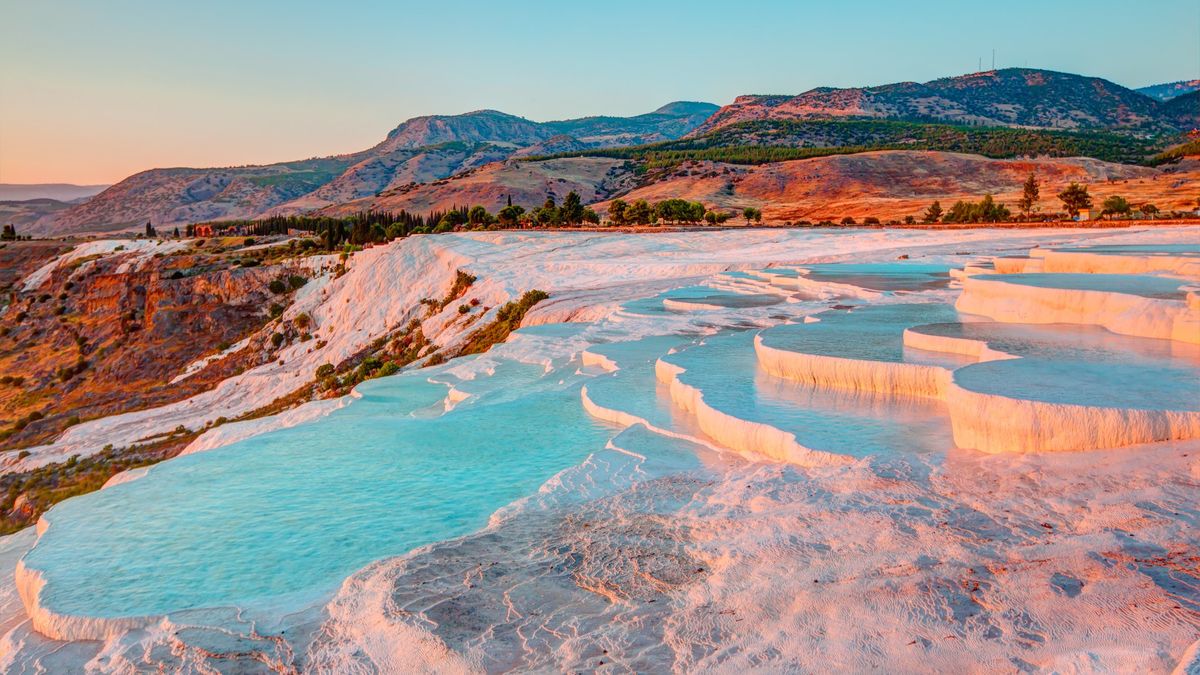
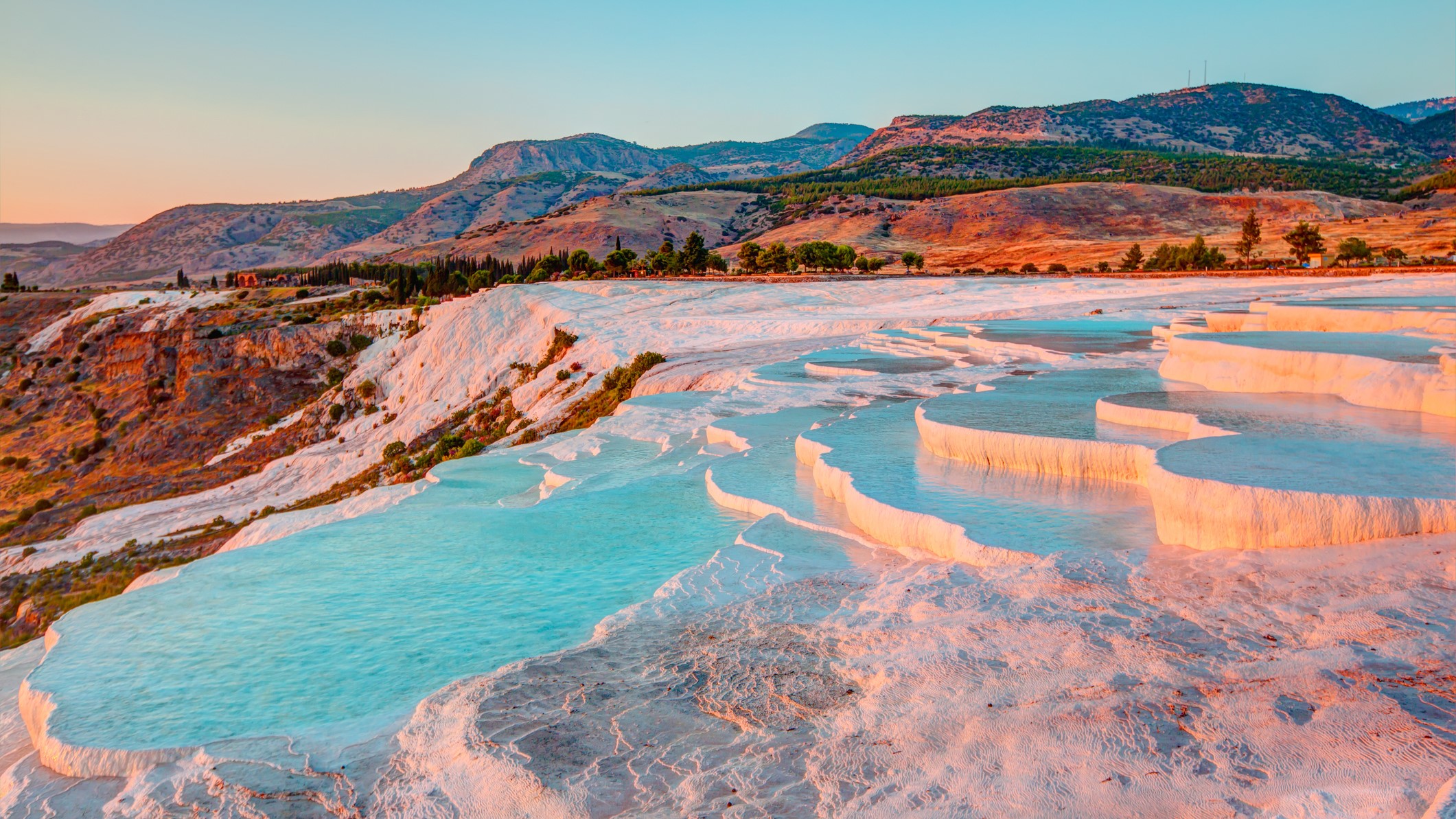
Pamukkale is a town in Turkey that’s famous for its dazzling travertine terraces and thermal water pools. The name, which means “cotton castle” in Turkish, hints at the height and snow-white color of the landmark, which stands in stark contrast to the surrounding arid plain.

Travertine is a type of rock made mostly of calcium carbonate that is deposited from mineral-rich spring water. Pamukkale is home to hot springs that bubble up at the top of a 660-foot-tall (200 meters) cliff overlooking the town. The water drips down over the mountainside, coating the rocks in calcium carbonate that has accumulated over millennia to form a white limestone crust.

The travertines of Pamukkale have grown so thick, they resemble a small glacier from above and afar.

Related: Fairy Chimneys: The stone spires in Turkey that form ‘the world’s most unusual high-rise neighborhood’

Pamukkale’s travertines may look like a winter wonderland, but they’re situated in a warm, sun-kissed part of southwestern Turkey.

The water flowing down the slopes is also warm — between 66 and 135 degrees Fahrenheit (19 to 57 degrees Celsius), according to NASA’s Earth Observatory — and can reach boiling temperatures. It collects in basins that have formed within the terraced slopes, creating natural hot tubs and infinity pools. These cascade into each other, with stalactites and other limestone formations growing along ledges up to 20 feet (6 m) tall where water has dripped down for thousands of years.

Pamukkale is listed as a UNESCO World Heritage Site, but the listing highlights far more than the site’s effervescent bathing pools. The travertines have drawn visitors since antiquity, with the ancient Greeks, in particular, building thermal baths, monuments and a complex system of canals to bring the spring water to nearby villages and fields.

Get the world’s most fascinating discoveries delivered straight to your inbox.

The Attalid kings of Pergamon — an ancient Greek state that ruled large parts of Asia Minor during the Hellenistic period — established a thermal spa town called Hierapolis near the travertines in the second century B.C., the ruins of which still exist today and are also listed by UNESCO. Previously, the site hosted an ancient cult, according to the U.N. agency.

Hierapolis reached its heyday in the second and third centuries A.D., after the ancient Romans took over and rebuilt the town following an earthquake. Remains dating back to Greco-Roman rule and the later Byzantine period include several baths, a monumental arch, a theater, a necropolis, a nymphaeum (a monument dedicated to water nymphs) and temple ruins.

Notably, some of these monuments, like the Temple of Apollo, stood on top of a geological fault that likely leaked noxious gases into the space between their walls, according to UNESCO.

The ruins at Pamukkale are generally well preserved, but huge numbers of visitors threaten the integrity of the site, according to UNESCO. An area where tourists can swim between ancient columns and marble decorations that collapsed after an earthquake in the seventh century is particularly vulnerable.


Discover more incredible places, where we highlight the fantastic history and science behind some of the most dramatic landscapes on Earth.

Source link

Share. Facebook Twitter Pinterest LinkedIn Tumblr Email
Previous ArticleBest headphones deal: Save $30 on JLab JBuds Lux ANC
Next Article Women’s Ashes: England head coach Jon Lewis says skill and discipline, not fitness, to blame for series defeat in Australia | Cricket News
Editor
  • Website

Related Posts

Lifestyle

2 rivers merged to form the Euphrates 3.6 million years ago, eventually leading to the Fertile Crescent

June 2, 2026
Lifestyle

NASA confirms fireball meteor exploded over northeastern US with force of 230 tons of TNT

June 2, 2026
Lifestyle

Astronauts could use lightning-like plasma jets to kill germs on the moon and Mars, demo hints

June 1, 2026
Add A Comment

Comments are closed.

Categories
  • Entertainment
  • Lifestyle
  • News
  • Sports
  • Tech
  • Travel
Recent Posts
  • 2 rivers merged to form the Euphrates 3.6 million years ago, eventually leading to the Fertile Crescent
  • NASA confirms fireball meteor exploded over northeastern US with force of 230 tons of TNT
  • Astronauts could use lightning-like plasma jets to kill germs on the moon and Mars, demo hints
  • First whole-genome sequence of a Greenland shark holds clues to their extreme longevity
  • Heading a soccer ball just once is enough to raise levels of proteins associated with brain damage
calendar
June 2026
M T W T F S S
1234567
891011121314
15161718192021
22232425262728
2930  
« May    
Recent Posts
  • 2 rivers merged to form the Euphrates 3.6 million years ago, eventually leading to the Fertile Crescent
  • NASA confirms fireball meteor exploded over northeastern US with force of 230 tons of TNT
  • Astronauts could use lightning-like plasma jets to kill germs on the moon and Mars, demo hints
About

Welcome to Baynard Media, your trusted source for a diverse range of news and insights. We are committed to delivering timely, reliable, and thought-provoking content that keeps you informed
and inspired

Categories
  • Entertainment
  • Lifestyle
  • News
  • Sports
  • Tech
  • Travel
Facebook X (Twitter) Pinterest WhatsApp
  • Contact Us
  • About Us
  • Privacy Policy
  • Disclaimer
  • UNSUBSCRIBE
© 2026 copyrights reserved

Type above and press Enter to search. Press Esc to cancel.