Close Menu
  • Home
  • UNSUBSCRIBE
  • News
  • Lifestyle
  • Tech
  • Entertainment
  • Sports
  • Travel
Facebook X (Twitter) WhatsApp
Trending
  • Lemur used in ‘lemur yoga’ session dies of human herpesvirus, study finds
  • ‘A fine line between reducing stigma and trivialising conditions’: Social media, self-diagnosis and the glamorization of ADHD
  • New 2D memory device stores data on just a single electron
  • Before we ban kids from social media completely, here’s what we should try first | Jonathan Bellack and Mariana Olaizola Rosenblat
  • Scientists uncover a better way to beat ‘the bends’ — using deep-diving pigs
  • Mars may have been losing its water more than 4 billion years ago, oldest-known Martian meteorite suggests
  • ‘The lance head was still inside the pelvis’: Mass grave found in Austria may hold casualties of unknown ancient Roman battle
  • ‘Full-on berserker mode’: Archaeologists solve mystery of medieval soldiers with gruesome square holes in their skull
Facebook X (Twitter) WhatsApp
Baynard Media
  • Home
  • UNSUBSCRIBE
  • News
  • Lifestyle
  • Tech
  • Entertainment
  • Sports
  • Travel
Baynard Media
Home»Lifestyle»Ötzi the Iceman and his neighbors had totally different ancestries, ancient DNA study finds
Lifestyle

Ötzi the Iceman and his neighbors had totally different ancestries, ancient DNA study finds

EditorBy EditorJuly 20, 2025No Comments4 Mins Read
Share Facebook Twitter Pinterest LinkedIn Tumblr Reddit Telegram Email
Share
Facebook Twitter LinkedIn Pinterest Email

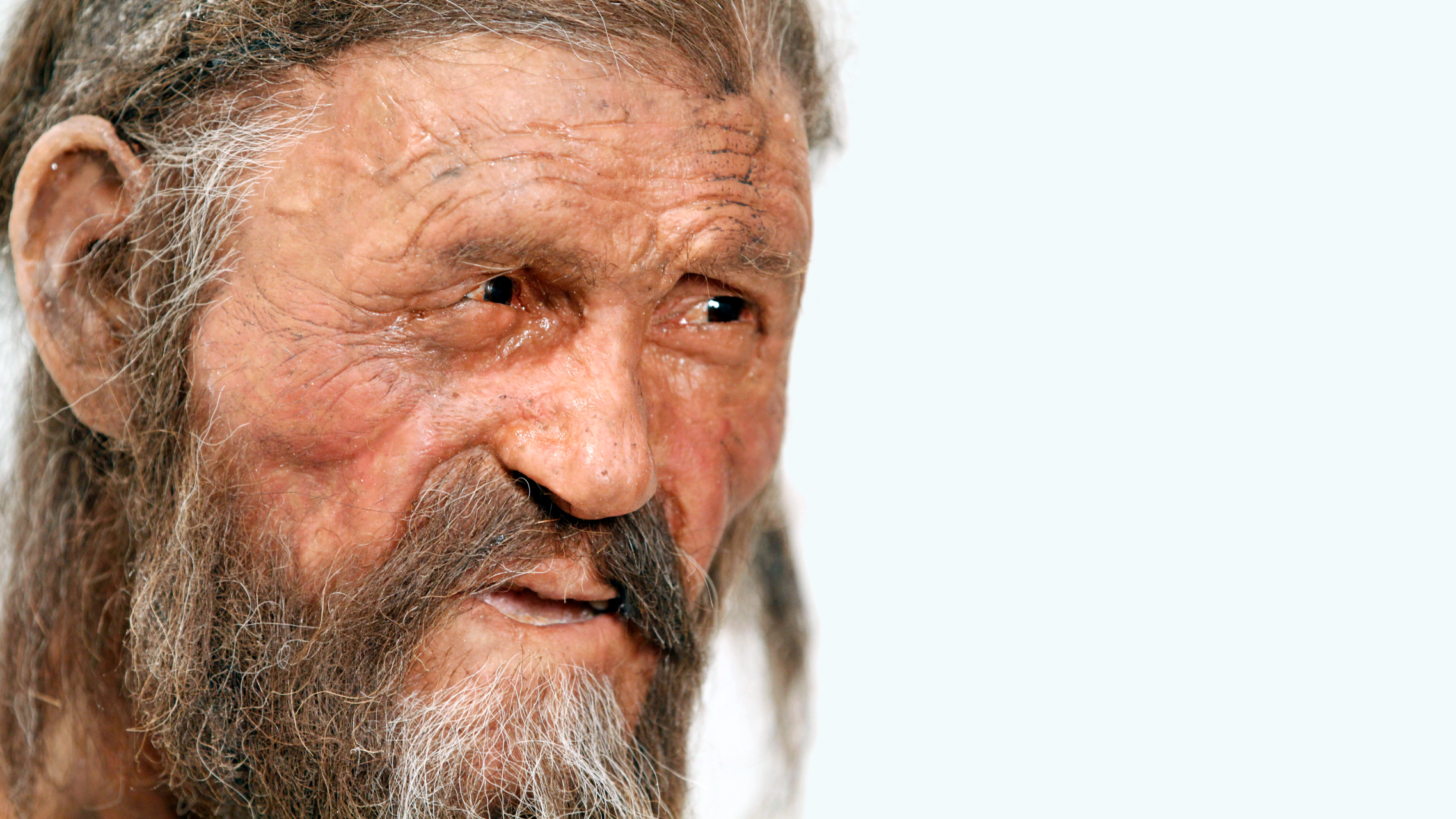
A new analysis of ancient DNA from 15 people who lived in the Italian Alps around the same time as Ötzi the Iceman shows that Ötzi’s ancestry was decidedly different from his neighbors’.

“We analysed an additional 15 Copper Age individuals and they have the same genetic structure as the Iceman,” Valentina Coia, a researcher at the Institute for Mummy Studies in Bolzano, Italy, told Live Science in an email. But when looking more closely at the DNA to understand lineages, “we were able to compare the results with those of the Iceman and found that it differs from the other Alpine samples in the area.”

In a study published July 11 in the journal Nature Communications, Coia and colleagues analyzed the genomes of 47 people who lived in the Tyrolean Alps between the Mesolithic and the Middle Bronze Age, around 6400 to 1300 B.C., to learn more about their ancestry.


You may like

The most famous individual they examined was Ötzi, who lived 5,300 years ago in the Alps before he was murdered in mysterious circumstances. His mummified and frozen corpse was discovered by tourists in 1991. Because a previous study found that Ötzi had “unusually high Anatolian farmer ancestry,” the researchers wanted to investigate whether the Iceman’s neighbors — who lived in the Alps in the Copper Age, between 3368 and 3108 B.C. — had a similar ancestry or whether they were more closely related to hunter-gatherer groups from the Eurasian Steppe.

The researchers’ analysis of the ancient genomes revealed that most prehistoric Alpine people had high proportions of Anatolian farmer ancestry (80% to 90%) and low proportions of hunter-gatherer ancestry. Most of these people also displayed a similar genomic structure and ancestry, they wrote in the study.

For example, the Y-chromosome data, which helps trace paternal lineage, revealed that nearly all males who were tested shared a similar ancestry that has been found in prehistoric Germany and France. Ötzi, by contrast, had a different paternal lineage that was more widespread, the researchers wrote.

Related: Ötzi the Iceman used surprisingly modern technique for his tattoos 5,300 years ago, study suggests

Get the world’s most fascinating discoveries delivered straight to your inbox.

While the paternal lineages of the prehistoric Alpine men were broadly similar, their maternal lineages were diverse, suggesting that women may have been marrying into a close-knit group of men.

A pyramidal stone monument stands in the middle of snow-covered mountains, with a brilliant blue sky in the background

A monument stands at the spot in the Alps where Ötzi was discovered. (Image credit: Alamy)

But Ötzi’s maternal lineage has never been identified in other ancient or modern individuals, the researchers wrote, and it was not found in any of the other Alpine people analyzed in the study.

“As the maternal line has never yet been found, this might suggest its extinction,” Coia said. But she cautioned that the data are somewhat difficult to interpret.

“Perhaps the Iceman, compared to other individuals of the same period, comes from a different group of farmers, but this can only be discovered if we have more data on Neolithic individuals from Anatolia and northern Italy,” she said.

Because a previous study had revealed Ötzi had dark hair and dark eyes, the researchers also looked for these traits in six individuals whose genomes were complete enough to predict hair and eye color. “These [people] likely had brown eyes associated with dark brown to black hair colour (similarly to the Iceman),” they wrote. And their genomes also revealed that all of the prehistoric Alpine people were lactose intolerant, as was Ötzi.

Prior to this study, only two genomes of Copper Age people from the eastern Italian Alps had been analyzed. The additional 15 new genomes from Ötzi’s “neighbors” are improving the researchers’ understanding of the lives of people who lived in this cold, high-altitude region.

“We have no information on the cultural group to which the Iceman may have belonged,” the researchers wrote, so “our findings leave open some questions about the genetic origin and cultural affiliation of this enigmatic individual.”

Source link

Share. Facebook Twitter Pinterest LinkedIn Tumblr Email
Previous ArticleEx-MLB pitcher details terrifying 25-foot fall
Next Article Thief who stole fire engine clipped 14 cars evades arrest in Washington state
Editor
  • Website

Related Posts

Lifestyle

Lemur used in ‘lemur yoga’ session dies of human herpesvirus, study finds

August 15, 2026
Lifestyle

‘A fine line between reducing stigma and trivialising conditions’: Social media, self-diagnosis and the glamorization of ADHD

August 15, 2026
Lifestyle

New 2D memory device stores data on just a single electron

August 15, 2026
Add A Comment

Comments are closed.

Categories
  • Entertainment
  • Lifestyle
  • News
  • Sports
  • Tech
  • Travel
Recent Posts
  • Lemur used in ‘lemur yoga’ session dies of human herpesvirus, study finds
  • ‘A fine line between reducing stigma and trivialising conditions’: Social media, self-diagnosis and the glamorization of ADHD
  • New 2D memory device stores data on just a single electron
  • Before we ban kids from social media completely, here’s what we should try first | Jonathan Bellack and Mariana Olaizola Rosenblat
  • Scientists uncover a better way to beat ‘the bends’ — using deep-diving pigs
calendar
September 2026
M T W T F S S
 123456
78910111213
14151617181920
21222324252627
282930  
« Aug    
Recent Posts
  • Lemur used in ‘lemur yoga’ session dies of human herpesvirus, study finds
  • ‘A fine line between reducing stigma and trivialising conditions’: Social media, self-diagnosis and the glamorization of ADHD
  • New 2D memory device stores data on just a single electron
About

Welcome to Baynard Media, your trusted source for a diverse range of news and insights. We are committed to delivering timely, reliable, and thought-provoking content that keeps you informed
and inspired

Categories
  • Entertainment
  • Lifestyle
  • News
  • Sports
  • Tech
  • Travel
Facebook X (Twitter) Pinterest WhatsApp
  • Contact Us
  • About Us
  • Privacy Policy
  • Disclaimer
  • UNSUBSCRIBE
© 2026 copyrights reserved

Type above and press Enter to search. Press Esc to cancel.