Close Menu
  • Home
  • UNSUBSCRIBE
  • News
  • Lifestyle
  • Tech
  • Entertainment
  • Sports
  • Travel
Facebook X (Twitter) WhatsApp
Trending
  • New robotic heart mimics common, mysterious condition to help researchers study it
  • Canon EOS R6 III review: A wildlife wonder
  • Medieval babies and adults buried together in Sweden were not related, archaeologists discover — raising big questions about early Christian burial practices
  • NASA is creating a fifth state of matter on the ISS, thanks to an upgrade to a mini-fridge-sized quantum lab
  • New sodium metal battery design charges in just 4 minutes and retains its capacity for years
  • Quantum computing wielded to create extremely rare material critical to nuclear fusion
  • Scientists build tiny ‘diving suit’ for cockroaches, turning them into search-and-rescue cyborgs
  • Physicists develop the first working model of quantum mechanics using only ‘real’ numbers
Facebook X (Twitter) WhatsApp
Baynard Media
  • Home
  • UNSUBSCRIBE
  • News
  • Lifestyle
  • Tech
  • Entertainment
  • Sports
  • Travel
Baynard Media
Home»Lifestyle»‘One of our most exciting discoveries so far’: Physicists detect rare ‘second-generation’ black holes that prove Einstein right again
Lifestyle

‘One of our most exciting discoveries so far’: Physicists detect rare ‘second-generation’ black holes that prove Einstein right again

EditorBy EditorOctober 30, 2025No Comments3 Mins Read
Share Facebook Twitter Pinterest LinkedIn Tumblr Reddit Telegram Email
Share
Facebook Twitter LinkedIn Pinterest Email

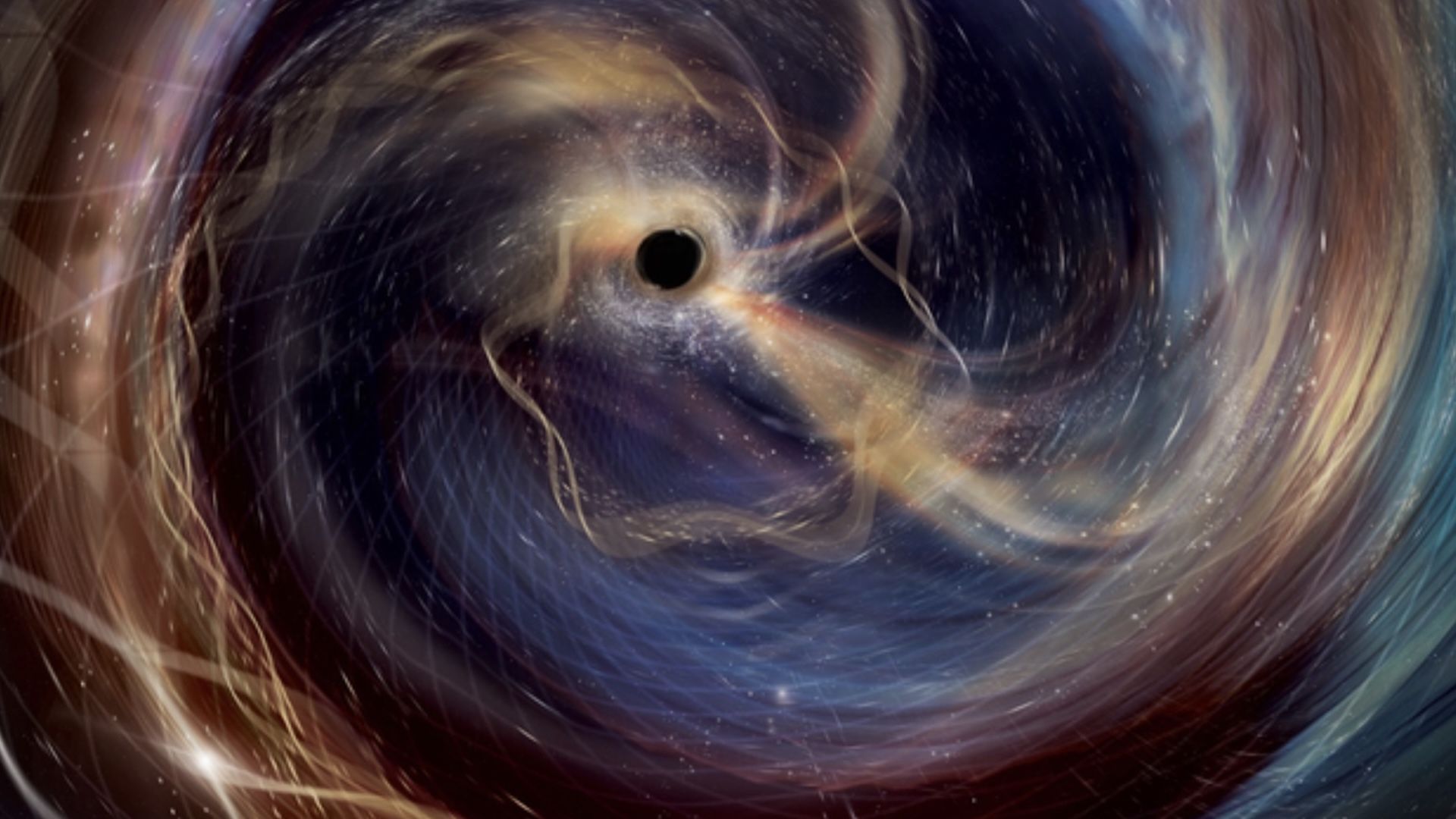
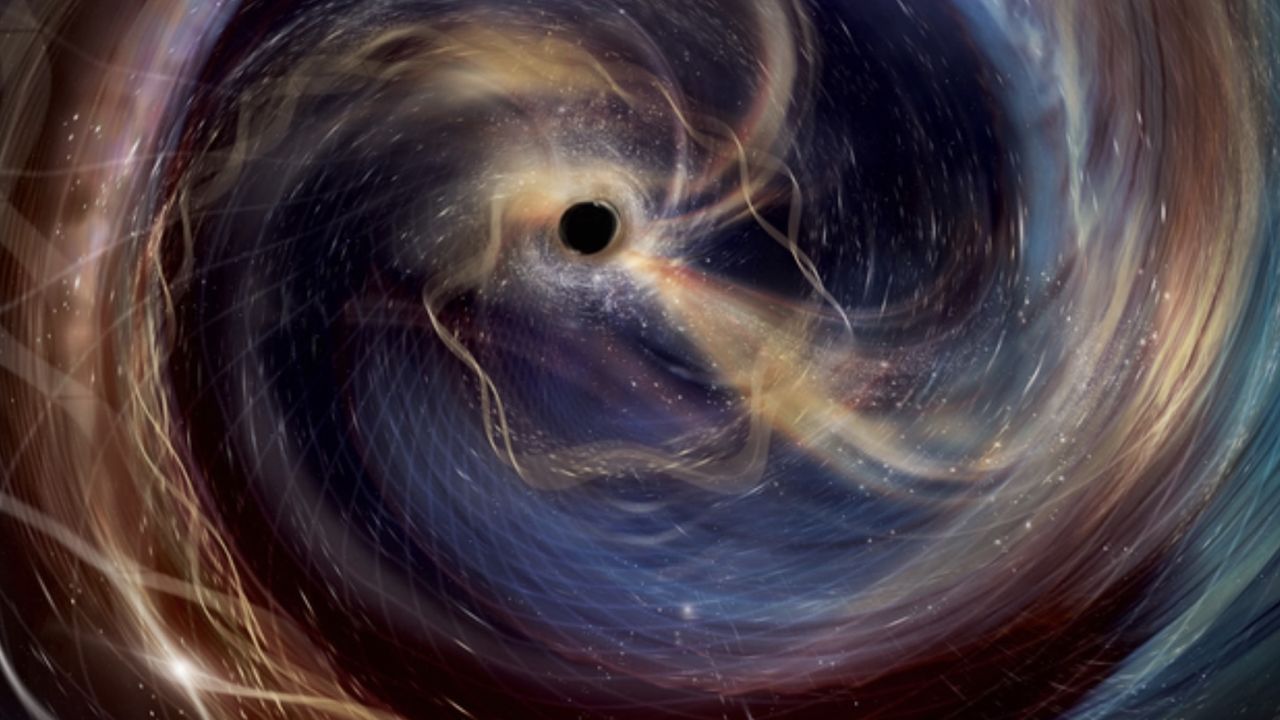
Scientists have found two pairs of merging black holes, and they think the larger one in each merger is a rare “second-generation” veteran of a previous collision.

The two larger black holes’ unusual behavior, observed through ripples in space-time called gravitational waves, was described Oct. 28 in The Astrophysical Journal Letters.

The telltale clue was twofold: In each merger, the larger black hole was spinning rapidly and was significantly more massive than the partner black hole it swallowed. The events were observed with the LIGO-Virgo-KAGRA Collaboration, a set of gravitational-wave detectors around the world aiming to observe space-shaking events like black hole mergers and neutron star collisions.


You may like

The results “provide tantalizing evidence that these black holes were formed from previous black hole mergers,” study co-author Stephen Fairhurst, a professor at Cardiff University in the U.K. and a spokesperson for the LIGO Scientific Collaboration, said in a statement.

Back-to-back mergers

The research was based on two recently detected mergers that occurred just a month apart. Analyzing the gravitational wave signatures from these events allowed the researchers to infer the mass, rotation and distances of the black holes involved.

In the first event, on Oct. 11, 2024, scientists spotted two black holes — measuring six and 20 times the mass of the sun, respectively — colliding in a merger known as GW241011, roughly 700 million light-years from Earth. The larger black hole was one of the fastest-rotating black holes ever found.

The second merger, GW241110, was found on Nov. 10, 2024, with black holes that were eight and 17 times the mass of the sun. This merger was farther away, at 2.4 billion light-years. The larger black hole was also spinning opposite to its orbit, which has never been seen before.

Get the world’s most fascinating discoveries delivered straight to your inbox.

Scientists say each of these mergers had novel properties, including that the bigger black hole in each merger was nearly double the size of the smaller one, and that the larger black holes were spinning oddly compared with the hundreds of other mergers observed through gravitational waves since the historic first detection by LIGO (Laser Interferometer Gravitational-Wave Observatory) in 2015.

The scientists suggested that the larger black hole in each merger previously coalesced in a process called a “hierarchical merger,” which would happen in dense environments like star clusters, where black holes would frequently come near each other.

“This is one of our most exciting discoveries so far,” study co-author Jess McIver, an astrophysicist at the University of British Columbia, said in the statement. “These events provide strong evidence that there are very dense, busy pockets of the universe driving some dead stars together.”

Aside from the possible second-generation black hole finds, scientists said that the two mergers validated physics laws predicted by Albert Einstein more than a century ago and that the events are helping scientists learn more about elementary particles.

For example, GW241011 generated a clear signal that allowed scientists to see the larger black hole deforming as it spun, due to the black hole’s rapid rotation. The resulting signature in the gravitational waves matched up with theories from Einstein, as well as from mathematician Roy Kerr, concerning rotating black holes.

That same event also generated a “hum” in the gravitational-wave signal, created because the larger black hole was much larger than the smaller one. (The hum is similar to musical instrument overtones, the collaborators stated.) This observation also helped confirm predictions from Einstein.

Source link

Share. Facebook Twitter Pinterest LinkedIn Tumblr Email
Previous ArticleRep. Guthrie demands NCAA accountability over betting rule shift
Next Article King Charles to remove Prince Andrew’s titles and eject him from Royal lodge
Editor
  • Website

Related Posts

Lifestyle

New robotic heart mimics common, mysterious condition to help researchers study it

July 11, 2026
Lifestyle

Canon EOS R6 III review: A wildlife wonder

July 10, 2026
Lifestyle

Medieval babies and adults buried together in Sweden were not related, archaeologists discover — raising big questions about early Christian burial practices

July 10, 2026
Add A Comment

Comments are closed.

Categories
  • Entertainment
  • Lifestyle
  • News
  • Sports
  • Tech
  • Travel
Recent Posts
  • New robotic heart mimics common, mysterious condition to help researchers study it
  • Canon EOS R6 III review: A wildlife wonder
  • Medieval babies and adults buried together in Sweden were not related, archaeologists discover — raising big questions about early Christian burial practices
  • NASA is creating a fifth state of matter on the ISS, thanks to an upgrade to a mini-fridge-sized quantum lab
  • New sodium metal battery design charges in just 4 minutes and retains its capacity for years
calendar
July 2026
M T W T F S S
 12345
6789101112
13141516171819
20212223242526
2728293031  
« Jun    
Recent Posts
  • New robotic heart mimics common, mysterious condition to help researchers study it
  • Canon EOS R6 III review: A wildlife wonder
  • Medieval babies and adults buried together in Sweden were not related, archaeologists discover — raising big questions about early Christian burial practices
About

Welcome to Baynard Media, your trusted source for a diverse range of news and insights. We are committed to delivering timely, reliable, and thought-provoking content that keeps you informed
and inspired

Categories
  • Entertainment
  • Lifestyle
  • News
  • Sports
  • Tech
  • Travel
Facebook X (Twitter) Pinterest WhatsApp
  • Contact Us
  • About Us
  • Privacy Policy
  • Disclaimer
  • UNSUBSCRIBE
© 2026 copyrights reserved

Type above and press Enter to search. Press Esc to cancel.