Close Menu
  • Home
  • UNSUBSCRIBE
  • News
  • Lifestyle
  • Tech
  • Entertainment
  • Sports
  • Travel
Facebook X (Twitter) WhatsApp
Trending
  • Ebola outbreak in Central Africa will be hard to contain, experts say
  • Landmark finding that showed brains of kids with ADHD mature later was actually a mirage in the data, new research finds
  • Seal pups were dying from a ‘corkscrew killer’ on a Canadian island. It turned out to be cannibals.
  • One of Neptune’s 16 moons is not like the others, James Webb telescope finds — and it could be key to fully understanding the solar system
  • Can AI really simulate human thinking? Research casts doubt on an influential study, suggesting an advanced model was just really good at memorizing patterns.
  • More young people are getting colorectal cancer — here’s what scientists think might be happening
  • ‘I have no doubt that life is out there’: Why radio astronomers are convinced alien contact is only a matter of time
  • 800-year-old ‘hugging skeletons’ are genetically confirmed as Poland’s only medieval same-sex double burial
Facebook X (Twitter) WhatsApp
Baynard Media
  • Home
  • UNSUBSCRIBE
  • News
  • Lifestyle
  • Tech
  • Entertainment
  • Sports
  • Travel
Baynard Media
Home»Lifestyle»‘Ominous milestone for the planet’: Arctic Ocean’s 1st ice-free day could be just 3 years away, alarming study finds
Lifestyle

‘Ominous milestone for the planet’: Arctic Ocean’s 1st ice-free day could be just 3 years away, alarming study finds

EditorBy EditorDecember 4, 2024No Comments3 Mins Read
Share Facebook Twitter Pinterest LinkedIn Tumblr Reddit Telegram Email
Share
Facebook Twitter LinkedIn Pinterest Email

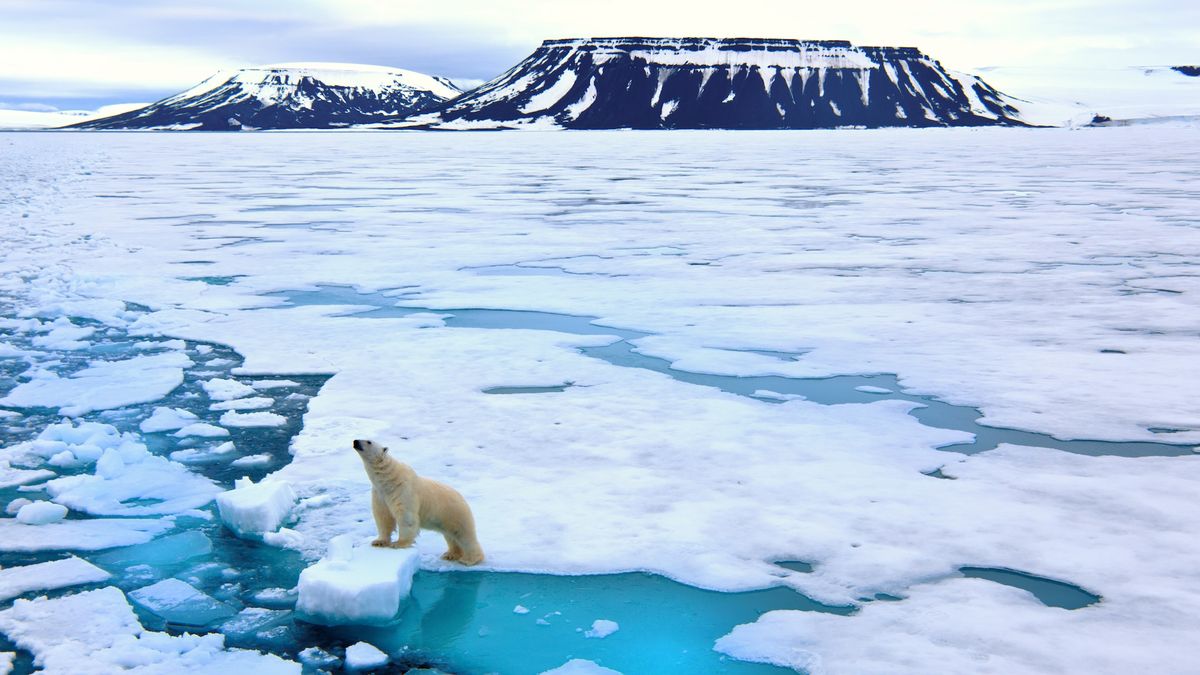
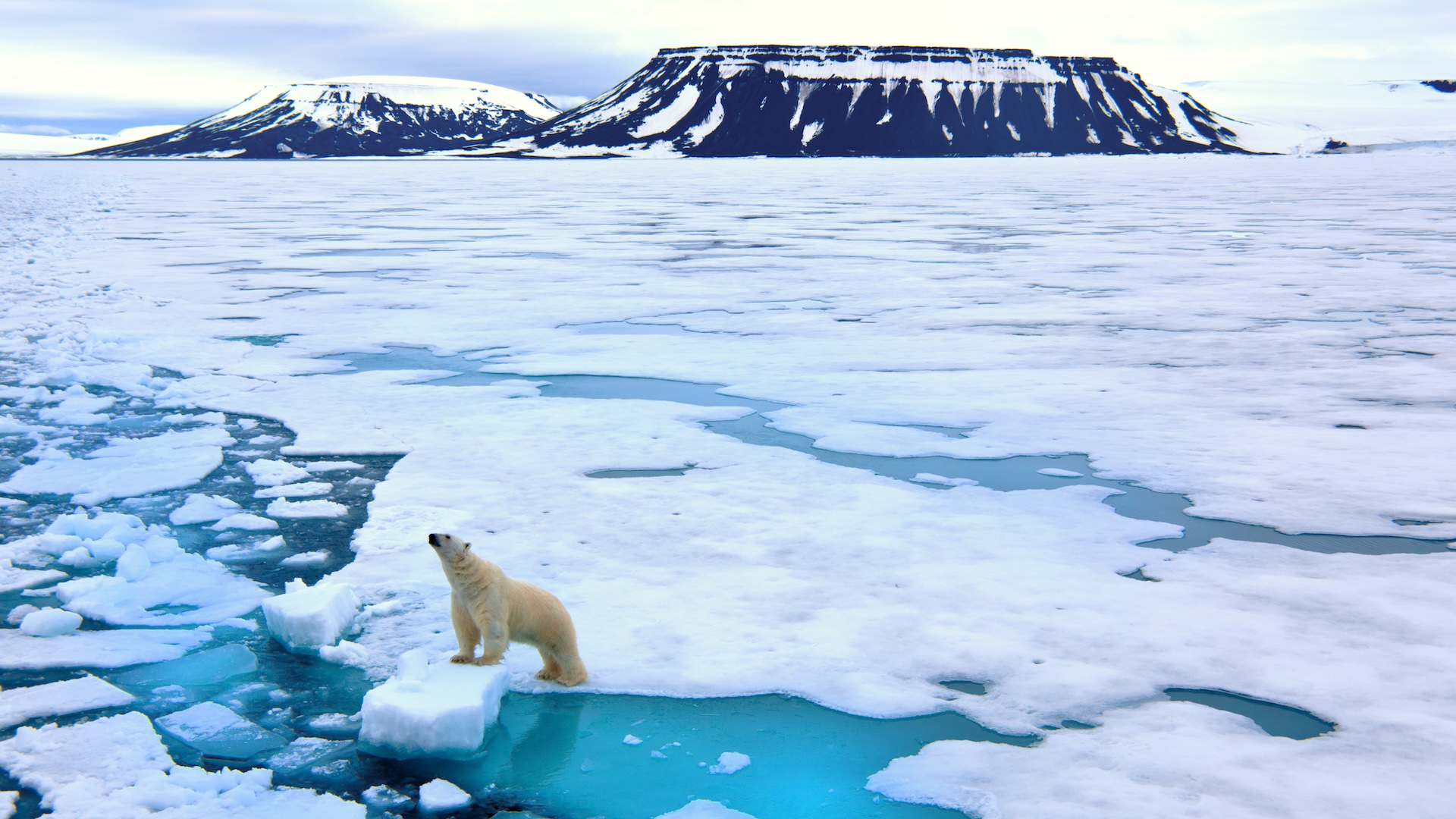
The Arctic Ocean could have its first ice free day as soon as 2027, an alarming new study reveals.

Arctic sea ice has been melting at an unprecedented rate of more than 12% each decade, meaning we are racing towards the day when nearly all of its ice temporarily disappears.

This “ominous milestone for the planet,” will most likely happen within nine to 20 years after 2023 regardless of how humans alter their greenhouse gas emissions, according to a new study published Monday (Nov. 3) in the journal Nature Communications. And the most pessimistic projections predict it could happen as soon as three years’ time.

“The first ice-free day in the Arctic won’t change things dramatically,” co-author Alexandra Jahn, a climatologist at the University of Colorado Boulder, said in a statement. “But it will show that we’ve fundamentally altered one of the defining characteristics of the natural environment in the Arctic Ocean, which is that it is covered by sea ice and snow year-round, through greenhouse gas emissions.”

Earth’s sea ice is charted each year by the satellite record, which has measured ice fluctuations at both poles since 1979. The world’s sea ice plays a crucial role in regulating ocean and air temperatures, maintaining marine habitats and powering ocean currents that transport heat and nutrients around the globe.

Related: ‘We were in disbelief’: Antarctica is behaving in a way we’ve never seen before. Can it recover?

The sea ice surface also reflects some of the sun’s energy back into space in a process known as the albedo effect. This effect can also work in reverse — with melting sea ice uncovering darker waters that absorb more of the sun’s rays. This means that, as our planet warms, the Arctic has transformed from a refrigerator to a radiator, and it’s now warming four times faster than the rest of the world.

Get the world’s most fascinating discoveries delivered straight to your inbox.

The rapid heating has had dramatic and marked consequences. The planet’s northernmost sea ice extent, which once spanned an average of 2.6 million square miles (6.85 million square kilometers) between 1979 to 1992, has plummeted to 1.65 million square miles (4.28 million km squared) this year.

The continuing decline means that future climate fluctuations are increasingly likely to push the ice beyond the 0.3 million square mile (1 million km squared) limit below which the region is considered “ice free.”

By using 11 climate models and running 366 simulations across them, the researchers behind the new study found that this day could come as soon as three to six years.

This prediction was made only in the nine most pessimistic simulations, which assumed the occurrence of a series of unusually warm seasons. But all of the simulations did eventually predict that an ice-free day would inevitably occur, most likely in the 2030s.

“Because the first ice-free day is likely to happen earlier than the first ice-free month, we want to be prepared. It’s also important to know what events could lead to the melting of all sea ice in the Arctic Ocean,” lead author Céline Heuzé, a climatology researcher at the University of Gothenburg in Sweden, said in the statement.

Despite the bleakness of their findings, the pair’s study does nonetheless come with some good news — a drastic cut to carbon dioxide emissions would dramatically forestall the ice free day, and soften the shock caused by the loss of arctic ice on planetary systems.

“Any reductions in emissions would help preserve sea ice,” Jahn said.

Source link

Share. Facebook Twitter Pinterest LinkedIn Tumblr Email
Previous ArticleJust $33 for peace of mind with a hidden camera detector
Next Article Dem Rep. Clyburn admits he urged Biden to pardon his son: ‘Needed to do this’
Editor
  • Website

Related Posts

Lifestyle

Ebola outbreak in Central Africa will be hard to contain, experts say

May 22, 2026
Lifestyle

Landmark finding that showed brains of kids with ADHD mature later was actually a mirage in the data, new research finds

May 22, 2026
Lifestyle

Seal pups were dying from a ‘corkscrew killer’ on a Canadian island. It turned out to be cannibals.

May 22, 2026
Add A Comment

Comments are closed.

Categories
  • Entertainment
  • Lifestyle
  • News
  • Sports
  • Tech
  • Travel
Recent Posts
  • Ebola outbreak in Central Africa will be hard to contain, experts say
  • Landmark finding that showed brains of kids with ADHD mature later was actually a mirage in the data, new research finds
  • Seal pups were dying from a ‘corkscrew killer’ on a Canadian island. It turned out to be cannibals.
  • One of Neptune’s 16 moons is not like the others, James Webb telescope finds — and it could be key to fully understanding the solar system
  • Can AI really simulate human thinking? Research casts doubt on an influential study, suggesting an advanced model was just really good at memorizing patterns.
calendar
May 2026
M T W T F S S
 123
45678910
11121314151617
18192021222324
25262728293031
« Apr    
Recent Posts
  • Ebola outbreak in Central Africa will be hard to contain, experts say
  • Landmark finding that showed brains of kids with ADHD mature later was actually a mirage in the data, new research finds
  • Seal pups were dying from a ‘corkscrew killer’ on a Canadian island. It turned out to be cannibals.
About

Welcome to Baynard Media, your trusted source for a diverse range of news and insights. We are committed to delivering timely, reliable, and thought-provoking content that keeps you informed
and inspired

Categories
  • Entertainment
  • Lifestyle
  • News
  • Sports
  • Tech
  • Travel
Facebook X (Twitter) Pinterest WhatsApp
  • Contact Us
  • About Us
  • Privacy Policy
  • Disclaimer
  • UNSUBSCRIBE
© 2026 copyrights reserved

Type above and press Enter to search. Press Esc to cancel.