Close Menu
  • Home
  • UNSUBSCRIBE
  • News
  • Lifestyle
  • Tech
  • Entertainment
  • Sports
  • Travel
Facebook X (Twitter) WhatsApp
Trending
  • Chinese medical practitioners used extremely toxic plant as a topical anesthetic 600 years ago, study finds
  • Bead net funerary shroud: A 2,500-year-old beaded veil from Egypt depicting the deceased’s transformation into Osiris
  • Rare genetic disease makes scientists reconsider what the ‘seat of fear’ in the brain really is
  • It’s illegal to repair most of our devices. There’s a surprising reason for that.
  • Jupiter’s Ganymede, the largest moon in the solar system, may be heating up
  • Bizarre patterns on Venus have scientists puzzled
  • Scientists trained an AI model using an IBM quantum computer — and it answered questions correctly that the base model couldn’t
  • How did animals survive the asteroid that killed the dinosaurs?
Facebook X (Twitter) WhatsApp
Baynard Media
  • Home
  • UNSUBSCRIBE
  • News
  • Lifestyle
  • Tech
  • Entertainment
  • Sports
  • Travel
Baynard Media
Home»Lifestyle»Nobel Prize in medicine goes to trio for their work on immune tolerance
Lifestyle

Nobel Prize in medicine goes to trio for their work on immune tolerance

EditorBy EditorOctober 7, 2025No Comments3 Mins Read
Share Facebook Twitter Pinterest LinkedIn Tumblr Reddit Telegram Email
Share
Facebook Twitter LinkedIn Pinterest Email

A trio of researchers has won the 2025 Nobel Prize in Physiology or Medicine for discovering how the immune system is prevented from attacking our own bodies.

Mary E. Brunkow of the Institute for Systems Biology in Seattle, Fred Ramsdell of Sonoma Biotherapeutics in San Francisco, and Shimon Sakaguchi of Osaka University in Japan were awarded the prize “for their discoveries concerning peripheral immune tolerance.” The Nobel Assembly at Karolinska Institutet announced the winners at a ceremony in Stockholm, Sweden, on Monday (Oct. 6).

The three scientists’ research, honored with the 116th medicine prize, provides insights into keeping the immune system under control to fight microbes and avoid autoimmune diseases.


You may like

“Their discoveries have been decisive for our understanding of how the immune system functions and why we do not all develop serious autoimmune diseases,” Olle Kämpe, chair of the Nobel Committee, said in a statement.

Our immune system has to protect the body from a variety of harmful microbes, acting like a biological bodyguard. Some sneaky invaders, such as viruses, can mimic human cells, so part of the immune system’s job is to determine who is on the guest list, while kicking out anything that shouldn’t be there.

The new Nobel Prize winners revealed how our bodies use regulatory T cells to keep the immune system in check. Their work has launched a new field in peripheral tolerance research and led to the development of new medical treatments, including for cancer and autoimmune diseases.

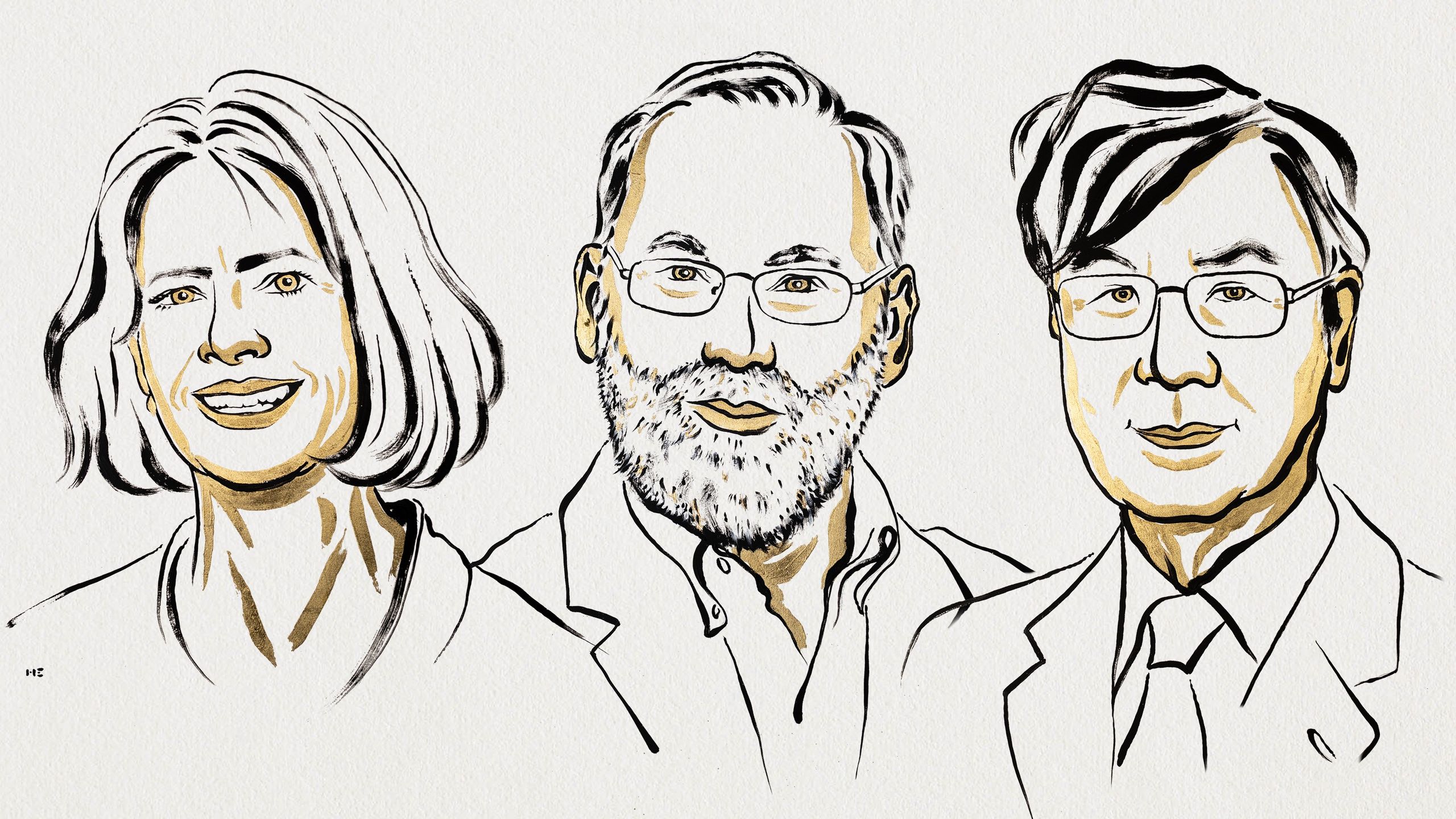
Mary E. Brunkow (left), Fred Ramsdell (center) and Shimon Sakaguchi (right) were announced as Nobel laureates during a ceremony at the Karolinska Institute in Sweden on Oct. 6.

Mary E. Brunkow (left), Fred Ramsdell (center) and Shimon Sakaguchi (right) were announced as Nobel laureates during a ceremony at the Karolinska Institute in Sweden on Oct. 6. (Image credit: The Nobel Committee for Physiology or Medicine)

Sakaguchi made the first key peripheral immune tolerance discovery in 1995, when many researchers thought that the immune system only developed tolerance through a process called central tolerance, during which harmful immune cells are dealt with in the thymus — a specialized organ in the chest that makes white blood cells.

Get the world’s most fascinating discoveries delivered straight to your inbox.

However, Sakaguchi demonstrated that the immune system has additional complexities by discovering immune cells, called regulatory T cells, that suppress overactive immune responses to protect the body’s cells from autoimmune diseases.

These specialist cells keep an eye on other immune cells to ensure the immune system tolerates the body’s natural tissues. In other words, they prevent our biological bodyguard from getting overzealous.

Brunkow and Ramsdell’s contribution came six years later with their discovery that some mice had a gene mutation, named Foxp3, that makes them especially vulnerable to autoimmune diseases. The pair also found that alterations to the human version of this gene were responsible for immune dysregulation, polyendocrinopathy, enteropathy, X-linked (IPEX) syndrome, an autoimmune disease.

In 2003, Sakaguchi demonstrated that the Foxp3 gene is responsible for governing the development of regulatory T cells.

Stay tuned for more Nobel Prize announcements this week. The next announcement will be on Tuesday (Oct. 7), when we’ll learn who is awarded the 2025 Nobel Prize for Physics.

Source link

Share. Facebook Twitter Pinterest LinkedIn Tumblr Email
Previous ArticleThe best Prime Big Deal Days finds under $25 – and no, they’re not junk
Next Article The 41+ Best Amazon October Prime Day 2025 Deals Live Now
Editor
  • Website

Related Posts

Lifestyle

Chinese medical practitioners used extremely toxic plant as a topical anesthetic 600 years ago, study finds

May 26, 2026
Lifestyle

Bead net funerary shroud: A 2,500-year-old beaded veil from Egypt depicting the deceased’s transformation into Osiris

May 25, 2026
Lifestyle

Rare genetic disease makes scientists reconsider what the ‘seat of fear’ in the brain really is

May 25, 2026
Add A Comment

Comments are closed.

Categories
  • Entertainment
  • Lifestyle
  • News
  • Sports
  • Tech
  • Travel
Recent Posts
  • Chinese medical practitioners used extremely toxic plant as a topical anesthetic 600 years ago, study finds
  • Bead net funerary shroud: A 2,500-year-old beaded veil from Egypt depicting the deceased’s transformation into Osiris
  • Rare genetic disease makes scientists reconsider what the ‘seat of fear’ in the brain really is
  • It’s illegal to repair most of our devices. There’s a surprising reason for that.
  • Jupiter’s Ganymede, the largest moon in the solar system, may be heating up
calendar
May 2026
M T W T F S S
 123
45678910
11121314151617
18192021222324
25262728293031
« Apr    
Recent Posts
  • Chinese medical practitioners used extremely toxic plant as a topical anesthetic 600 years ago, study finds
  • Bead net funerary shroud: A 2,500-year-old beaded veil from Egypt depicting the deceased’s transformation into Osiris
  • Rare genetic disease makes scientists reconsider what the ‘seat of fear’ in the brain really is
About

Welcome to Baynard Media, your trusted source for a diverse range of news and insights. We are committed to delivering timely, reliable, and thought-provoking content that keeps you informed
and inspired

Categories
  • Entertainment
  • Lifestyle
  • News
  • Sports
  • Tech
  • Travel
Facebook X (Twitter) Pinterest WhatsApp
  • Contact Us
  • About Us
  • Privacy Policy
  • Disclaimer
  • UNSUBSCRIBE
© 2026 copyrights reserved

Type above and press Enter to search. Press Esc to cancel.