Close Menu
  • Home
  • UNSUBSCRIBE
  • News
  • Lifestyle
  • Tech
  • Entertainment
  • Sports
  • Travel
Facebook X (Twitter) WhatsApp
Trending
  • A physicist built a ‘mini-universe’ out of ultracold atoms and watched time being born inside it.
  • Are CAPTCHAs obsolete in the age of AI?
  • Colorful ‘painting-like’ ripples cover an ancient seafloor structure the Bahamas — Earth from space
  • First experiment to thicken Arctic ice with seawater shows promise — but there’s a big catch
  • Heart issues tied to ‘microdamage’ in the brain might raise risk of memory loss, study hints
  • Neanderthals and modern humans may have shared culture 59,000 years ago in Turkey, study finds
  • Scientists just created the most lifelike cell ever made in the lab ‪— but experts say it’s not ‘truly autonomous’
  • ‘What we found was striking’: Physicists take the closest-ever look at a black hole’s mysterious event horizon
Facebook X (Twitter) WhatsApp
Baynard Media
  • Home
  • UNSUBSCRIBE
  • News
  • Lifestyle
  • Tech
  • Entertainment
  • Sports
  • Travel
Baynard Media
Home»Lifestyle»New wonder material designed by AI is as light as foam but as strong as steel
Lifestyle

New wonder material designed by AI is as light as foam but as strong as steel

EditorBy EditorFebruary 1, 2025No Comments3 Mins Read
Share Facebook Twitter Pinterest LinkedIn Tumblr Reddit Telegram Email
Share
Facebook Twitter LinkedIn Pinterest Email

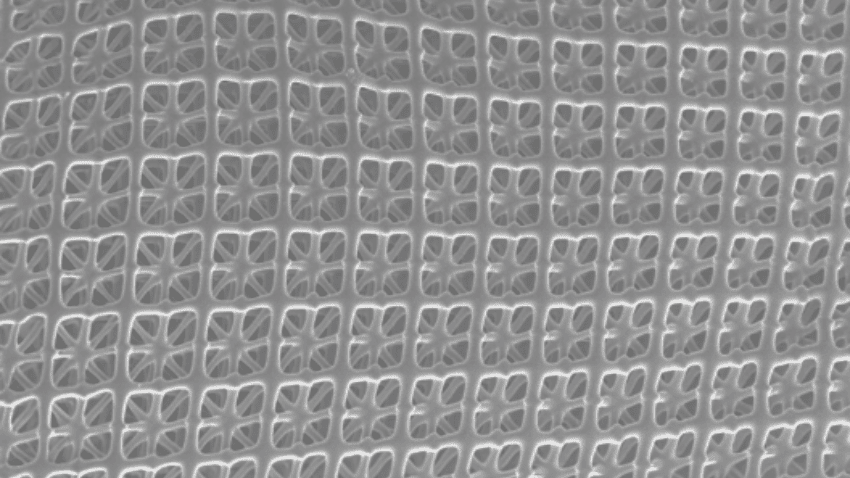
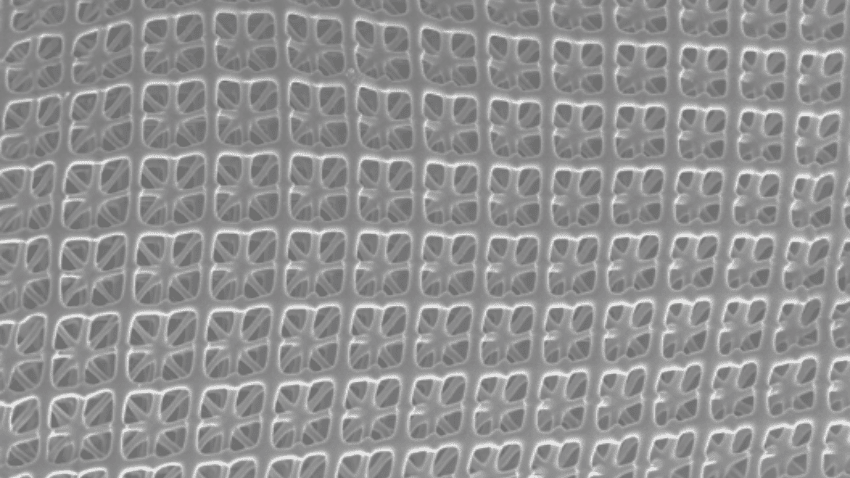
Scientists have used artificial intelligence (AI) to design never-before-seen nanomaterials with the strength of carbon steel and the lightness of styrofoam.

The new nanomaterials, made using machine learning and a 3D printer, more than doubled the strength of existing designs. The scientists behind the new study said they could be used in stronger, lighter and more fuel-efficient components for airplanes and cars. They published their findings Jan. 23 in the journal Advanced Materials.

“We hope that these new material designs will eventually lead to ultra-light weight components in aerospace applications, such as planes, helicopters and spacecraft that can reduce fuel demands during flight while maintaining safety and performance,” co-author Tobin Filleter, a professor of engineering at the University of Toronto, said in a statement. “This can ultimately help reduce the high carbon footprint of flying.”

In many materials, strength and toughness can often be at odds. Take a ceramic dinner plate, for example: while plates are usually strong and can carry heavy loads, their strength comes at the cost of toughness — it doesn’t take much energy to make them shatter.

Related: Scientists discover revolutionary method that makes fuel from water and sunlight — but it’s not finished yet

The same problem applies to nano-architectured materials, whose construction from multitudes of tiny, repeating building blocks 1/100th the thickness of a human hair makes them strong and stiff for their weight, but can also cause stress concentrations that lead to sudden breakages. So far, this tendency to shatter has limited the materials’ applications.

“As I thought about this challenge, I realized that it is a perfect problem for machine learning to tackle,” first-author Peter Serles, an engineering researcher at Caltech, said in the statement.

Get the world’s most fascinating discoveries delivered straight to your inbox.

To search for better ways to design nanomaterials, the researchers simulated possible geometries for their design before passing them through a machine learning algorithm. By learning from the designs they had generated, the algorithm was able to predict the best shapes that would evenly distribute applied stresses while also carrying a heavy load.

With these shapes in hand, the researchers used a 3D printer to create their new nanolattices, finding that they could withstand a stress of 2.03 megapascals for every cubic meter per kilogram — a strength five times higher than titanium.

“This is the first time machine learning has been applied to optimize nano-architected materials, and we were shocked by the improvements,” Serles said. “It didn’t just replicate successful geometries from the training data; it learned from what changes to the shapes worked and what didn’t, enabling it to predict entirely new lattice geometries.”

The researchers said their next steps will center on scaling up the materials until they can be used to make bigger components, while also searching for even better designs using their process. The primary aim is to design much lighter and stronger components for vehicles in the future.

“For example, if you were to replace components made of titanium on a plane with this material, you would be looking at fuel savings of 80 litres per year for every kilogram of material you replace,” Serles said.

Source link

Share. Facebook Twitter Pinterest LinkedIn Tumblr Email
Previous ArticleBlackburn 2-1 Preston
Next Article Deadly Eaton and Palisades fires 100% contained after 24 days
Editor
  • Website

Related Posts

Lifestyle

A physicist built a ‘mini-universe’ out of ultracold atoms and watched time being born inside it.

July 7, 2026
Lifestyle

Are CAPTCHAs obsolete in the age of AI?

July 7, 2026
Lifestyle

Colorful ‘painting-like’ ripples cover an ancient seafloor structure the Bahamas — Earth from space

July 7, 2026
Add A Comment

Comments are closed.

Categories
  • Entertainment
  • Lifestyle
  • News
  • Sports
  • Tech
  • Travel
Recent Posts
  • A physicist built a ‘mini-universe’ out of ultracold atoms and watched time being born inside it.
  • Are CAPTCHAs obsolete in the age of AI?
  • Colorful ‘painting-like’ ripples cover an ancient seafloor structure the Bahamas — Earth from space
  • First experiment to thicken Arctic ice with seawater shows promise — but there’s a big catch
  • Heart issues tied to ‘microdamage’ in the brain might raise risk of memory loss, study hints
calendar
July 2026
M T W T F S S
 12345
6789101112
13141516171819
20212223242526
2728293031  
« Jun    
Recent Posts
  • A physicist built a ‘mini-universe’ out of ultracold atoms and watched time being born inside it.
  • Are CAPTCHAs obsolete in the age of AI?
  • Colorful ‘painting-like’ ripples cover an ancient seafloor structure the Bahamas — Earth from space
About

Welcome to Baynard Media, your trusted source for a diverse range of news and insights. We are committed to delivering timely, reliable, and thought-provoking content that keeps you informed
and inspired

Categories
  • Entertainment
  • Lifestyle
  • News
  • Sports
  • Tech
  • Travel
Facebook X (Twitter) Pinterest WhatsApp
  • Contact Us
  • About Us
  • Privacy Policy
  • Disclaimer
  • UNSUBSCRIBE
© 2026 copyrights reserved

Type above and press Enter to search. Press Esc to cancel.