Close Menu
  • Home
  • UNSUBSCRIBE
  • News
  • Lifestyle
  • Tech
  • Entertainment
  • Sports
  • Travel
Facebook X (Twitter) WhatsApp
Trending
  • Artemis moon landing could face long delay while NASA waits for next-generation spacesuits
  • NASA’s Curiosity rover finds a surprising number of giant ‘dragon scales’ littered across Mars
  • Diagnostic dilemma: A teen’s classic diabetes symptoms didn’t improve with treatment — revealing she also had a much rarer syndrome
  • Strange mammal ancestor laid huge, leathery eggs —‬ and it was key to surviving the world’s worst mass extinction
  • Ancient process that created rare earth elements discovered — and it could help us locate desperately needed deposits
  • This humanoid robot does all your housework for you ‪—‬ and its makers say it’s ready for your home
  • ‘Nations need to prepare now’: Key Atlantic ocean current is much closer to collapse than scientists thought
  • Neanderthal toddlers grew faster than modern humans, probably because of the harsh environment they evolved in
Facebook X (Twitter) WhatsApp
Baynard Media
  • Home
  • UNSUBSCRIBE
  • News
  • Lifestyle
  • Tech
  • Entertainment
  • Sports
  • Travel
Baynard Media
Home»Lifestyle»New laser-based artificial neuron processes enormous data sets at high speed
Lifestyle

New laser-based artificial neuron processes enormous data sets at high speed

EditorBy EditorFebruary 4, 2025No Comments3 Mins Read
Share Facebook Twitter Pinterest LinkedIn Tumblr Reddit Telegram Email
Share
Facebook Twitter LinkedIn Pinterest Email

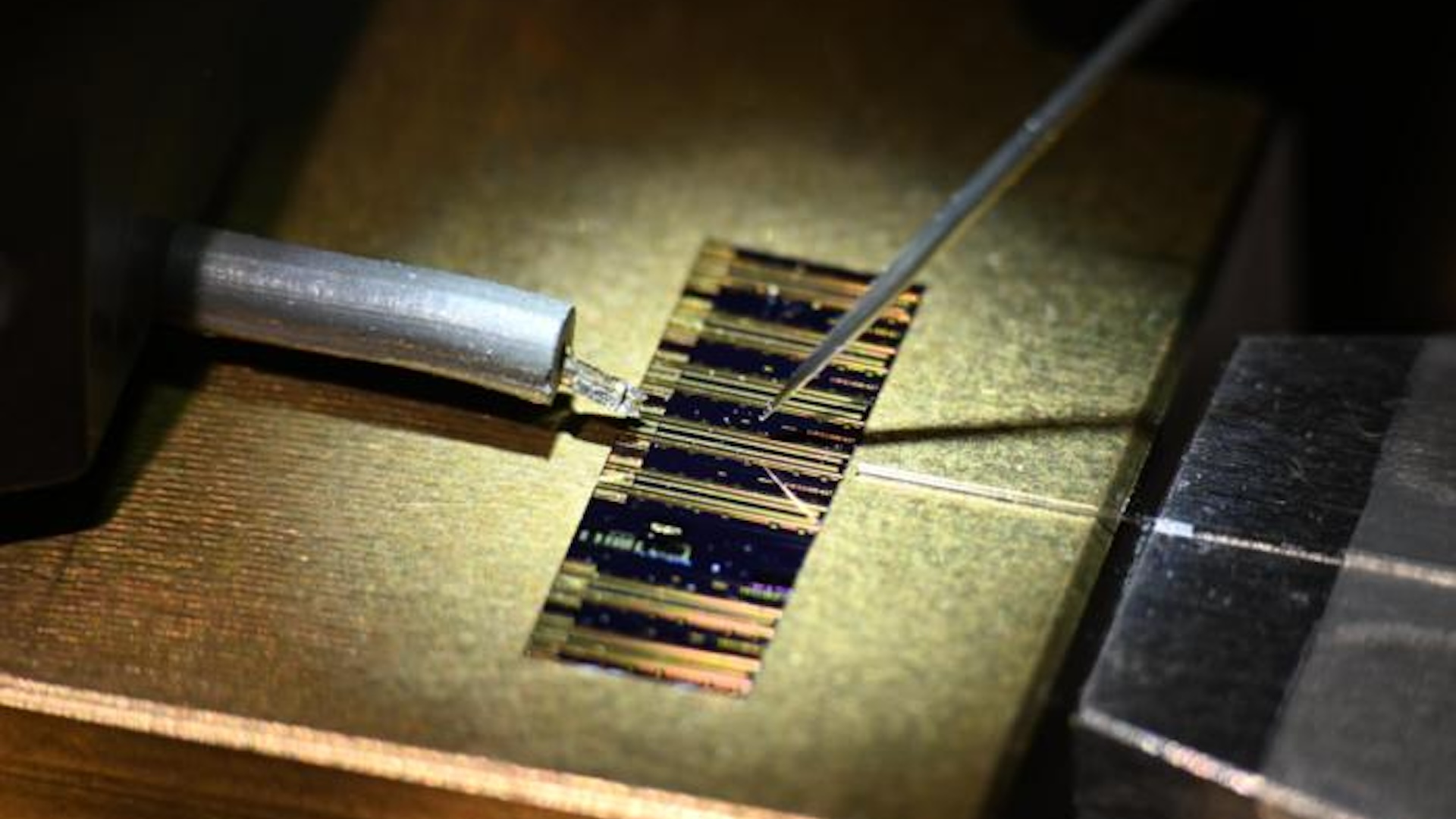
Scientists have developed a new kind of laser-based artificial neuron that mimics a biological nerve cell. This artificial neuron could boost high-speed computing and artificial intelligence (AI), researchers say.

Artificial neurons mimic nerve cells by activating once they hit a certain information threshold. When a biological neuron takes in enough of the right type of information, it generates an electrical pulse to communicate with nearby neurons. Similarly, artificial neurons process and transmit computational information only once they take in a certain amount of relevant electronic data.

Existing artificial neurons, which are known as photonic spiking neurons, mimic biological spiking neurons by responding to these input signals with all-or-nothing, on-and-off spikes. But the way in which the neurons receive those input signals means that, for a short time after each spike, they cannot respond to new inputs. This brief reset period puts a speed limit on computations performed with artificial spiking neurons.

But the new artificial neurons transmit information via “graded” signals with variable intensity. In the new study, published Dec. 19, 2024 in the journal Optica, researchers used a graded neuron system to surpass spiking neurons’ speed limit. Much like a biological graded or “non-spiking” neuron, the laser-based system generated increasingly strong output signals in response to consecutive stimuli, so it didn’t need the same reset period as the spiking neurons. As a result, the new artificial neuron transmitted data up to 100,000 times faster than artificial spiking neurons.

The researchers incorporated the graded neuron into a reservoir computing system — a type of artificial neural network which processes time-dependent data. They used this system to scan 700 heartbeat samples for arrhythmia. The reservoir processed these heartbeats at a speed of 100 million heartbeats per second — much faster that spiking neural networks can. The new system detected arrhythmic patterns with more than 98% accuracy. In a separate experiment, the system analyzed and classified handwritten numbers at a rate of nearly 35 million digits per second with 92% accuracy.

“With powerful memory effects and excellent information processing capabilities, a single laser graded neuron can behave like a small neural network,” study co-author Chaoran Huang, an engineer at the Chinese University of Hong Kong, said in a statement. “Therefore, even a single laser graded neuron without additional complex connections can perform machine learning tasks with high performance.”

Connecting multiple graded neurons could offer even greater computing power. “In this work, we used a single laser graded neuron, but we believe that cascading multiple laser graded neurons will further unlock their potential, just as the brain has billions of neurons working together in networks,” Huang said.

Get the world’s most fascinating discoveries delivered straight to your inbox.

“Our technology could accelerate AI decision-making in time-critical applications while maintaining high accuracy,” Huang added. “We hope the integration of our technology into edge computing devices — which process data near its source — will facilitate faster and smarter AI systems that better serve real-world applications with reduced energy consumption in the future.”

Source link

Share. Facebook Twitter Pinterest LinkedIn Tumblr Email
Previous ArticleNathan Aspinall: I have ‘nothing to prove’ in Premier League | Darts News
Next Article Best Beats Studio Buds deal: Save $50 on these noise-canceling wireless earbuds
Editor
  • Website

Related Posts

Lifestyle

Artemis moon landing could face long delay while NASA waits for next-generation spacesuits

April 22, 2026
Lifestyle

NASA’s Curiosity rover finds a surprising number of giant ‘dragon scales’ littered across Mars

April 22, 2026
Lifestyle

Diagnostic dilemma: A teen’s classic diabetes symptoms didn’t improve with treatment — revealing she also had a much rarer syndrome

April 22, 2026
Add A Comment

Comments are closed.

Categories
  • Entertainment
  • Lifestyle
  • News
  • Sports
  • Tech
  • Travel
Recent Posts
  • Artemis moon landing could face long delay while NASA waits for next-generation spacesuits
  • NASA’s Curiosity rover finds a surprising number of giant ‘dragon scales’ littered across Mars
  • Diagnostic dilemma: A teen’s classic diabetes symptoms didn’t improve with treatment — revealing she also had a much rarer syndrome
  • Strange mammal ancestor laid huge, leathery eggs —‬ and it was key to surviving the world’s worst mass extinction
  • Ancient process that created rare earth elements discovered — and it could help us locate desperately needed deposits
calendar
April 2026
M T W T F S S
 12345
6789101112
13141516171819
20212223242526
27282930  
« Mar    
Recent Posts
  • Artemis moon landing could face long delay while NASA waits for next-generation spacesuits
  • NASA’s Curiosity rover finds a surprising number of giant ‘dragon scales’ littered across Mars
  • Diagnostic dilemma: A teen’s classic diabetes symptoms didn’t improve with treatment — revealing she also had a much rarer syndrome
About

Welcome to Baynard Media, your trusted source for a diverse range of news and insights. We are committed to delivering timely, reliable, and thought-provoking content that keeps you informed
and inspired

Categories
  • Entertainment
  • Lifestyle
  • News
  • Sports
  • Tech
  • Travel
Facebook X (Twitter) Pinterest WhatsApp
  • Contact Us
  • About Us
  • Privacy Policy
  • Disclaimer
  • UNSUBSCRIBE
© 2026 copyrights reserved

Type above and press Enter to search. Press Esc to cancel.