Close Menu
  • Home
  • UNSUBSCRIBE
  • News
  • Lifestyle
  • Tech
  • Entertainment
  • Sports
  • Travel
Facebook X (Twitter) WhatsApp
Trending
  • New robotic heart mimics common, mysterious condition to help researchers study it
  • Canon EOS R6 III review: A wildlife wonder
  • Medieval babies and adults buried together in Sweden were not related, archaeologists discover — raising big questions about early Christian burial practices
  • NASA is creating a fifth state of matter on the ISS, thanks to an upgrade to a mini-fridge-sized quantum lab
  • New sodium metal battery design charges in just 4 minutes and retains its capacity for years
  • Quantum computing wielded to create extremely rare material critical to nuclear fusion
  • Scientists build tiny ‘diving suit’ for cockroaches, turning them into search-and-rescue cyborgs
  • Physicists develop the first working model of quantum mechanics using only ‘real’ numbers
Facebook X (Twitter) WhatsApp
Baynard Media
  • Home
  • UNSUBSCRIBE
  • News
  • Lifestyle
  • Tech
  • Entertainment
  • Sports
  • Travel
Baynard Media
Home»Lifestyle»New brain implant can decode a person’s ‘inner monologue’
Lifestyle

New brain implant can decode a person’s ‘inner monologue’

EditorBy EditorAugust 19, 2025No Comments3 Mins Read
Share Facebook Twitter Pinterest LinkedIn Tumblr Reddit Telegram Email
Share
Facebook Twitter LinkedIn Pinterest Email

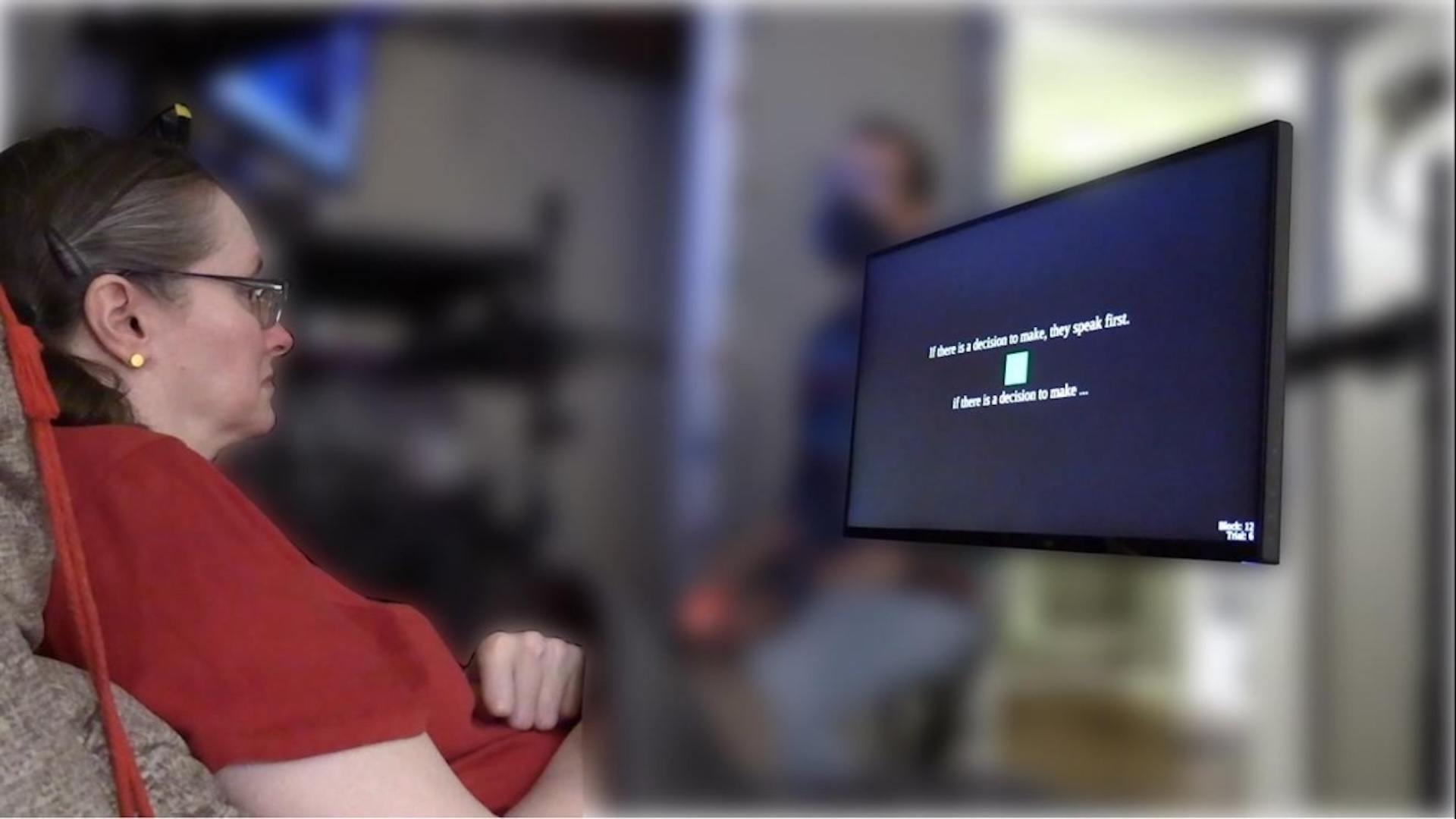
Scientists have developed a brain-computer interface that can capture and decode a person’s inner monologue.

The results could help people who are unable to speak communicate more easily with others. Unlike some previous systems, the new brain-computer interface does not require people to attempt to physically speak. Instead, they just have to think what they want to say.

“This is the first time we’ve managed to understand what brain activity looks like when you just think about speaking,” study co-author Erin Kunz, an electrical engineer at Stanford University, said in a statement. “For people with severe speech and motor impairments, [brain-computer interfaces] capable of decoding inner speech could help them communicate much more easily and more naturally.”


You may like

Brain-computer interfaces (BCIs) allow people who are paralyzed to use their thoughts to control assistive devices, such as prosthetic hands, or to communicate with others. Some systems involve implanting electrodes in a person’s brain, while others use MRI to observe brain activity and relate it to thoughts or actions.

But many BCIs that help people communicate require a person to physically attempt to speak in order to interpret what they want to say. This process can be tiring for people who have limited muscle control. Researchers in the new study wondered if they could instead decode inner speech.

In the new study, published Aug. 14 in the journal Cell, Kunz and her colleagues worked with four people who were paralyzed by either a stroke or amyotrophic lateral sclerosis (ALS), a degenerative disease that affects the nerve cells that help control muscles. The participants had electrodes implanted in their brains as part of a clinical trial for controlling assistive devices with thoughts. The researchers trained artificial intelligence models to decode inner speech and attempted speech from electrical signals picked up by the electrodes in the participants’ brains.

The models decoded sentences that participants internally “spoke” in their minds with up to 74% accuracy, the team found. They also picked up on a person’s natural inner speech during tasks that required it, such as remembering the order of a series of arrows pointing in different directions.

Get the world’s most fascinating discoveries delivered straight to your inbox.

Inner speech and attempted speech produced similar patterns of brain activity in the brain’s motor cortex, which controls movement, but inner speech produced weaker activity overall.

One ethical dilemma with BCIs is that they could potentially decode people’s private thoughts rather than what they intended to say aloud. The differences in brain signals between attempted and inner speech suggest that future brain-computer interfaces could be trained to ignore inner speech entirely, study co-author Frank Willett, an assistant professor of neurosurgery at Stanford, said in the statement.

As an additional safeguard against the current system unintentionally decoding a person’s private inner speech, the team developed a password-protected BCI. Participants could use attempted speech to communicate at any time, but the interface started decoding inner speech only after they spoke the passphrase “chitty chitty bang bang” in their minds.

Though the BCI wasn’t able to decode complete sentences when a person wasn’t explicitly thinking in words, advanced devices may be able to do so in the future, the researchers wrote in the study.

“The future of BCIs is bright,” Willett said in the statement. “This work gives real hope that speech BCIs can one day restore communication that is as fluent, natural, and comfortable as conversational speech.”

Source link

Share. Facebook Twitter Pinterest LinkedIn Tumblr Email
Previous ArticleTrump pledges no US troops in Ukraine, teases Putin-Zelenskyy meeting
Next Article Senior mediator spells out Gaza ceasefire proposal agreed to by Hamas, Israel yet to respond
Editor
  • Website

Related Posts

Lifestyle

New robotic heart mimics common, mysterious condition to help researchers study it

July 11, 2026
Lifestyle

Canon EOS R6 III review: A wildlife wonder

July 10, 2026
Lifestyle

Medieval babies and adults buried together in Sweden were not related, archaeologists discover — raising big questions about early Christian burial practices

July 10, 2026
Add A Comment

Comments are closed.

Categories
  • Entertainment
  • Lifestyle
  • News
  • Sports
  • Tech
  • Travel
Recent Posts
  • New robotic heart mimics common, mysterious condition to help researchers study it
  • Canon EOS R6 III review: A wildlife wonder
  • Medieval babies and adults buried together in Sweden were not related, archaeologists discover — raising big questions about early Christian burial practices
  • NASA is creating a fifth state of matter on the ISS, thanks to an upgrade to a mini-fridge-sized quantum lab
  • New sodium metal battery design charges in just 4 minutes and retains its capacity for years
calendar
July 2026
M T W T F S S
 12345
6789101112
13141516171819
20212223242526
2728293031  
« Jun    
Recent Posts
  • New robotic heart mimics common, mysterious condition to help researchers study it
  • Canon EOS R6 III review: A wildlife wonder
  • Medieval babies and adults buried together in Sweden were not related, archaeologists discover — raising big questions about early Christian burial practices
About

Welcome to Baynard Media, your trusted source for a diverse range of news and insights. We are committed to delivering timely, reliable, and thought-provoking content that keeps you informed
and inspired

Categories
  • Entertainment
  • Lifestyle
  • News
  • Sports
  • Tech
  • Travel
Facebook X (Twitter) Pinterest WhatsApp
  • Contact Us
  • About Us
  • Privacy Policy
  • Disclaimer
  • UNSUBSCRIBE
© 2026 copyrights reserved

Type above and press Enter to search. Press Esc to cancel.