Close Menu
  • Home
  • UNSUBSCRIBE
  • News
  • Lifestyle
  • Tech
  • Entertainment
  • Sports
  • Travel
Facebook X (Twitter) WhatsApp
Trending
  • Do you really have to wash rice before you cook it?
  • Neuroscientists are searching for the ‘cellular substrate of loneliness’
  • Bow-Wow, Ding-Dong, Pooh-Pooh: Expert explains early theories of how human language evolved — and their silly names
  • Famous child mummies in Andes may belong to kids who were sacrificed to ‘ritually anchor’ the Inca’s presence as their empire expanded
  • Artemis II crew captures rare double auroras on the dark side of Earth as they zoom toward the moon — Space photo of the week
  • Has all the water on Earth been peed before?
  • ‘This might be the point of no return’: Experts on the current measles outbreak and where we go from here
  • NASA’s experimental X-59 jet breaks sound barrier for 1st time in step toward ‘quiet supersonic’ technology
Facebook X (Twitter) WhatsApp
Baynard Media
  • Home
  • UNSUBSCRIBE
  • News
  • Lifestyle
  • Tech
  • Entertainment
  • Sports
  • Travel
Baynard Media
Home»Lifestyle»Never-before-seen ‘extreme’ microbes surrounded NASA robot before it was sent to Mars 18 years ago, new study reveals
Lifestyle

Never-before-seen ‘extreme’ microbes surrounded NASA robot before it was sent to Mars 18 years ago, new study reveals

EditorBy EditorMay 22, 2025No Comments4 Mins Read
Share Facebook Twitter Pinterest LinkedIn Tumblr Reddit Telegram Email
Share
Facebook Twitter LinkedIn Pinterest Email

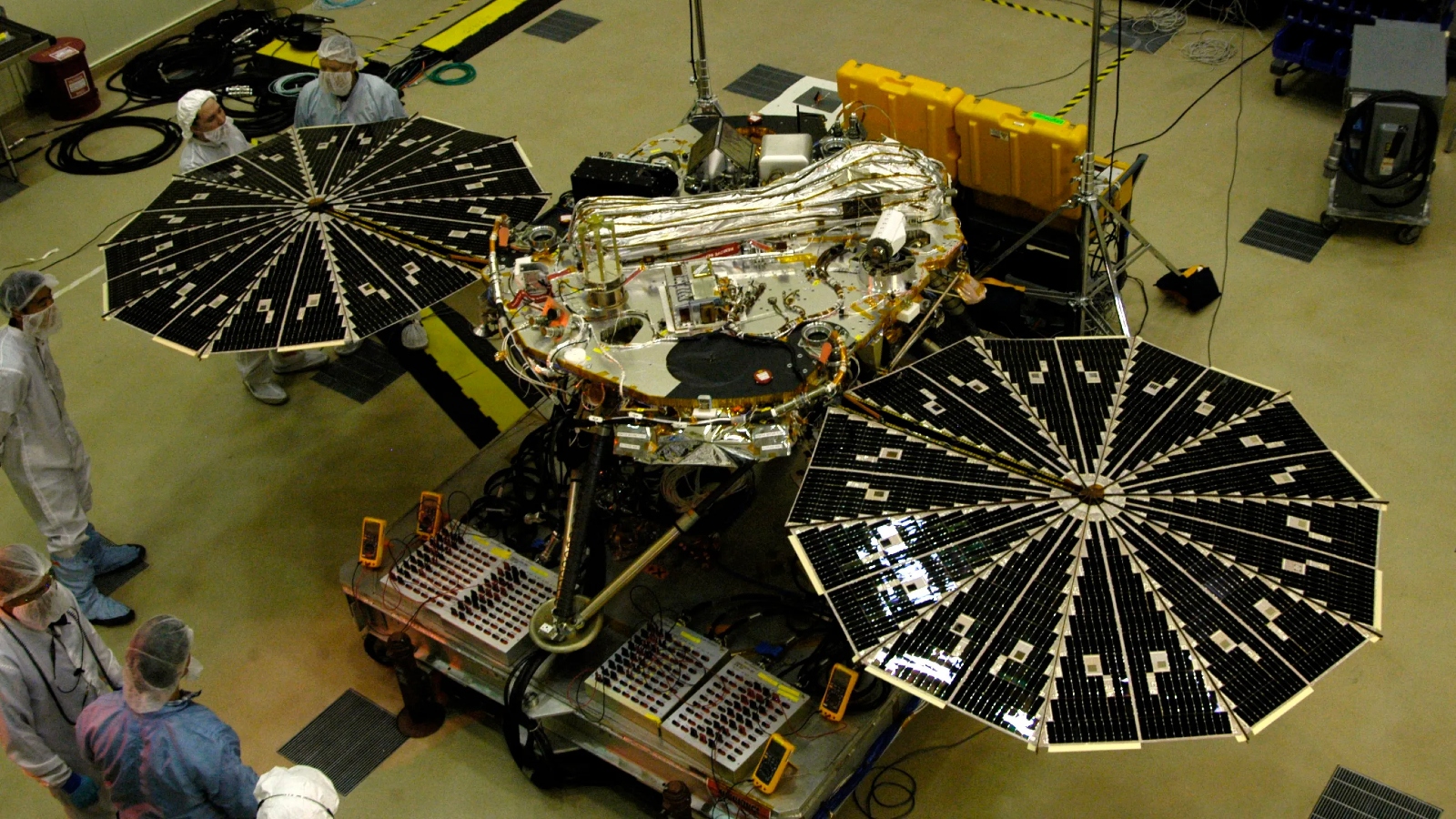
Dozens of never-before-seen species of “extremophile” bacteria were hiding in a NASA clean room used to quarantine a Mars lander before it was successfully launched to the Red Planet more than 17 years ago, a new study reveals.

Some of the hardy microbes may be capable of surviving the vacuum of space. However, there is no evidence that the spacecraft or Mars were contaminated.

NASA’s Phoenix Mars lander touched down on the Red Planet on May 25, 2008, and spent 161 days (156 Martian days) collecting a variety of data, before suddenly going offline. Around 10 months before arriving on Mars, the lander spent several days inside a clean room at the Payload Hazardous Servicing Facility at Kennedy Space Center in Florida, before being launched from neighboring Cape Canaveral Space Force Station (then known as Cape Canaveral Air Force Station) on Aug. 4, 2007, according to Live Science’s sister site Space.com.


You may like

Clean rooms are spaces where spacecraft and their payloads are quarantined before launches and upon reentry to Earth, in order to prevent environmental contamination by microbes and keep them free of potentially damaging particles, according to NASA. These spaces are sterilized, pressurized, constantly vacuumed and supplied with air via special filters that keep out 99.97% of all airborne particles. Anybody entering the room must wear an all-in-one “bunny suit” and have an air shower before entering.

But all of these measures still can’t keep everything out. When researchers reanalyzed samples collected from the Phoenix lander clean room before, during and after the spacecraft was quarantined there, they found DNA from 26 novel species of bacteria. The team reported their findings in a study published May 12 in the journal Microbiome.

Related: Alien organisms could hitch a ride on our spacecraft and contaminate Earth, scientists warn

Electron microscopy of several of the newly discovered microbes

The newly described species all have genes that allow them to survive in extreme environments, such as the vacuum of space. (Image credit: Schulz et al. 2025)

Most of the newly described microbes displayed at least some characteristics that made them resistant to harsh environmental conditions, such as extreme temperatures, pressures and levels of radiation. Some had genes associated with DNA repair, detoxification of harmful molecules, and improved metabolism, and may even be able to survive the vacuum of space, the researchers wrote.

Get the world’s most fascinating discoveries delivered straight to your inbox.

“Our study aimed to understand the risk of extremophiles being transferred in space missions and to identify which microorganisms might survive the harsh conditions of space,” study co-author Alexandre Rosado, a microbiologist at the King Abdullah University of Science and Technology in Saudi Arabia, said in a statement. “This effort is pivotal for monitoring the risk of microbial contamination and safeguarding against unintentional colonization of exploring planets.”

Side by side photos of people in suits hoovering a floor and scanning for microbes

Clean rooms have to be constantly cleaned to reduce the number of microbes in them. However, it is impossible to keep everything out. (Image credit: NASA)

The newly described species made up just under a quarter of all the species identified in the room, most of which also had extremophile properties. This suggests spacecraft clean rooms could be an excellent place to search for more of these hardy microbes.

Finding new extremophiles is important because it can help researchers predict what potential extraterrestrial microbes might look like and how we can prevent them from contaminating Earth. Some of them also produce substances, such as biofilms, that have potential applications in medicine, food preservation and biotechnologies.

“Together, we are unraveling the mysteries of microbes that withstand the extreme conditions of space — organisms with the potential to revolutionize the life sciences, bioengineering, and interplanetary exploration,” study co-author Kasthuri Venkateswaran, a retired senior research scientist at NASA’s Jet Propulsion Laboratory, said in the statement.

Source link

Share. Facebook Twitter Pinterest LinkedIn Tumblr Email
Previous ArticleAmazon’s new warehouse robot has a ‘sense of touch’ that could see it replace human workers
Next Article Get a huge saving in this Peacock Memorial Day weekend streaming deal and pay just $24.99 for 12 months
Editor
  • Website

Related Posts

Lifestyle

Do you really have to wash rice before you cook it?

June 15, 2026
Lifestyle

Neuroscientists are searching for the ‘cellular substrate of loneliness’

June 14, 2026
Lifestyle

Bow-Wow, Ding-Dong, Pooh-Pooh: Expert explains early theories of how human language evolved — and their silly names

June 14, 2026
Add A Comment

Comments are closed.

Categories
  • Entertainment
  • Lifestyle
  • News
  • Sports
  • Tech
  • Travel
Recent Posts
  • Do you really have to wash rice before you cook it?
  • Neuroscientists are searching for the ‘cellular substrate of loneliness’
  • Bow-Wow, Ding-Dong, Pooh-Pooh: Expert explains early theories of how human language evolved — and their silly names
  • Famous child mummies in Andes may belong to kids who were sacrificed to ‘ritually anchor’ the Inca’s presence as their empire expanded
  • Artemis II crew captures rare double auroras on the dark side of Earth as they zoom toward the moon — Space photo of the week
calendar
June 2026
M T W T F S S
1234567
891011121314
15161718192021
22232425262728
2930  
« May    
Recent Posts
  • Do you really have to wash rice before you cook it?
  • Neuroscientists are searching for the ‘cellular substrate of loneliness’
  • Bow-Wow, Ding-Dong, Pooh-Pooh: Expert explains early theories of how human language evolved — and their silly names
About

Welcome to Baynard Media, your trusted source for a diverse range of news and insights. We are committed to delivering timely, reliable, and thought-provoking content that keeps you informed
and inspired

Categories
  • Entertainment
  • Lifestyle
  • News
  • Sports
  • Tech
  • Travel
Facebook X (Twitter) Pinterest WhatsApp
  • Contact Us
  • About Us
  • Privacy Policy
  • Disclaimer
  • UNSUBSCRIBE
© 2026 copyrights reserved

Type above and press Enter to search. Press Esc to cancel.