Close Menu
  • Home
  • UNSUBSCRIBE
  • News
  • Lifestyle
  • Tech
  • Entertainment
  • Sports
  • Travel
Facebook X (Twitter) WhatsApp
Trending
  • Birds in cities appear to dislike men less than women, and experts have no idea why
  • ‘One of the most rapid transitions that I’ve seen’: NOAA forecaster on how this year’s El Niño could shatter records
  • May’s Flower ‘micromoon’ will look extra small tonight, with a rare Blue Moon following
  • ‘If astrological compatibility exists, its effects should be observable’: TL;DR — it’s not
  • Humanoid robots have outpaced human runners in the half-marathon, beating the world record ‪—‬ here are the secrets to this astonishing feat
  • Google AI breakthrough means chatbots use six times less memory during conversations without compromising performance
  • ZWO Seestar S30 Pro smart telescope review
  • Doctors partially delivered a baby at 25 weeks to perform a lifesaving surgery and then returned him to the womb
Facebook X (Twitter) WhatsApp
Baynard Media
  • Home
  • UNSUBSCRIBE
  • News
  • Lifestyle
  • Tech
  • Entertainment
  • Sports
  • Travel
Baynard Media
Home»Lifestyle»NASA’s Hubble telescope reveals most detailed photos of interstellar visitor 3I/ATLAS to date
Lifestyle

NASA’s Hubble telescope reveals most detailed photos of interstellar visitor 3I/ATLAS to date

EditorBy EditorAugust 8, 2025No Comments3 Mins Read
Share Facebook Twitter Pinterest LinkedIn Tumblr Reddit Telegram Email
Share
Facebook Twitter LinkedIn Pinterest Email

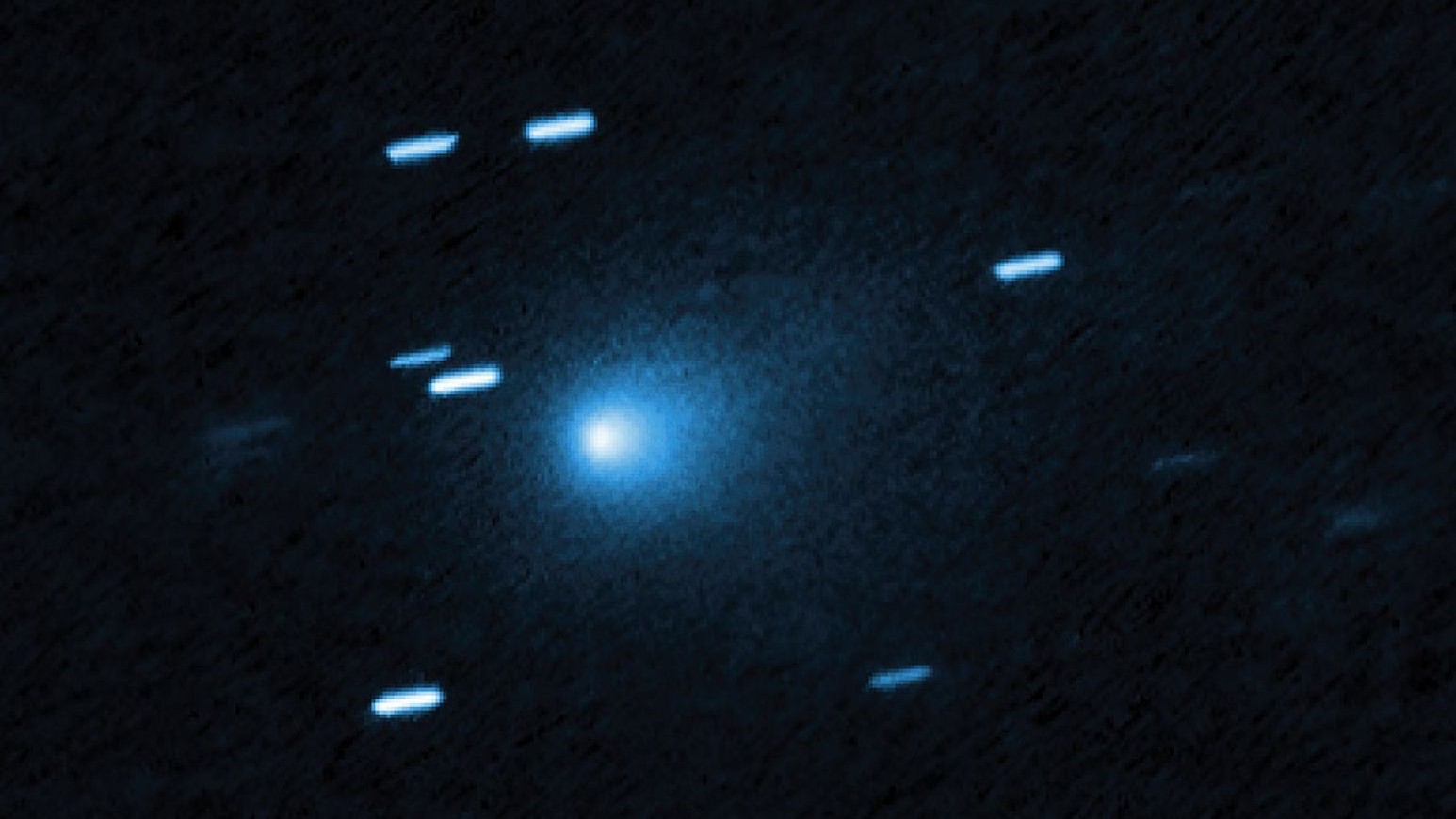
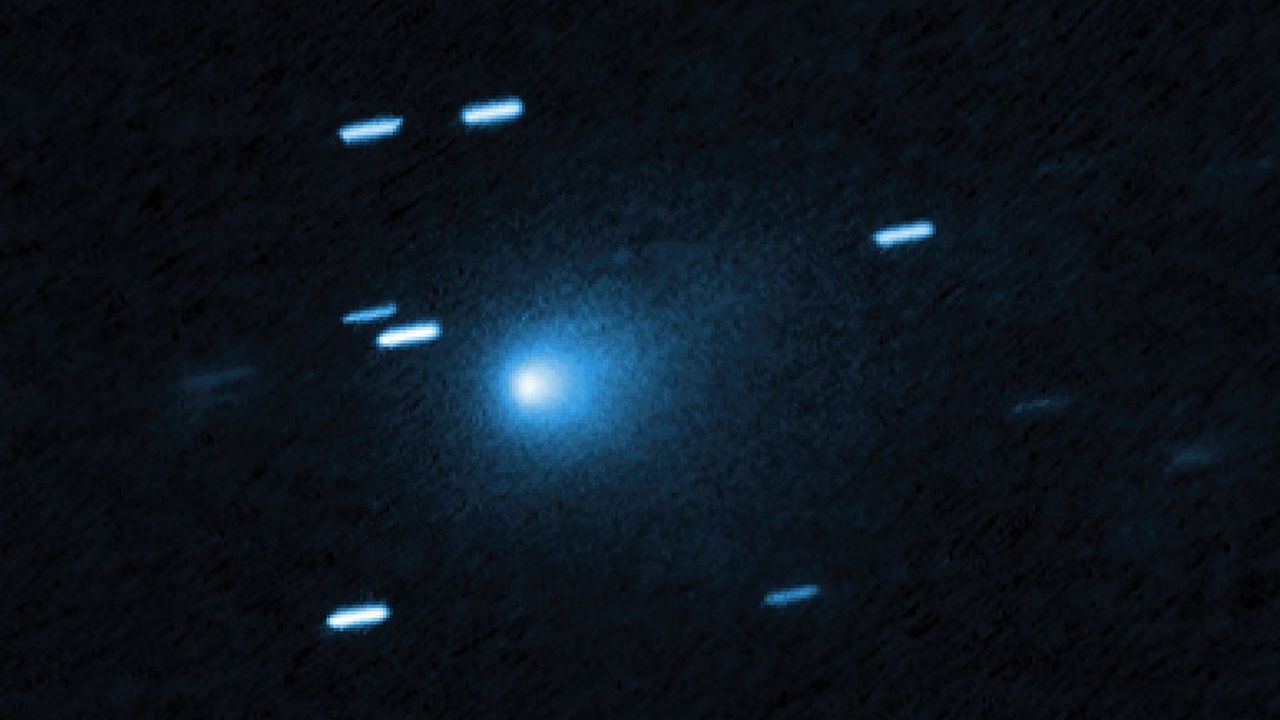
NASA has revealed the most detailed images yet taken of comet 3I/ATLAS, the interstellar visitor that is currently barreling its way through our solar system.

The images, taken by NASA’s Hubble Space Telescope, have enabled astronomers to more accurately estimate the space object’s size — and it looks like it’s smaller than we thought, NASA said in a statement.

3I/ATLAS was first discovered on July 1, and the next day it was confirmed by NASA to have originated from outside of our solar system. The extrasolar entity is hurtling toward the inner solar system at speeds of more than 130,000 mph (210,000 km/h) and is expected to reach its closest point to the sun in late October. (The object poses no threat to us, and will be on the far side of the sun during its close approach).


You may like

It is only the third such interstellar object to have been detected in our solar system, and astronomers are still scratching their heads as to where it came from and what it is made of.

“No one knows where the comet came from,” David Jewitt, an astronomer at UCLA and science team leader for the Hubble observations, said in the statement. “It’s like glimpsing a rifle bullet for a thousandth of a second. You can’t project that back with any accuracy to figure out where it started on its path.”

Related: 3I/ATLAS: Everything you need to know about the new ‘interstellar visitor’ shooting through the solar system

At the end of July, the newly operational Vera C. Rubin Observatory estimated that the alien comet was roughly 7 miles (11.2 kilometers) wide across its icy nucleus. Now, Hubble’s images have suggested that the nucleus is probably closer to a maximum of 3.5 miles (5.6 km) across, which would still make it the largest interstellar object ever spotted. On the low end, NASA estimates the comet to be no smaller than 1,000 feet (320 meters) across — but planned observations with the James Webb Space Telescope and other NASA observatories will further hone these numbers as the comet gets closer over the coming months.

Get the world’s most fascinating discoveries delivered straight to your inbox.

The two other known interstellar objects that have blown through our solar system are 1I/’Oumuamua, which was discovered in 2017, and 2I/Borisov, which was spotted in 2019. ‘Oumuamua, an asteroid, is believed to have been around 0.2 miles (0.4 km) wide), while Comet Borisov has a nucleus measuring roughly 0.6 miles (1 km) wide — making both significantly smaller than the upper estimates for 3I/ATLAS.

Researchers hope that by studying these alien objects we can learn more about distant star systems and the characteristics of the exoplanets that orbit within them.

“Each one of these ISOs [interstellar objects] is a little piece of low-hanging fruit from a tree that can tell us a great deal about the trees growing in some other neighborhood,” Wes Fraser, an astronomer with National Research Council Canada, previously told Live Science.

Source link

Share. Facebook Twitter Pinterest LinkedIn Tumblr Email
Previous ArticleClear labeling on fruits and vegetables with coatings sold to Americans focus of new bill
Next Article Astronaut Jim Lovell, famed Apollo 13 commander, dies at 97
Editor
  • Website

Related Posts

Lifestyle

Birds in cities appear to dislike men less than women, and experts have no idea why

May 1, 2026
Lifestyle

‘One of the most rapid transitions that I’ve seen’: NOAA forecaster on how this year’s El Niño could shatter records

May 1, 2026
Lifestyle

May’s Flower ‘micromoon’ will look extra small tonight, with a rare Blue Moon following

May 1, 2026
Add A Comment

Comments are closed.

Categories
  • Entertainment
  • Lifestyle
  • News
  • Sports
  • Tech
  • Travel
Recent Posts
  • Birds in cities appear to dislike men less than women, and experts have no idea why
  • ‘One of the most rapid transitions that I’ve seen’: NOAA forecaster on how this year’s El Niño could shatter records
  • May’s Flower ‘micromoon’ will look extra small tonight, with a rare Blue Moon following
  • ‘If astrological compatibility exists, its effects should be observable’: TL;DR — it’s not
  • Humanoid robots have outpaced human runners in the half-marathon, beating the world record ‪—‬ here are the secrets to this astonishing feat
calendar
May 2026
M T W T F S S
 123
45678910
11121314151617
18192021222324
25262728293031
« Apr    
Recent Posts
  • Birds in cities appear to dislike men less than women, and experts have no idea why
  • ‘One of the most rapid transitions that I’ve seen’: NOAA forecaster on how this year’s El Niño could shatter records
  • May’s Flower ‘micromoon’ will look extra small tonight, with a rare Blue Moon following
About

Welcome to Baynard Media, your trusted source for a diverse range of news and insights. We are committed to delivering timely, reliable, and thought-provoking content that keeps you informed
and inspired

Categories
  • Entertainment
  • Lifestyle
  • News
  • Sports
  • Tech
  • Travel
Facebook X (Twitter) Pinterest WhatsApp
  • Contact Us
  • About Us
  • Privacy Policy
  • Disclaimer
  • UNSUBSCRIBE
© 2026 copyrights reserved

Type above and press Enter to search. Press Esc to cancel.