Close Menu
  • Home
  • UNSUBSCRIBE
  • News
  • Lifestyle
  • Tech
  • Entertainment
  • Sports
  • Travel
Facebook X (Twitter) WhatsApp
Trending
  • Lemur used in ‘lemur yoga’ session dies of human herpesvirus, study finds
  • ‘A fine line between reducing stigma and trivialising conditions’: Social media, self-diagnosis and the glamorization of ADHD
  • New 2D memory device stores data on just a single electron
  • Before we ban kids from social media completely, here’s what we should try first | Jonathan Bellack and Mariana Olaizola Rosenblat
  • Scientists uncover a better way to beat ‘the bends’ — using deep-diving pigs
  • Mars may have been losing its water more than 4 billion years ago, oldest-known Martian meteorite suggests
  • ‘The lance head was still inside the pelvis’: Mass grave found in Austria may hold casualties of unknown ancient Roman battle
  • ‘Full-on berserker mode’: Archaeologists solve mystery of medieval soldiers with gruesome square holes in their skull
Facebook X (Twitter) WhatsApp
Baynard Media
  • Home
  • UNSUBSCRIBE
  • News
  • Lifestyle
  • Tech
  • Entertainment
  • Sports
  • Travel
Baynard Media
Home»Lifestyle»NASA’s daredevil solar spacecraft survives 2nd close flyby of our sun
Lifestyle

NASA’s daredevil solar spacecraft survives 2nd close flyby of our sun

EditorBy EditorApril 3, 2025No Comments3 Mins Read
Share Facebook Twitter Pinterest LinkedIn Tumblr Reddit Telegram Email
Share
Facebook Twitter LinkedIn Pinterest Email

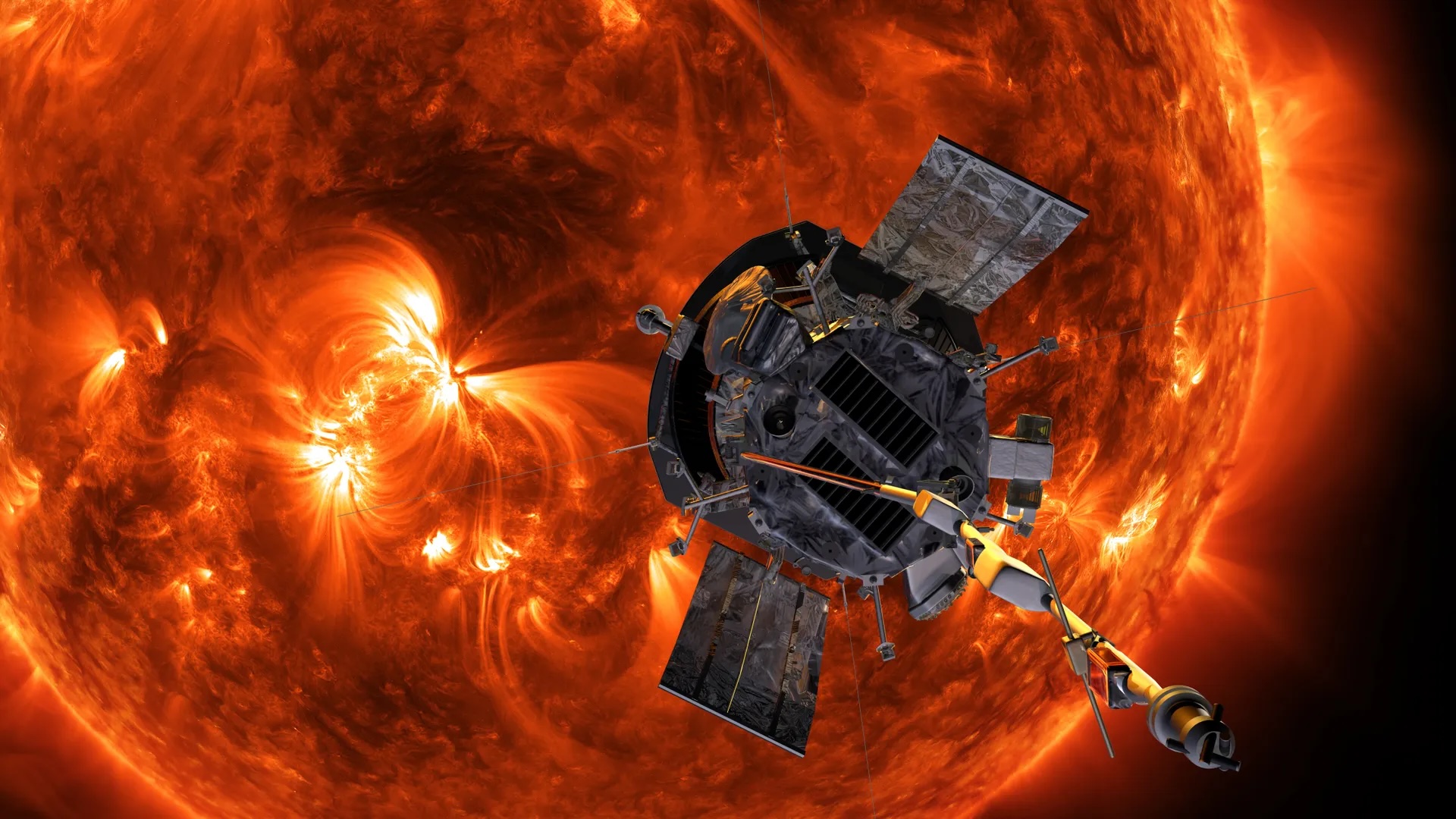
NASA’s Parker Solar Probe has successfully completed its second close flyby of the sun, the space agency announced earlier this week.

The car-sized spacecraft swooped within 3.8 million miles (6.1 million kilometers) of the sun’s surface at a whopping 430,000 miles per hour (692,000 kilometers per hour), matching the historic record it set during its encounter on Christmas Eve last year.

During this approach, which occurred on Saturday (March 22), the Parker Solar Probe once again operated autonomously, with its four science instruments programmed to collect science data about solar wind from inside the sun’s corona — the outermost layer of its atmosphere. On Tuesday (March 25), the probe beamed home a beacon tone, signaling that it was in good health and that all systems were functioning normally, NASA said in a statement.

“The flyby, the second at this distance and speed, allows the spacecraft to conduct unrivaled scientific measurements of the solar wind and related activity,” the statement reads.

Scientists hope the close-up data collected by the probe will help them better predict space weather as well as solve long-standing mysteries about our star, such as why its corona is hundreds of times hotter than its surface as it extends into space.

“This mission’s trailblazing research is rewriting the textbooks on solar science by going to a place no human-made object has ever been,” NASA acting Administrator Janet Petro said in another statement.

Good news: Parker Solar Probe phoned home! ☎️The spacecraft is in good health after its latest swing through the solar corona. On this pass, Parker matched the distance and speed records that it set during its previous solar flyby in December.https://t.co/CbRGx8uef1 pic.twitter.com/YofJEGUDf2March 25, 2025

The spacecraft’s record-setting achievements highlight the effectiveness of its custom heat shield, which safeguards the probe from the sun’s intense heat, enabling its electronics and instruments to function at room temperature — even while it faces directly toward our star to collect solar material.

Get the world’s most fascinating discoveries delivered straight to your inbox.

In recognition of the specially designed thermal protection system and other advancements in aeronautics that contributed to the spacecraft’s design, the Parker Solar Probe team — comprising engineers and scientists from NASA, the Johns Hopkins Applied Physics Laboratory in Maryland, and 40 other partner organizations nationwide — was recently honored with the 2024 Robert J. Collier Trophy annual award by the National Aeronautic Association.

Congratulations to the entire team! Parker Solar Probe operates closer to the Sun than any other spacecraft has ever ventured, at faster speeds than have ever been achieved — all to help us understand how our star affects Earth and the other planets. https://t.co/7rEVh4qKE9March 25, 2025

“This amazing team brought to life an incredibly difficult space science mission that had been studied, and determined to be impossible, for more than 60 years,” Ralph Semmel, who is the director of the Johns Hopkins Applied Physics Laboratory in Maryland, said in the statement

“They did so by solving numerous long-standing technology challenges and dramatically advancing our nation’s spaceflight capabilities.”

The Parker Solar Probe, which launched in 2018, is scheduled for one more flyby this year at approximately the same speed and distance from the sun, on June 19.

Correction 3/28: The spacecraft swooped within 3.8 million miles (6.1 million kilometers) of the sun’s surface. This article has been updated to reflect that.

Originally posted on Space.com.


Source link

Share. Facebook Twitter Pinterest LinkedIn Tumblr Email
Previous ArticleHow to choose an air purifier: Everything we have learned from years of testing.
Next Article Kids infected with measles face long-term health consequences. Vaccines can prevent all of them.
Editor
  • Website

Related Posts

Lifestyle

Lemur used in ‘lemur yoga’ session dies of human herpesvirus, study finds

August 15, 2026
Lifestyle

‘A fine line between reducing stigma and trivialising conditions’: Social media, self-diagnosis and the glamorization of ADHD

August 15, 2026
Lifestyle

New 2D memory device stores data on just a single electron

August 15, 2026
Add A Comment

Comments are closed.

Categories
  • Entertainment
  • Lifestyle
  • News
  • Sports
  • Tech
  • Travel
Recent Posts
  • Lemur used in ‘lemur yoga’ session dies of human herpesvirus, study finds
  • ‘A fine line between reducing stigma and trivialising conditions’: Social media, self-diagnosis and the glamorization of ADHD
  • New 2D memory device stores data on just a single electron
  • Before we ban kids from social media completely, here’s what we should try first | Jonathan Bellack and Mariana Olaizola Rosenblat
  • Scientists uncover a better way to beat ‘the bends’ — using deep-diving pigs
calendar
August 2026
M T W T F S S
 12
3456789
10111213141516
17181920212223
24252627282930
31  
« Jul    
Recent Posts
  • Lemur used in ‘lemur yoga’ session dies of human herpesvirus, study finds
  • ‘A fine line between reducing stigma and trivialising conditions’: Social media, self-diagnosis and the glamorization of ADHD
  • New 2D memory device stores data on just a single electron
About

Welcome to Baynard Media, your trusted source for a diverse range of news and insights. We are committed to delivering timely, reliable, and thought-provoking content that keeps you informed
and inspired

Categories
  • Entertainment
  • Lifestyle
  • News
  • Sports
  • Tech
  • Travel
Facebook X (Twitter) Pinterest WhatsApp
  • Contact Us
  • About Us
  • Privacy Policy
  • Disclaimer
  • UNSUBSCRIBE
© 2026 copyrights reserved

Type above and press Enter to search. Press Esc to cancel.