Close Menu
  • Home
  • UNSUBSCRIBE
  • News
  • Lifestyle
  • Tech
  • Entertainment
  • Sports
  • Travel
Facebook X (Twitter) WhatsApp
Trending
  • 2 rivers merged to form the Euphrates 3.6 million years ago, eventually leading to the Fertile Crescent
  • NASA confirms fireball meteor exploded over northeastern US with force of 230 tons of TNT
  • Astronauts could use lightning-like plasma jets to kill germs on the moon and Mars, demo hints
  • First whole-genome sequence of a Greenland shark holds clues to their extreme longevity
  • Heading a soccer ball just once is enough to raise levels of proteins associated with brain damage
  • OpenAI’s internal AI model just solved an 80-year-old math problem ‪—‬ and mathematicians verified it
  • Skeletal remains of Queen Elisenda, one of the most powerful rulers in medieval Europe, unearthed in Barcelona — along with several others who bore unexplained stab wounds
  • Tests that measure ‘biological age’ aren’t helpful for tracking your health, scientists say
Facebook X (Twitter) WhatsApp
Baynard Media
  • Home
  • UNSUBSCRIBE
  • News
  • Lifestyle
  • Tech
  • Entertainment
  • Sports
  • Travel
Baynard Media
Home»Lifestyle»NASA’s Curiosity rover finds a surprising number of giant ‘dragon scales’ littered across Mars
Lifestyle

NASA’s Curiosity rover finds a surprising number of giant ‘dragon scales’ littered across Mars

EditorBy EditorApril 22, 2026No Comments4 Mins Read
Share Facebook Twitter Pinterest LinkedIn Tumblr Reddit Telegram Email
Share
Facebook Twitter LinkedIn Pinterest Email

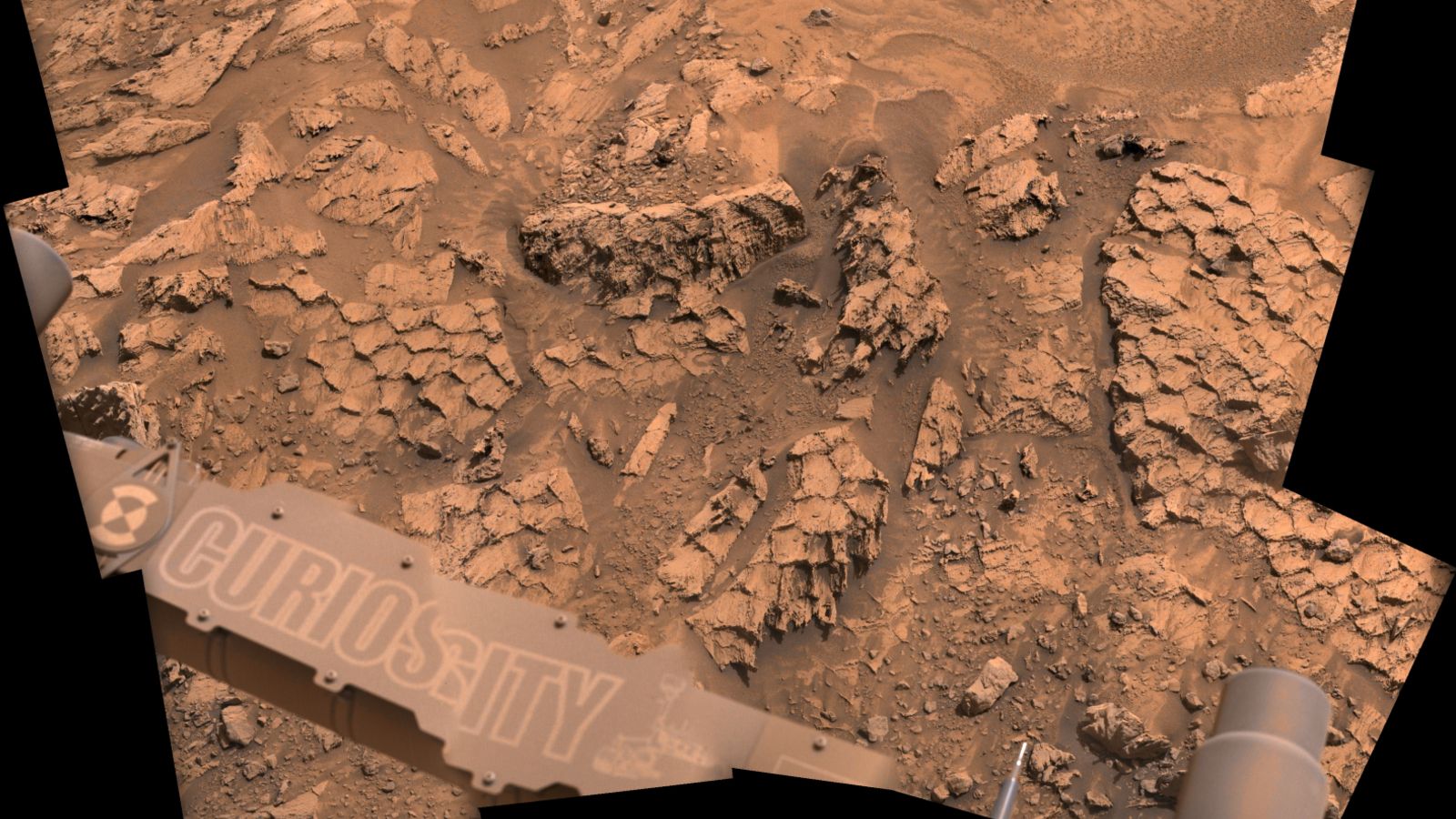
A section of Mars is covered in a surprising number of features that look like clumps of giant, fossilized reptile scales, new photos reveal. But don’t be alarmed ‪—‬ the strange structures did not originate from monstrous aliens. Instead, they may have ties to ancient water.

NASA’s Curiosity rover snapped the photos of the peculiar rocks as it was driving toward Antofagasta — a relatively young, 33-foot-wide (10 meters) impact crater located on the slopes of Mount Sharp (also called Aeolis Mons), which stands in the larger Gale crater, near Mars’ equator.

A pair of black-and-white photos of the “scales” was released by NASA April 14, while a close-up color image of the rocks was shared online the next day by Kevin M. Gill, a software and spaceflight engineer at NASA’s Jet Propulsion Laboratory (JPL) who specializes in image processing. (The pics were captured April 7 and April 13, respectively — also called Sol 4859 and Sol 4865 in Martian time.)


You may like

The unusual shape and tight clustering of these rocks have drawn comparisons to the scales of reptiles such as crocodilians, while some commenters joked that the formations look dragon-like.

It is currently unclear how many of the scale-like rocks were photographed or how large they are, but they stretched across the ground “for meters and meters,” according to an April 10 NASA blog post.
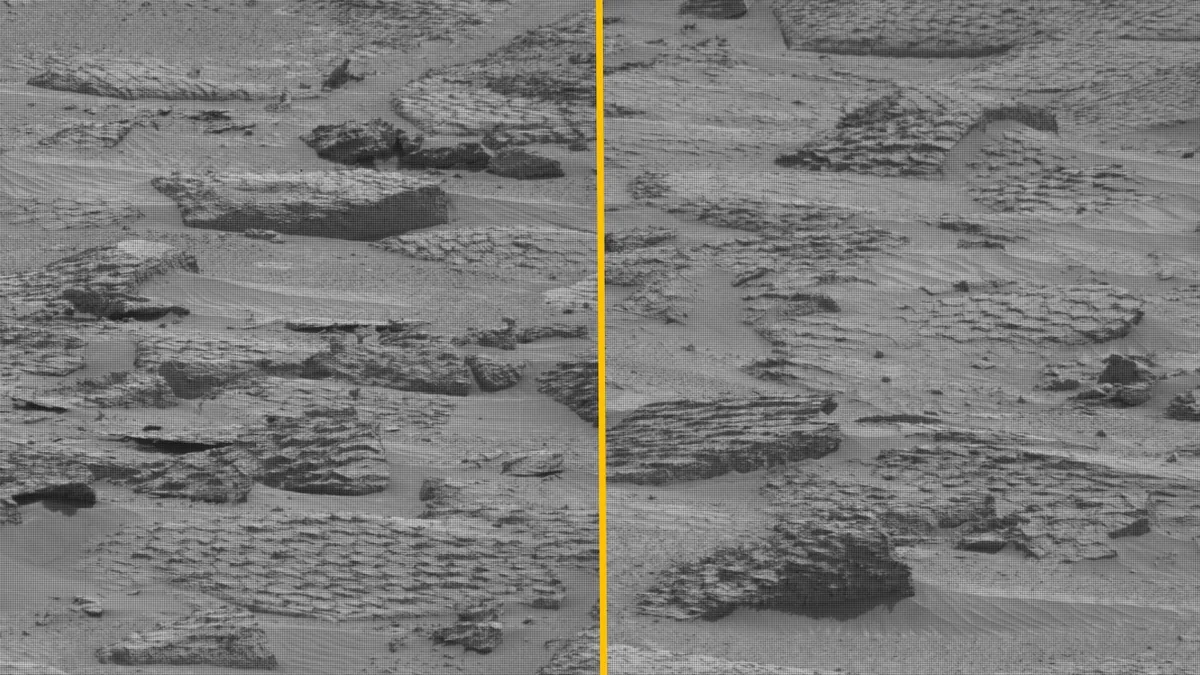
Side-by-side black and white photos of polygon covered rocks on Mars that look like giant reptile scales

Curiosity snapped several photos of the scaly rocks stretching “for meters and meters” as it drove toward Antofagasta. (Image credit: NASA/JPL-Caltech/MSSS)

Although the researchers were not shocked to see these multifaced rocks, or “polygons,” they were surprised by the sheer quantity of them in the area.

“Many of the rocks we’ve driven over have these incredible textures — thousands of honeycomb-shaped polygons crisscross their surface,” Abigail Fraeman, a planetary scientist at JPL, wrote in the blog post. “We’ve seen polygon-patterned rocks like these before, but they didn’t seem quite this dramatically abundant.”

Get the world’s most fascinating discoveries delivered straight to your inbox.

Polygons with a similar honeycomb-like shape have been seen before on Mars on both smaller and larger scales. In these past instances, the shapes were often tied to the drying of wet mud or ice crystals moving beneath the Martian surface. However, it is too early for scientists to tell exactly how the latest shapes formed.

Curiosity has collected “lots of images and chemical data that will help us distinguish between different hypotheses for how the honeycomb textures formed,” Fraeman said.

Animal impostors

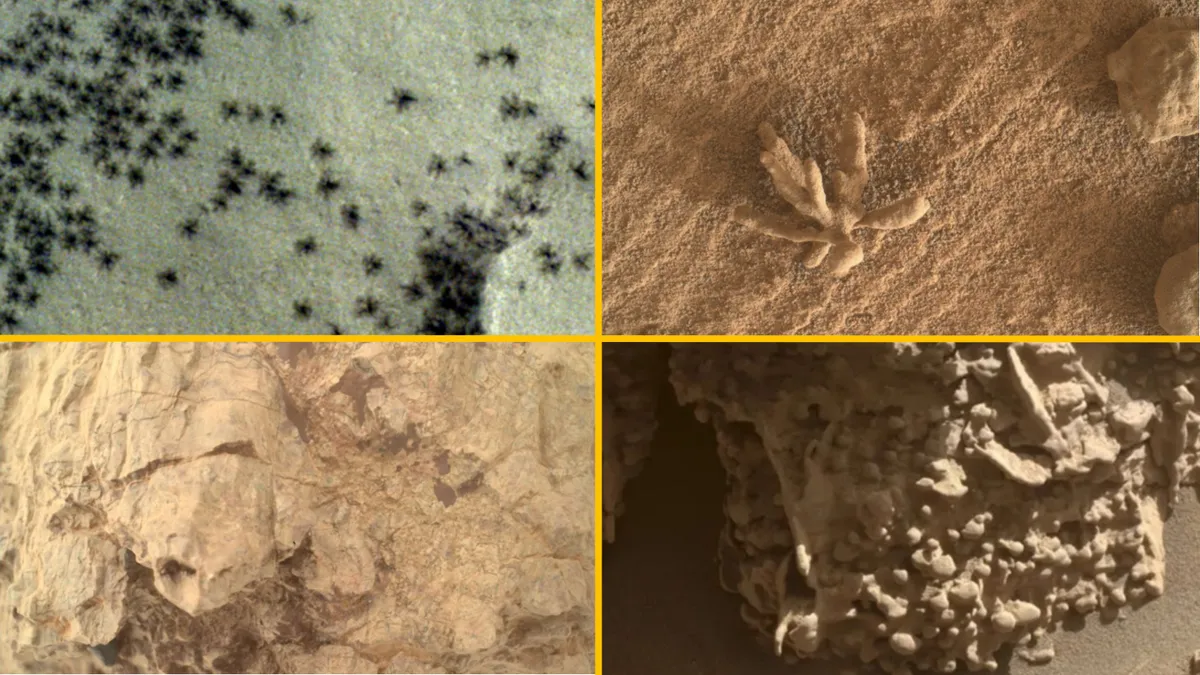
Before reaching Antofagasta, Curiosity spent the better part of a year studying a series of rocky ridges on Mount Sharp dubbed “boxwork.” These features are also known as Martian “spiderwebs” because of how they zigzag across the ground, and the wandering robot recently spotted tiny, egg-like spheroids stuck to their sides. (The “webs” should not be confused with the infamous “Spiders on Mars,” which are dark, arachnid-like features that litter the planet’s surface.)

What to read next

A collage of four rocky features on Mars that look like other animals

Curiosity and the other spacecraft on or around Mars have spied dozens of animal impostors on the Red Planet’s surface, including “Spiders on Mars” (top left), a coral-like rock (top right), a Martian turtle (bottom left) and egg-like spheroids (bottom right). (Image credit: Top left: ESA/DLR/FU Berlin; top right: NASA/JPL-Caltech/MSSS; bottom left: NASA/JPL-Caltech; bottom right: NASA/JPL-Caltech/MSSS.)

Since landing on the Red Planet in 2012, the rover has also snapped a series of other objects that look suspiciously animal-like, including a surprisingly realistic coral-like rock formation.

NASA’s other Mars rover, Perseverance, has also seen its fair share of faux creatures since touching down in 2021, including a statuesque “turtle” poking its head out of a shell. And the fleet of spacecraft orbiting Mars has spied other unusual entities, including a “butterfly” crater and a Martian “dog” buried beneath the planet’s north pole.

Most of these animal associations are the result of a phenomenon known as pareidolia, which is when the human brain sees or hears something significant in a random image or pattern.


Mars quiz: Is your knowledge of the Red Planet out of this world?

Source link

Share. Facebook Twitter Pinterest LinkedIn Tumblr Email
Previous ArticleDiagnostic dilemma: A teen’s classic diabetes symptoms didn’t improve with treatment — revealing she also had a much rarer syndrome
Next Article Artemis moon landing could face long delay while NASA waits for next-generation spacesuits
Editor
  • Website

Related Posts

Lifestyle

2 rivers merged to form the Euphrates 3.6 million years ago, eventually leading to the Fertile Crescent

June 2, 2026
Lifestyle

NASA confirms fireball meteor exploded over northeastern US with force of 230 tons of TNT

June 2, 2026
Lifestyle

Astronauts could use lightning-like plasma jets to kill germs on the moon and Mars, demo hints

June 1, 2026
Add A Comment

Comments are closed.

Categories
  • Entertainment
  • Lifestyle
  • News
  • Sports
  • Tech
  • Travel
Recent Posts
  • 2 rivers merged to form the Euphrates 3.6 million years ago, eventually leading to the Fertile Crescent
  • NASA confirms fireball meteor exploded over northeastern US with force of 230 tons of TNT
  • Astronauts could use lightning-like plasma jets to kill germs on the moon and Mars, demo hints
  • First whole-genome sequence of a Greenland shark holds clues to their extreme longevity
  • Heading a soccer ball just once is enough to raise levels of proteins associated with brain damage
calendar
June 2026
M T W T F S S
1234567
891011121314
15161718192021
22232425262728
2930  
« May    
Recent Posts
  • 2 rivers merged to form the Euphrates 3.6 million years ago, eventually leading to the Fertile Crescent
  • NASA confirms fireball meteor exploded over northeastern US with force of 230 tons of TNT
  • Astronauts could use lightning-like plasma jets to kill germs on the moon and Mars, demo hints
About

Welcome to Baynard Media, your trusted source for a diverse range of news and insights. We are committed to delivering timely, reliable, and thought-provoking content that keeps you informed
and inspired

Categories
  • Entertainment
  • Lifestyle
  • News
  • Sports
  • Tech
  • Travel
Facebook X (Twitter) Pinterest WhatsApp
  • Contact Us
  • About Us
  • Privacy Policy
  • Disclaimer
  • UNSUBSCRIBE
© 2026 copyrights reserved

Type above and press Enter to search. Press Esc to cancel.