Close Menu
  • Home
  • UNSUBSCRIBE
  • News
  • Lifestyle
  • Tech
  • Entertainment
  • Sports
  • Travel
Facebook X (Twitter) WhatsApp
Trending
  • More young people are getting colorectal cancer — here’s what scientists think might be happening
  • ‘I have no doubt that life is out there’: Why radio astronomers are convinced alien contact is only a matter of time
  • 800-year-old ‘hugging skeletons’ are genetically confirmed as Poland’s only medieval same-sex double burial
  • There’s a new T. rex from the dinosaur age — and it ruled the seas with a skull-crushing bite
  • Great Pyramid of Giza is remarkably resilient to earthquakes —‬ and it’s due to the ancient Egyptians’ ‘extraordinary’ engineering knowledge
  • China’s real-life ‘transformer’ mech is a giant humanoid robot that can switch from bounding on 4 legs to walking on 2
  • How can we prevent AI models from cannibalizing themselves when human-generated data runs out? Scientists say they’ve found the answer.
  • ‘The system is likely to reach a breaking point’: Major Italian volcano is speeding toward a transition, and a major eruption could be on the way
Facebook X (Twitter) WhatsApp
Baynard Media
  • Home
  • UNSUBSCRIBE
  • News
  • Lifestyle
  • Tech
  • Entertainment
  • Sports
  • Travel
Baynard Media
Home»Lifestyle»NASA launches special mission to study Earth’s mysterious “halo”
Lifestyle

NASA launches special mission to study Earth’s mysterious “halo”

EditorBy EditorSeptember 27, 2025No Comments3 Mins Read
Share Facebook Twitter Pinterest LinkedIn Tumblr Reddit Telegram Email
Share
Facebook Twitter LinkedIn Pinterest Email

Some NASA missions are designed for very specific tasks, but all of them help feed into our understanding of our universe, and in some cases our pale blue dot, work. A new mission to study one of the more esoteric parts of the atmosphere successfully launched Wednesday (Sept. 24), and over the next 2-3 years will monitor the outer reaches of our planet’s atmosphere.

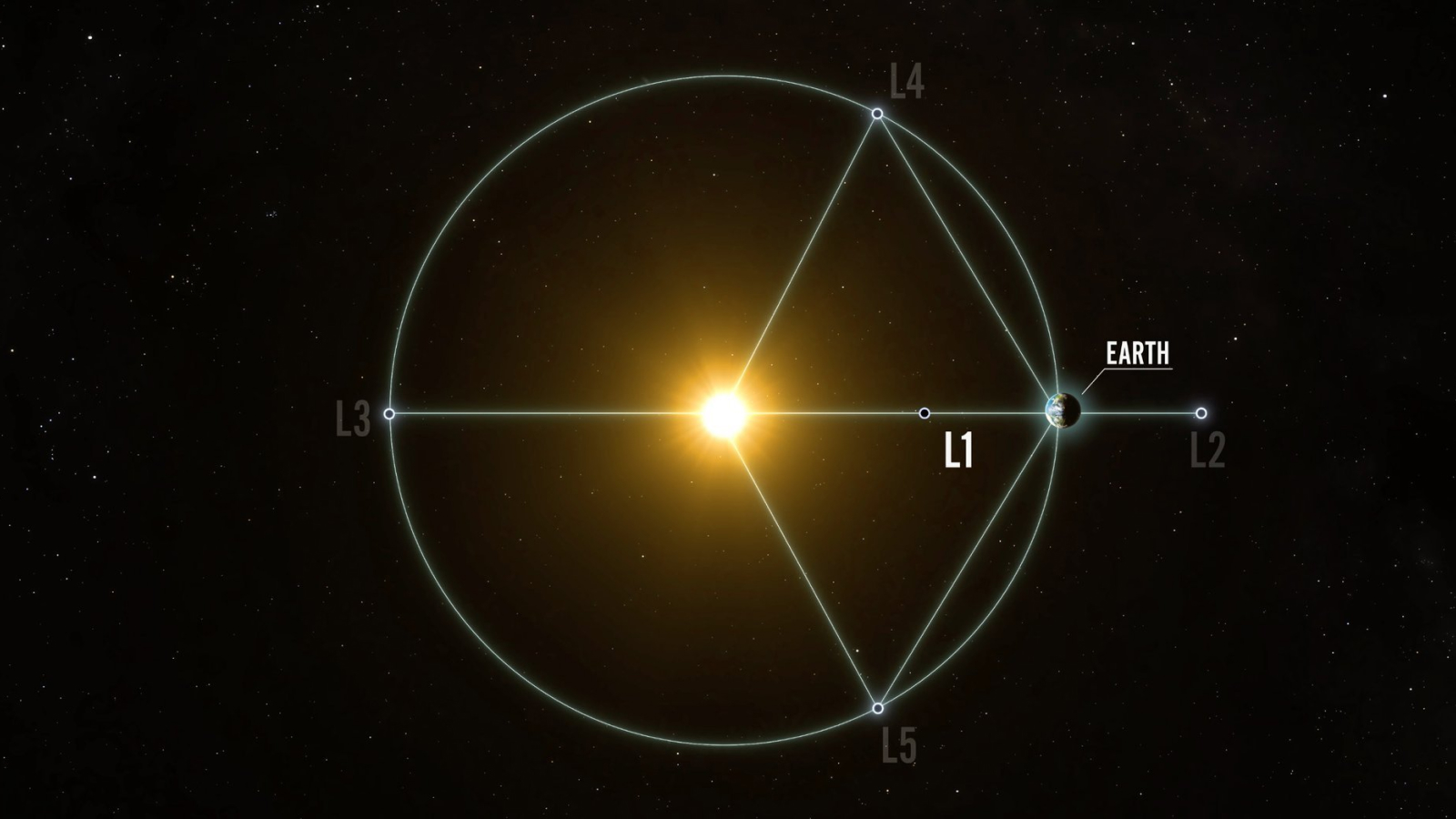
The Carruthers Geocorona Observatory lifted off at 7:30 a.m. EDT from the Kennedy Space Center in Florida. It joins NASA’s Interstellar Mapping and Acceleration Probe (IMAP) and the National Atmospheric and Oceanic Administration (NOAA)’s Space Weather Follow-on Lagrange-1 (SWFO-L1) probes on a journey to the L1 Lagrange point between the Earth and the Sun.

From there, it will monitor the upper layer of the Earth’s atmosphere, known as the exosphere. Specifically it will look for the “halo” that is visible only in ultraviolet light. Known as the geocorona, this effect starts at about 300 miles above the Earth’s surface, but extends as far out as about half-way to the Moon.


You may like

We know this because, in April 1972, Apollo astronauts put a primitive UV camera on the Descartes Highlands on the Moon during their visit there. The images it produced of the geocorona were absolutely stunning, but the camera’s inventor, Dr. George Carruthers, realized it didn’t show the whole picture. Even a camera as far away as the Moon couldn’t capture the exosphere in its entirety.

It took more than 50 years, but his dreams of launching a mission to be able to capture that complete image will finally be fulfilled soon.

The new model of camera is much more advanced than his original one, representing 50 years of advancement in UV imaging. It will have both a wide-field and a near-field imager. The former will take pictures of the whole exosphere while the latter will provide details of how it’s interacting with both the lower atmosphere and particles from the Sun.

Image from the original Carruthers mission as part of Apollo 16 in 1972.

Image from the original Carruthers mission as part of Apollo 16 in 1972. (Image credit: G. Carruther (NRL) et al. / Far UV Camera / NASA / Apollo 16)

That solar interaction is one of the most interesting parts of the mission, as it is one of the main methods by which the Earth loses its hydrogen – one of the main components of water, which is critical to life as we know it. Understanding how that hydrogen loss happens could help scientists narrow the search for potential exoplanets with sufficient amounts of water to potentially be habitable.

Get the world’s most fascinating discoveries delivered straight to your inbox.

Once it reaches the Earth-Sun L1 point, which is four times farther away than the Moon, and 1.6 million kilometers closer to the Sun than Earth, the Carruthers Geocorona Observatory will begin its commissioning sequence. It should start taking data in March next year, and has a planned operational life of two years, though, if all goes well, that could be extended significantly. Watching our pale blue dot shine its brightest, in this case, will help us understand other pale blue dots scattered throughout the galaxy better. But, perhaps most importantly, it will fulfill the dream of a pioneering engineer and physicist who passed away in 2020 at the age of 81.

The original version of this article was published on Universe Today. It has been edited lightly for accuracy.

Source link

Share. Facebook Twitter Pinterest LinkedIn Tumblr Email
Previous ArticleTexas yogurt shop murders cold case suspect identified after 34 years
Next Article Hurricane Humberto strengthens to a Category 4 storm
Editor
  • Website

Related Posts

Lifestyle

More young people are getting colorectal cancer — here’s what scientists think might be happening

May 22, 2026
Lifestyle

‘I have no doubt that life is out there’: Why radio astronomers are convinced alien contact is only a matter of time

May 22, 2026
Lifestyle

800-year-old ‘hugging skeletons’ are genetically confirmed as Poland’s only medieval same-sex double burial

May 21, 2026
Add A Comment

Comments are closed.

Categories
  • Entertainment
  • Lifestyle
  • News
  • Sports
  • Tech
  • Travel
Recent Posts
  • More young people are getting colorectal cancer — here’s what scientists think might be happening
  • ‘I have no doubt that life is out there’: Why radio astronomers are convinced alien contact is only a matter of time
  • 800-year-old ‘hugging skeletons’ are genetically confirmed as Poland’s only medieval same-sex double burial
  • There’s a new T. rex from the dinosaur age — and it ruled the seas with a skull-crushing bite
  • Great Pyramid of Giza is remarkably resilient to earthquakes —‬ and it’s due to the ancient Egyptians’ ‘extraordinary’ engineering knowledge
calendar
May 2026
M T W T F S S
 123
45678910
11121314151617
18192021222324
25262728293031
« Apr    
Recent Posts
  • More young people are getting colorectal cancer — here’s what scientists think might be happening
  • ‘I have no doubt that life is out there’: Why radio astronomers are convinced alien contact is only a matter of time
  • 800-year-old ‘hugging skeletons’ are genetically confirmed as Poland’s only medieval same-sex double burial
About

Welcome to Baynard Media, your trusted source for a diverse range of news and insights. We are committed to delivering timely, reliable, and thought-provoking content that keeps you informed
and inspired

Categories
  • Entertainment
  • Lifestyle
  • News
  • Sports
  • Tech
  • Travel
Facebook X (Twitter) Pinterest WhatsApp
  • Contact Us
  • About Us
  • Privacy Policy
  • Disclaimer
  • UNSUBSCRIBE
© 2026 copyrights reserved

Type above and press Enter to search. Press Esc to cancel.