Close Menu
  • Home
  • UNSUBSCRIBE
  • News
  • Lifestyle
  • Tech
  • Entertainment
  • Sports
  • Travel
Facebook X (Twitter) WhatsApp
Trending
  • Why does metal stick together in space?
  • Faster ‘biological aging’ in young adults may help explain rise in early-onset cancers, study hints
  • Computer scientists are rushing to tame tame AI’s voracious appetite for energy
  • Our brains aren’t wired to handle this much bad news. But ‘looking away is not the fix,’ expert says.
  • ‘The fate of Earth depends on a delicate balance’: Our planet may survive the death of the sun after all, new models hint
  • Bullseye! Enormous ‘bow and arrow’ galaxy is unlike anything radio astronomers have ever seen — Space photo of the week
  • IBM creates first sub-1nm computer chip — cramming 100 billion transistors into a tiny fingernail-sized space
  • New chip harnesses quantum computing’s biggest weakness — and tries to turn it into a strength
Facebook X (Twitter) WhatsApp
Baynard Media
  • Home
  • UNSUBSCRIBE
  • News
  • Lifestyle
  • Tech
  • Entertainment
  • Sports
  • Travel
Baynard Media
Home»Lifestyle»Mystery creature found in ‘forbidden cloud forest’ of Peru is new species of marsupial
Lifestyle

Mystery creature found in ‘forbidden cloud forest’ of Peru is new species of marsupial

EditorBy EditorSeptember 25, 2025No Comments2 Mins Read
Share Facebook Twitter Pinterest LinkedIn Tumblr Reddit Telegram Email
Share
Facebook Twitter LinkedIn Pinterest Email

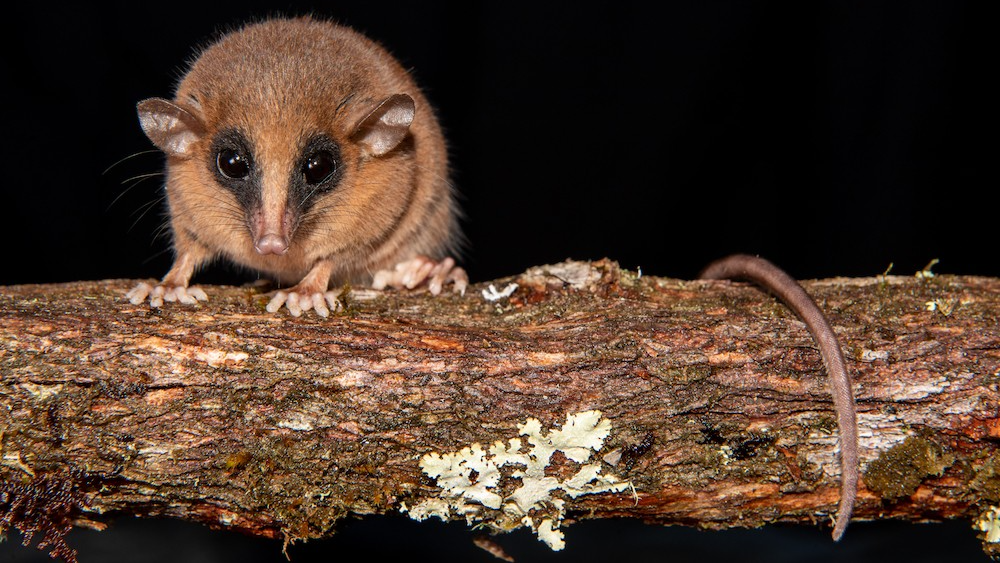
While exploring the region around an archaeological site in the Peruvian Andes, researchers discovered a never-before-seen creature. The tiny, big-eyed marsupial — named Marmosa chachapoya — is a newly identified species of mouse opossum.

“We know very little about this species, including its natural history and distribution, and only one specimen has been collected so far,” Silvia Pavan, a biologist at Cal Poly Humboldt who led the research expedition that discovered the creature, said in a statement.

Pavan and her team were searching for a mysterious species of squirrel in Río Abiseo National Park in 2018, when they found the opossum. The little mammal, which was just 4 inches (10 centimeters) long, had reddish-brown fur and mask-like face markings.


You may like

“I realized immediately that this was something unusual,” Pavan said, in part because related species of mouse opossum are not typically found at that altitude — 8,740 feet (2,664 meters) above sea level.

The team spent years studying the opossum’s DNA and physical characteristics and comparing them to data from other mouse opossums in museum collections around the world. In June, the researchers published their detailed study in the journal American Museum Novitates, naming the marsupial Marmosa chachapoya, in honor of the ancient people who inhabited the region before the Inca Empire took over.

The ancient Chachapoya people lived in northern Peru from about A.D. 800 until the arrival of the Incas in the 1470s. Often called the “people of the cloud forest,” the Chachapoya lived in damp, rugged terrain in the eastern Andes and built their houses on summits.

More than three dozen archaeological sites have been recorded in Río Abiseo National Park, and many are associated with the Chachapoya. But the remote and difficult-to-access park was also created as a significant conservation area to protect plants and animals found nowhere else on Earth. These include the yellow-tailed woolly monkey (Lagothrix flavicauda), which was once thought to be extinct.

Get the world’s most fascinating discoveries delivered straight to your inbox.

In addition to the new mouse opossum species, Pavan and her team discovered several other animals that they think have never been documented by scientists. These creatures, which include a semiaquatic rodent, have yet to be formally described.

The discovery of a new marsupial species is “a reminder of the critical importance of scientific exploration and conservation in areas like Río Abiseo,” Pavan said.


Animal quiz: Test yourself on these fun animal trivia questions

Source link

Share. Facebook Twitter Pinterest LinkedIn Tumblr Email
Previous ArticleMegyn Kelly confronts liberal over Trump rhetoric claims at TPUSA event
Next Article Critics say Palestine recognition ‘too little, too late’
Editor
  • Website

Related Posts

Lifestyle

Why does metal stick together in space?

June 29, 2026
Lifestyle

Faster ‘biological aging’ in young adults may help explain rise in early-onset cancers, study hints

June 29, 2026
Lifestyle

Computer scientists are rushing to tame tame AI’s voracious appetite for energy

June 28, 2026
Add A Comment

Comments are closed.

Categories
  • Entertainment
  • Lifestyle
  • News
  • Sports
  • Tech
  • Travel
Recent Posts
  • Why does metal stick together in space?
  • Faster ‘biological aging’ in young adults may help explain rise in early-onset cancers, study hints
  • Computer scientists are rushing to tame tame AI’s voracious appetite for energy
  • Our brains aren’t wired to handle this much bad news. But ‘looking away is not the fix,’ expert says.
  • ‘The fate of Earth depends on a delicate balance’: Our planet may survive the death of the sun after all, new models hint
calendar
June 2026
M T W T F S S
1234567
891011121314
15161718192021
22232425262728
2930  
« May    
Recent Posts
  • Why does metal stick together in space?
  • Faster ‘biological aging’ in young adults may help explain rise in early-onset cancers, study hints
  • Computer scientists are rushing to tame tame AI’s voracious appetite for energy
About

Welcome to Baynard Media, your trusted source for a diverse range of news and insights. We are committed to delivering timely, reliable, and thought-provoking content that keeps you informed
and inspired

Categories
  • Entertainment
  • Lifestyle
  • News
  • Sports
  • Tech
  • Travel
Facebook X (Twitter) Pinterest WhatsApp
  • Contact Us
  • About Us
  • Privacy Policy
  • Disclaimer
  • UNSUBSCRIBE
© 2026 copyrights reserved

Type above and press Enter to search. Press Esc to cancel.