Close Menu
  • Home
  • UNSUBSCRIBE
  • News
  • Lifestyle
  • Tech
  • Entertainment
  • Sports
  • Travel
Facebook X (Twitter) WhatsApp
Trending
  • New robotic heart mimics common, mysterious condition to help researchers study it
  • Canon EOS R6 III review: A wildlife wonder
  • Medieval babies and adults buried together in Sweden were not related, archaeologists discover — raising big questions about early Christian burial practices
  • NASA is creating a fifth state of matter on the ISS, thanks to an upgrade to a mini-fridge-sized quantum lab
  • New sodium metal battery design charges in just 4 minutes and retains its capacity for years
  • Quantum computing wielded to create extremely rare material critical to nuclear fusion
  • Scientists build tiny ‘diving suit’ for cockroaches, turning them into search-and-rescue cyborgs
  • Physicists develop the first working model of quantum mechanics using only ‘real’ numbers
Facebook X (Twitter) WhatsApp
Baynard Media
  • Home
  • UNSUBSCRIBE
  • News
  • Lifestyle
  • Tech
  • Entertainment
  • Sports
  • Travel
Baynard Media
Home»Lifestyle»Mount Roraima: The ‘lost world’ isolated for millions of years that Indigenous people call the ‘house of the gods’
Lifestyle

Mount Roraima: The ‘lost world’ isolated for millions of years that Indigenous people call the ‘house of the gods’

EditorBy EditorMarch 7, 2025No Comments3 Mins Read
Share Facebook Twitter Pinterest LinkedIn Tumblr Reddit Telegram Email
Share
Facebook Twitter LinkedIn Pinterest Email

QUICK FACTS

Name: Mount Roraima

Location: Tripoint between Venezuela, Brazil and Guyana

Coordinates: 5.131793939771963, -60.758709443048986

Why it’s incredible: The mountain looks like a floating island from the sky.

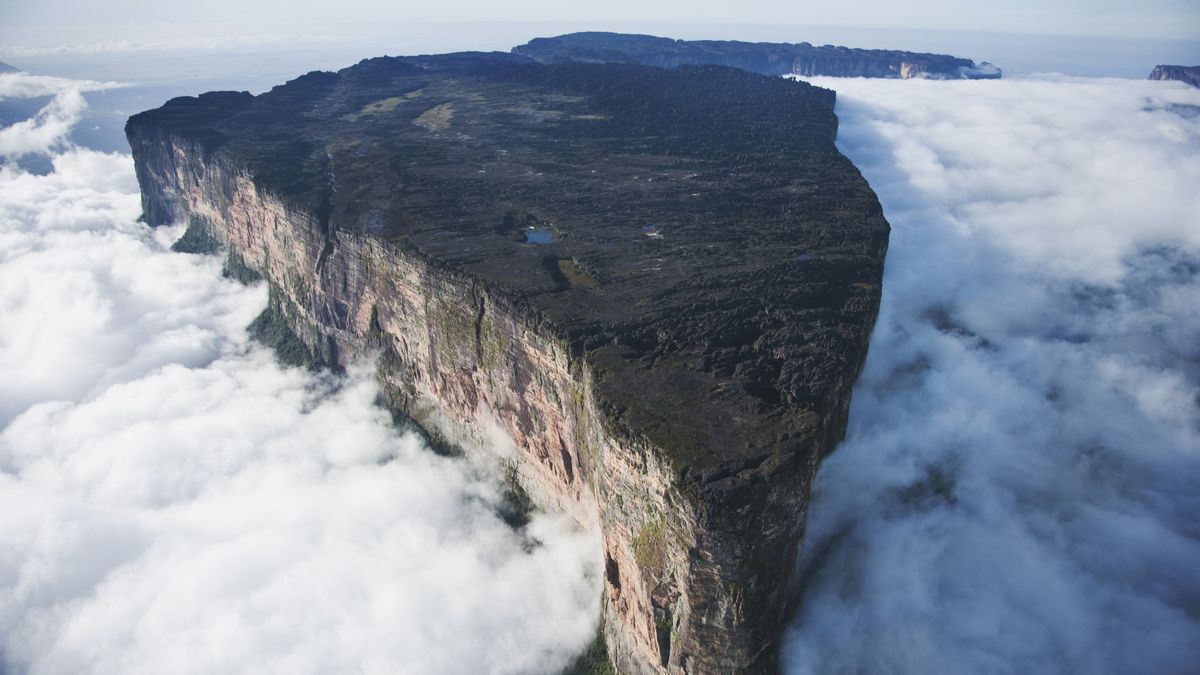
Mount Roraima is a plateau with near-vertical sides that sits on the triple border point between Brazil, Venezuela and Guyana. The plateau is often encircled by a ring of clouds, which makes the summit look like an island floating in the sky.

The mountain towers 9,219 feet (2,810 meters) above the surrounding savanna, jutting out like a giant tabletop. Geologists call this kind of formation a “tepui,” which means “house of the gods” in the language of the Pemon, the local Indigenous people. The Pemon believe tepuis to be sacred, and that Mount Roraima is the stump of a supernatural tree that held all the fruit and vegetables of the world until a mythical figure named Makunaima felled it, according to the International Business Times.

But scientists have another explanation for how Mount Roraima came to be. Tepuis are exclusively found in South America, and specifically in Venezuela and western Guyana, where they number more than 100. According to the Geological Society of London, tepuis are the remnants of a huge block of sandstone that formed in this region around 1.8 billion years ago as large sand dunes slowly solidified into rock.

Over the next 1.5 billion years, other types of rock accumulated on top of the sandstone, but these layers were eroded away roughly 180 million years ago, according to the Geological Society. Wind and water then went to work on the sandstone, carving out the giant, steep-sided plateaus we see today, according to Geology Science. Finally, geologic uplift raised the plateaus to their current height, according to Geology Science.

Related: Snake Island: The isle writhing with vipers where only Brazilian military and scientists are allowed

Like other tepuis, Mount Roraima’s summit harbors a “lost world” ecosystem that has been sheltered from the surrounding region for about 70 million to 90 million years, according to a 2012 study.

Aerial view of Mount Roraima showing the steep sides and flat top.

The summit of Mount Roraima harbors a rare ecosystem. (Image credit: robertharding/Alamy)

Much remains unknown about the way that tepui ecosystems have assembled and evolved, but researchers estimate that a high proportion of the flora and fauna on the summits are endemic, meaning that they aren’t found elsewhere. For example, about one-third of the vegetation found at the top of all tepuis, including carnivorous plants and orchids, is endemic, according to the World Wildlife Fund.

Get the world’s most fascinating discoveries delivered straight to your inbox.

However, the 2012 study found that these ecosystems aren’t completely isolated. The researchers analyzed the DNA of four tree frog species living on separate tepuis to determine whether these species have had any contact with each other in the past 70 million years. The scientists discovered that the frogs shared a common ancestor as recently as 5.3 million years ago, suggesting that tree frogs — and perhaps other creatures as well — can migrate up and down the cliffs of tepui formations.

Rare nectar-sucking birds and other unusual creatures, such as the Roraima black frog (Oreophrynella quelchii), thrive at the top of Mount Roraima thanks to pools of crystal-clear water and streams that feed waterfalls down the tepui’s sides. These cascades are fed by rainwater and include the Crystal Valley Falls and Triple Point Falls.

Mount Roraima’s summit and its incredible views are accessible to tourists, but ascending to the top requires a multi-day trek through challenging terrain, according to Geology Science.


Discover more incredible places, where we highlight the fantastic history and science behind some of the most dramatic landscapes on Earth.

Source link

Share. Facebook Twitter Pinterest LinkedIn Tumblr Email
Previous ArticleNumber of people injured after fighter jets accidentally drop bombs rises to 29, South Korea says
Next Article What to expect from Trump’s first White House Crypto Summit
Editor
  • Website

Related Posts

Lifestyle

New robotic heart mimics common, mysterious condition to help researchers study it

July 11, 2026
Lifestyle

Canon EOS R6 III review: A wildlife wonder

July 10, 2026
Lifestyle

Medieval babies and adults buried together in Sweden were not related, archaeologists discover — raising big questions about early Christian burial practices

July 10, 2026
Add A Comment

Comments are closed.

Categories
  • Entertainment
  • Lifestyle
  • News
  • Sports
  • Tech
  • Travel
Recent Posts
  • New robotic heart mimics common, mysterious condition to help researchers study it
  • Canon EOS R6 III review: A wildlife wonder
  • Medieval babies and adults buried together in Sweden were not related, archaeologists discover — raising big questions about early Christian burial practices
  • NASA is creating a fifth state of matter on the ISS, thanks to an upgrade to a mini-fridge-sized quantum lab
  • New sodium metal battery design charges in just 4 minutes and retains its capacity for years
calendar
July 2026
M T W T F S S
 12345
6789101112
13141516171819
20212223242526
2728293031  
« Jun    
Recent Posts
  • New robotic heart mimics common, mysterious condition to help researchers study it
  • Canon EOS R6 III review: A wildlife wonder
  • Medieval babies and adults buried together in Sweden were not related, archaeologists discover — raising big questions about early Christian burial practices
About

Welcome to Baynard Media, your trusted source for a diverse range of news and insights. We are committed to delivering timely, reliable, and thought-provoking content that keeps you informed
and inspired

Categories
  • Entertainment
  • Lifestyle
  • News
  • Sports
  • Tech
  • Travel
Facebook X (Twitter) Pinterest WhatsApp
  • Contact Us
  • About Us
  • Privacy Policy
  • Disclaimer
  • UNSUBSCRIBE
© 2026 copyrights reserved

Type above and press Enter to search. Press Esc to cancel.