Close Menu
  • Home
  • UNSUBSCRIBE
  • News
  • Lifestyle
  • Tech
  • Entertainment
  • Sports
  • Travel
Facebook X (Twitter) WhatsApp
Trending
  • Lemur used in ‘lemur yoga’ session dies of human herpesvirus, study finds
  • ‘A fine line between reducing stigma and trivialising conditions’: Social media, self-diagnosis and the glamorization of ADHD
  • New 2D memory device stores data on just a single electron
  • Before we ban kids from social media completely, here’s what we should try first | Jonathan Bellack and Mariana Olaizola Rosenblat
  • Scientists uncover a better way to beat ‘the bends’ — using deep-diving pigs
  • Mars may have been losing its water more than 4 billion years ago, oldest-known Martian meteorite suggests
  • ‘The lance head was still inside the pelvis’: Mass grave found in Austria may hold casualties of unknown ancient Roman battle
  • ‘Full-on berserker mode’: Archaeologists solve mystery of medieval soldiers with gruesome square holes in their skull
Facebook X (Twitter) WhatsApp
Baynard Media
  • Home
  • UNSUBSCRIBE
  • News
  • Lifestyle
  • Tech
  • Entertainment
  • Sports
  • Travel
Baynard Media
Home»Lifestyle»Most of the atoms in your body left the Milky Way on a ‘cosmic conveyor belt’ long before you were born, new study reveals
Lifestyle

Most of the atoms in your body left the Milky Way on a ‘cosmic conveyor belt’ long before you were born, new study reveals

EditorBy EditorJanuary 8, 2025No Comments3 Mins Read
Share Facebook Twitter Pinterest LinkedIn Tumblr Reddit Telegram Email
Share
Facebook Twitter LinkedIn Pinterest Email

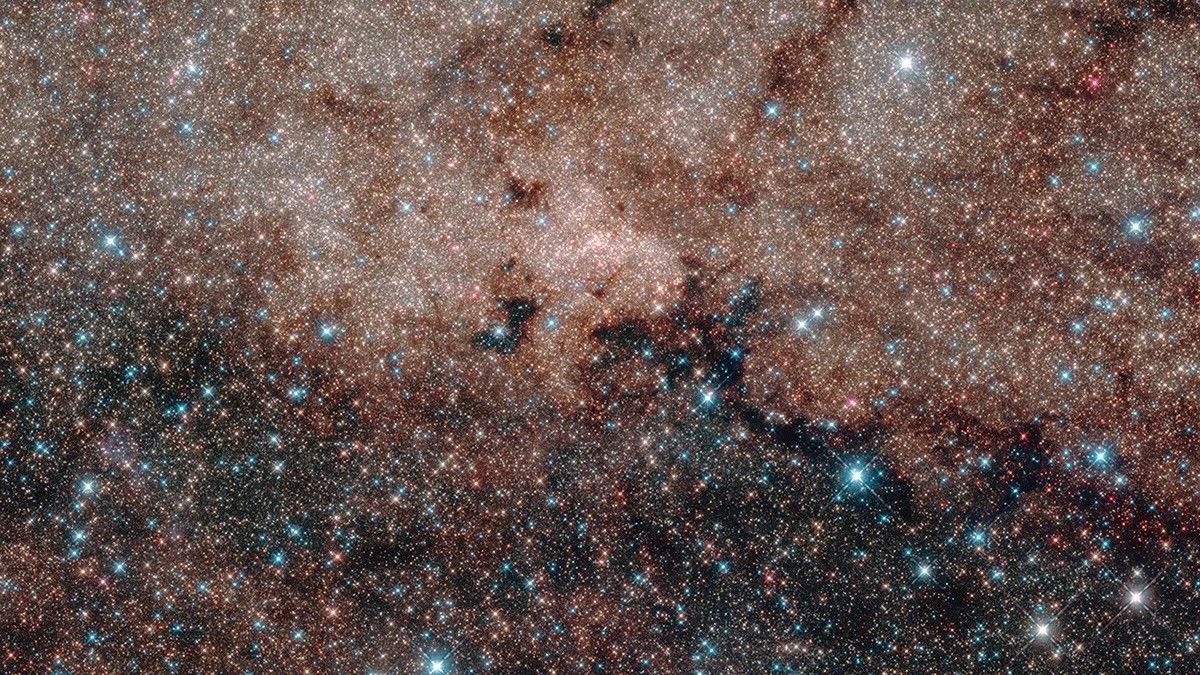
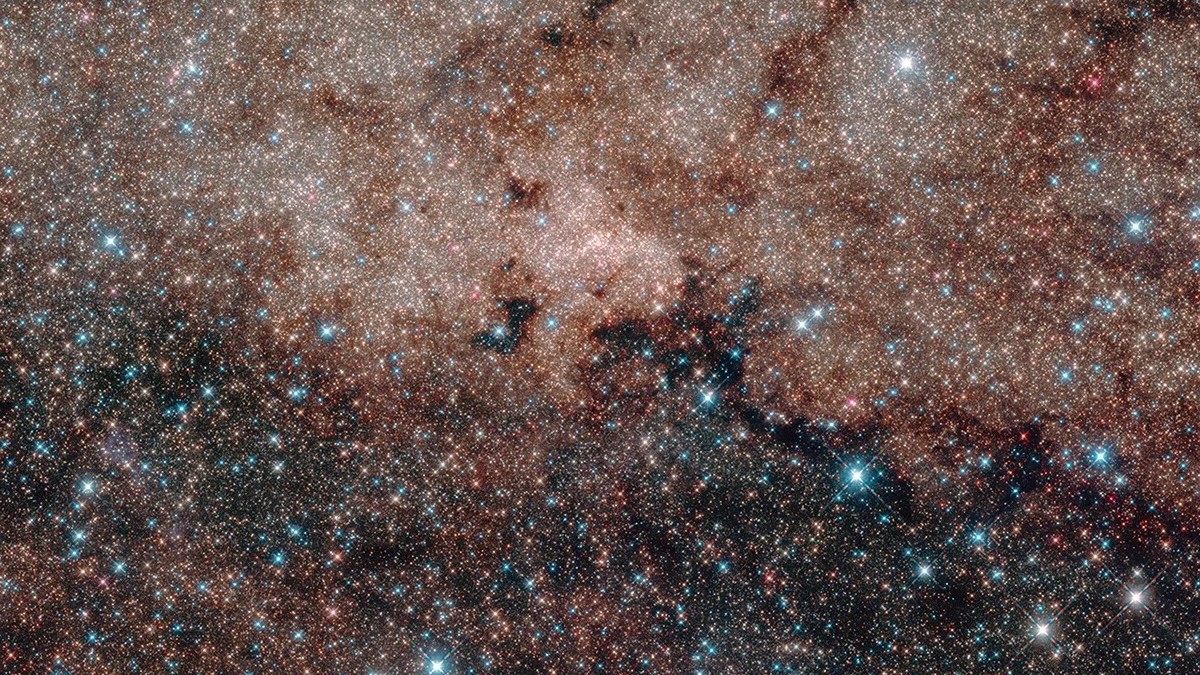
Most of the atoms in your body likely spent millions of years circling the Milky Way on a cosmic “conveyor belt” before returning to our galaxy prior to the solar system’s creation, a new study suggests.

Most elements in the universe, except for hydrogen and helium (and a few other weird exceptions), were forged by stars, either through nuclear fusion deep within their cores or during gigantic stellar explosions, known as supernovas. These explosions also disperse the newly forged materials into interstellar space. The matter then forms giant clouds that eventually condense into new stars surrounded by other objects, such as planets, moons, asteroids, comets — and in Earth’s case, people.

For decades, scientists assumed that matter expelled by exploding stars slowly drifted through interstellar space before reforming into new star systems. However, in 2011, scientists discovered that some atoms, including oxygen, iron and other heavier elements, can be expelled from their host galaxy by supernovae and get caught up in giant cosmic currents, known as the circumgalactic medium. These atoms eventually fall back into their original galaxy, including the Milky Way, and get turned into new stuff.

In a new study, published Dec. 27, 2024 in the journal The Astrophysical Journal Letters, researchers studying the circumstellar medium around distant galaxies have shown for the first time that carbon atoms can also be recycled via these cosmic currents. Scientists previously assumed this was unlikely, believing that carbon atoms are too light to be expelled from the galaxy. The team also showed that carbon is one of the most abundant elements within these extragalactic structures.

Related: How many atoms are in the observable universe?

This means that “the same carbon in our bodies most likely spent a significant amount of time outside of the galaxy,” study co-author Jessica Werk, an astrophysicist at the University of Washington, said in a statement. Given that other abundant atoms within human bodies, such as oxygen and iron, are also known to travel in the circumstellar medium, it is likely that a majority of the atoms in most people’s bodies have spent time outside the Milky Way.

The researchers made the discovery using data from the Hubble telescope’s Cosmic Origins Spectrograph, which measures how light from distant quasars (brightly glowing objects powered by active black holes) is affected as it passes through the circumstellar mediums of different star-forming galaxies. This also revealed that, in some cases, carbon can be found up to 400,000 light-years outside its host galaxy — a distance around four times wider than the Milky Way.

Get the world’s most fascinating discoveries delivered straight to your inbox.

Recycling star stuff

The circumstellar medium is a relatively new concept in astrophysics, and the new study confirms that it plays a vital role in how galaxies recycle their star-forged materials.

“Think of the circumgalactic medium as a giant train station: It is constantly pushing material out and pulling it back in,” study co-author Samantha Garza, a doctoral candidate at the University of Washington, said in the statement.

Understanding which elements can be recycled by the circumstellar medium is important because it will help researchers work out exactly how matter gets distributed and reformed throughout the universe. The cosmic currents also likely enable galaxies to continually form new stars, meaning they play a key role in galactic evolution.

“If you can keep the cycle going — pushing material out and pulling it back in — then theoretically you have enough fuel to keep star formation going,” Garza said. Therefore, learning how these currents eventually slow down and fizzle out will be a key tool in understanding how galaxies eventually die, she added.

Source link

Share. Facebook Twitter Pinterest LinkedIn Tumblr Email
Previous ArticleGoogle’s ‘Daily Listen’ AI generates customized mini podcasts
Next Article Meta, Zuckerberg threaten human rights by allowing dehumanizing speech, advocates warn
Editor
  • Website

Related Posts

Lifestyle

Lemur used in ‘lemur yoga’ session dies of human herpesvirus, study finds

August 15, 2026
Lifestyle

‘A fine line between reducing stigma and trivialising conditions’: Social media, self-diagnosis and the glamorization of ADHD

August 15, 2026
Lifestyle

New 2D memory device stores data on just a single electron

August 15, 2026
Add A Comment

Comments are closed.

Categories
  • Entertainment
  • Lifestyle
  • News
  • Sports
  • Tech
  • Travel
Recent Posts
  • Lemur used in ‘lemur yoga’ session dies of human herpesvirus, study finds
  • ‘A fine line between reducing stigma and trivialising conditions’: Social media, self-diagnosis and the glamorization of ADHD
  • New 2D memory device stores data on just a single electron
  • Before we ban kids from social media completely, here’s what we should try first | Jonathan Bellack and Mariana Olaizola Rosenblat
  • Scientists uncover a better way to beat ‘the bends’ — using deep-diving pigs
calendar
August 2026
M T W T F S S
 12
3456789
10111213141516
17181920212223
24252627282930
31  
« Jul    
Recent Posts
  • Lemur used in ‘lemur yoga’ session dies of human herpesvirus, study finds
  • ‘A fine line between reducing stigma and trivialising conditions’: Social media, self-diagnosis and the glamorization of ADHD
  • New 2D memory device stores data on just a single electron
About

Welcome to Baynard Media, your trusted source for a diverse range of news and insights. We are committed to delivering timely, reliable, and thought-provoking content that keeps you informed
and inspired

Categories
  • Entertainment
  • Lifestyle
  • News
  • Sports
  • Tech
  • Travel
Facebook X (Twitter) Pinterest WhatsApp
  • Contact Us
  • About Us
  • Privacy Policy
  • Disclaimer
  • UNSUBSCRIBE
© 2026 copyrights reserved

Type above and press Enter to search. Press Esc to cancel.