Close Menu
  • Home
  • UNSUBSCRIBE
  • News
  • Lifestyle
  • Tech
  • Entertainment
  • Sports
  • Travel
Facebook X (Twitter) WhatsApp
Trending
  • ‘What are the odds’: Superbright comet and exploding fireball meteor form near-perfect X over European castle
  • ‘Kraken’ octopus that lived at the time of the dinosaurs was a 62-foot-long apex predator of the ocean
  • ‘A landmark moment for the field’: FDA approves first-ever gene therapy for inherited deafness
  • ‘Strong, undeniable public examples of something positive’: Astronaut Chris Hadfield on why Artemis II hit him hard, the importance of spaceflight, and why we need to send a guitar to the moon
  • Artemis II heat shield aced its blistering reentry, ghostly underwater photo reveals
  • Scientists invent artificial neurons that ‘talk’ to real brain cells, paving way to better brain implants
  • Meet AGI CPU — a specialist processor that engineers believe will power the next wave of AI
  • Earth quiz: What do you know about our planet’s most amazing features?
Facebook X (Twitter) WhatsApp
Baynard Media
  • Home
  • UNSUBSCRIBE
  • News
  • Lifestyle
  • Tech
  • Entertainment
  • Sports
  • Travel
Baynard Media
Home»Lifestyle»Microsoft unveils new liquid-cooled computer chips — they could prevent AI data centers from massively overheating
Lifestyle

Microsoft unveils new liquid-cooled computer chips — they could prevent AI data centers from massively overheating

EditorBy EditorSeptember 30, 2025No Comments4 Mins Read
Share Facebook Twitter Pinterest LinkedIn Tumblr Reddit Telegram Email
Share
Facebook Twitter LinkedIn Pinterest Email

Microsoft engineers have devised a new way to keep data centers cool — and it might help prevent the next generation of artificial intelligence (AI) hardware from cooking itself to death.

The technology is based on “microfluidics” and involves pumping liquid coolant through tiny channels etched directly into silicon chips.

In a statement, Microsoft representatives said the technology was up to three times more effective at removing heat compared with conventional “cold plate” methods for cooling data centers.


You may like

The company hopes that microfluidics will make it possible for data centers to run more-intensive computational workloads without the risk of overheating, particularly as newer, more powerful AI processors enter the market. These generate far more heat than earlier generations of computer chips, with Microsoft warning that current cooling technology could max out data center performance in “just a few years.”

“If you’re still relying heavily on traditional cold plate technology, you’re stuck,” Sashi Majety, senior technical program manager at Microsoft, said in the statement. “In as soon as five years, this could become a ceiling on performance.”

Graphics processing units (GPUs) are often used in data centers because they can run multiple calculations in parallel. This makes them ideal for powering AI and other computationally intensive workloads.

To prevent them from overheating, GPUs are typically cooled using metal cold plates. These are mounted on top of the chip’s housing and circulate coolant over and around it to draw heat away. However, cold plates are separated from the silicon by multiple layers, which limits how much heat they can extract from the chip.

Get the world’s most fascinating discoveries delivered straight to your inbox.

Cool and groovy

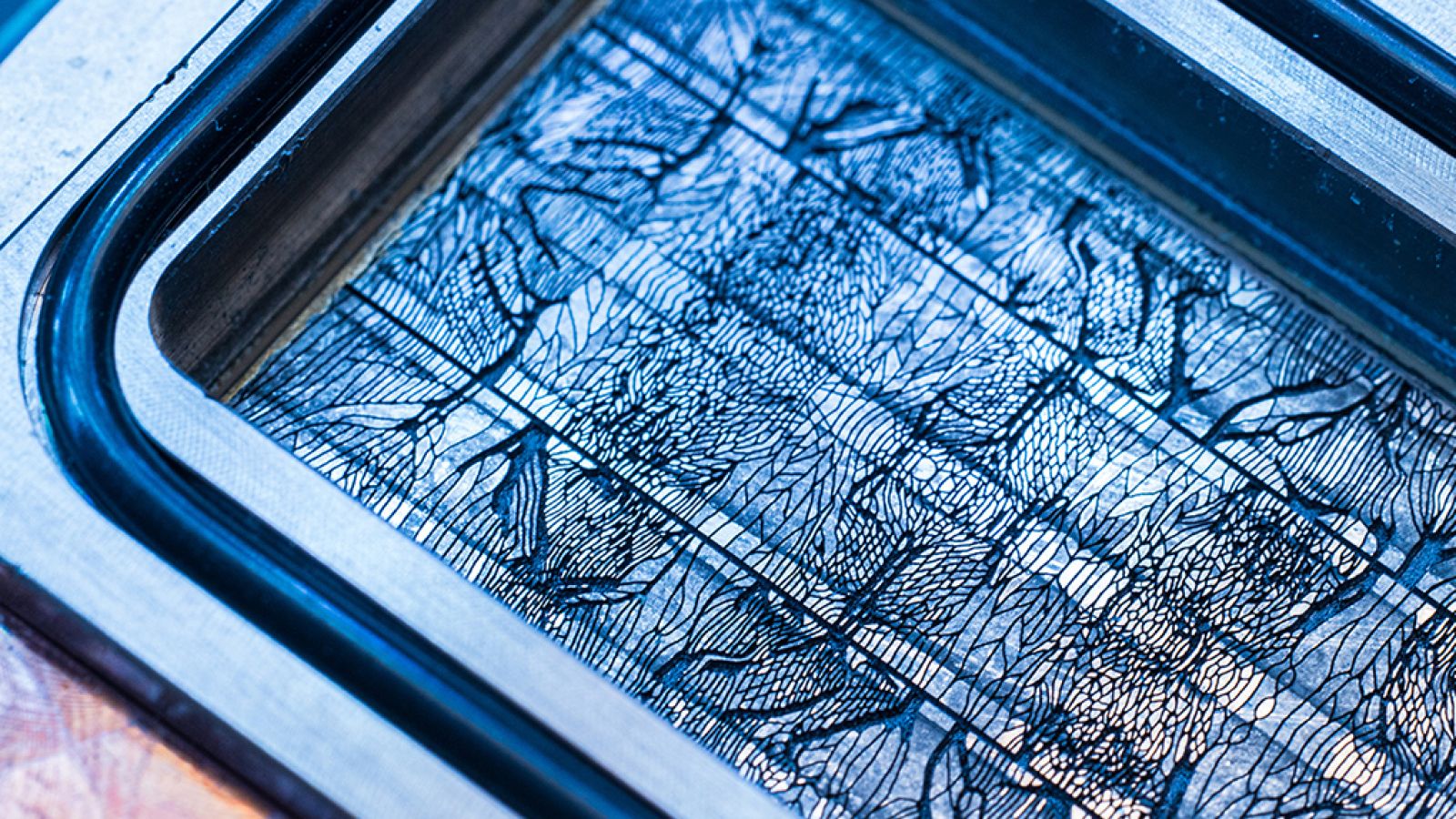
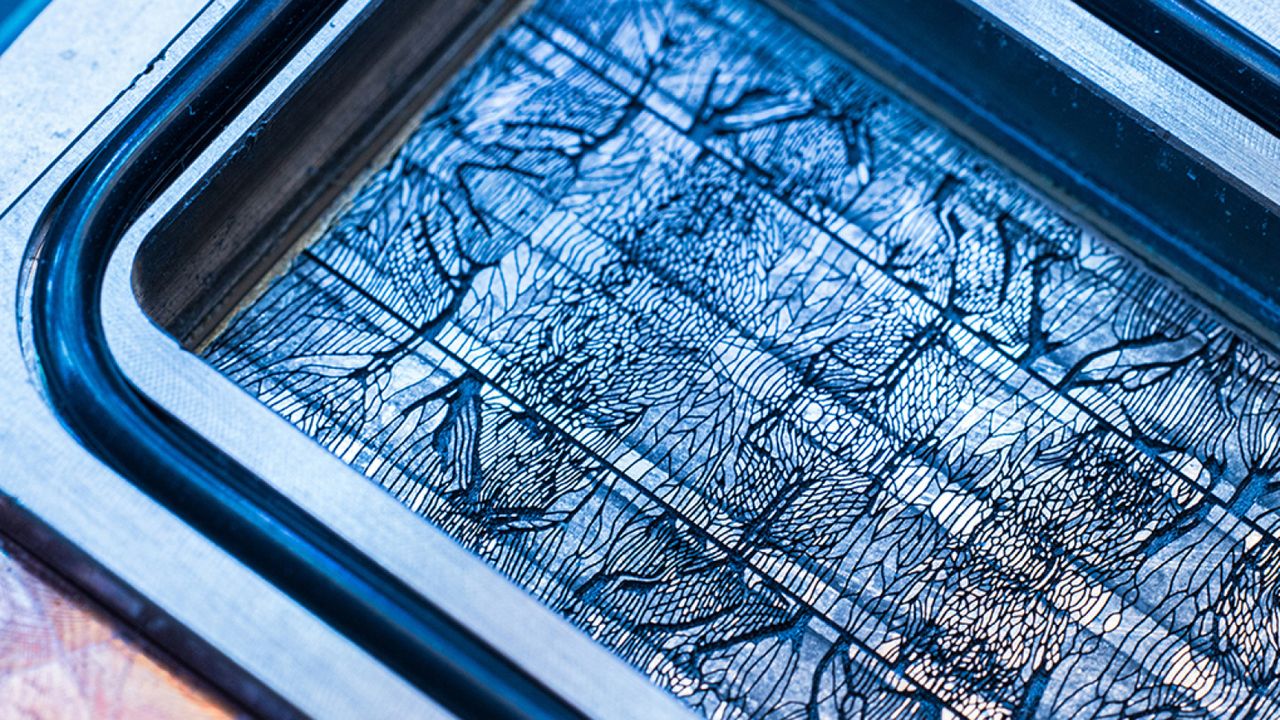
Microsoft’s microfluidics technology involves etching grooves the size of a human hair directly into the silicon die — the densely packed computational core of the chip. When coolant is sent directly to the die via this microscopic pipework, heat is carried away much more efficiently.

The prototype chip went through four design iterations. Microsoft partnered with Swiss startup Corintis to develop a layout inspired by leaf veins and butterfly wings — patterns that distribute liquid across branching paths rather than straight lines.

The aim was to reach hotspots more precisely and avoid clogging or cracking the silicon. An AI model optimized these cooling paths by using heat maps to show where temperatures tended to be highest on the processor.


You may like

Engineers then tested the design on a GPU running a simulated Microsoft Teams workload — a mix of video, audio and transcription services used to reflect typical data center conditions. In addition to carrying away heat much more efficiently, the microfluidic cooling system reduced the peak temperature rise in the GPU’s silicon by 65%, according to Microsoft representatives.

Beyond better thermal control, Microsoft hopes microfluidics could allow for overclocking — safely pushing chips beyond their normal operating limits without burning them out.

“Whenever we have spiky workloads, we want to be able to overclock,” Jim Kleewein, technical fellow at Microsoft 365 Core Management, said in the statement. “Microfluidics would allow us to overclock without worrying about melting the chip down because it’s a more efficient cooler of the chip.”

The company is now exploring how to apply microfluidics to its custom Cobalt and Maia chips and will now work with fabrication partners to bring the technology into broader use. Future applications may include cooling 3D-stacked chips, which are notoriously hard to design due to the heat buildup between layers.

“We want microfluidics to become something everybody does, not just something we do,” Kleewein said. “The more people that adopt it the better, the faster the technology is going to develop, the better it’s going to be for us, for our customers, for everybody.”

Source link

Share. Facebook Twitter Pinterest LinkedIn Tumblr Email
Previous ArticleBrett Favre backs Jon Gruden to coach Arkansas
Next Article 2nd detainee dies after Dallas ICE facility shooting
Editor
  • Website

Related Posts

Lifestyle

‘What are the odds’: Superbright comet and exploding fireball meteor form near-perfect X over European castle

April 24, 2026
Lifestyle

‘Kraken’ octopus that lived at the time of the dinosaurs was a 62-foot-long apex predator of the ocean

April 24, 2026
Lifestyle

‘A landmark moment for the field’: FDA approves first-ever gene therapy for inherited deafness

April 23, 2026
Add A Comment

Comments are closed.

Categories
  • Entertainment
  • Lifestyle
  • News
  • Sports
  • Tech
  • Travel
Recent Posts
  • ‘What are the odds’: Superbright comet and exploding fireball meteor form near-perfect X over European castle
  • ‘Kraken’ octopus that lived at the time of the dinosaurs was a 62-foot-long apex predator of the ocean
  • ‘A landmark moment for the field’: FDA approves first-ever gene therapy for inherited deafness
  • ‘Strong, undeniable public examples of something positive’: Astronaut Chris Hadfield on why Artemis II hit him hard, the importance of spaceflight, and why we need to send a guitar to the moon
  • Artemis II heat shield aced its blistering reentry, ghostly underwater photo reveals
calendar
April 2026
M T W T F S S
 12345
6789101112
13141516171819
20212223242526
27282930  
« Mar    
Recent Posts
  • ‘What are the odds’: Superbright comet and exploding fireball meteor form near-perfect X over European castle
  • ‘Kraken’ octopus that lived at the time of the dinosaurs was a 62-foot-long apex predator of the ocean
  • ‘A landmark moment for the field’: FDA approves first-ever gene therapy for inherited deafness
About

Welcome to Baynard Media, your trusted source for a diverse range of news and insights. We are committed to delivering timely, reliable, and thought-provoking content that keeps you informed
and inspired

Categories
  • Entertainment
  • Lifestyle
  • News
  • Sports
  • Tech
  • Travel
Facebook X (Twitter) Pinterest WhatsApp
  • Contact Us
  • About Us
  • Privacy Policy
  • Disclaimer
  • UNSUBSCRIBE
© 2026 copyrights reserved

Type above and press Enter to search. Press Esc to cancel.