Close Menu
  • Home
  • UNSUBSCRIBE
  • News
  • Lifestyle
  • Tech
  • Entertainment
  • Sports
  • Travel
Facebook X (Twitter) WhatsApp
Trending
  • Chinese medical practitioners used extremely toxic plant as a topical anesthetic 600 years ago, study finds
  • Bead net funerary shroud: A 2,500-year-old beaded veil from Egypt depicting the deceased’s transformation into Osiris
  • Rare genetic disease makes scientists reconsider what the ‘seat of fear’ in the brain really is
  • It’s illegal to repair most of our devices. There’s a surprising reason for that.
  • Jupiter’s Ganymede, the largest moon in the solar system, may be heating up
  • Bizarre patterns on Venus have scientists puzzled
  • Scientists trained an AI model using an IBM quantum computer — and it answered questions correctly that the base model couldn’t
  • How did animals survive the asteroid that killed the dinosaurs?
Facebook X (Twitter) WhatsApp
Baynard Media
  • Home
  • UNSUBSCRIBE
  • News
  • Lifestyle
  • Tech
  • Entertainment
  • Sports
  • Travel
Baynard Media
Home»Lifestyle»Meet NASA’s X-59: An ultraquiet supersonic jet that just made history with its first test flight
Lifestyle

Meet NASA’s X-59: An ultraquiet supersonic jet that just made history with its first test flight

EditorBy EditorNovember 9, 2025No Comments3 Mins Read
Share Facebook Twitter Pinterest LinkedIn Tumblr Reddit Telegram Email
Share
Facebook Twitter LinkedIn Pinterest Email

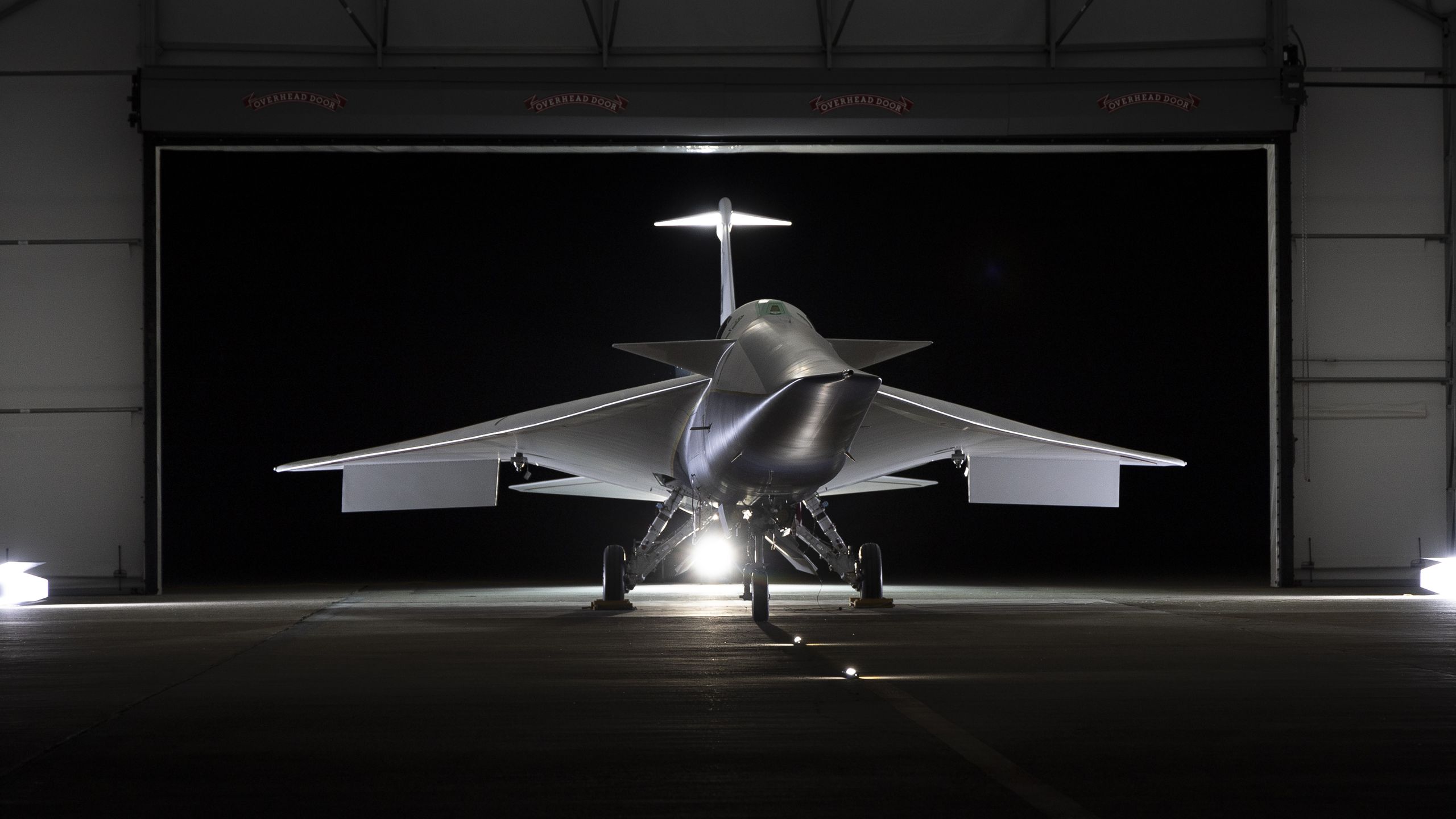
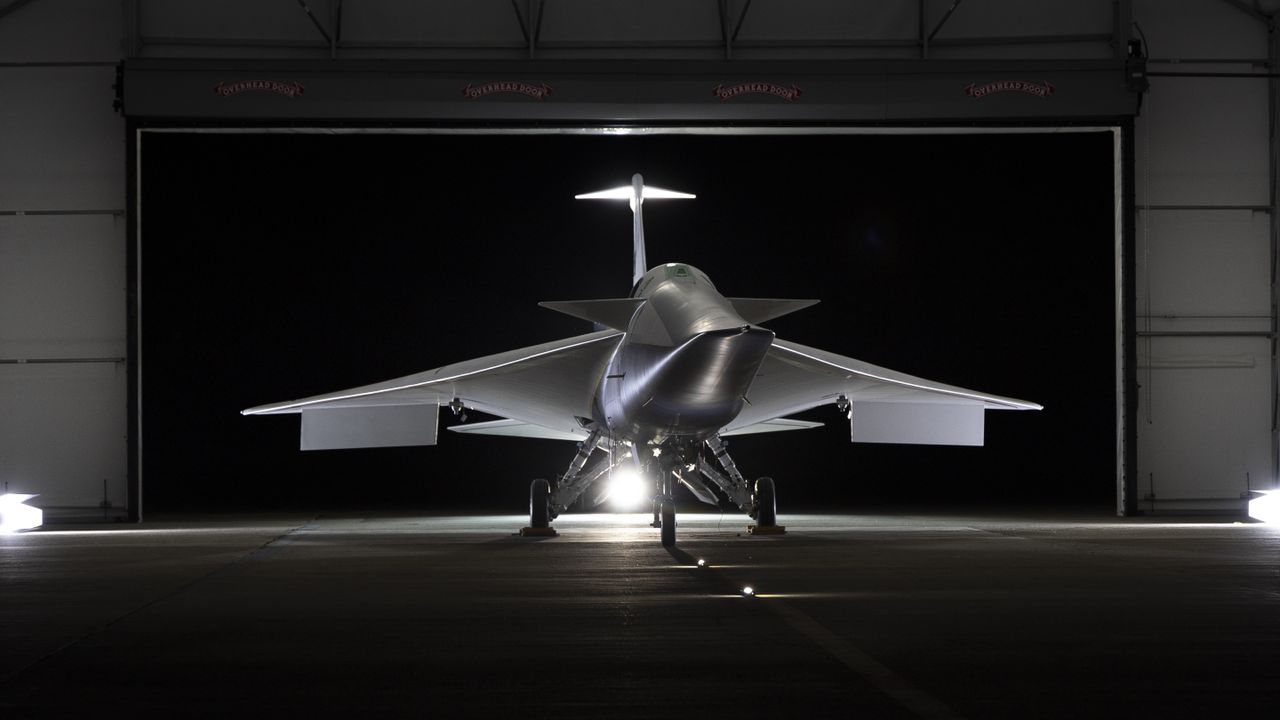
NASA and Lockheed Martin’s experimental X-59 aircraft has taken to the skies for the first time, making history as the first supersonic aircraft designed to make a soft “thump” instead of thunderous sonic booms.

The X-59’s flight is a major step towards commercial supersonic travel, which has been banned in the United States since 1973.

The test flight was planned to last about one hour, taking off from Lockheed Martin’s Skunk Works facility in Palmdale, California, and landing at NASA Armstrong Flight Research Center in Edwards, California on Oct. 28. The plane reached a maximum speed of about 240 miles per hour (386 kilometers per hour) and flew at about 12,000 feet (3,658 meters) off the ground. It did not reach supersonic speeds for this test, which focused on checking critical systems.


You may like

According to Lockheed Martin’s specifications, the X-59 has a top speed of Mach 1.4, or 925 mph (1,489 km/h), which is almost twice as fast as a Boeing 747. It’s designed to fly at an altitude of 55,000 feet (16,764 m). The aircraft has a wingspan of 30 feet (9.1 m), is 14 feet (4.3 m) high, and a whopping 100 feet (30.5 m) long, giving it a strong resemblance to a swordfish.

From the side, the airplane’s shockingly long nose appears to narrow to a point, but it’s actually shaped like a chisel. The nose’s shape is designed to change the shape of the shockwaves generated by supersonic flight, making the aircraft much quieter than the supersonic jets used today. These are banned from flying over populated areas in the United States because of their loud sonic booms.

Sonic booms are caused by shockwaves from rapidly compressed air, similar to thunder. As an aircraft flies, it pushes upon the air in front of it, creating pressure waves. When an aircraft goes supersonic, the pressure waves can’t move out of the way fast enough, so they combine into a single large shockwave, resulting in a sonic boom.

A controversial six-month test over Oklahoma City in 1964 showed that sonic booms from supersonic aircraft flying too close to the ground can break windows, cause minor damage to buildings, and startle people. At the end of the study, more than 1 in 4 people surveyed said that they could not learn to live with the sonic booms.

Get the world’s most fascinating discoveries delivered straight to your inbox.

To lessen the impact of the booms, the X-59 design separates the usual shockwave into multiple smaller shockwaves, resulting in “thumps” that are about the same volume as a car door slamming.

The shockwaves that cause sonic booms can be seen with schlieren imaging, a type of specialized photography invented in 1864 by August Toepler, a German physicist. It relies on how changing air pressure warps light passing through it. Imaging the shockwaves helps us understand if the aircraft’s aerodynamics match what was modeled using computers and small model planes in wind tunnels.

The X-59 is planned to go supersonic in future test flights, and if all goes to plan, will be used to test public reaction to its supersonic “thumps” — paving the way for commercial supersonic flight to return to the US, albeit much quieter this time.

Source link

Share. Facebook Twitter Pinterest LinkedIn Tumblr Email
Previous ArticleTrump administration seeks federal judge approval for Liberia deportation
Next Article Mandated flight cancellations expected to rise
Editor
  • Website

Related Posts

Lifestyle

Chinese medical practitioners used extremely toxic plant as a topical anesthetic 600 years ago, study finds

May 26, 2026
Lifestyle

Bead net funerary shroud: A 2,500-year-old beaded veil from Egypt depicting the deceased’s transformation into Osiris

May 25, 2026
Lifestyle

Rare genetic disease makes scientists reconsider what the ‘seat of fear’ in the brain really is

May 25, 2026
Add A Comment

Comments are closed.

Categories
  • Entertainment
  • Lifestyle
  • News
  • Sports
  • Tech
  • Travel
Recent Posts
  • Chinese medical practitioners used extremely toxic plant as a topical anesthetic 600 years ago, study finds
  • Bead net funerary shroud: A 2,500-year-old beaded veil from Egypt depicting the deceased’s transformation into Osiris
  • Rare genetic disease makes scientists reconsider what the ‘seat of fear’ in the brain really is
  • It’s illegal to repair most of our devices. There’s a surprising reason for that.
  • Jupiter’s Ganymede, the largest moon in the solar system, may be heating up
calendar
May 2026
M T W T F S S
 123
45678910
11121314151617
18192021222324
25262728293031
« Apr    
Recent Posts
  • Chinese medical practitioners used extremely toxic plant as a topical anesthetic 600 years ago, study finds
  • Bead net funerary shroud: A 2,500-year-old beaded veil from Egypt depicting the deceased’s transformation into Osiris
  • Rare genetic disease makes scientists reconsider what the ‘seat of fear’ in the brain really is
About

Welcome to Baynard Media, your trusted source for a diverse range of news and insights. We are committed to delivering timely, reliable, and thought-provoking content that keeps you informed
and inspired

Categories
  • Entertainment
  • Lifestyle
  • News
  • Sports
  • Tech
  • Travel
Facebook X (Twitter) Pinterest WhatsApp
  • Contact Us
  • About Us
  • Privacy Policy
  • Disclaimer
  • UNSUBSCRIBE
© 2026 copyrights reserved

Type above and press Enter to search. Press Esc to cancel.