
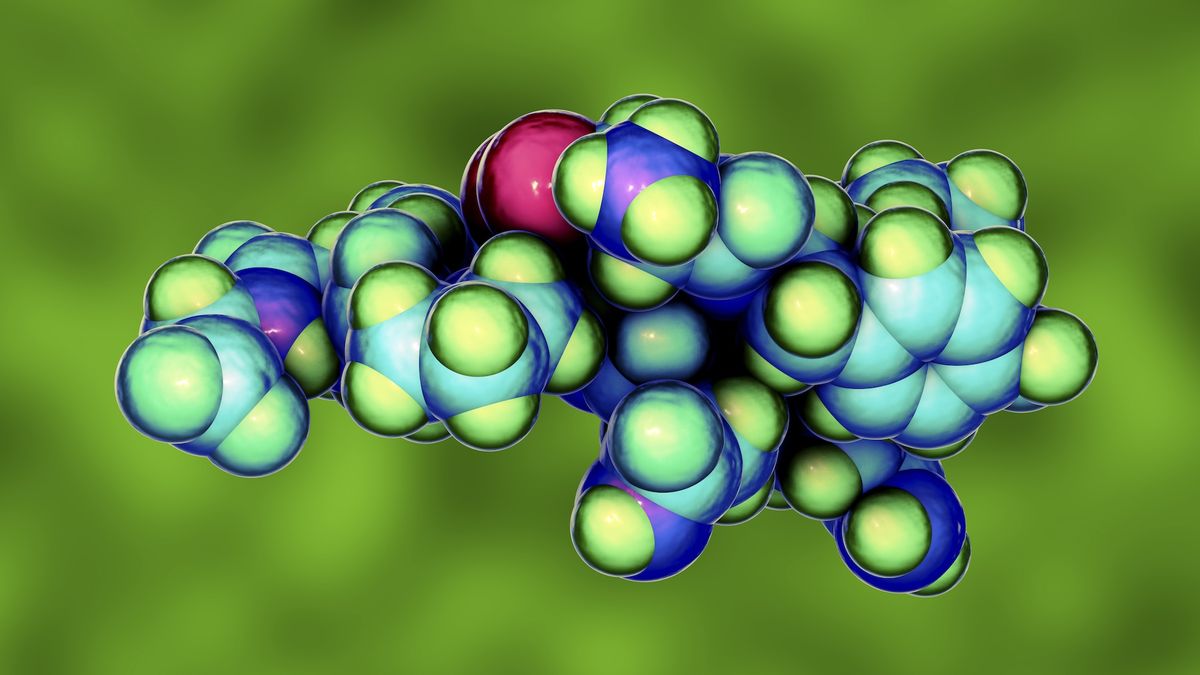
Oxytocin, the “cuddle hormone” that’s known for its involvement in bonding, may also play a role in putting early pregnancies on pause, a study of lab animals finds.
New research in mice shows that the hormone can put embryos in the earliest stages of development into a kind of hibernation state. Once triggered, this process, called “diapause,” might allow a mouse mother to delay a pregnancy at a time when resources are scarce — such as while she is still nursing a previous litter of newborn mouse pups.
“The fact that oxytocin had an influence on this was a little bit of a surprise,” study co-author Moses Chao, a neuroscientist at the New York University Grossman School of Medicine, told Live Science.
Diapause, in general, is a bit of a mystery. The phenomenon naturally occurs in marsupials, such as kangaroos and possums, and in at least 130 species of mammals, including mice and bats.
It might even occur in humans — it’s a difficult phenomenon to track in most human pregnancies, but a few scattered reports from in vitro fertilization (IVF) clinics suggest that, in rare cases, embryos transferred into the uterus might hang out for weeks before actually implanting in the organ. In one case reported in 1996, it took five weeks after embryo transfer for the pregnancy to begin.
Related: Pregnancy may speed up ‘biological aging,’ study suggests
It’s not clear how long diapause can last, Chao said, nor is much known about how embryos enter this state of suspended animation.
Study first author Jessica Minder, a graduate student at the NYU Grossman School of Medicine, was interested in oxytocin’s role in diapause because the hormone is also known to be involved in embryonic development and nursing in mammals, including humans.
Minder and colleagues began the work by introducing male mice into the enclosures of female mice that had just given birth, allowing the rodents to mate while the females were still nursing their first litters. The researchers found that the resulting pregnancies lasted about a week longer in still-nursing female mice than they did in mice that were not nursing.
They think this likely reflects a pre-implantation “pause.” As mouse pregnancies typically last only 19 to 21 days, the pause reflects a significant delay in the process.
The team then set about exploring how this pause might occur.
In another group of newly pregnant mice, the team used a technique called optogenetics, which uses light to switch on specific neurons, to make the brains of the mouse moms release oxytocin. The researchers timed this stimulation to mimic the pulses of oxytocin seen during nursing.
After five days of this treatment, they removed the mice’s uteruses to assess embryonic development. Five of the six mouse mothers had embryos that underwent diapause, as evidenced by a lack of development.
Meanwhile, in a comparison group, pregnant mice who did not have their oxytocin stimulated did not show any signs of diapause.
In another experiment, the team treated early mouse embryos with oxytocin in lab dishes, and that also induced cellular changes consistent with diapause.
Together, the evidence suggested that oxytocin caused embryonic cells to slow their translation of genes into proteins, the researchers reported March 5 in the journal Science Advances. This multistep process involves copying down instructions from DNA into a new molecule, called RNA, that gets shipped to a cell’s protein construction sites.
Embryos without oxytocin receptors can still undergo diapause, Chao noted, so there are probably multiple signals that can trigger the pause. However, oxytocin seems to be important for the embryos to survive this arrest.
When the researchers turned off oxytocin receptors in the mouse embryos, they found that only 11% survived diapause, compared with 42% of the embryos with working oxytocin receptors.
This research is an early exploration of the metabolism of early embryos, Chao said. Eventually, a better understanding of these mechanisms might reveal insight into why early miscarriages happen in people and could possibly lead to new fertility treatments.
More work will be needed to understand the biochemical steps that lead from oxytocin stimulation to diapause, Chao said.
The new findings could also be helpful for understanding cell survival more generally, Chao added. For example, half of the nerve cells in the early embryo die as the developing nervous system is refined before birth. However, many of the nerve cells that develop in the womb ultimately last a lifetime.
“Later on [in development], you don’t want half your cells dying,” Chao said, “so we’re very interested in what keeps those cells going.”
