Close Menu
  • Home
  • UNSUBSCRIBE
  • News
  • Lifestyle
  • Tech
  • Entertainment
  • Sports
  • Travel
Facebook X (Twitter) WhatsApp
Trending
  • James Webb telescope just spotted the oldest, closest pair of black holes in the early universe
  • Saving old trees may protect people’s health more than planting new ones, study of Chicago neighborhoods finds
  • Memory may not work how we thought, study of mice in artificial hibernation finds
  • Romans unceremoniously dumped plague victims down a well, mysterious mass grave in Croatia suggest
  • New AI lets robots complete tasks twice as fast
  • Mammal ancestors may have given live birth 90 million years earlier than we thought, rewriting evolutionary timelines
  • How to see and photograph the partial lunar eclipse on August 27-28
  • Watch now! The Aug. 12 total solar eclipse has begun (live stream)
Facebook X (Twitter) WhatsApp
Baynard Media
  • Home
  • UNSUBSCRIBE
  • News
  • Lifestyle
  • Tech
  • Entertainment
  • Sports
  • Travel
Baynard Media
Home»Lifestyle»Leaf sheep: The adorable solar-powered sea slug that looks like Shaun the Sheep
Lifestyle

Leaf sheep: The adorable solar-powered sea slug that looks like Shaun the Sheep

EditorBy EditorDecember 21, 2024No Comments2 Mins Read
Share Facebook Twitter Pinterest LinkedIn Tumblr Reddit Telegram Email
Share
Facebook Twitter LinkedIn Pinterest Email

Name: Leaf sheep, or leaf slug (Costasiella kuroshimae)

Where it lives: Shallow waters across Asia and the Coral Triangle

What it eats: Algae

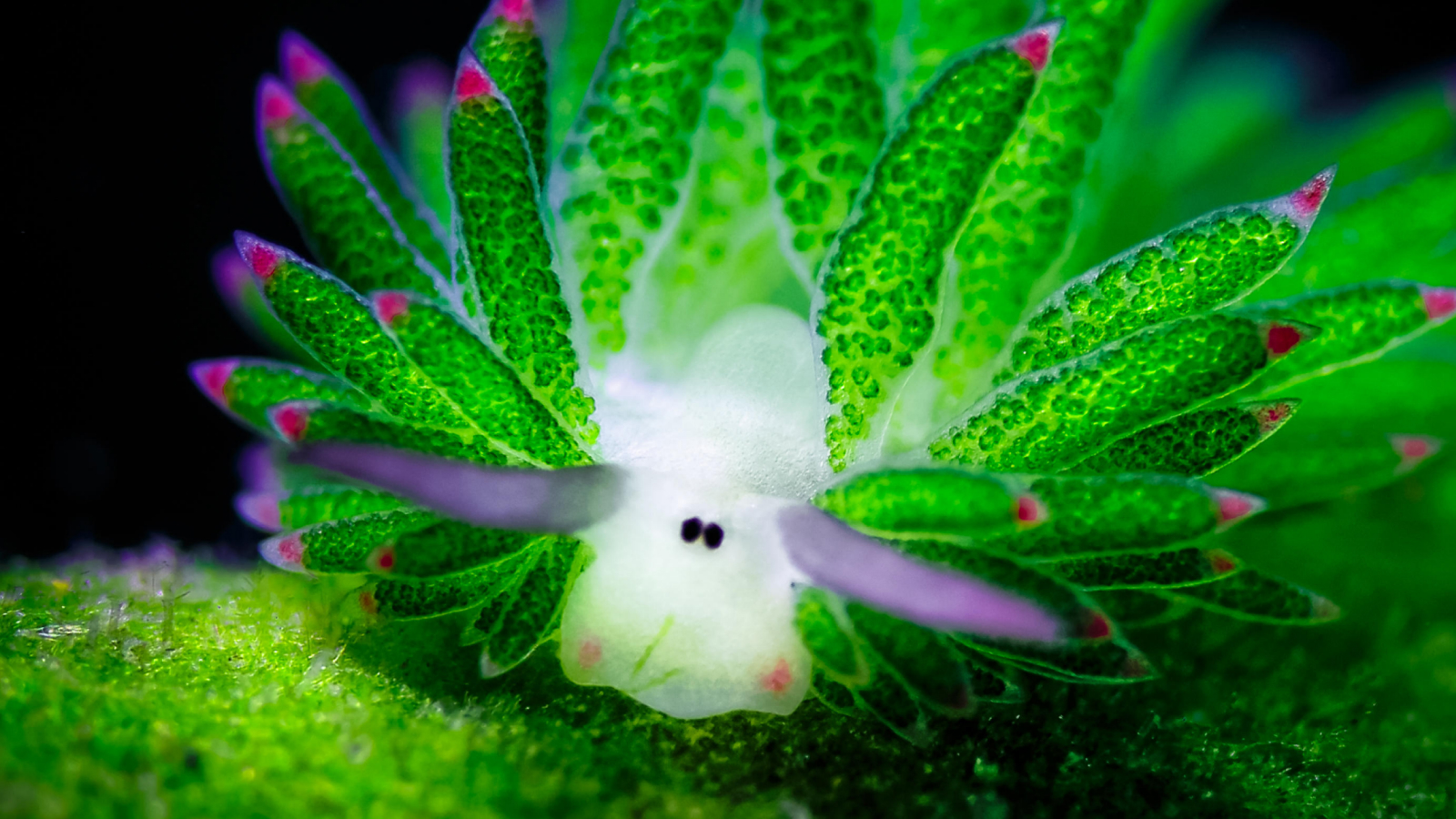
Why it‘s awesome: These tiny marine creatures are probably better known by their nickname, “Shaun the Sheep” sea slugs, because of their uncanny resemblance to the iconic TV character.

The adorable critters have white faces, small black eyes and two “ears.” These structures are special organs called rhinophores covered in tiny hairs that help the leaf sheep sense chemicals in the water and find food. Their tiny bodies are covered with green structures called cerata, which look like leaves and give them a larger surface area for gas exchange.

Growing to 0.3 inches (8 millimeters) long, leaf sheep were first discovered off Kuroshima Island, Japan, in 1993. They have also been recorded in the Philippines, Indonesia, Singapore and Thailand. Shaun the Sheep sea slugs are found in shallow waters near coral reefs. They live on algae, which also provides them with food.

Solar-powered sea slugs

When leaf sheep munch on algae, they absorb chloroplasts — special structures where photosynthesis takes place. These are filled with chlorophyll, and the green pigment gives the sea slugs’ bodies a leaf-like color. This not only helps them blend in with their surroundings to better hide from predators but also gives them a clever way of generating food.

Get the world’s most fascinating discoveries delivered straight to your inbox.

Related: Blue dragon: The deadly sea slug that steals venom from its prey

The sea slugs steal the chloroplasts through a process called kleptoplasty — from the Greek word for “thief” — and store them in their tissues for up to 10 days. The chloroplasts continue working inside the animals, enabling them to create energy through photosynthesis.

“Imagine you ate a salad and kept the chloroplast from it in your digestive system, so you just need to put yourself under the sun to make food,” Miguel Azcuna, assistant professor of marine natural products chemistry at Batangas State University in the Philippines, told the BBC. “It’s convenient for survival.” Azcuna is an expert in coral reef ecology.

Along with corals, spotted salamanders and giant clams, these solar-powered slugs are among the few animals that can photosynthesize.

Source link

Share. Facebook Twitter Pinterest LinkedIn Tumblr Email
Previous ArticleTest out the top AI tools
Next Article Walmart’s Top 100 Gifts: Save Up to 86% Off on Apple, Xbox &More
Editor
  • Website

Related Posts

Lifestyle

James Webb telescope just spotted the oldest, closest pair of black holes in the early universe

August 14, 2026
Lifestyle

Saving old trees may protect people’s health more than planting new ones, study of Chicago neighborhoods finds

August 14, 2026
Lifestyle

Memory may not work how we thought, study of mice in artificial hibernation finds

August 13, 2026
Add A Comment

Comments are closed.

Categories
  • Entertainment
  • Lifestyle
  • News
  • Sports
  • Tech
  • Travel
Recent Posts
  • James Webb telescope just spotted the oldest, closest pair of black holes in the early universe
  • Saving old trees may protect people’s health more than planting new ones, study of Chicago neighborhoods finds
  • Memory may not work how we thought, study of mice in artificial hibernation finds
  • Romans unceremoniously dumped plague victims down a well, mysterious mass grave in Croatia suggest
  • New AI lets robots complete tasks twice as fast
calendar
August 2026
M T W T F S S
 12
3456789
10111213141516
17181920212223
24252627282930
31  
« Jul    
Recent Posts
  • James Webb telescope just spotted the oldest, closest pair of black holes in the early universe
  • Saving old trees may protect people’s health more than planting new ones, study of Chicago neighborhoods finds
  • Memory may not work how we thought, study of mice in artificial hibernation finds
About

Welcome to Baynard Media, your trusted source for a diverse range of news and insights. We are committed to delivering timely, reliable, and thought-provoking content that keeps you informed
and inspired

Categories
  • Entertainment
  • Lifestyle
  • News
  • Sports
  • Tech
  • Travel
Facebook X (Twitter) Pinterest WhatsApp
  • Contact Us
  • About Us
  • Privacy Policy
  • Disclaimer
  • UNSUBSCRIBE
© 2026 copyrights reserved

Type above and press Enter to search. Press Esc to cancel.