Close Menu
  • Home
  • UNSUBSCRIBE
  • News
  • Lifestyle
  • Tech
  • Entertainment
  • Sports
  • Travel
Facebook X (Twitter) WhatsApp
Trending
  • Heartbeats physically stop cardiac cancer from growing — hinting that ‘squeezing’ tumors could be a good way to thwart them
  • Gone in 9 seconds: Claude AI deletes an entire company’s database, then confesses
  • ‘It cuts both ways’: Positive tipping points can restore wreaked ecosystems — we just need to trigger them, Earth system scientist Tim Lenton says
  • 1,900-year-old souvenir cup featuring Hadrian’s Wall and Roman forts discovered in Spain
  • First-of-its-kind map of the mouse nose reveals surprises about the sense of smell
  • Some fungi can influence the weather ‪—‬ and now we know how they do it
  • Neanderthals’ brains weren’t to blame for their demise, new study suggests
  • NASA Curiosity rover uncovers rock with 7 new organic molecules on Mars
Facebook X (Twitter) WhatsApp
Baynard Media
  • Home
  • UNSUBSCRIBE
  • News
  • Lifestyle
  • Tech
  • Entertainment
  • Sports
  • Travel
Baynard Media
Home»Lifestyle»Lasers powered by sunlight could beam energy through space to support interplanetary missions
Lifestyle

Lasers powered by sunlight could beam energy through space to support interplanetary missions

EditorBy EditorDecember 27, 2024No Comments3 Mins Read
Share Facebook Twitter Pinterest LinkedIn Tumblr Reddit Telegram Email
Share
Facebook Twitter LinkedIn Pinterest Email

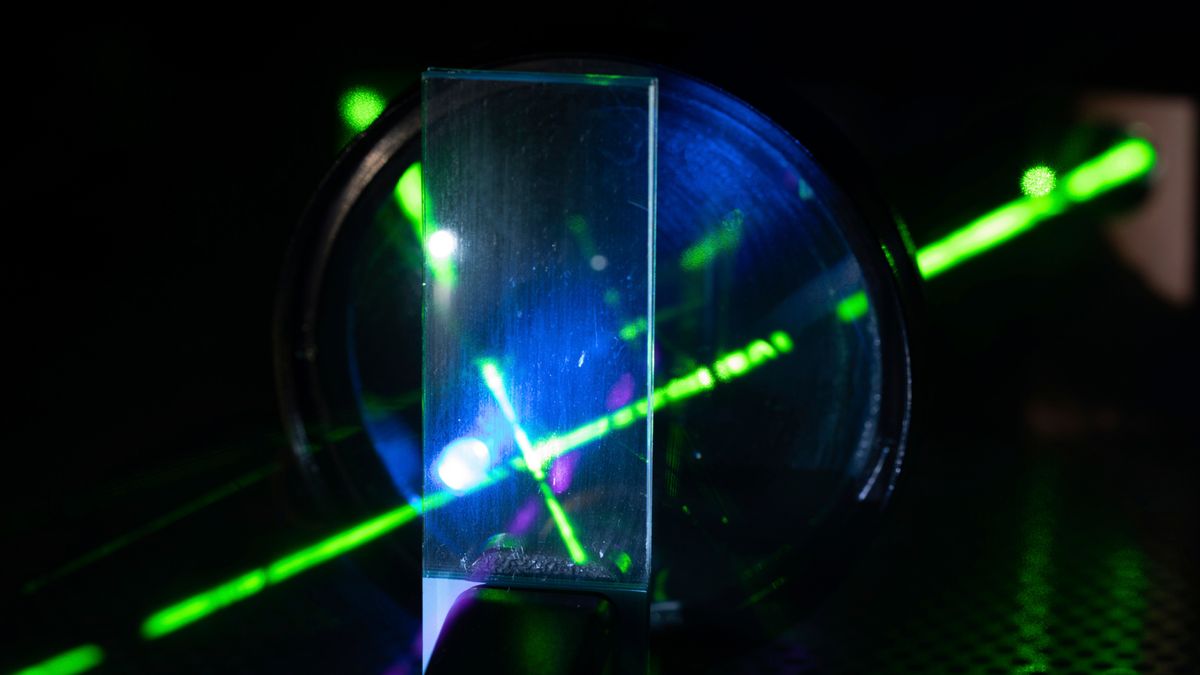
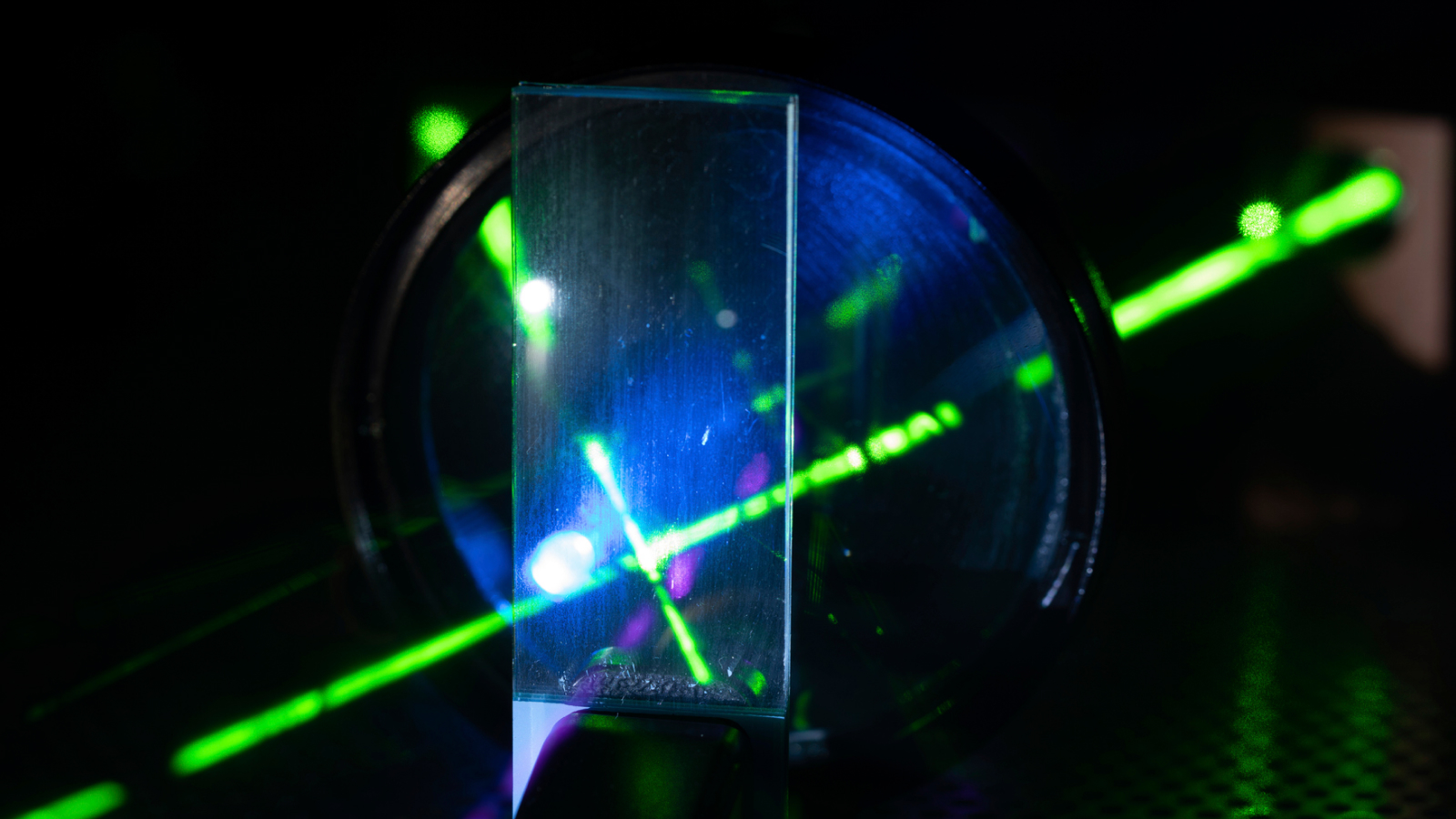
Laser beams powered by the sun are one small step closer to becoming a reality after researchers received funding to develop the pioneering technology. These lasers could eventually help power lunar bases and missions to Mars, and contribute to sustainable energy solutions on Earth, scientists say.

In June, the international team of researchers announced it had received a roughly €4 million ($1.2 million) grant from the European Innovation Council and Innovate UK to develop solar-powered laser technology inspired by photosynthetic bacteria.

“In my group, we spend a lot of time thinking about artificial light harvesting and what we can learn from nature,” Erik Gauger, a quantum theorist at Heriot-Watt University in Scotland who is involved in the collaboration, told Live Science in an interview. “If it’s possible in nature, we should be able to utilize similar effects in artificial systems.”

Sunlight-powered lasers aren’t a new concept — the first one was demonstrated in 1963, just three years after the first laser was built. But regular sunlight is too dilute to power a laser effectively. Solar-powered lasers typically require complex, heavy-duty optics to intensify sunlight at least a thousand-fold. The weight of these components means it’s challenging to send them to space.

Related: ‘It invites us to reconsider our notion of shadow’: Laser beams can actually cast their own shadows, scientists discover

To overcome these challenges, Gauger and his colleagues will turn to bacteria that live in darkness deep in the ocean. These bacteria have extremely sensitive light-harvesting structures that can pick up nearly every photon they encounter. These structures enable the bacteria to photosynthesize even in very low-light conditions. By extracting these light-harvesting structures and replicating them in the lab, the team hopes to concentrate ambient sunlight enough to power a laser, Gauger said.

Powering lunar bases and interplanetary missions

He and his colleagues described how such a system might work in a 2021 paper. In the proposed system, the structures capture incoming sunlight, then funnel the light into a solid material, such as a crystal. The electrons in the atoms of that material absorb energy from the light and then release that extra energy as laser light.

Get the world’s most fascinating discoveries delivered straight to your inbox.

With the new grant, the team plans to develop new laser-emitting materials that can interface with the bacteria’s photosynthetic structures.

Once the laser system is online, it could help power satellites, lunar bases and even missions to Mars, according to a statement. Because laser beams remain narrow and tightly focused over long distances, they can transmit energy to faraway systems. For example, a solar laser built on a space station could power that station or send power to a nearby satellite, or even to Earth. At the receiving site, the energy from the laser light could then be converted into heat or electricity.

The solar-powered lasers could also support a shift toward renewable energy on Earth, Gauger said.

“They could, for example, help you split water, drive chemistry, synthesize fertilizers, and help with processes which require a significant fraction of the energy we currently produce, including from fossil sources,” Gauger said. “They’re not going to solve all our problems directly, but they might play a small part in the challenge we face to move to clean, sustainable energies.”

The team plans to develop a prototype laser within the next three years.

Source link

Share. Facebook Twitter Pinterest LinkedIn Tumblr Email
Previous ArticleJennifer Love Hewitt Shares Rare Video of 9-Year-Old Son Atticus
Next Article Richard Parsons, former Time Warner CEO, dies at age 76
Editor
  • Website

Related Posts

Lifestyle

Heartbeats physically stop cardiac cancer from growing — hinting that ‘squeezing’ tumors could be a good way to thwart them

April 29, 2026
Lifestyle

Gone in 9 seconds: Claude AI deletes an entire company’s database, then confesses

April 29, 2026
Lifestyle

‘It cuts both ways’: Positive tipping points can restore wreaked ecosystems — we just need to trigger them, Earth system scientist Tim Lenton says

April 29, 2026
Add A Comment

Comments are closed.

Categories
  • Entertainment
  • Lifestyle
  • News
  • Sports
  • Tech
  • Travel
Recent Posts
  • Heartbeats physically stop cardiac cancer from growing — hinting that ‘squeezing’ tumors could be a good way to thwart them
  • Gone in 9 seconds: Claude AI deletes an entire company’s database, then confesses
  • ‘It cuts both ways’: Positive tipping points can restore wreaked ecosystems — we just need to trigger them, Earth system scientist Tim Lenton says
  • 1,900-year-old souvenir cup featuring Hadrian’s Wall and Roman forts discovered in Spain
  • First-of-its-kind map of the mouse nose reveals surprises about the sense of smell
calendar
April 2026
M T W T F S S
 12345
6789101112
13141516171819
20212223242526
27282930  
« Mar    
Recent Posts
  • Heartbeats physically stop cardiac cancer from growing — hinting that ‘squeezing’ tumors could be a good way to thwart them
  • Gone in 9 seconds: Claude AI deletes an entire company’s database, then confesses
  • ‘It cuts both ways’: Positive tipping points can restore wreaked ecosystems — we just need to trigger them, Earth system scientist Tim Lenton says
About

Welcome to Baynard Media, your trusted source for a diverse range of news and insights. We are committed to delivering timely, reliable, and thought-provoking content that keeps you informed
and inspired

Categories
  • Entertainment
  • Lifestyle
  • News
  • Sports
  • Tech
  • Travel
Facebook X (Twitter) Pinterest WhatsApp
  • Contact Us
  • About Us
  • Privacy Policy
  • Disclaimer
  • UNSUBSCRIBE
© 2026 copyrights reserved

Type above and press Enter to search. Press Esc to cancel.