Close Menu
  • Home
  • UNSUBSCRIBE
  • News
  • Lifestyle
  • Tech
  • Entertainment
  • Sports
  • Travel
Facebook X (Twitter) WhatsApp
Trending
  • Lemur used in ‘lemur yoga’ session dies of human herpesvirus, study finds
  • ‘A fine line between reducing stigma and trivialising conditions’: Social media, self-diagnosis and the glamorization of ADHD
  • New 2D memory device stores data on just a single electron
  • Before we ban kids from social media completely, here’s what we should try first | Jonathan Bellack and Mariana Olaizola Rosenblat
  • Scientists uncover a better way to beat ‘the bends’ — using deep-diving pigs
  • Mars may have been losing its water more than 4 billion years ago, oldest-known Martian meteorite suggests
  • ‘The lance head was still inside the pelvis’: Mass grave found in Austria may hold casualties of unknown ancient Roman battle
  • ‘Full-on berserker mode’: Archaeologists solve mystery of medieval soldiers with gruesome square holes in their skull
Facebook X (Twitter) WhatsApp
Baynard Media
  • Home
  • UNSUBSCRIBE
  • News
  • Lifestyle
  • Tech
  • Entertainment
  • Sports
  • Travel
Baynard Media
Home»Lifestyle»Lake Superior rocks reveal build up to giant collision that formed supercontinent Rodinia
Lifestyle

Lake Superior rocks reveal build up to giant collision that formed supercontinent Rodinia

EditorBy EditorAugust 21, 2025No Comments2 Mins Read
Share Facebook Twitter Pinterest LinkedIn Tumblr Reddit Telegram Email
Share
Facebook Twitter LinkedIn Pinterest Email

Around 1.1 billion years ago, the oldest and most tectonically stable part of North America — called Laurentia — was rapidly heading south toward the equator. Laurentia eventually slammed into Earth’s other landmasses during the Grenville orogeny to form the supercontinent Rodinia.

Laurentia’s path during that period is known, thanks to paleomagnetism. By tracing the orientation and magnetism of rocks in the lithosphere, scientists can approximate the relative position and movement of Laurentia leading up to Rodinia’s formation.

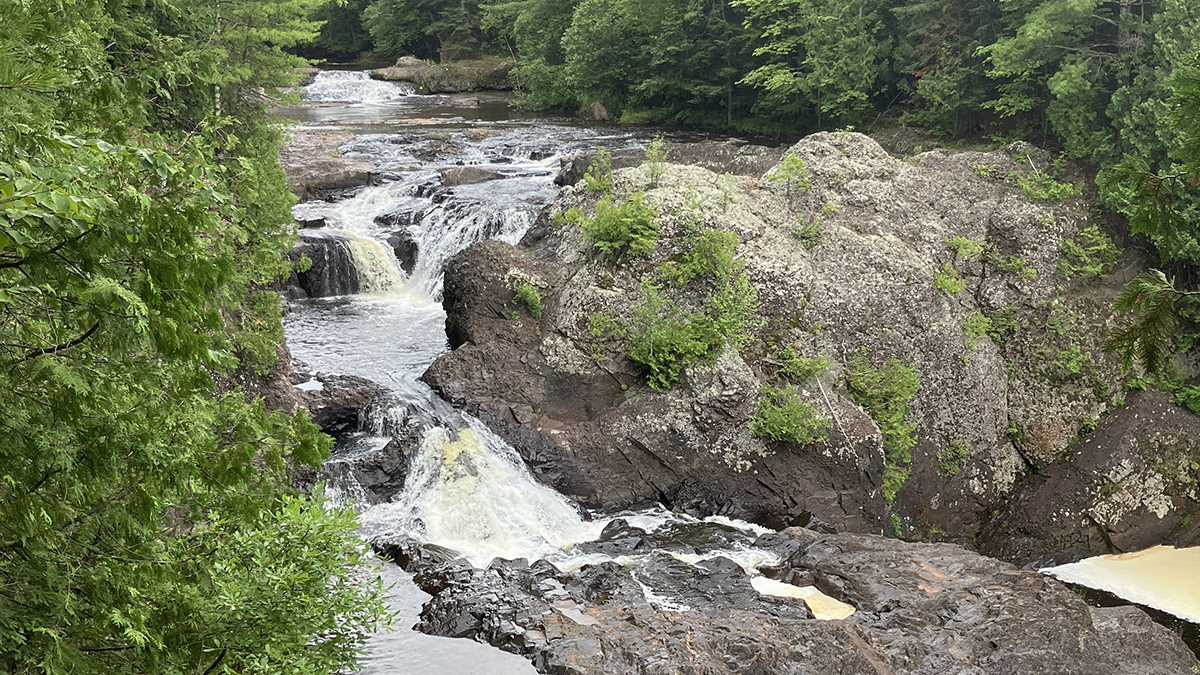
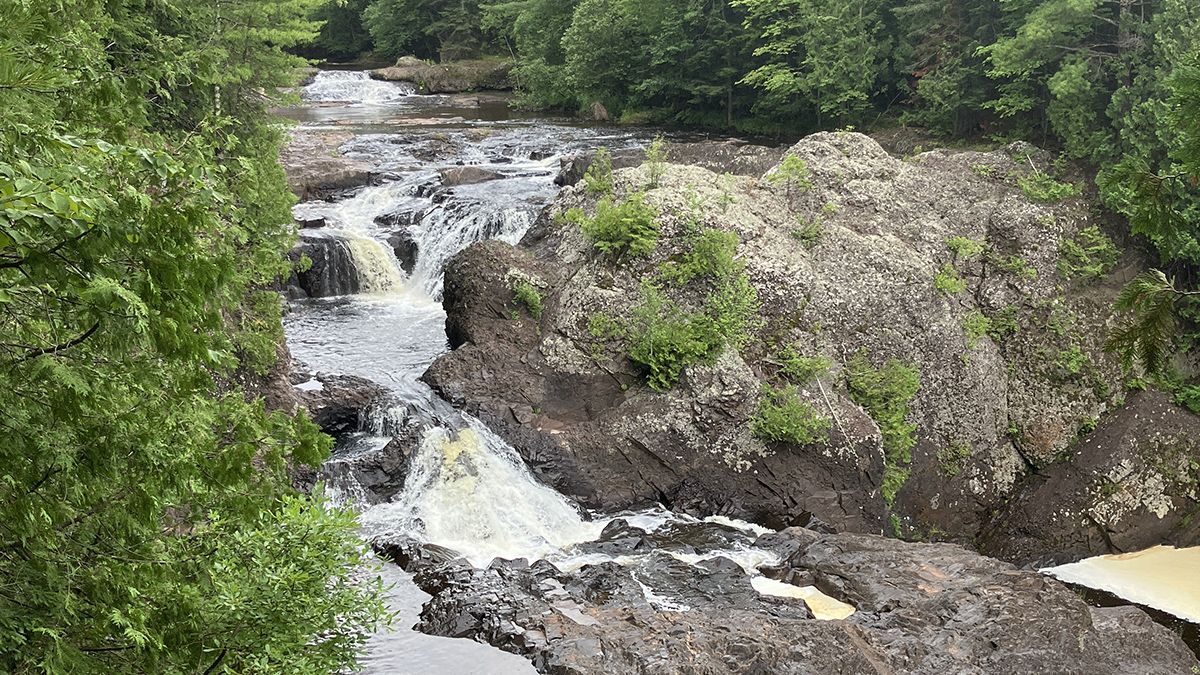
The rocks along Lake Superior in northern Wisconsin and Michigan are especially important for tracing Laurentia’s movement. These rocks — dominated by red sandstones, siltstones, and minor conglomerates — were deposited during extensive sedimentation caused by the North American Midcontinent Rift and are rife with iron oxides like hematite. Hematite can acquire magnetization when it is deposited, which records where the rock was in relation to Earth’s poles at the time.


You may like

Unfortunately, the existing paleomagnetic record is marred by a gap between 1,075 million and 900 million years ago, limiting our understanding of how, when, and where Rodinia formed.

To fill this data gap, Fuentes et al. collected new samples from the Freda Formation near Lake Superior, which formed in floodplain environments an estimated 1,045 million years ago. The authors combined these data with stratigraphic age modeling to estimate a new, sedimentary paleopole, or the position of the geomagnetic pole at a particular time in the past.

Previous studies indicate that for 30 million years, sometime between 1,110 million and 1,080 million years ago, Laurentia moved from about 60°N to 5°N at a rate of 30 centimeters (12 inches) per year — faster than the Indian plate’s collision with Eurasia pushing up the Himalayas. This study showed that over the following 30 million years, Laurentia’s progress slowed to 2.4 centimeters (1 inch) per year as it crossed the equator.

The paleocontinent’s slowdown during Freda Formation deposition coincides with the onset of the Grenville orogeny. The results confirm that a stagnant single-lid regime — in which the lithosphere behaves as a single, continuous plate rather than multiple independent plates — was not in effect during this interval.

Get the world’s most fascinating discoveries delivered straight to your inbox.

This article was originally published on Eos.org. Read the original article.

Source link

Share. Facebook Twitter Pinterest LinkedIn Tumblr Email
Previous ArticleWoman’s violent meltdown at Orlando Southwest airport leads to arrest
Next Article Trump administration’s newest allegation against political foes: Mortgage fraud
Editor
  • Website

Related Posts

Lifestyle

Lemur used in ‘lemur yoga’ session dies of human herpesvirus, study finds

August 15, 2026
Lifestyle

‘A fine line between reducing stigma and trivialising conditions’: Social media, self-diagnosis and the glamorization of ADHD

August 15, 2026
Lifestyle

New 2D memory device stores data on just a single electron

August 15, 2026
Add A Comment

Comments are closed.

Categories
  • Entertainment
  • Lifestyle
  • News
  • Sports
  • Tech
  • Travel
Recent Posts
  • Lemur used in ‘lemur yoga’ session dies of human herpesvirus, study finds
  • ‘A fine line between reducing stigma and trivialising conditions’: Social media, self-diagnosis and the glamorization of ADHD
  • New 2D memory device stores data on just a single electron
  • Before we ban kids from social media completely, here’s what we should try first | Jonathan Bellack and Mariana Olaizola Rosenblat
  • Scientists uncover a better way to beat ‘the bends’ — using deep-diving pigs
calendar
September 2026
M T W T F S S
 123456
78910111213
14151617181920
21222324252627
282930  
« Aug    
Recent Posts
  • Lemur used in ‘lemur yoga’ session dies of human herpesvirus, study finds
  • ‘A fine line between reducing stigma and trivialising conditions’: Social media, self-diagnosis and the glamorization of ADHD
  • New 2D memory device stores data on just a single electron
About

Welcome to Baynard Media, your trusted source for a diverse range of news and insights. We are committed to delivering timely, reliable, and thought-provoking content that keeps you informed
and inspired

Categories
  • Entertainment
  • Lifestyle
  • News
  • Sports
  • Tech
  • Travel
Facebook X (Twitter) Pinterest WhatsApp
  • Contact Us
  • About Us
  • Privacy Policy
  • Disclaimer
  • UNSUBSCRIBE
© 2026 copyrights reserved

Type above and press Enter to search. Press Esc to cancel.