
A mountain of hydrogen is lurking beneath Earth’s surface — and scientists say that just a fraction of it could break our dependence on fossil fuels for 200 years.
New research suggests the planet holds around 6.2 trillion tons (5.6 trillion metric tons) of hydrogen in rocks and underground reservoirs. That’s roughly 26 times the amount of oil known to be left in the ground (1.6 trillion barrels, each weighing approximately 0.15 tons) — but where these hydrogen stocks are located remains unknown.
Most of the hydrogen is likely too deep or too far offshore to be accessed, and some of the reserves are probably too small to extract in a way that makes economical sense, the researchers suspect. However, the results indicate there’s more than enough hydrogen to go around, even with those limitations, Geoffrey Ellis, a petroleum geochemist at the U.S. Geological Survey (USGS) and lead author of the new study, told Live Science.
Hydrogen is a source of clean energy that can fuel vehicles, power industrial processes and generate electricity. Just 2% of the hydrogen stocks found in the study, equivalent to 124 billion tons (112 billion metric tons) of gas, “would supply all the hydrogen we need to get to net-zero [carbon] for a couple hundred years,” Ellis said.
The energy released by that amount of hydrogen is roughly twice the energy stored in all the known natural gas reserves on Earth, Ellis and his co-author Sarah Gelman, also a USGS geologist, noted in the study. The results were published Friday (Dec. 13) in the journal Science Advances.
Related: Massive helium reservoir in Minnesota could solve US shortage
To estimate the amount of hydrogen inside Earth, the researchers used a model that accounted for the rate at which the gas is produced underground, the amount likely to be trapped in reservoirs, and the amount lost through various processes, such as leaking out of rocks and into the atmosphere.
Hydrogen is created through chemical reactions in rocks, the simplest being a reaction that splits water into hydrogen and oxygen, Ellis said. “There’s actually dozens of natural processes that are capable of generating hydrogen, but most of them generate very small amounts,” he said.
Until recently, researchers didn’t realize that hydrogen accumulates beneath Earth’s surface. “The paradigm throughout my entire career was that hydrogen’s out there, it occurs, but it’s a very small molecule, so it easily escapes through small pores and cracks and rocks,” Ellis explained.
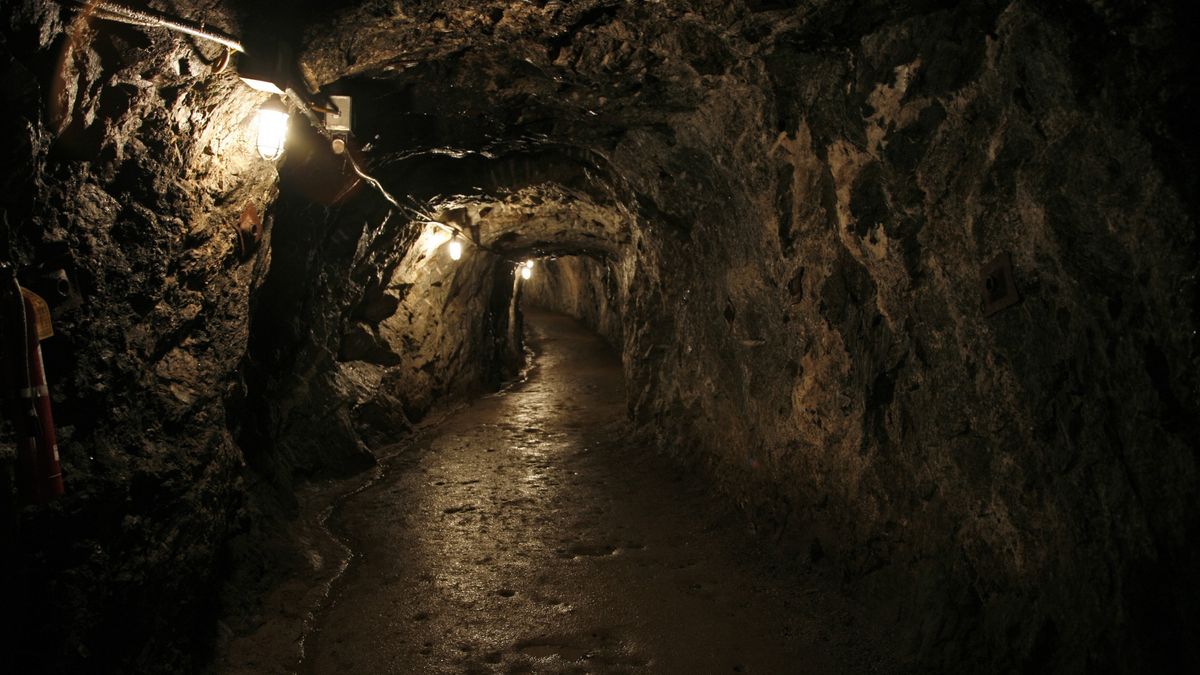
But when scientists discovered a huge cache of hydrogen in West Africa, and then another in an Albanian chromium mine, that paradigm shifted. It’s now clear that hydrogen does build up in reservoirs in the Earth, and the new study suggests some of those accumulations could be sizable.
“I was surprised that the results were larger than I thought going in,” Ellis said. “The takeaway is that there is a lot down there.”
But it’s important to note that there is huge uncertainty surrounding these results, he said, as the model showed there could be anywhere from 1 billion to 10 trillion tons of hydrogen down there. (The most probable value, based on the assumptions of the model, was 6.2 trillion tons.)
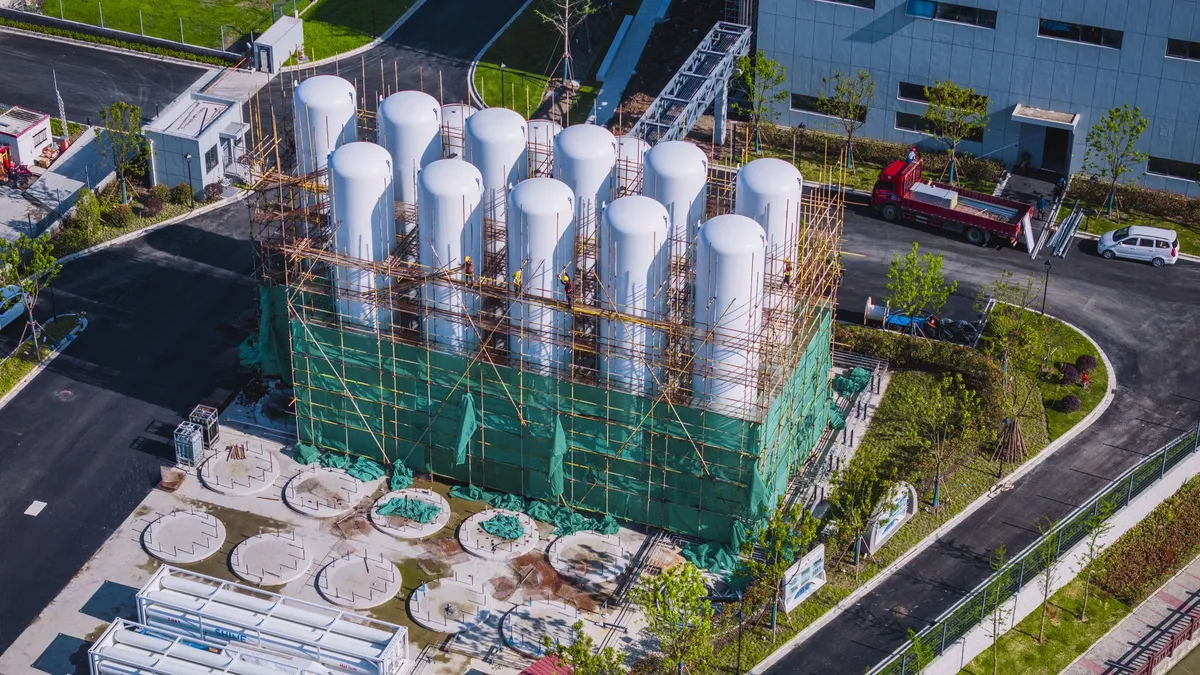
Hydrogen is projected to account for up to 30% of the future energy supply in some sectors, and global demand is expected to rise fivefold by 2050. The gas is produced artificially through electrolysis of water, where water molecules are broken down with electric currents. When renewable energy is used, the product is called “green hydrogen,” and when fossil fuels are used, it’s known as “blue hydrogen.”
The benefits of tapping natural hydrogen are that it doesn’t require a source of energy to produce, and underground reservoirs can hold the gas until it is needed. “We don’t have to worry about storage, which is something that with the blue hydrogen or green hydrogen you do — you want to make it when electricity is cheap and then you have to store it somewhere,” Ellis said. With natural hydrogen, “you could just open a valve and close it whenever you needed it.”
The big question that remains is where exactly all this hydrogen is located, which will affect whether it is accessible. Ellis and colleagues are making strides toward narrowing down the geologic criteria needed to form accumulations underground, and the results for the U.S. could be published early next year, he said.
