
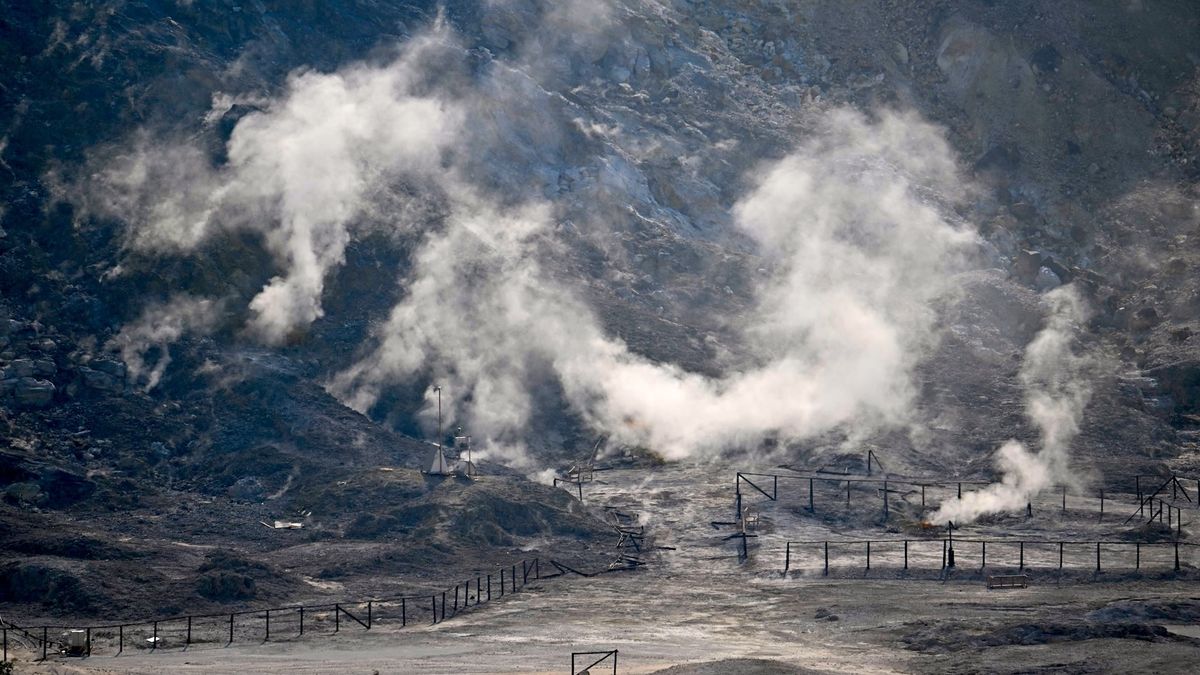
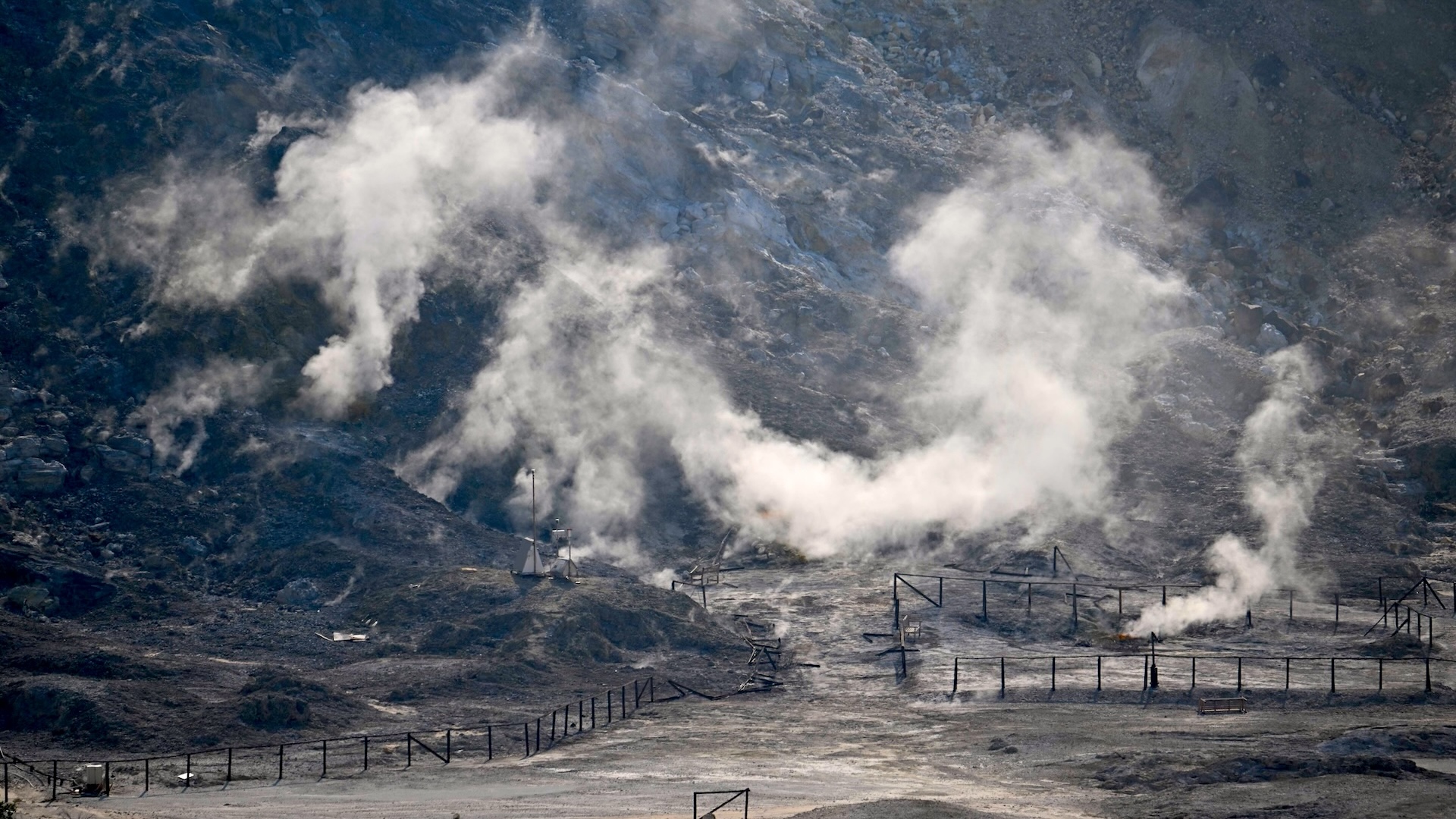
Italy’s Campi Flegrei volcano may have had a more explosive history than experts thought.
A new study finds that the volcano — or one near it — laid down an enormous layer of ash and volcanic rock about 109,000 years ago. This outburst, dubbed the Maddaloni/X-6 eruption, was similar in size to the biggest known Campi Flegrei eruption, which happened 40,000 years ago and was so large that it created a caldera 9 miles (15 kilometers) in diameter.
“Despite the relatively large uncertainty, the Maddaloni/X-6 eruption may be, by a wide margin, at least the second-largest explosive event [to have] occurred in the Campi Flegrei area since 109,000 years ago,” study lead author Giada Fernandez, a doctoral student in Earth science at Sapienza University of Rome, wrote in the new paper, published Jan. 15 in the journal Communications Earth & Environment.
Campi Flegrei sits just east of Naples, at the southern end of the fertile Campanian Plain. The soil of the plain is rich and fertile, and it’s made of broken-down volcanic ash from the eruption 40,000 years ago.
The confirmation of an older eruption that was nearly as large has subtle implications for the risk to the 400,000 or so people who live in the caldera.
The volcano has been experiencing about 75 years of unrest, which may or may not lead to an eruption. Should such an eruption occur, it is almost certain to be small, said Christopher Kilburn, a volcanologist at University College London who was not involved in the new research. But if Campi Flegrei has experienced multiple caldera-forming eruptions in the past, it could suggest that in the long term, the volcano has the capacity for more devastating explosions.
“It changes the perception of the risk of Campi Flegrei being active again,” Kilburn told Live Science.
What the new paper can’t say, however, is whether the Maddaloni/X-6 eruption came from Campi Flegrei itself or whether the magma erupted from fractures a few dozen miles north of the caldera. This wouldn’t particularly matter to anyone standing in the eruption zone in the event of such a devastating event, Kilburn said. But it does matter to researchers monitoring the volcano, because it can help them focus on the signals that are most likely to presage a major eruption.
Researchers knew the volcano had laid down ash layers prior to the eruption 40,000 years ago. The difficulty in understanding these eruptions is that most of their traces were wiped away by that most recent major eruption. The rocks from the Maddaloni/X-6 eruption are now visible mostly in small outcrops in the Apennine, Kilburn said, or in boreholes drilled deep into the Earth.
Fernandez and her colleagues used these outcrops to make a model of what the 109,000-year-old eruption would have looked like. They found that it did come from the Campi Flegrei region and that it began with an explosive eruption of ash and rock that made the classic billowing volcanic cloud. Next came a period of enormous pyroclastic flows — avalanches of hot gas and rock that became a layer of rock called ignimbrite. This ignimbrite is 6.5 feet (2 meters) deep in places.
The eruption would have removed more than 36 cubic miles (150 cubic km) of magma from below the surface. That is not much smaller than the largest known eruption, which occurred 40,000 years ago, Fernandez and her colleagues reported.
In comparison, the last eruption at Campi Flegrei was in 1538 and spewed about 0.005 cubic miles (0.02 cubic km) of magma, Kilburn said.
The new study is “an exemplary piece of work,” Kilburn said, and it points to the need to better understand the magma plumbing under the Campi Flegrei system. If the eruption 109,000 years ago came from Campi Flegrei itself, that suggests the caldera is capable of large, recurring eruptions, he said. If it came from nearby volcanic fractures, it suggests that those areas need to be better studied.
This doesn’t mean a huge eruption is likely on human timescales, Kilburn stressed, but it could reveal more about the future of volcanic activity in the region over tens of thousands of years.
“We”ve got to start viewing the volcano as more than just Campi Flegrei,” he said. “We”ve got to start thinking of the whole of the Campanian Plain as being a potential zone of eruption, even if very rarely.”
