Close Menu
  • Home
  • UNSUBSCRIBE
  • News
  • Lifestyle
  • Tech
  • Entertainment
  • Sports
  • Travel
Facebook X (Twitter) WhatsApp
Trending
  • New robotic heart mimics common, mysterious condition to help researchers study it
  • Canon EOS R6 III review: A wildlife wonder
  • Medieval babies and adults buried together in Sweden were not related, archaeologists discover — raising big questions about early Christian burial practices
  • NASA is creating a fifth state of matter on the ISS, thanks to an upgrade to a mini-fridge-sized quantum lab
  • New sodium metal battery design charges in just 4 minutes and retains its capacity for years
  • Quantum computing wielded to create extremely rare material critical to nuclear fusion
  • Scientists build tiny ‘diving suit’ for cockroaches, turning them into search-and-rescue cyborgs
  • Physicists develop the first working model of quantum mechanics using only ‘real’ numbers
Facebook X (Twitter) WhatsApp
Baynard Media
  • Home
  • UNSUBSCRIBE
  • News
  • Lifestyle
  • Tech
  • Entertainment
  • Sports
  • Travel
Baynard Media
Home»Lifestyle»In a 1st, ancient proteins reveal sex of human relative from 3.5 million years ago
Lifestyle

In a 1st, ancient proteins reveal sex of human relative from 3.5 million years ago

EditorBy EditorFebruary 7, 2025No Comments3 Mins Read
Share Facebook Twitter Pinterest LinkedIn Tumblr Reddit Telegram Email
Share
Facebook Twitter LinkedIn Pinterest Email

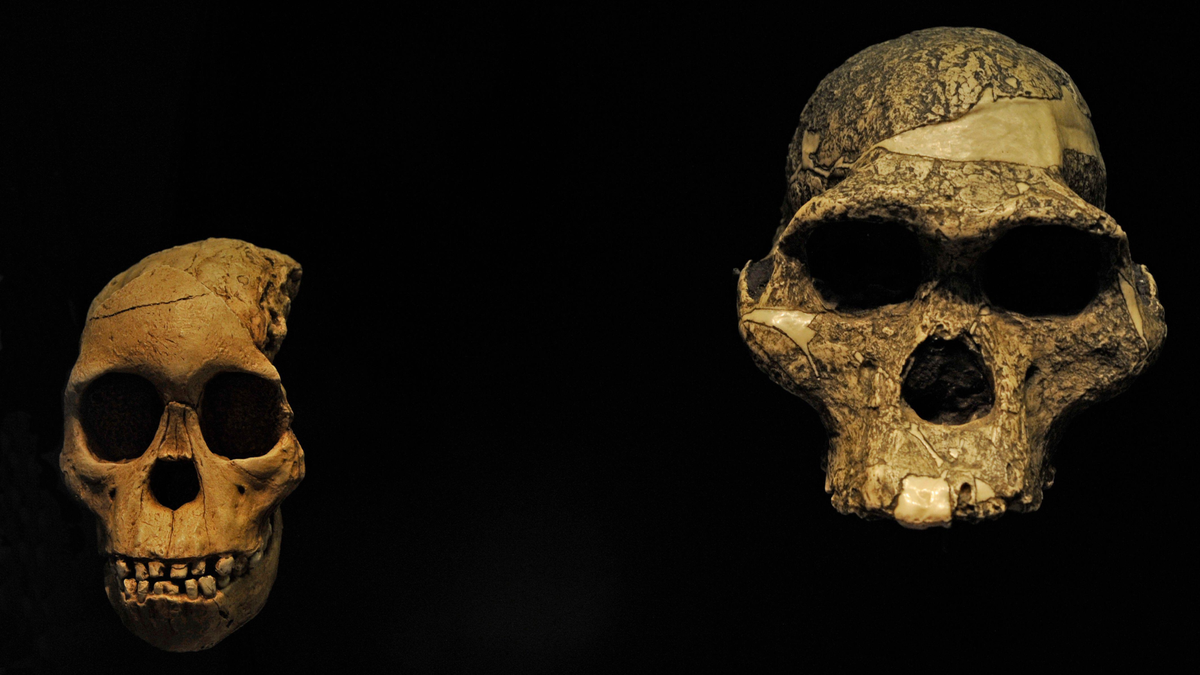
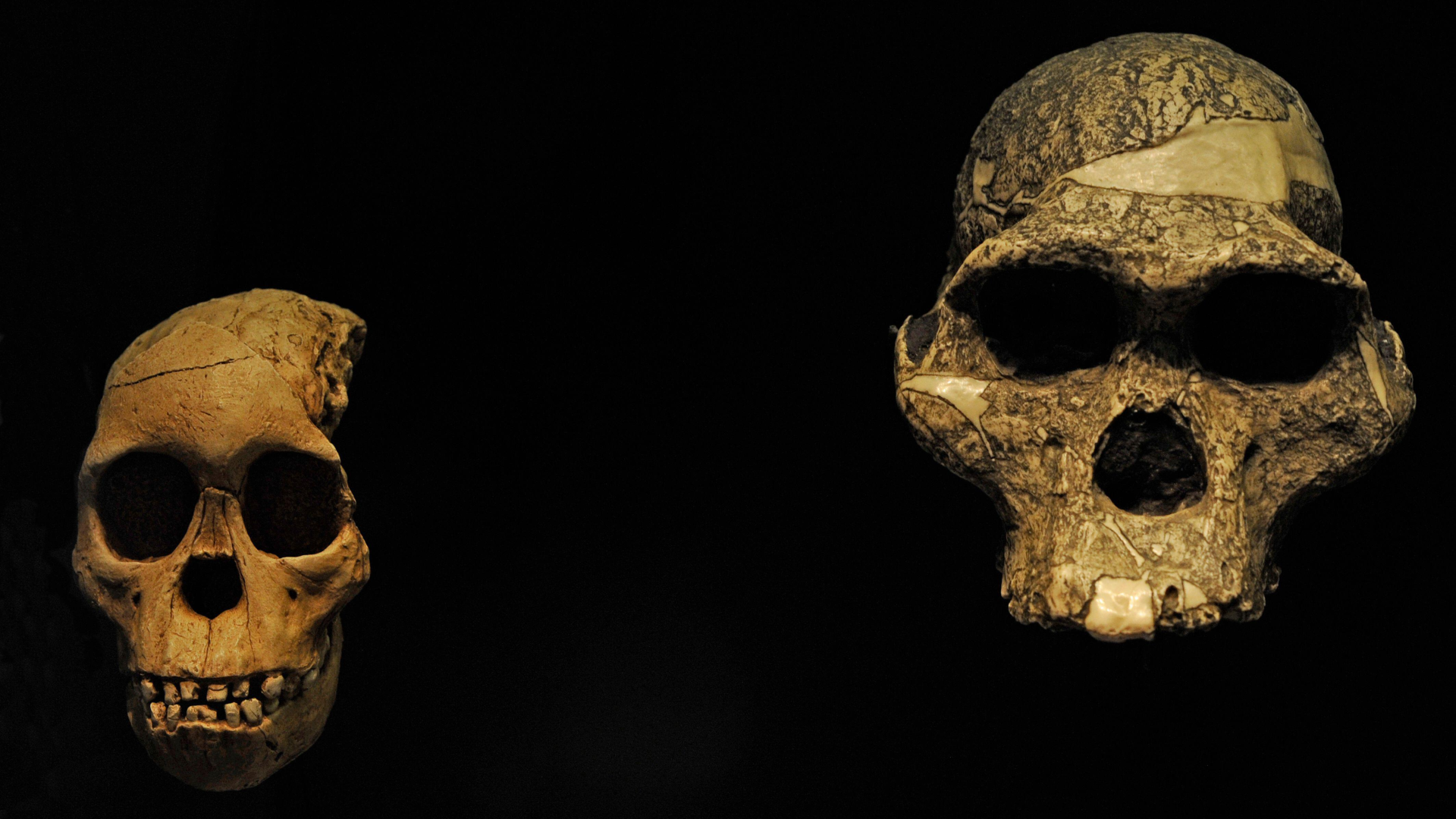
In a first, scientists have used ancient proteins to determine the sex of an archaic human relative that lived up to 3.5 million years ago, a new study reports.

An international team of scientists examined a set of proteins called the proteome. They collected this material from the tooth enamel of an Australopithecus africanus individual whose remains were found in a South African cave decades ago. The method they used, called paleoproteomics, has never successfully worked on such an old hominin (modern humans along with their ancient relatives and ancestors), the researchers said in a study published in the South African Journal of Science on Friday (Feb. 7).

“To my knowledge, among the publicly shared hominin enamel proteomes, A. africanus is the oldest hominin to be subjected to palaeoproteomic analysis,” study lead author Palesa Madupe, a postdoctoral researcher in the Section for Geogenetics at the University of Copenhagen, told Live Science in an email.

Paleoproteomics, the study of ancient proteins trapped in tooth enamel, was developed about 30 years ago. Because proteins can preserve longer than DNA, paleoproteomics is used to study the genetic building blocks of creatures that are millions of years old, such as an 80 million-year-old Brachylophosaurus. Only recently, however, have paleoanthropologists been able to extract these proteins from our fossil ancestors.

Madupe and her team have been working to recover traces of proteins from hominin fossils in South Africa’s Cradle of Humankind, where at least six hominin species lived, including A. africanus (3.5 million to 2.0 million years ago) and Homo naledi (335,000 to 236,000 years ago). Paleoproteomics, they wrote in the study, can help researchers better understand how the different species varied. This would include determining the sex of these individuals, which is not always straightforward given the fragmentary nature of fossilized skeletons.

Related: Famous Taung Child fossil from South Africa is 2.58 million years old, new study finds

Using a minimally invasive technique, the researchers extracted over 100 peptides — short chains of amino acids that are built into proteins — from the tooth of one A. africanus individual found in the Sterkfontein limestone caves in South Africa. Several of these peptides were unique to amelogenin, a protein that is key in normal tooth development. Because males and females build this protein slightly differently, the researchers could tell the A. africanus tooth was from a male individual.

Get the world’s most fascinating discoveries delivered straight to your inbox.

The study was published as part of a special issue of the South African Journal of Science in honor of the 100th anniversary of the “Taung Child.” The famous child’s tiny skull was accidentally discovered by quarry workers who were blasting a limestone cliff in South Africa. In a groundbreaking study published in the journal Nature on Feb. 7, 1925, Australian anthropologist Raymond Dart boldly suggested that A. africanus was a human relative, making it the first ancient hominin ever discovered in Africa.

Although the new study proved that proteins can be recovered from hominin fossils up to 3 million years old in South Africa, Madupe wants to apply the technique to a wider range of regions and climates around the world.

“These are all incredibly exciting breakthroughs that are poised to revolutionise our understanding of human evolution,” the researchers wrote.

Source link

Share. Facebook Twitter Pinterest LinkedIn Tumblr Email
Previous ArticleScale your business without a big budget
Next Article Trump taps Vance to negotiate sale of TikTok ahead of deadline
Editor
  • Website

Related Posts

Lifestyle

New robotic heart mimics common, mysterious condition to help researchers study it

July 11, 2026
Lifestyle

Canon EOS R6 III review: A wildlife wonder

July 10, 2026
Lifestyle

Medieval babies and adults buried together in Sweden were not related, archaeologists discover — raising big questions about early Christian burial practices

July 10, 2026
Add A Comment

Comments are closed.

Categories
  • Entertainment
  • Lifestyle
  • News
  • Sports
  • Tech
  • Travel
Recent Posts
  • New robotic heart mimics common, mysterious condition to help researchers study it
  • Canon EOS R6 III review: A wildlife wonder
  • Medieval babies and adults buried together in Sweden were not related, archaeologists discover — raising big questions about early Christian burial practices
  • NASA is creating a fifth state of matter on the ISS, thanks to an upgrade to a mini-fridge-sized quantum lab
  • New sodium metal battery design charges in just 4 minutes and retains its capacity for years
calendar
July 2026
M T W T F S S
 12345
6789101112
13141516171819
20212223242526
2728293031  
« Jun    
Recent Posts
  • New robotic heart mimics common, mysterious condition to help researchers study it
  • Canon EOS R6 III review: A wildlife wonder
  • Medieval babies and adults buried together in Sweden were not related, archaeologists discover — raising big questions about early Christian burial practices
About

Welcome to Baynard Media, your trusted source for a diverse range of news and insights. We are committed to delivering timely, reliable, and thought-provoking content that keeps you informed
and inspired

Categories
  • Entertainment
  • Lifestyle
  • News
  • Sports
  • Tech
  • Travel
Facebook X (Twitter) Pinterest WhatsApp
  • Contact Us
  • About Us
  • Privacy Policy
  • Disclaimer
  • UNSUBSCRIBE
© 2026 copyrights reserved

Type above and press Enter to search. Press Esc to cancel.