Close Menu
  • Home
  • UNSUBSCRIBE
  • News
  • Lifestyle
  • Tech
  • Entertainment
  • Sports
  • Travel
Facebook X (Twitter) WhatsApp
Trending
  • Don Juan Pond: Antarctica’s salty, syrupy lake that never freezes, even when it’s minus 58 F
  • Withings ScanWatch 2 review: Style meets next-level health monitoring
  • AI Chatbots are turbo-charging violence against women and girls: We urgently need to regulate them | Yvonne McDermott Rees
  • ‘The biggest El Niño event since the 1870s’: ‘Super’ El Niño is now the most likely scenario by the end of this year ‪—‬ and the humanitarian cost could be huge
  • Antarctica’s sudden sea ice loss is one of the most extreme and confusing events in the modern climate record. Scientists now know why it’s happening.
  • ‘I heard gasps’: Artemis II astronauts reveal inside story of their mind-bending solar eclipse
  • A pill can stop people from developing COVID after being exposed to the virus, trial finds
  • ‘There are 4 people in those pixels’: Earth-based telescope snapped Artemis II crew orbiting the moon
Facebook X (Twitter) WhatsApp
Baynard Media
  • Home
  • UNSUBSCRIBE
  • News
  • Lifestyle
  • Tech
  • Entertainment
  • Sports
  • Travel
Baynard Media
Home»Lifestyle»How do cats get their spots?
Lifestyle

How do cats get their spots?

EditorBy EditorDecember 14, 2024No Comments4 Mins Read
Share Facebook Twitter Pinterest LinkedIn Tumblr Reddit Telegram Email
Share
Facebook Twitter LinkedIn Pinterest Email

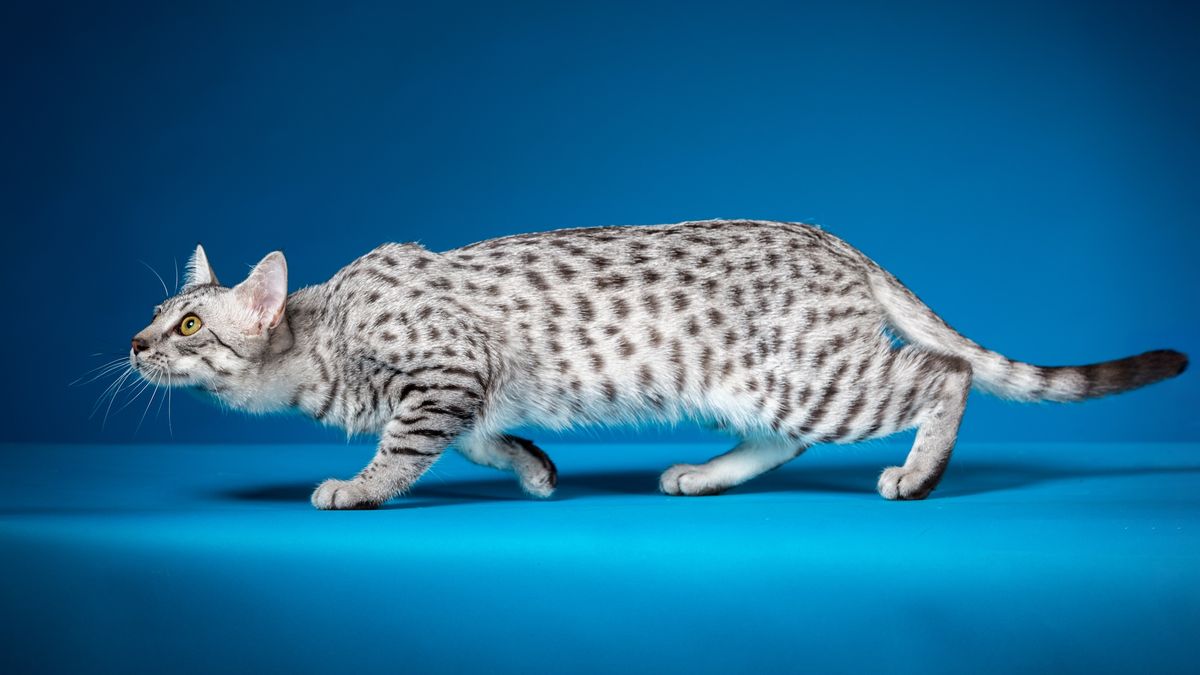
Leopards, cheetahs, Egyptian maus — a variety of cats have stunning spots. Others, like tigers, have stripes; still others, like lions, lack patterns on their coats. But how do cats get their spots, specifically?

Scientists don’t have a complete answer to this question, but they’ve uncovered many clues.

“We don’t know why some cats have spots and some cats have stripes,” Dr. Greg Barsh, a professor emeritus of genetics and pediatrics at Stanford University, told Live Science. But researchers have identified two genes that affect the size and shape of spots — as well as stripes — in both domestic cats and wild felines.

Domestic cats with one or two normal copies of a gene called Taqpep have stripes, Barsh and colleagues reported in a 2012 paper published in the journal Science. But according to this same paper, as Live Science previously reported, cats with mutations in both copies of this gene (one from their mother and one from their father) have fur that is blotched or whorled.

These Taqpep mutations give rise to the patterns of the classic tabby cat, Leslie Lyons, a cat geneticist at the University of Missouri College of Veterinary Medicine, told Live Science.

Related: Is it safe for cats to drink milk?

Taqpep mutations can also modify spots — at least in cheetahs. Cheetahs are known for having black spots on a yellowish-tan background. But “king cheetahs” — which have mutations in both copies of the Taqpep gene, according to the 2012 Science paper — have large, blotchy spots. Along the spine, the blotches align themselves into stripes.

Get the world’s most fascinating discoveries delivered straight to your inbox.

A cheetah in tall grass

King cheetahs have blotches that align themselves into stripes. (Image credit: claudialothering via Getty Images)

Although spotted domestic cats are obviously not striped, they appear to have a normal version of Taqpep, according to Eduardo Eizirik, a professor of genetics at the Pontifical Catholic University of Rio Grande do Sul in Porto Alegre, Brazil. As part of a study published in the journal Genetics in 2010, he mated a spotted domestic cat with a blotched one.

Eizirik and his colleagues concluded that the spotted cat he started with — an Egyptian mau — must have had a normal Taqpep gene, because some of its descendants had stripes. The team also surmised that one or more other genes in the spotted cat had the effect of breaking up the stripes that Taqpep would normally cause and turning them into spots. It’s still unclear what those other genes are, he said.

Another gene that seems to affect spotting is Dkk4, according to Barsh. The Abyssinian breed of domestic cat has one or two mutated copies of the Dkk4 gene. Its coat, at a glance, appears to be a solid brown or cinnamon color. Another way to view it, however, is as a coat peppered with tiny black spots, Barsh said.

Servals are wild felines with large spots, and they have two normal copies of Dkk4. Therefore, if you cross an Abyssinian cat with a serval, as has been done, some of the offspring inherit one normal copy and one mutant copy of Dkk4, Barsh explained. These offspring have spots that are larger and sparser than the peppered spots on the Abyssinian parent but smaller and more numerous than those of the serval parent.

a serval cat walks with her two kittens

Serval cats have large spots. (Image credit: Marcello Calandrini via Getty Images)

“This is a very clear example of how the [Dkk4] gene can affect the number and the size of spots on the animal,” Barsh said.

Although mutations in Taqpep and Dkk4 can modify spots and stripes, these genes do not by themselves control whether cats have spots or stripes in the first place. A tiger with a normal Taqpep gene has stripes, while a cheetah with a normal Taqpep gene has spots, Barsh said. While mutations in Taqpep can make a cheetah’s spots become blotchy, the spots don’t turn into stripes.

And as Eizirik’s work showed, domestic cats with a normal Taqpep gene can be either striped or spotted. “There must be something else yet, a third gene, that is helping to create those spots,” Lyons said.

Source link

Share. Facebook Twitter Pinterest LinkedIn Tumblr Email
Previous ArticleRobertson sent off while Pereira survives red and scores! Dean analyses big decisions
Next Article Suspect charged with murder in UnitedHealthcare CEO’s killing hires prominent New York attorney
Editor
  • Website

Related Posts

Lifestyle

Don Juan Pond: Antarctica’s salty, syrupy lake that never freezes, even when it’s minus 58 F

May 16, 2026
Lifestyle

Withings ScanWatch 2 review: Style meets next-level health monitoring

May 15, 2026
Lifestyle

AI Chatbots are turbo-charging violence against women and girls: We urgently need to regulate them | Yvonne McDermott Rees

May 15, 2026
Add A Comment

Comments are closed.

Categories
  • Entertainment
  • Lifestyle
  • News
  • Sports
  • Tech
  • Travel
Recent Posts
  • Don Juan Pond: Antarctica’s salty, syrupy lake that never freezes, even when it’s minus 58 F
  • Withings ScanWatch 2 review: Style meets next-level health monitoring
  • AI Chatbots are turbo-charging violence against women and girls: We urgently need to regulate them | Yvonne McDermott Rees
  • ‘The biggest El Niño event since the 1870s’: ‘Super’ El Niño is now the most likely scenario by the end of this year ‪—‬ and the humanitarian cost could be huge
  • Antarctica’s sudden sea ice loss is one of the most extreme and confusing events in the modern climate record. Scientists now know why it’s happening.
calendar
May 2026
M T W T F S S
 123
45678910
11121314151617
18192021222324
25262728293031
« Apr    
Recent Posts
  • Don Juan Pond: Antarctica’s salty, syrupy lake that never freezes, even when it’s minus 58 F
  • Withings ScanWatch 2 review: Style meets next-level health monitoring
  • AI Chatbots are turbo-charging violence against women and girls: We urgently need to regulate them | Yvonne McDermott Rees
About

Welcome to Baynard Media, your trusted source for a diverse range of news and insights. We are committed to delivering timely, reliable, and thought-provoking content that keeps you informed
and inspired

Categories
  • Entertainment
  • Lifestyle
  • News
  • Sports
  • Tech
  • Travel
Facebook X (Twitter) Pinterest WhatsApp
  • Contact Us
  • About Us
  • Privacy Policy
  • Disclaimer
  • UNSUBSCRIBE
© 2026 copyrights reserved

Type above and press Enter to search. Press Esc to cancel.