
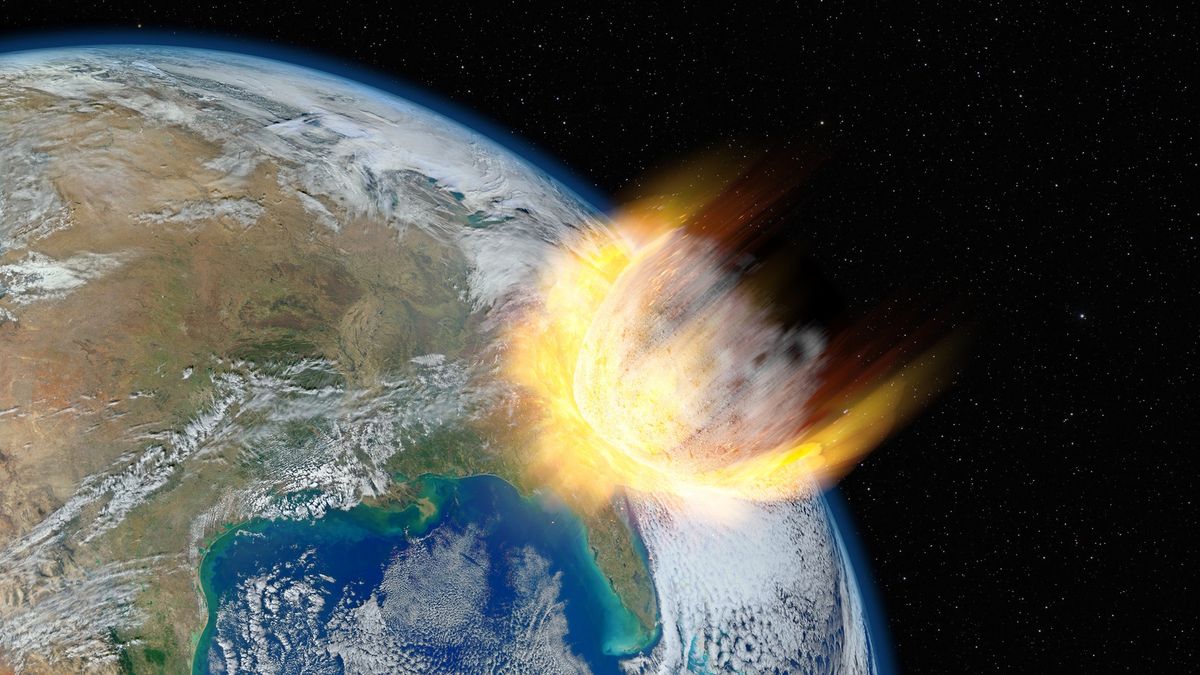
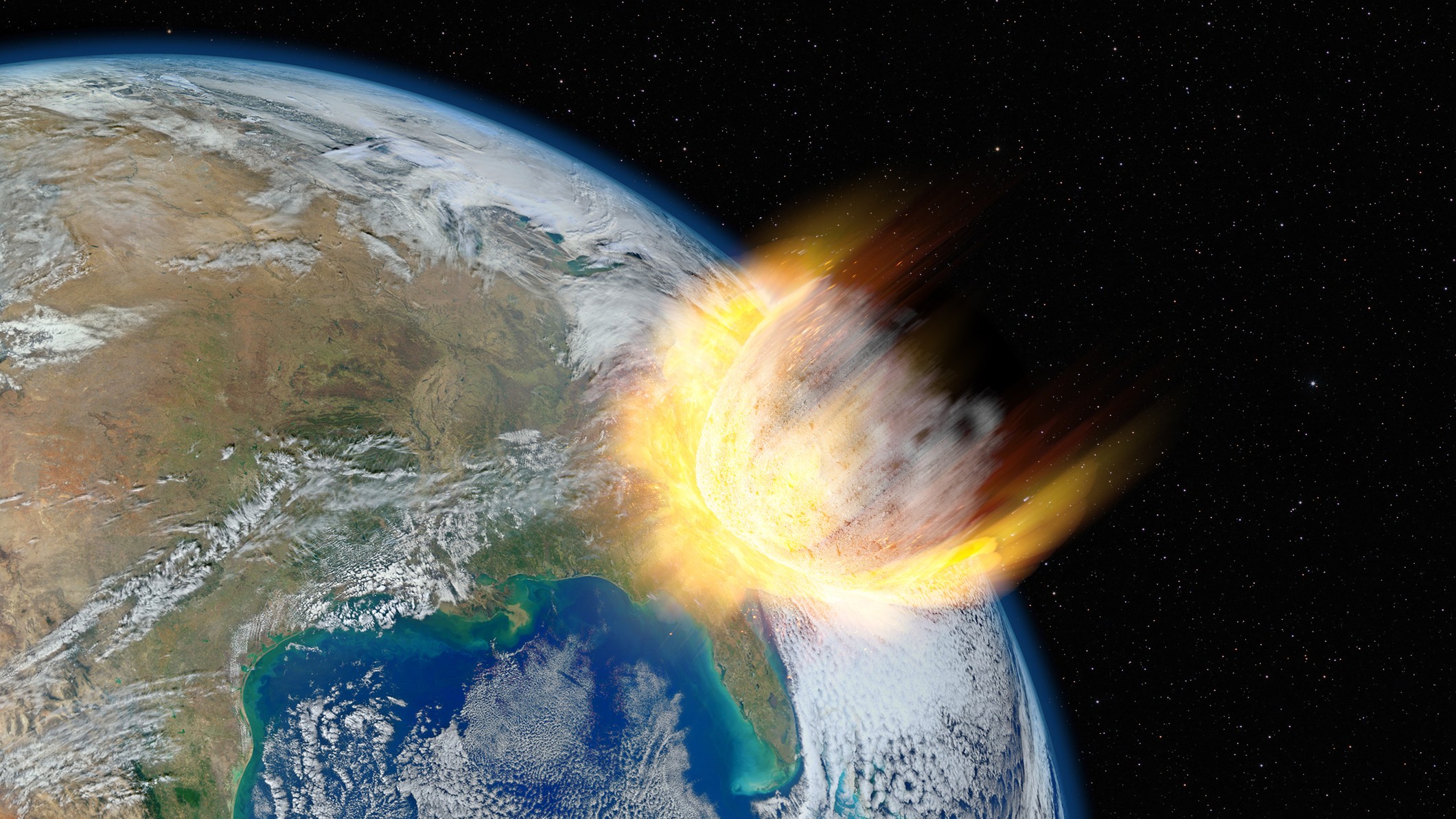
Scientists have revealed what would actually happen to our planet if an asteroid the size of One World Trade Center smashed into it.
The findings were modeled on near-Earth asteroid Bennu, considered by NASA to pose the highest risk to our planet in terms of proximity and impact. The asteroid measures 0.31 miles (0.5 kilometers) in diameter and weighs an estimated 74 million tons (67 million metric tons).
“The immediate effects of a Bennu-sized asteroid impact would cause devastating damages around the impact site,” Axel Timmermann, study co-author and director at the Institute of Basic Science Center for Climate Physics at Pusan National University in South Korea, told Live Science in an email. “But large amounts of ejecta from the impact would have more long-term effects on Earth’s climate and could affect human society around the globe.”
Bennu is significantly smaller than the 6-mile-wide (10 km) behemoth that created the Chixulub crater and wiped out the dinosaurs about 66 million years ago. However, even a Bennu-size asteroid could drastically reduce global food production and lead to worldwide climate change, the researchers said in the study, published Wednesday (Feb. 5) in the journal Science Advances.
Near the impact the immediate consequences would be devastating. “It would immediately generate powerful shockwaves, thermal radiation, tsunamis, earthquakes, crater, and ejecta around the collision site,” Timmerman said.
However, the long-term effects of this collision would be global. “We focus mainly on the climatic and ecological effects of several hundred million tons of dust into the upper atmosphere from the initial impact,” Timmerman said.
Using supercomputer models, the researchers showed that such large dust clouds could cool global temperatures by as much as 7.2 degrees Fahrenheit (4 degrees Celsius) and reduce global rainfall by approximately 15%.
Related: ‘City-killer’ asteroid has a 1-in-83 chance of smashing into Earth in 2032, NASA says
“The solar dimming due to dust would cause an abrupt global ‘impact winter’ characterized by reduced sunlight, cold temperature and decreased precipitation at the surface,” Timmerman said. This would slow plant growth on land and photosynthesis in the oceans.
In total, the models predicted up to 30% reduction in global plant photosynthesis as well as a 15% reduction in global rainfall, threatening global food security. The authors added that this change in weather patterns could last for more than four years after the initial impact.
The dust plume would also deplete the ozone layer. “Severe ozone depletion occurs in the stratosphere due to strong stratospheric warming caused by the solar absorption of dust particles,” Timmerman said.
Not every organism would suffer, however. If the impact produced particularly iron-rich dust, certain types of ocean algae may blossom, the model showed. The researchers said that these algae could offer an alternative to food production on land, but the algae may also throw ocean ecosystems out of whack.
How likely is it that Bennu will hit Earth?
While it is important to consider these risks, Bennu has just a 1 in 2,700 chance of hitting Earth in 2182, Timmerman said.
Still, NASA scientists are learning as much as they can about the space rock, which is believed to have broken away from a larger asteroid between 700 million and 2 billion years ago.
In 2016, NASA scientists sent its OSIRIS-REx spacecraft to the asteroid to collect samples from its surface. The samples were brought to Earth in 2023, and the first results of their analysis were revealed last week.
Samples from Bennu contained all five of the “letters” that make up life’s genetic codes — DNA and RNA — alongside minerals rich in carbon, sulfur, phosphorus, fluorine and sodium — the basic building blocks for life.
