Close Menu
  • Home
  • UNSUBSCRIBE
  • News
  • Lifestyle
  • Tech
  • Entertainment
  • Sports
  • Travel
Facebook X (Twitter) WhatsApp
Trending
  • New robotic heart mimics common, mysterious condition to help researchers study it
  • Canon EOS R6 III review: A wildlife wonder
  • Medieval babies and adults buried together in Sweden were not related, archaeologists discover — raising big questions about early Christian burial practices
  • NASA is creating a fifth state of matter on the ISS, thanks to an upgrade to a mini-fridge-sized quantum lab
  • New sodium metal battery design charges in just 4 minutes and retains its capacity for years
  • Quantum computing wielded to create extremely rare material critical to nuclear fusion
  • Scientists build tiny ‘diving suit’ for cockroaches, turning them into search-and-rescue cyborgs
  • Physicists develop the first working model of quantum mechanics using only ‘real’ numbers
Facebook X (Twitter) WhatsApp
Baynard Media
  • Home
  • UNSUBSCRIBE
  • News
  • Lifestyle
  • Tech
  • Entertainment
  • Sports
  • Travel
Baynard Media
Home»Lifestyle»Haniwa Dancers: 1,500-year-old ghostly figurines thought to hold the souls of the dead
Lifestyle

Haniwa Dancers: 1,500-year-old ghostly figurines thought to hold the souls of the dead

EditorBy EditorSeptember 1, 2025No Comments2 Mins Read
Share Facebook Twitter Pinterest LinkedIn Tumblr Reddit Telegram Email
Share
Facebook Twitter LinkedIn Pinterest Email

QUICK FACTS

Name: Haniwa Dancers

What it is: Clay tubes topped with clay sculptures

Where it is from: Japan

When it was made: Sixth century

During the Kofun period (300 to 710) of Japanese history, people buried the dead in large mounds with many grave goods. Scattered around the mounds were objects called “haniwa” — clay cylinders topped with clay figures, used in offerings for the dead.

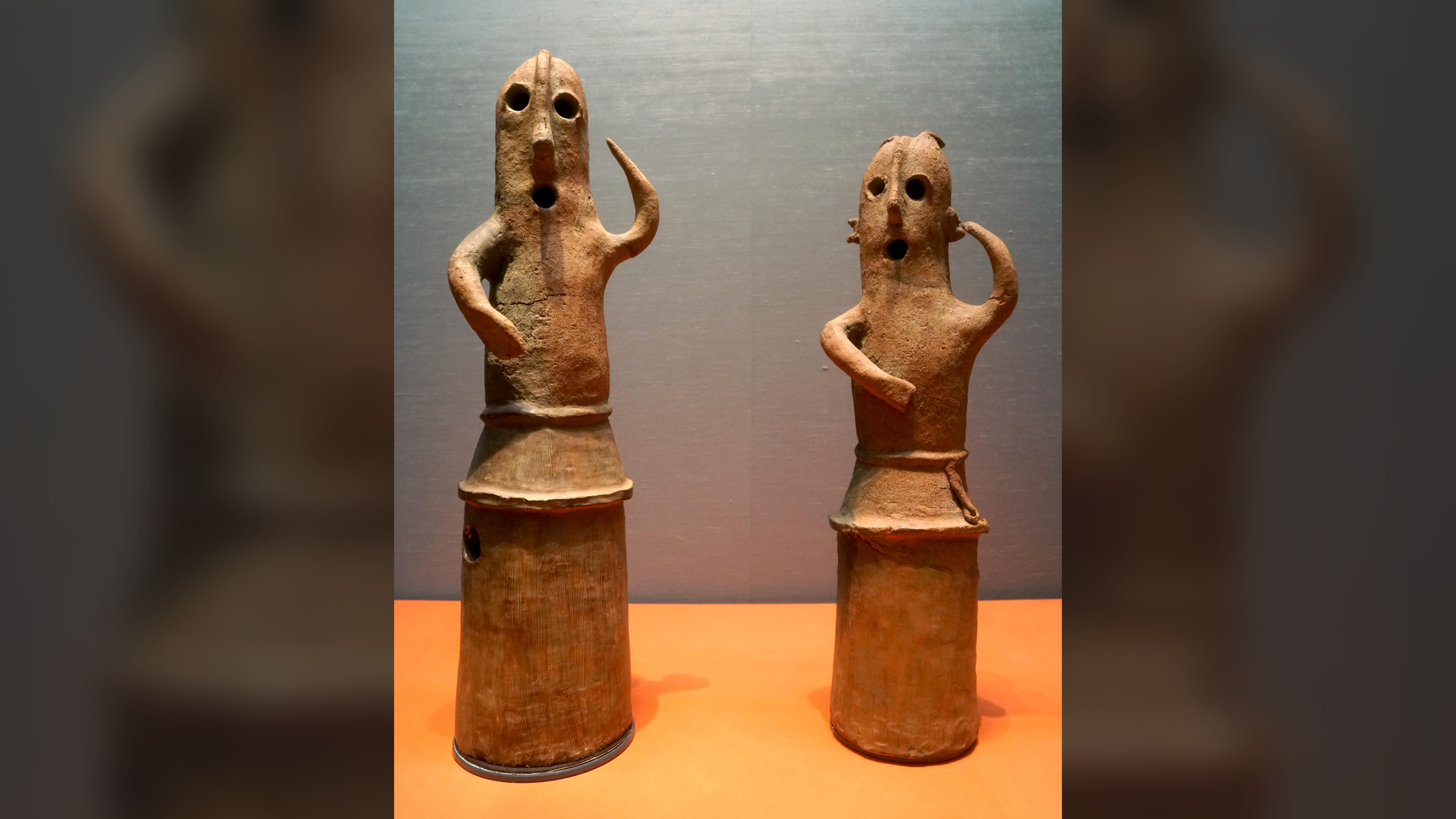
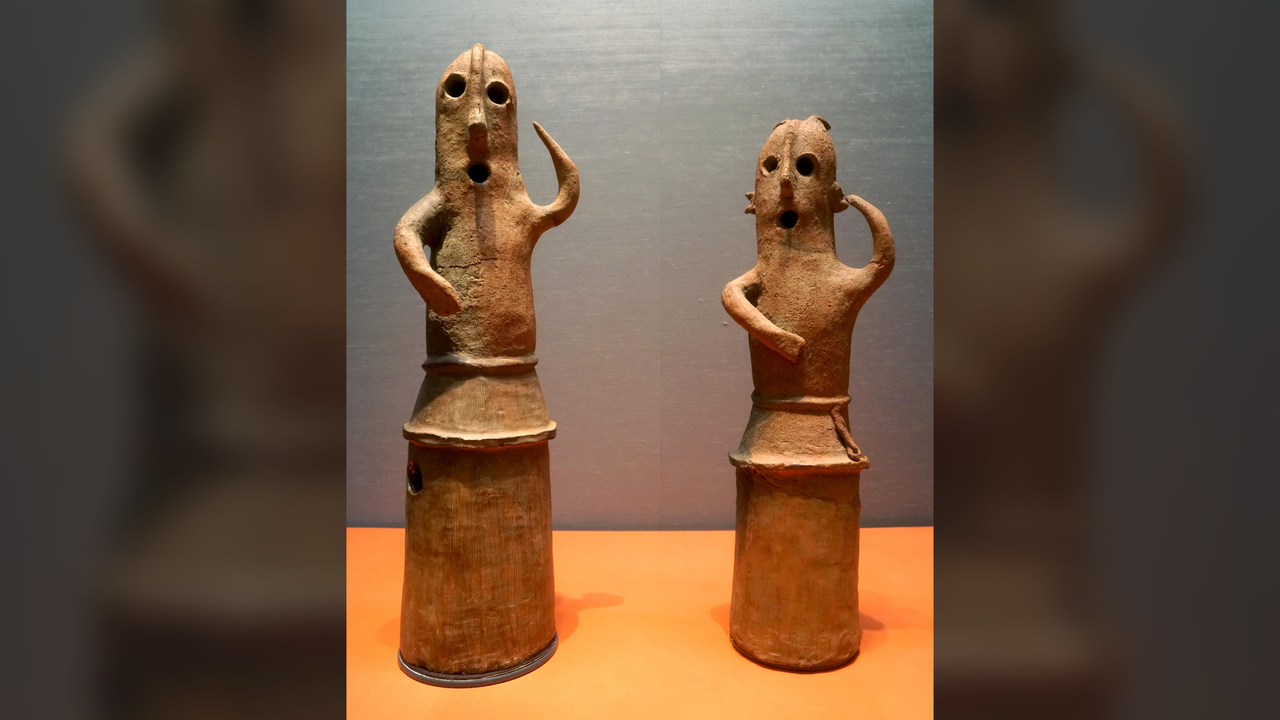
These two haniwa, known as the “Dancing People” or “Haniwa Terracotta Dancers,” are in the collection of the Tokyo National Museum. They were discovered in 1930 during the excavation of an ancient cemetery in Saitama prefecture, north of Tokyo, and are thought to have been made about 1,500 years ago.

According to the Tokyo National Museum, haniwa were made throughout the Kofun period and were used exclusively as tomb decorations. Originally simple clay cylinders, haniwa became more elaborate over time, as the cylinders were topped with figures that included humans, animals, houses, armor and boats. They were used to mark grave boundaries, and some haniwa were thought to hold the souls of the deceased.


You may like

The Dancing People haniwa are especially striking because of their simplicity. Their mouths and eyes are holes, which make them appear to be wide open. Their arms are stick-like, and their upper bodies end in a cylinder base below a thin belt. Their curving arms and open mouths have led some researchers to conclude they are singers or dancers.

Related: Malia Bee Pendant: A 3,800-year-old accessory found in a Minoan ‘pit of gold’

MORE ASTONISHING ARTIFACTS

In a 2008 study of the Dancing People, archaeologist Yoshio Negita suggested that the pair may be a man and a woman. The smaller one has clay on the sides of its head, suggesting a peasant hairstyle, so haniwa may represent a male farmer, Negita proposed. Another theory, put forward by archaeologist Yoshimichi Tsukada in a 2007 study, suggested that the haniwa may depict two male herders holding the reins of their horses.

Thousands of haniwa have been discovered from ancient Japanese graveyards, as each tomb was surrounded by many of these objects.

But video game enthusiasts may recognize haniwa from a 21st century context: In the game “Animal Crossing,” the “gyroids” that a player can dig up are called “haniwa” in the Japanese version and are based on the ancient clay sculptures.

Source link

Share. Facebook Twitter Pinterest LinkedIn Tumblr Email
Previous ArticleLabor Day belongs to American workers, not political operatives
Next Article As Trump takes aim at the Smithsonian, meet the woman racing to visit every exhibit
Editor
  • Website

Related Posts

Lifestyle

New robotic heart mimics common, mysterious condition to help researchers study it

July 11, 2026
Lifestyle

Canon EOS R6 III review: A wildlife wonder

July 10, 2026
Lifestyle

Medieval babies and adults buried together in Sweden were not related, archaeologists discover — raising big questions about early Christian burial practices

July 10, 2026
Add A Comment

Comments are closed.

Categories
  • Entertainment
  • Lifestyle
  • News
  • Sports
  • Tech
  • Travel
Recent Posts
  • New robotic heart mimics common, mysterious condition to help researchers study it
  • Canon EOS R6 III review: A wildlife wonder
  • Medieval babies and adults buried together in Sweden were not related, archaeologists discover — raising big questions about early Christian burial practices
  • NASA is creating a fifth state of matter on the ISS, thanks to an upgrade to a mini-fridge-sized quantum lab
  • New sodium metal battery design charges in just 4 minutes and retains its capacity for years
calendar
July 2026
M T W T F S S
 12345
6789101112
13141516171819
20212223242526
2728293031  
« Jun    
Recent Posts
  • New robotic heart mimics common, mysterious condition to help researchers study it
  • Canon EOS R6 III review: A wildlife wonder
  • Medieval babies and adults buried together in Sweden were not related, archaeologists discover — raising big questions about early Christian burial practices
About

Welcome to Baynard Media, your trusted source for a diverse range of news and insights. We are committed to delivering timely, reliable, and thought-provoking content that keeps you informed
and inspired

Categories
  • Entertainment
  • Lifestyle
  • News
  • Sports
  • Tech
  • Travel
Facebook X (Twitter) Pinterest WhatsApp
  • Contact Us
  • About Us
  • Privacy Policy
  • Disclaimer
  • UNSUBSCRIBE
© 2026 copyrights reserved

Type above and press Enter to search. Press Esc to cancel.