
QUICK FACTS
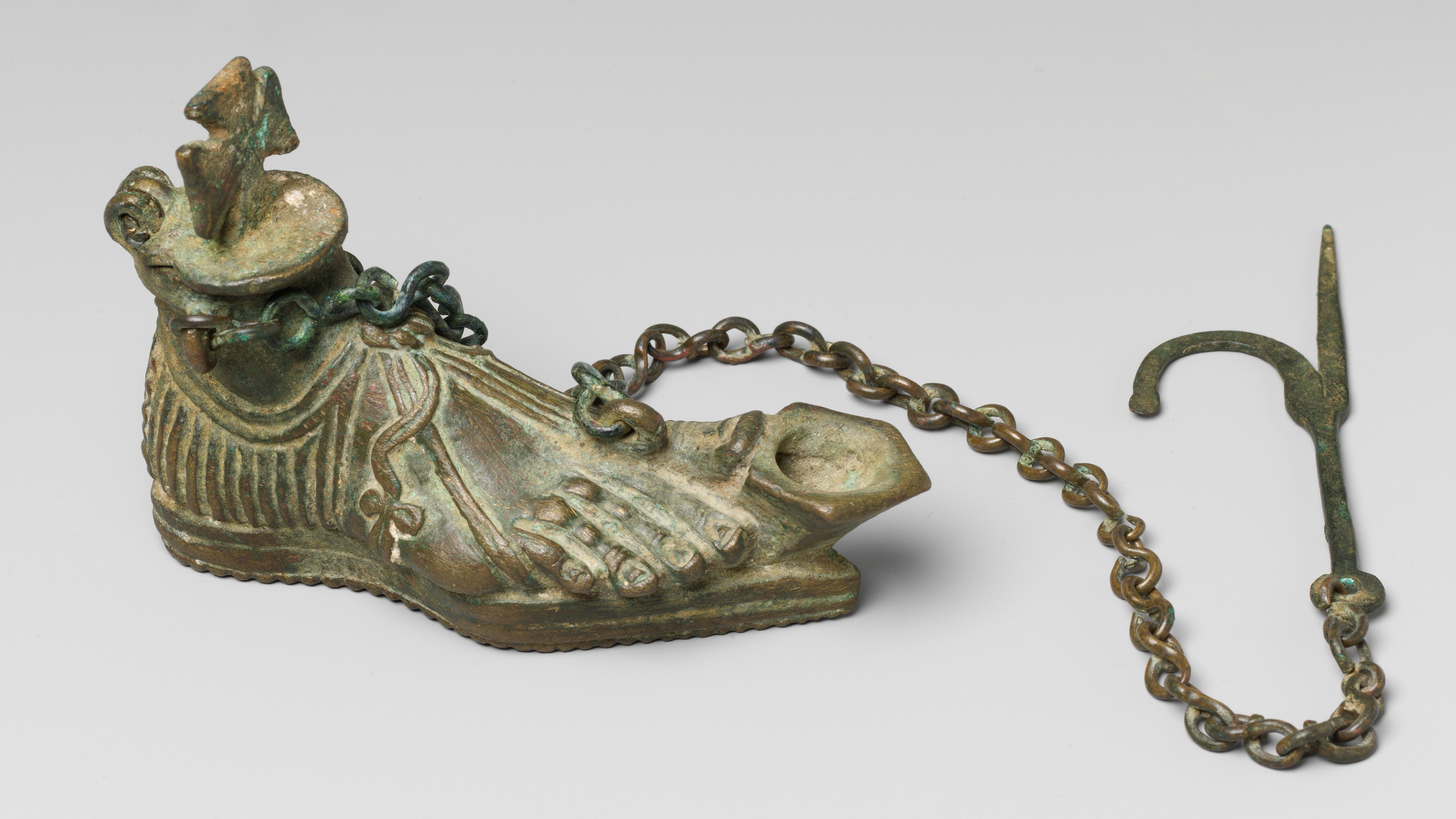
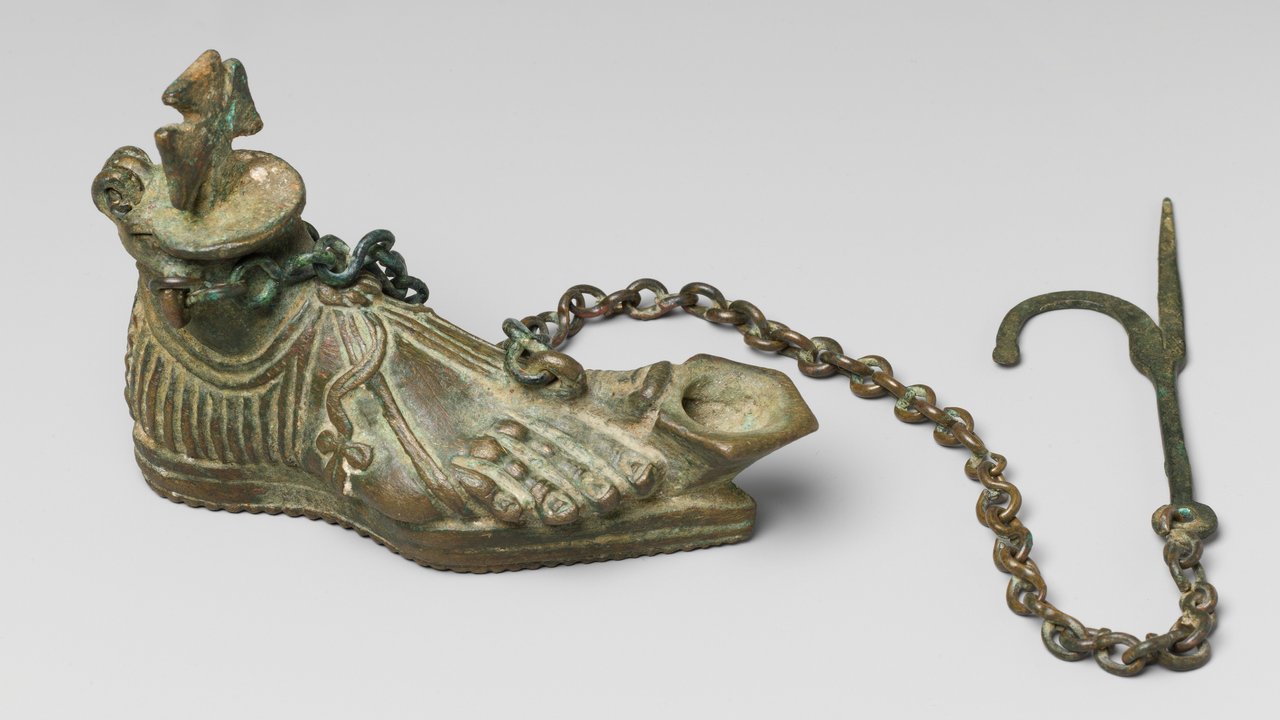
Name: Hanging lamp in the form of a sandaled right foot
What it is: A bronze oil lamp
Where it is from: Syria (Byzantine Empire)
When it was made: Fifth century
Oil lamps have been simple and popular light sources for more than three millennia. But during the Roman and Byzantine empires, many oil lamps were highly decorated works of art. This hanging lamp in the collection of the Metropolitan Museum of Art was made nearly 1,600 years ago in the shape of a human right foot wearing a sandal, likely as an early Christian symbol.
The bronze oil lamp is significantly smaller than a life-size foot, measuring just 3.25 inches (8.3 centimeters) long. Still attached to the lamp is a chain with a hook for hanging, which is over 17 inches (43.5 cm) long.
The right big toe rests against the spout of the lamp, which would have held the wick. A sandal covers the foot, its leather or cord thongs tied at the ankle. The sole of the sandal is decorated with a swastika, which in Byzantine times was known as a gammadion cross and represented good fortune.
MORE ASTONISHING ARTIFACTS
At the back of the lamp, there is an opening at the ankle where the lamp could be filled with oil. The flat cover for the opening is topped with a cross, identifying the lamp as a Christian artifact, Vera Ostoia, a curator of medieval art at The Met, wrote in a 1969 study of objects from the The Met Cloisters.
The foot shape may have been a protective image that symbolized good health and healing, according to The Met, and it may have doubled as a symbol of Christian pilgrimage. But the symbolism may have run even deeper.
In early Christian times, oil lamps and the light they produced were metaphors for enlightenment and immortality rather than just functional, Ostoia wrote. This foot lamp may have been connected to Psalm 119:105, which reads: “Thy word is a lamp unto my feet, and a light unto my path,” meaning that people should follow the word of God as their path in life.
For more stunning archaeological discoveries, check out our Astonishing Artifacts archives.
Get the world’s most fascinating discoveries delivered straight to your inbox.
TOPICS
