
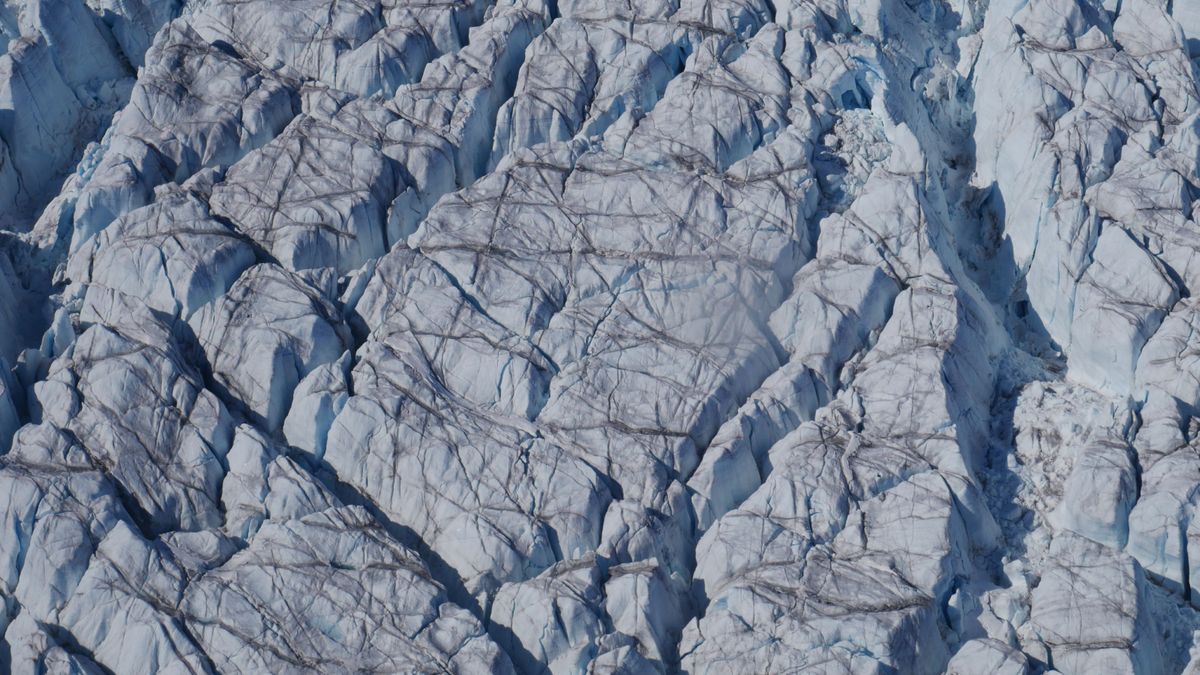
Huge cracks in the Greenland Ice Sheet have grown significantly wider and deeper in just five years, new 3D maps reveal. The finding suggests the landmass is unzipping faster than scientists previously thought.
Most of these cracks, called crevasses, sit around the edges of the ice sheet, where they funnel ice and meltwater into the ocean. But the fissures also siphon meltwater and heat toward glaciers inland, which researchers say could trigger a “domino effect” that would lead to catastrophic melt and sea level rise.
The Greenland Ice Sheet covers 80% of Greenland’s landmass and is 1.9 miles (3 kilometers) thick at its thickest point. Water from the Greenland Ice Sheet is already the largest global source of sea level rise, accounting for a 0.6-inch (14 millimeters) increase since the 1990s, Thomas Chudley, a glaciologist at Durham University in the U.K. and the lead author of a new study of Greenland’s crevasses, said in a video.
Melting causes the Greenland Ice Sheet’s glaciers to flow faster down slopes and valleys; this, in turn, stretches the ice sheet so much that it cracks open, Chudley explained.
“As the ice sheet accelerates, we would expect to see more crevasses and deeper crevasses,” Chudley said. “So our research aimed to look at where these crevasses were and how they were changing in the 21st century.”
Related: Catastrophic tipping point in Greenland reached as crystal blue lakes turn brown, belch out carbon dioxide
Chudley and his colleagues examined crevasses in Greenland by stitching together more than 8,000 3D maps of the island’s surface. The researchers sourced their data from the Polar Geospatial Center at the University of Minnesota, which creates 3D maps from high-resolution satellite images.
The researchers compared the shape, size and distribution of cracks in 2016 versus in 2021 to assess how crevasses are responding to global warming. Their results, which were published Monday (Feb. 3) in the journal Nature Geoscience, revealed that fissures in the ice sheet grew by up to 25% during the five-year period, with crevasses in coastal regions showing the biggest increases.
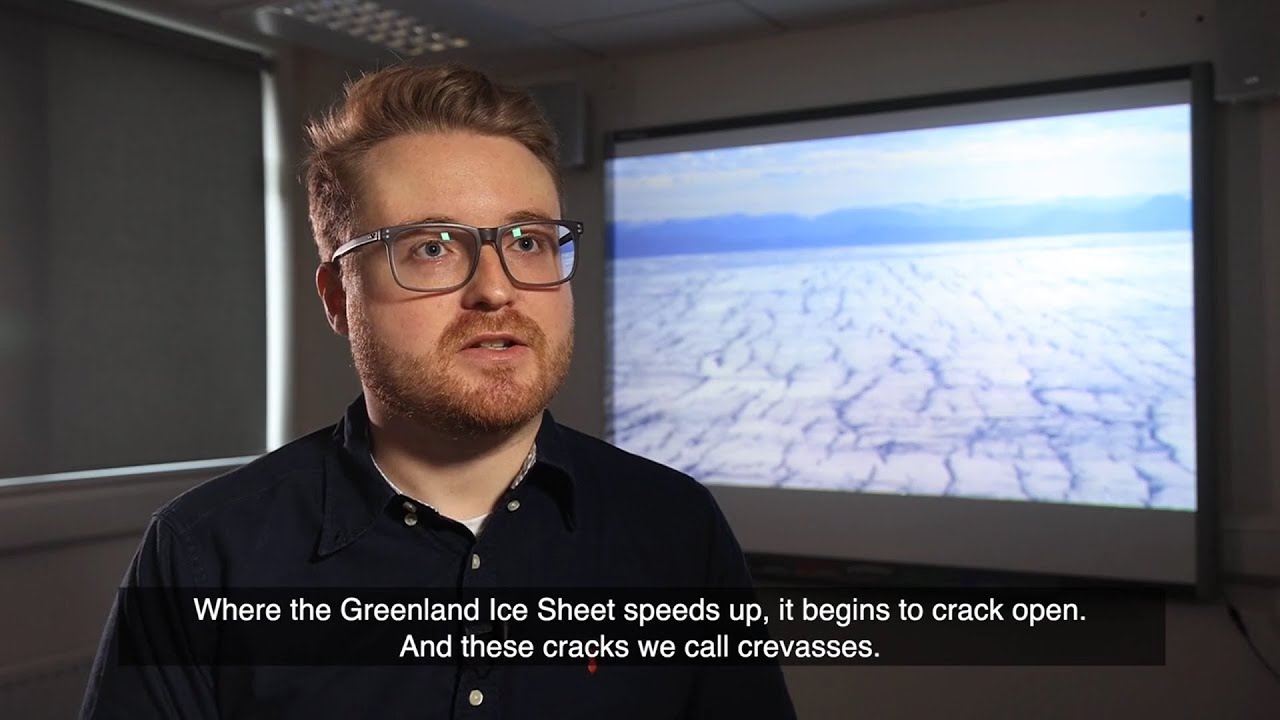
“Where the ice sheet has been accelerating, we are seeing more, and we are seeing deeper crevasses,” Chudley said. “This is especially true in the areas of the ice sheet that are exposed to the ocean and that have seen significant warming from the ocean since the 1990s.”
The loss of ice in coastal areas was offset by large gains in a West Greenland glacier called Jakobshavn. This glacier typically advances by around 165 feet (50 meters) per day, making it the fastest-flowing glacier on Earth, Chudley said. But between 2016 and 2018, due to an influx of cold water from the North Atlantic, Jakobshavn slowed down so much that ice filled its cracks and piled onto the glacier.
As a result of ice accumulating in West Greenland, crevasses across the Greenland Ice Sheet shrank by 4%, on average, between 2016 and 2021. “This slowdown and the closure of crevasses that it caused single-handedly outweighed the increase in crevasses across the rest of the ice sheet,” Chudley said.

But in 2018, Jakobshavn began moving at full throttle again. This means the glacier likely won’t compensate for future increases in crevasse size elsewhere, Chudley said.
Scientists are worried about cracks opening in the Greenland Ice Sheet because fissures promote melting. Wider cracks enable more meltwater and heat to enter glaciers, leading to faster flow rates and more calving events, when chunks of ice break off to form icebergs.
“As crevasses grow, they feed the mechanisms that make the ice sheet’s glaciers move faster,” study co-author Ian Howat, a professor and glaciologist at The Ohio State University, said in a statement. “These processes can in turn speed up ice flow and lead to the formation of more and deeper crevasses — a domino effect that could drive the loss of ice from Greenland at a faster pace.”
Previous research suggested the Greenland Ice Sheet contains enough water to raise sea levels by 23 feet (7 m). The new study reveals just how quickly the lock to this giant reservoir could come undone.
“If we continue along our current path […] we might see committed sea levels of 10 or even 20 meters [33 to 66 feet] of sea level rise from Greenland and Antarctica,” Chudley said.
