Close Menu
  • Home
  • UNSUBSCRIBE
  • News
  • Lifestyle
  • Tech
  • Entertainment
  • Sports
  • Travel
Facebook X (Twitter) WhatsApp
Trending
  • New robotic heart mimics common, mysterious condition to help researchers study it
  • Canon EOS R6 III review: A wildlife wonder
  • Medieval babies and adults buried together in Sweden were not related, archaeologists discover — raising big questions about early Christian burial practices
  • NASA is creating a fifth state of matter on the ISS, thanks to an upgrade to a mini-fridge-sized quantum lab
  • New sodium metal battery design charges in just 4 minutes and retains its capacity for years
  • Quantum computing wielded to create extremely rare material critical to nuclear fusion
  • Scientists build tiny ‘diving suit’ for cockroaches, turning them into search-and-rescue cyborgs
  • Physicists develop the first working model of quantum mechanics using only ‘real’ numbers
Facebook X (Twitter) WhatsApp
Baynard Media
  • Home
  • UNSUBSCRIBE
  • News
  • Lifestyle
  • Tech
  • Entertainment
  • Sports
  • Travel
Baynard Media
Home»Lifestyle»Golden scaleless cave fish discovered in China shows evolution in action
Lifestyle

Golden scaleless cave fish discovered in China shows evolution in action

EditorBy EditorMarch 6, 2025No Comments3 Mins Read
Share Facebook Twitter Pinterest LinkedIn Tumblr Reddit Telegram Email
Share
Facebook Twitter LinkedIn Pinterest Email

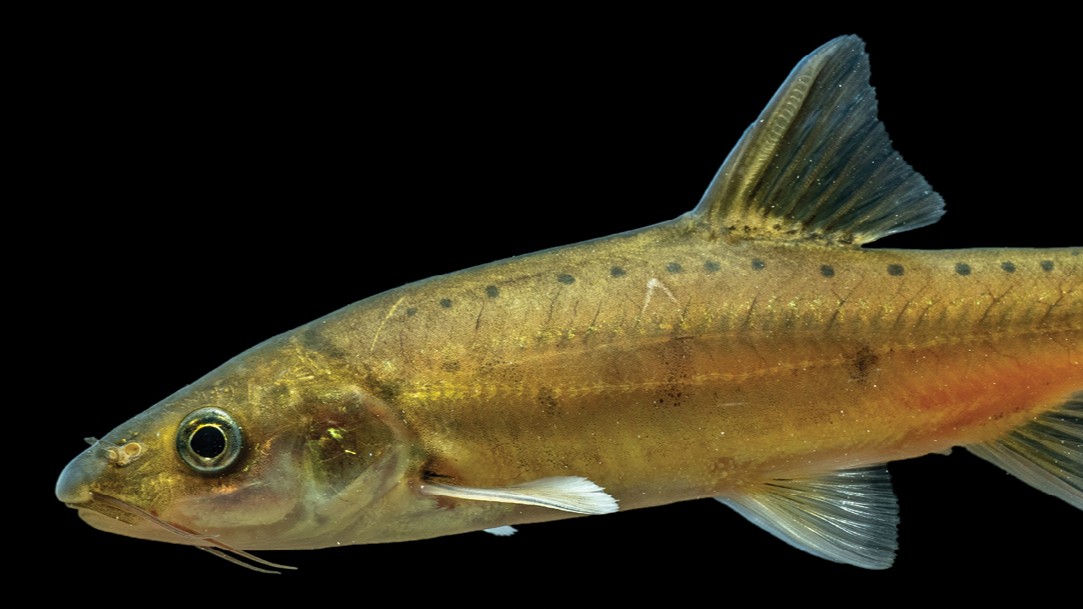
Researchers have discovered a never-before-seen golden cave fish in southwestern China that’s still evolving to survive underground.

The scaleless fish is a previously unknown species of golden-line fish (Sinocyclocheilus), which are only found in and around Chinese caves. The discovery therefore offers scientists a window into the evolution of these unusual cave-dwelling creatures.

Some golden-line fish have lost their scales and eyes as part of adaptations to cave life — there’s no point having eyes if it’s too dark to see anything. The newfound species, which the researchers named “Xingren golden-lined fish” (S. xingrenensis) after the city close to where it was found, has large eyes but no scales, suggesting it is still evolving to suit its conditions, according to the study, published Feb. 24 in the journal Zoosystematics and Evolution.

Previous research suggested that golden-line fish moved into caves when China was drying up — so there was less water outside — towards the end of the Miocene epoch (23 million to 5.3 million years ago) and in the Pliocene epoch (5.3 million to 2.6 million years ago). By examining the evolutionary history of golden-line fish, the study authors found that Xingren and others like it probably lost their scales during the Pleistocene (2.6 million years to 11,700 years ago), similar to when some members of the group supposedly started losing their eyes.

“This further suggests that most cave fishes may not have lived in cave ecosystems for more than a few million years,” the researchers wrote in the study. “Thus, together with the eyes and scales, we hypothesize that the new species may be undergoing a gradual evolutionary process towards caves.”

Related: Do fish get thirsty?

Sinocyclocheilus is the most diverse group of cave fish in the world with 80 recognized species — the Xingren golden-line fish makes 81. Researchers found this latest addition to the group while collecting golden-line fish in southwestern Guizhou province between 2012 and 2020, according to the study.

Get the world’s most fascinating discoveries delivered straight to your inbox.

Golden-line fish are strikingly varied in appearance. The newfound species differs from known golden-line fish thanks to a unique combination of features, including having a scaleless body with irregular black markings. Xingrens also lack a horn-like structure present on some golden-line fish, notably S. longicornus, a unicorn-like blind fish discovered in 2023.

Researchers still have much to learn about Xingrens, but their eyes offer some clues about how this species lives. The researchers suggested that Xingrens’ lives are linked to photoperiods, which are the lengths of daylight periods an organism receives within 24 hours. After all, Xingren eyes are significantly larger than the blind fish found in total darkness deep in caves, and can therefore still detect light.

“This is related to the habitat, where the new species can be connected to surface streams through cave windows, and their life rhythms may be closely related to photoperiods,” the study authors wrote.

Source link

Share. Facebook Twitter Pinterest LinkedIn Tumblr Email
Previous ArticleBroadway musical ‘Hamilton’ cancels plans to play the Kennedy Center in 2026
Next Article Trump considering major NATO policy shift
Editor
  • Website

Related Posts

Lifestyle

New robotic heart mimics common, mysterious condition to help researchers study it

July 11, 2026
Lifestyle

Canon EOS R6 III review: A wildlife wonder

July 10, 2026
Lifestyle

Medieval babies and adults buried together in Sweden were not related, archaeologists discover — raising big questions about early Christian burial practices

July 10, 2026
Add A Comment

Comments are closed.

Categories
  • Entertainment
  • Lifestyle
  • News
  • Sports
  • Tech
  • Travel
Recent Posts
  • New robotic heart mimics common, mysterious condition to help researchers study it
  • Canon EOS R6 III review: A wildlife wonder
  • Medieval babies and adults buried together in Sweden were not related, archaeologists discover — raising big questions about early Christian burial practices
  • NASA is creating a fifth state of matter on the ISS, thanks to an upgrade to a mini-fridge-sized quantum lab
  • New sodium metal battery design charges in just 4 minutes and retains its capacity for years
calendar
July 2026
M T W T F S S
 12345
6789101112
13141516171819
20212223242526
2728293031  
« Jun    
Recent Posts
  • New robotic heart mimics common, mysterious condition to help researchers study it
  • Canon EOS R6 III review: A wildlife wonder
  • Medieval babies and adults buried together in Sweden were not related, archaeologists discover — raising big questions about early Christian burial practices
About

Welcome to Baynard Media, your trusted source for a diverse range of news and insights. We are committed to delivering timely, reliable, and thought-provoking content that keeps you informed
and inspired

Categories
  • Entertainment
  • Lifestyle
  • News
  • Sports
  • Tech
  • Travel
Facebook X (Twitter) Pinterest WhatsApp
  • Contact Us
  • About Us
  • Privacy Policy
  • Disclaimer
  • UNSUBSCRIBE
© 2026 copyrights reserved

Type above and press Enter to search. Press Esc to cancel.