Close Menu
  • Home
  • UNSUBSCRIBE
  • News
  • Lifestyle
  • Tech
  • Entertainment
  • Sports
  • Travel
Facebook X (Twitter) WhatsApp
Trending
  • ‘If astrological compatibility exists, its effects should be observable’: TL;DR — it’s not
  • Humanoid robots have outpaced human runners in the half-marathon, beating the world record ‪—‬ here are the secrets to this astonishing feat
  • Google AI breakthrough means chatbots use six times less memory during conversations without compromising performance
  • ZWO Seestar S30 Pro smart telescope review
  • Doctors partially delivered a baby at 25 weeks to perform a lifesaving surgery and then returned him to the womb
  • Poop-encrusted chamber pots from the Roman Empire reveal oldest known human cases of Crypto parasite
  • Weapons of the world quiz: Can you identify these historical objects of war?
  • ‘The detectors never stopped beeping!’ Nearly 3,000 coins discovered in field are Norway’s largest Viking hoard on record
Facebook X (Twitter) WhatsApp
Baynard Media
  • Home
  • UNSUBSCRIBE
  • News
  • Lifestyle
  • Tech
  • Entertainment
  • Sports
  • Travel
Baynard Media
Home»Lifestyle»Giant North American ‘hell pigs’ could crunch bones like lions 30 million years ago, tooth analysis reveals
Lifestyle

Giant North American ‘hell pigs’ could crunch bones like lions 30 million years ago, tooth analysis reveals

EditorBy EditorNovember 14, 2025No Comments3 Mins Read
Share Facebook Twitter Pinterest LinkedIn Tumblr Reddit Telegram Email
Share
Facebook Twitter LinkedIn Pinterest Email

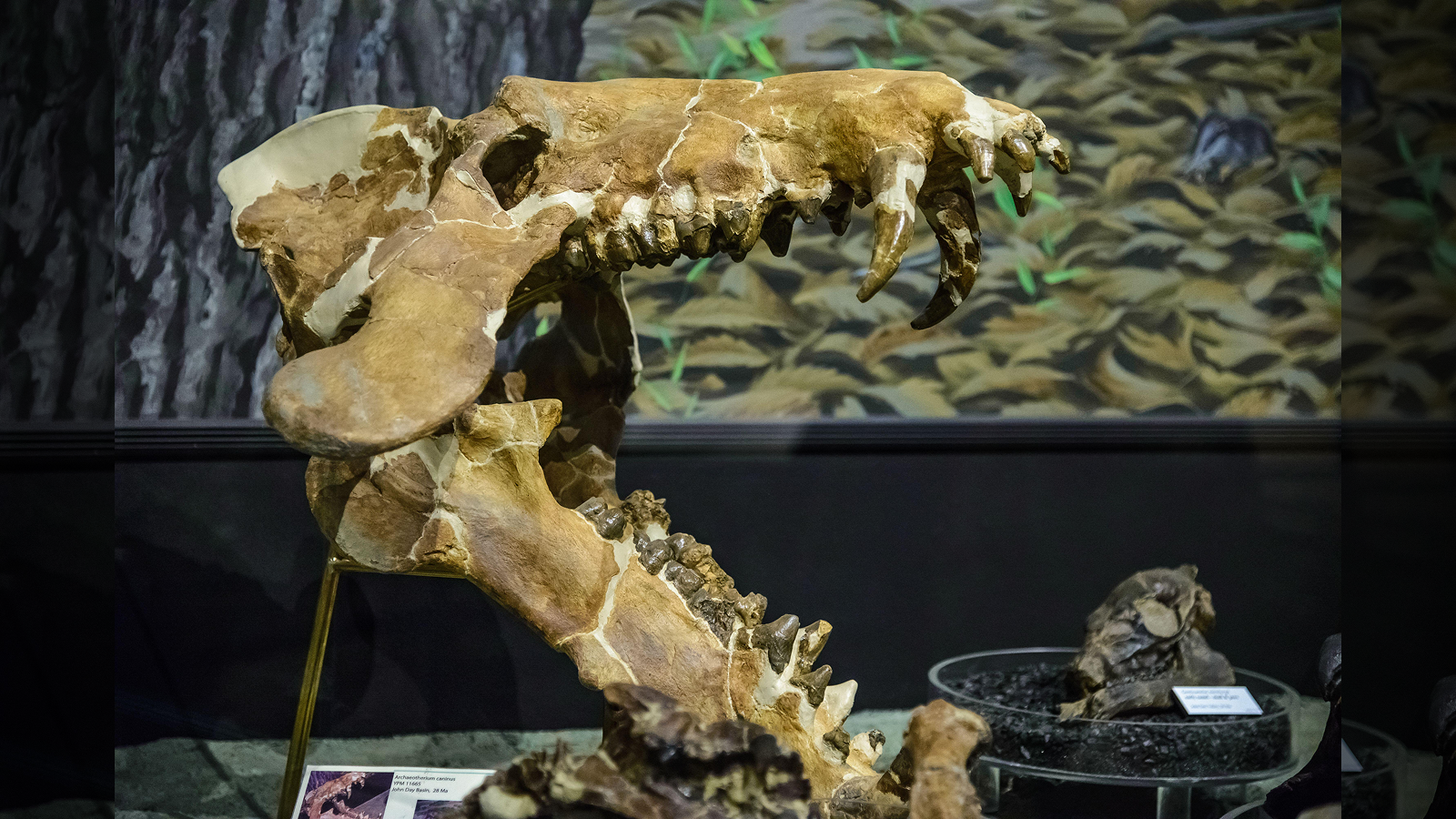
Giant North American “hell pigs” may have munched on bones around 30 million years ago, while their smaller counterparts ripped through softer material, like flesh, new research finds.

The “hell pigs,” scientifically known as Archaeotherium (“ancient beast” in Greek), were a group of pig-like creatures that could be as tall as humans while standing on four legs and potentially weigh more than 2,000 pounds (1,000 kilograms).

Researchers have known about Archaeotherium since 1850. But now, a new tooth analysis reveals that these beasts’ feeding strategies were more varied than previously assumed. By examining tooth wear, researchers saw that larger species were crushing bones or other hard material, while smaller species were likely shearing soft foods, potentially giving them different roles on the ancient North American landscape.


You may like

“We can’t assume that they were doing the same thing,” Brynn Wooten, a doctoral candidate at Vanderbilt University in Tennessee, told Live Science.

Wooten presented preliminary findings from her research Thursday (Nov. 13) at the Society of Vertebrate Paleontology 2025 annual meeting. The findings haven’t been peer-reviewed yet, as Wooten and her colleagues still have to complete their research and submit it to a journal.

Whale of a pig

Archaeotherium roamed across North America from about 37 million to 23 million years ago. Despite their vaguely hoggish appearance, Archaeotherium was more closely related to whales and hippos than to pigs. Their heads were around 30% of their total body length (it varied by species), but their small brains meant they weren’t the brightest tools in the Paleogenic shed.

“Archaeotherium has a brain-to-body mass ratio similar to that of reptiles, so they were very unintelligent creatures,” Wooten said. “Their heads were massive, but they had little tiny brain cases.”

Get the world’s most fascinating discoveries delivered straight to your inbox.

Researchers previously suggested that Archaeotherium could have been active predators, scavengers and/or vegetation strippers. Bite marks on the fossils of Poebrotherium — small camel relatives that used to roam North America — indicate that Archaeotherium may have hunted Poebrotherium and stored some of the carcasses for leftovers.

A photo of an Archaeotherium fossil at an auction in London in 2011.

An Archaeotherium fossil at an auction in London in 2011. The photo is for illustrative purposes only; this fossil wasn’t part of the new research. (Image credit: Peter Macdiarmid/Getty Images)

For the new research, Wooten and Larisa DeSantis, an associate professor of biological sciences at Vanderbilt University, examined a variety of Archaeotherium teeth from different states, including Nebraska, South Dakota, Oregon and Colorado. By using dental microwear texture analysis, which involves creating 3D scans of the tooth surface with a powerful microscope, they could compare wear variation between the different Archaeotherium teeth.

On the whole, Archaeotherium was typically similar to peccaries (pig-like animals found in the Americas), which shear their food. However, wear on the larger-bodied Archaeotherium was statistically indistinguishable from that of lions and hyenas and indicative of an animal that crushed its food.

“It’s really interesting that the large ones are capable of crunching bones,” DeSantis told Live Science. “The small ones are not.”

The crushing wear could mean that the larger species engaged in more scavenging behaviors, potentially using their great size to bully other predators off their kills, the researchers suggested. On the other hand, the larger Archaeotherium could have been consuming more hard vegetarian foods, such as tubers or woody browse. The soft veggie option for smaller Archaeotherium may have been leaves and grasses.

So far, the dental analysis reveals only the texture of Archaeotherium food — not which species they ate. Wooten will now explore other research techniques, including calcium isotope analysis, to confirm whether bone was part of Archaeotherium‘s diet.

Source link

Share. Facebook Twitter Pinterest LinkedIn Tumblr Email
Previous ArticleGOP revolt brews over Senate clause allowing lawsuits tied to Jack Smith probe
Next Article Ancient RNA offers a snapshot of a mammoth’s life 39,000 years ago
Editor
  • Website

Related Posts

Lifestyle

‘If astrological compatibility exists, its effects should be observable’: TL;DR — it’s not

May 1, 2026
Lifestyle

Humanoid robots have outpaced human runners in the half-marathon, beating the world record ‪—‬ here are the secrets to this astonishing feat

May 1, 2026
Lifestyle

Google AI breakthrough means chatbots use six times less memory during conversations without compromising performance

May 1, 2026
Add A Comment

Comments are closed.

Categories
  • Entertainment
  • Lifestyle
  • News
  • Sports
  • Tech
  • Travel
Recent Posts
  • ‘If astrological compatibility exists, its effects should be observable’: TL;DR — it’s not
  • Humanoid robots have outpaced human runners in the half-marathon, beating the world record ‪—‬ here are the secrets to this astonishing feat
  • Google AI breakthrough means chatbots use six times less memory during conversations without compromising performance
  • ZWO Seestar S30 Pro smart telescope review
  • Doctors partially delivered a baby at 25 weeks to perform a lifesaving surgery and then returned him to the womb
calendar
May 2026
M T W T F S S
 123
45678910
11121314151617
18192021222324
25262728293031
« Apr    
Recent Posts
  • ‘If astrological compatibility exists, its effects should be observable’: TL;DR — it’s not
  • Humanoid robots have outpaced human runners in the half-marathon, beating the world record ‪—‬ here are the secrets to this astonishing feat
  • Google AI breakthrough means chatbots use six times less memory during conversations without compromising performance
About

Welcome to Baynard Media, your trusted source for a diverse range of news and insights. We are committed to delivering timely, reliable, and thought-provoking content that keeps you informed
and inspired

Categories
  • Entertainment
  • Lifestyle
  • News
  • Sports
  • Tech
  • Travel
Facebook X (Twitter) Pinterest WhatsApp
  • Contact Us
  • About Us
  • Privacy Policy
  • Disclaimer
  • UNSUBSCRIBE
© 2026 copyrights reserved

Type above and press Enter to search. Press Esc to cancel.