Close Menu
  • Home
  • UNSUBSCRIBE
  • News
  • Lifestyle
  • Tech
  • Entertainment
  • Sports
  • Travel
Facebook X (Twitter) WhatsApp
Trending
  • Science news this week: Life on Mars, weird water and a curious human cousin
  • Early Homo sapiens may have lived in rainforests, new clues suggest — and it could overturn our understanding of human evolution
  • Scientists infected a ‘vagina on a chip’ with gonorrhea — then cured it with a new antibiotic found by AI
  • Free speech in the age of AI | Akhil Bhardwaj
  • China’s top-secret ‘dragon’ space plane just released another unidentified object over Earth
  • ‘It sounds so impossible’: Student studying fungus that makes users hallucinate tiny people may be on the verge of a scientific breakthrough
  • Ancient empires quiz: Can you match these lands to the historical powers that ruled them?
  • Socotra Archipelago: The Yemeni islands covered with astonishing cucumber, bottle and dragon’s blood trees
Facebook X (Twitter) WhatsApp
Baynard Media
  • Home
  • UNSUBSCRIBE
  • News
  • Lifestyle
  • Tech
  • Entertainment
  • Sports
  • Travel
Baynard Media
Home»Lifestyle»Giant horned dinosaur’s fossils were destroyed in WWII — but photos reveal it was an unknown species
Lifestyle

Giant horned dinosaur’s fossils were destroyed in WWII — but photos reveal it was an unknown species

EditorBy EditorJanuary 16, 2025No Comments3 Mins Read
Share Facebook Twitter Pinterest LinkedIn Tumblr Reddit Telegram Email
Share
Facebook Twitter LinkedIn Pinterest Email

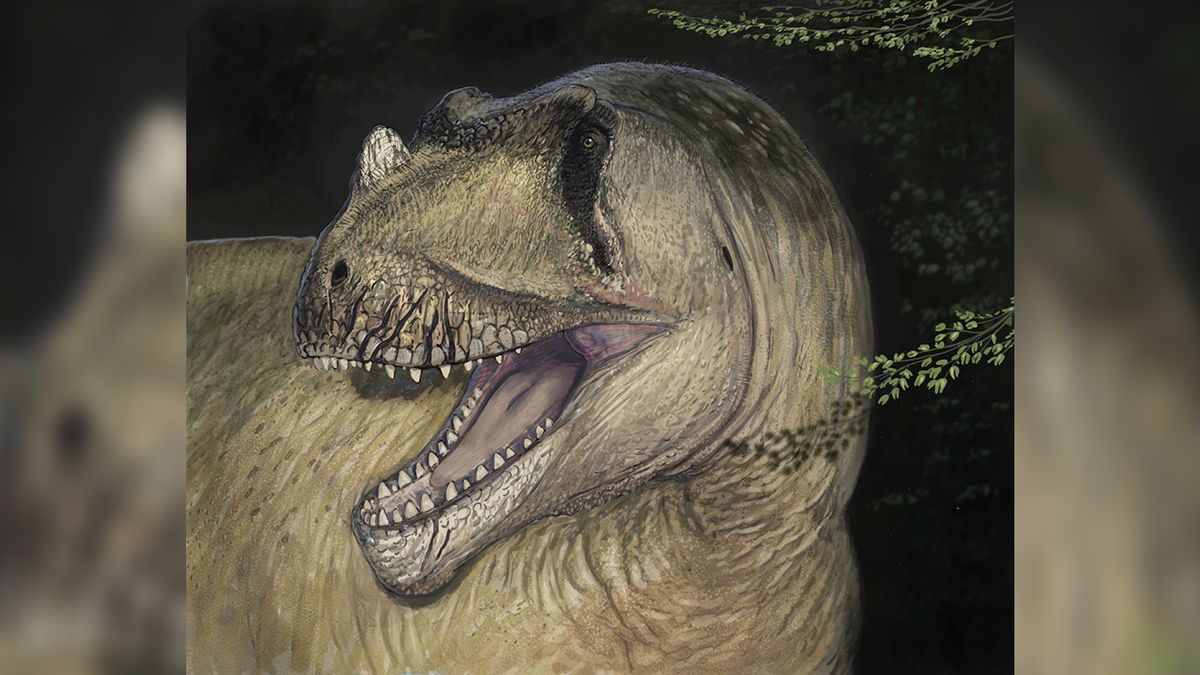
Researchers have identified a giant new dinosaur species after uncovering lost photos of fossils destroyed in World War II.

The newly named species, Tameryraptor markgrafi, or “thief from the beloved land,” roamed Egypt 95 million years ago, and at 33 feet (10 meters) long, it is one of largest known land carnivores to ever roam the planet.

German scientists first discovered the fossilized remains of this Cretaceous dinosaur in the Bahariya Oasis in Egypt’s Western Desert in 1914. They were then held at the Bavarian State Collection for Paleontology and Geology (BSPG) in Germany until 1944, when the building they were in burned down during a WWII bombing raid, destroying the fossils, according to a BSPG statement released on Tuesday (Jan. 14).

Researchers recently found previously unknown photographs of the fossils in the Huene Archive at the University of Tübingen in Germany, which showed them on display in the 1940s. At the time of the photos, the fossils were thought to belong to a large theropod dinosaur called Carcharodontosaurus — but closer inspection of the photos revealed a prominent horn, an enlarged frontal brain and other features absent on other Carcharodontosaurus fossils.

“At first I was a bit confused when we found the new photos, and then I was super excited,” study first author Maximilian Kellermann, a doctoral student at the BSPG, told Live Science in an email. “The more we looked, the more differences we found.”

The researchers published their findings on Tuesday in the journal PLOS One.

Related: Enormous skull of 200-million-year-old giant dinosaur discovered in China

Get the world’s most fascinating discoveries delivered straight to your inbox.

The Egyptian fossils were first categorized by German paleontologist Ernst Stromer (1871-1952), who thought the fossils matched a dinosaur unearthed in Algeria that was only known by its teeth, according to the study. Stromer named a new group, Carcharodontosaurus, to encompass both sets of fossils, and the Egyptian specimen was considered the prime example of the group.

Over the years, paleontologists have unearthed more members of the Carcharodontosaurus group. In the 1990s, a relatively complete carcharodontosaurid skull from Morocco became the type specimen to represent the group, given that the Egyptian fossils were gone. Comparing the newfound photos of the lost fossils, along with Stromer’s old descriptions and illustrations, with this type specimen, it became very clear that the former didn’t fit within the Carcharodontosaurus group.

Skeletal remains of Tameryraptor markgrafi in Alte Akademie before they were destroyed in WWII.

Skeletal remains of Tameryraptor markgrafi in Alte Akademie before they were destroyed in WWII. (Image credit: University Archives Tübingen )

“Exceptional case”

Researchers don’t normally introduce a new species of dinosaur without observing fossils directly, but the study authors said that this was an “exceptional case.” The new genus, Tameryraptor, combines the ancient name for Egypt, “Ta-Mery,” or “promised land,” and raptor, which is Latin for “thief.” The species name markgrafi honors the German fossil collector Richard Markgraf, who excavated the dinosaur from the Bahariya Oasis in 1914, according to the study.

The new study suggests that dinosaur life was richer across North Africa than previously thought, but also that more research is needed to fully understand the region’s dinosaurs.

“There are some other taxa that are also seemingly shared between Egypt and Morocco, such as Deltadromeus or the famous Spinosaurus, which I suspect are also quite distinct if one takes the time to go through Stromer’s old texts and the old Archives,” Kellermann said.

Source link

Share. Facebook Twitter Pinterest LinkedIn Tumblr Email
Previous ArticleWhat to expect at Samsung Galaxy Unpacked
Next Article Brittany Mahomes Shares Name She Almost Gave Baby Golden Raye
Editor
  • Website

Related Posts

Lifestyle

Science news this week: Life on Mars, weird water and a curious human cousin

June 27, 2026
Lifestyle

Early Homo sapiens may have lived in rainforests, new clues suggest — and it could overturn our understanding of human evolution

June 27, 2026
Lifestyle

Scientists infected a ‘vagina on a chip’ with gonorrhea — then cured it with a new antibiotic found by AI

June 27, 2026
Add A Comment

Comments are closed.

Categories
  • Entertainment
  • Lifestyle
  • News
  • Sports
  • Tech
  • Travel
Recent Posts
  • Science news this week: Life on Mars, weird water and a curious human cousin
  • Early Homo sapiens may have lived in rainforests, new clues suggest — and it could overturn our understanding of human evolution
  • Scientists infected a ‘vagina on a chip’ with gonorrhea — then cured it with a new antibiotic found by AI
  • Free speech in the age of AI | Akhil Bhardwaj
  • China’s top-secret ‘dragon’ space plane just released another unidentified object over Earth
calendar
June 2026
M T W T F S S
1234567
891011121314
15161718192021
22232425262728
2930  
« May    
Recent Posts
  • Science news this week: Life on Mars, weird water and a curious human cousin
  • Early Homo sapiens may have lived in rainforests, new clues suggest — and it could overturn our understanding of human evolution
  • Scientists infected a ‘vagina on a chip’ with gonorrhea — then cured it with a new antibiotic found by AI
About

Welcome to Baynard Media, your trusted source for a diverse range of news and insights. We are committed to delivering timely, reliable, and thought-provoking content that keeps you informed
and inspired

Categories
  • Entertainment
  • Lifestyle
  • News
  • Sports
  • Tech
  • Travel
Facebook X (Twitter) Pinterest WhatsApp
  • Contact Us
  • About Us
  • Privacy Policy
  • Disclaimer
  • UNSUBSCRIBE
© 2026 copyrights reserved

Type above and press Enter to search. Press Esc to cancel.