Close Menu
  • Home
  • UNSUBSCRIBE
  • News
  • Lifestyle
  • Tech
  • Entertainment
  • Sports
  • Travel
Facebook X (Twitter) WhatsApp
Trending
  • Orange County, No Longer the “Dirty Tricks Capital of California”
  • Colorado River may have pooled and spilled over to form the Grand Canyon, solving a long-standing mystery ‪—‬ but not everyone agrees
  • Seattle, Vancouver coordinate cross-border planning for 2026 World Cup tourism
  • Woman suspected in 2020 murder arrested day after being added to FBI most-wanted list
  • Portugal StartUp Visa: The Definitive Guide
  • Lawmakers approve short-term extension of Trump’s surveillance powers
  • Bill to fund Medicaid fraud prosecutions eviscerated by House GOP
  • Anglo-Saxon burial holds an older sister cradling her little brother after they both died 1,400 years ago, possibly of an infectious disease
Facebook X (Twitter) WhatsApp
Baynard Media
  • Home
  • UNSUBSCRIBE
  • News
  • Lifestyle
  • Tech
  • Entertainment
  • Sports
  • Travel
Baynard Media
Home»Lifestyle»Giant cosmic arachnid spotted by James Webb telescope could resemble the future of our own solar system
Lifestyle

Giant cosmic arachnid spotted by James Webb telescope could resemble the future of our own solar system

EditorBy EditorOctober 31, 2025No Comments2 Mins Read
Share Facebook Twitter Pinterest LinkedIn Tumblr Reddit Telegram Email
Share
Facebook Twitter LinkedIn Pinterest Email

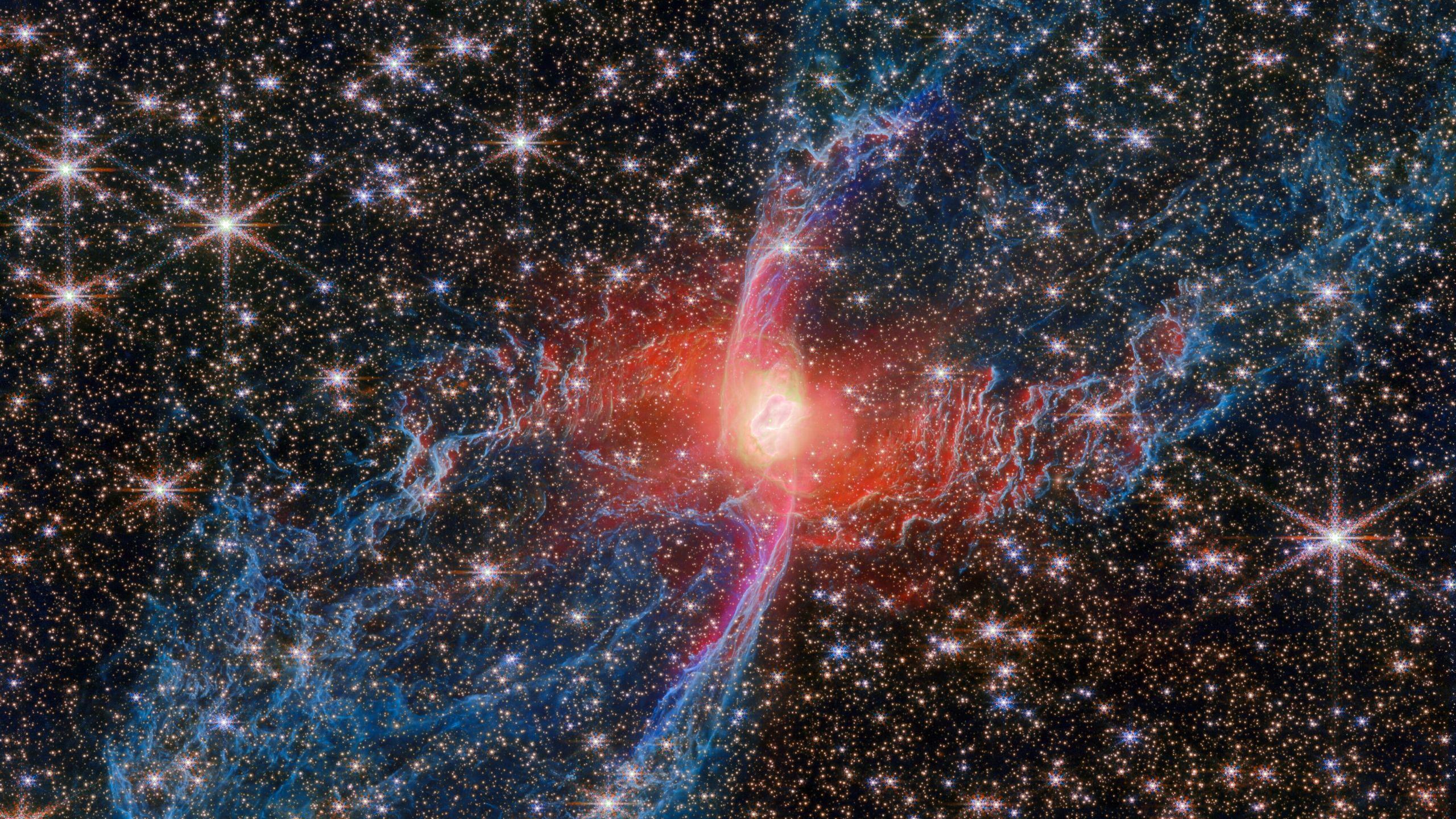
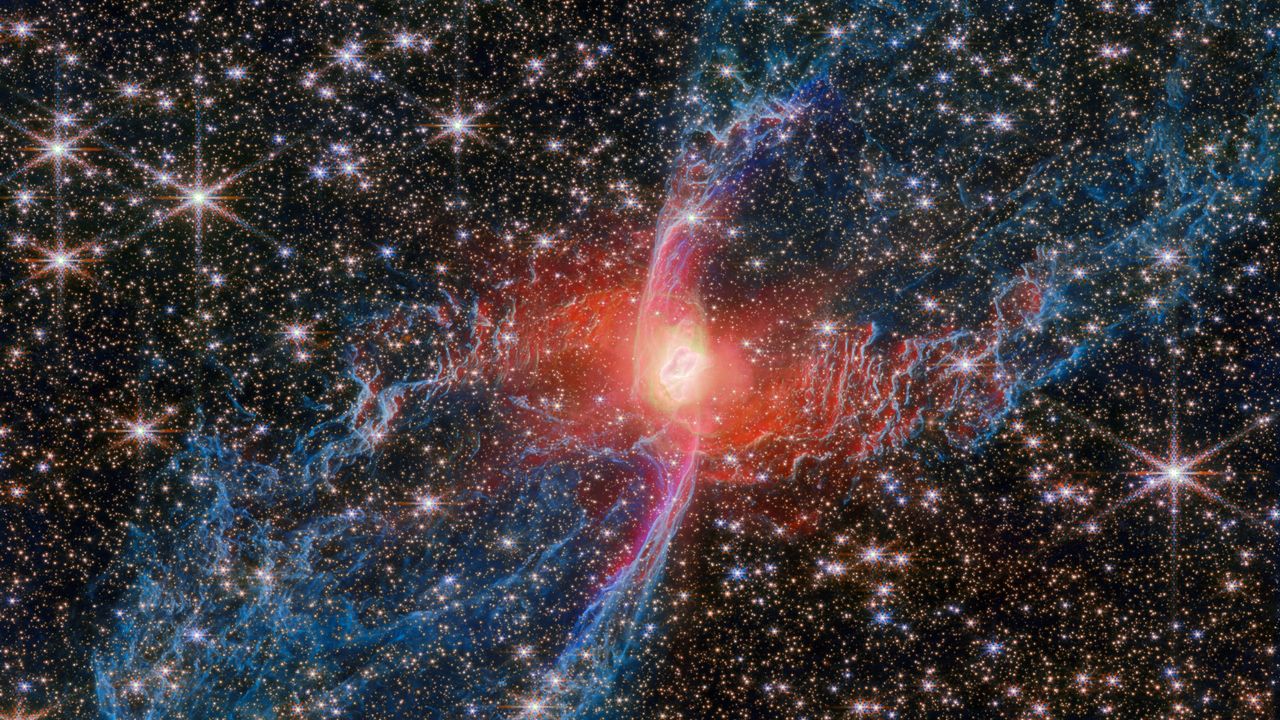
The James Webb Space Telescope (JWST) is celebrating Halloween with a stunning image showing never-before-seen details of the Red Spider Nebula.

The image, snapped by JWST’s Near-Infrared Camera (NIRCam), shows dust and gas being shed by a dying star to form a planetary nebula, its filaments twisting and stretching like the limbs of a cosmic arachnid.

Lobes, which were formed by this outgassed material, buffeted by the radiation of a hidden companion star, and inflated into massive bubbles over thousands of years, stretch across the image. The researchers reported their findings Oct. 28 in The Astrophysical Journal.


You may like

“The legs are hairy and shine with molecular hydrogen emission, which have escaped from the torus,” Mikako Matsuura, an astrophysicist at Cardiff University and a co-investigator on the program that took the image, said in an email statement. “It is still unclear why the outflows appear ‘hairy’. One possibility is that the outflow from the primary star was not continuous, perhaps because mass transfer from the companion star affected the timing of the outflow.”

For most of their lives, stars burn by fusing hydrogen into helium. But once they have exhausted their hydrogen fuel, they begin fusing helium into even heavier elements, leading to a massive increase in energy output that causes them to swell into red giants hundreds or even thousands of times their original size.

The star in the Red Spider Nebula (NGC 6537) has already transformed into a red giant and is currently shedding its outer material to expose its white-hot core. The ultraviolet light from the star’s embering heart is ionizing this gas and dust, causing it to glow.

Stunning images such as this one offer scientists rare insights into the possible future of our own solar system, after our sun transforms into a red giant in 5 billion years’ time. After running out of fuel, our star too will accelerate outward as a red giant, consuming Mercury, Venus and possibly even Earth and Mars in the process.

Get the world’s most fascinating discoveries delivered straight to your inbox.

But if our planet is spared from the sun’s transformation, it could find itself in a scene much like this one, drifting out along the dewy limbs of a perishing cosmic spider.

Source link

Share. Facebook Twitter Pinterest LinkedIn Tumblr Email
Previous ArticleTrump and Youngkin rally for Virginia Republican ticket led by Earle-Sears
Next Article At food banks, families brace for loss of SNAP benefits
Editor
  • Website

Related Posts

Lifestyle

Colorado River may have pooled and spilled over to form the Grand Canyon, solving a long-standing mystery ‪—‬ but not everyone agrees

April 17, 2026
Lifestyle

Portugal StartUp Visa: The Definitive Guide

April 17, 2026
Lifestyle

Anglo-Saxon burial holds an older sister cradling her little brother after they both died 1,400 years ago, possibly of an infectious disease

April 17, 2026
Add A Comment

Comments are closed.

Categories
  • Entertainment
  • Lifestyle
  • News
  • Sports
  • Tech
  • Travel
Recent Posts
  • Orange County, No Longer the “Dirty Tricks Capital of California”
  • Colorado River may have pooled and spilled over to form the Grand Canyon, solving a long-standing mystery ‪—‬ but not everyone agrees
  • Seattle, Vancouver coordinate cross-border planning for 2026 World Cup tourism
  • Woman suspected in 2020 murder arrested day after being added to FBI most-wanted list
  • Portugal StartUp Visa: The Definitive Guide
calendar
April 2026
M T W T F S S
 12345
6789101112
13141516171819
20212223242526
27282930  
« Mar    
Recent Posts
  • Orange County, No Longer the “Dirty Tricks Capital of California”
  • Colorado River may have pooled and spilled over to form the Grand Canyon, solving a long-standing mystery ‪—‬ but not everyone agrees
  • Seattle, Vancouver coordinate cross-border planning for 2026 World Cup tourism
About

Welcome to Baynard Media, your trusted source for a diverse range of news and insights. We are committed to delivering timely, reliable, and thought-provoking content that keeps you informed
and inspired

Categories
  • Entertainment
  • Lifestyle
  • News
  • Sports
  • Tech
  • Travel
Facebook X (Twitter) Pinterest WhatsApp
  • Contact Us
  • About Us
  • Privacy Policy
  • Disclaimer
  • UNSUBSCRIBE
© 2026 copyrights reserved

Type above and press Enter to search. Press Esc to cancel.