Close Menu
  • Home
  • UNSUBSCRIBE
  • News
  • Lifestyle
  • Tech
  • Entertainment
  • Sports
  • Travel
Facebook X (Twitter) WhatsApp
Trending
  • Study suggests life on Earth has around 1.8 billion years left — but the biosphere might evolve to survive even longer
  • Ancient-DNA analysis solves 500-year-old mystery of what killed 2 Medici brothers
  • Antarctica’s first dinosaur fossil belonged to a group of the largest land animals ever
  • Scientists propose launching a giant ‘airbag’ into space to protect us from solar superstorms ‪— and experts say it’s ‘quite feasible’
  • Dead-end bitcoin mining wastes as much energy as Switzerland’s entire hydropower generation capacity
  • 66 billion trees have been planted in China’s Great Green Wall — and they appear to be growing faster than natural forests
  • 500-year-old freeze-dried potato snacks discovered in Inca storage room in Peru
  • CERN shuts down Large Hadron Collider until 2030, upgrading the atom smasher to its most powerful form yet
Facebook X (Twitter) WhatsApp
Baynard Media
  • Home
  • UNSUBSCRIBE
  • News
  • Lifestyle
  • Tech
  • Entertainment
  • Sports
  • Travel
Baynard Media
Home»Lifestyle»From orcas with salmon hats to the resurrection of the mammoths — this year in animal news
Lifestyle

From orcas with salmon hats to the resurrection of the mammoths — this year in animal news

EditorBy EditorDecember 27, 2024No Comments4 Mins Read
Share Facebook Twitter Pinterest LinkedIn Tumblr Reddit Telegram Email
Share
Facebook Twitter LinkedIn Pinterest Email

There’s been a lot going on in animal news this year.

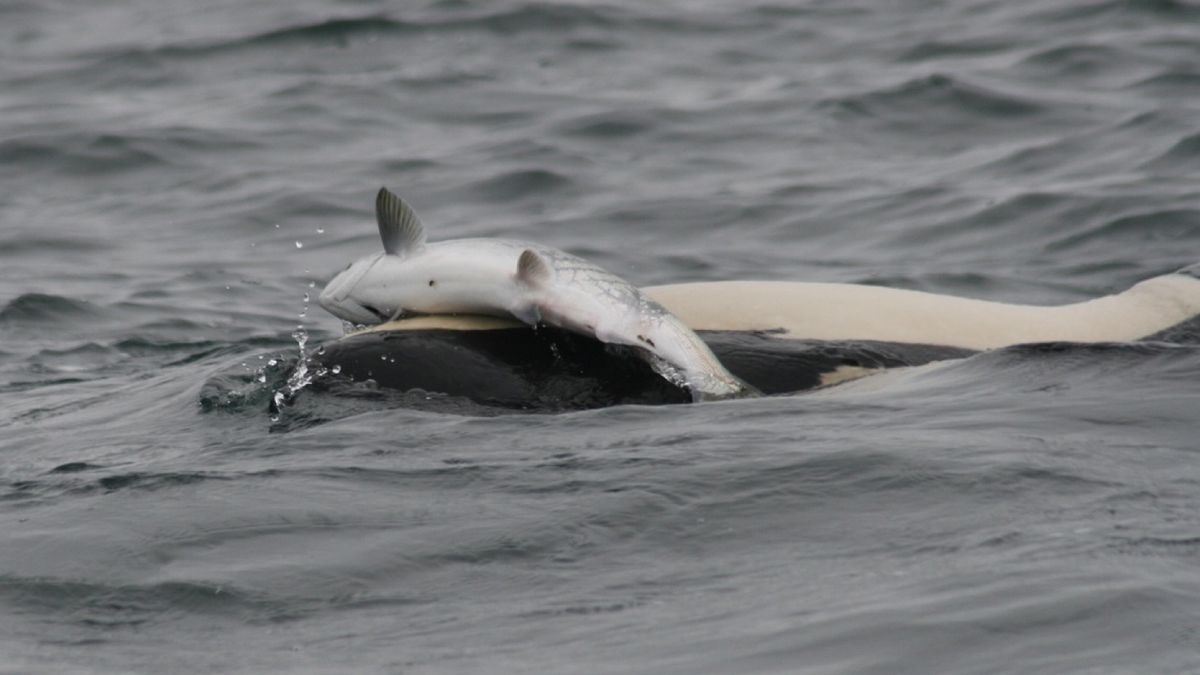
Perhaps the best animal story of 2024 came right at the end of the year, when orcas (Orcinus orca) started wearing salmon hats again after a 37-year hiatus from the fabulous fad. And while scientists don’t really know why orcas are balancing dead fish on their heads, the best guess is there is so much of their favorite food — chum salmon (Oncorhynchus keta) — available, it’s a way to save it for later.

But there was plenty of other news from the animal kingdom this year. We found out that female gibbons do the robot and “vogue” — but only if they’re sure someone else is watching. Researchers aren’t sure why the apes do it (the dancing was seen in wild and captive gibbons), but it seems to relate to sex, food and their social lives.

Speaking of food, we had two never-before-seen cases of predators eating each other. In the sea, a pregnant portbeagle shark (Lamna nasus) got gobbled up by another shark — likely a great white shark (Carcharodon carcharias) or a shortfin mako (Isurus oxyrinchus). And on land, a Burmese python (Python bivittatus) was seen feasting on an even bigger reticulated python (Malayopython reticulatus) from the tail up, while it was still alive. A Burmese python in Florida also swallowed a deer whole by stretching its mouth to almost the limit of what is physically possible for the species.

In the insect world, scientists discovered that ants carry out life-saving operations by performing amputations on injured nestmates — becoming the only known animal in the world other than humans to do so.

Cassius, the world’s largest captive crocodile, died in November, having potentially reached the ripe old age of 120. He was captured in the Finniss River, near Darwin, Australia, in 1984 after he started eating livestock, attacking boat engines and fighting other crocodiles. Scientists are now studying his bones to find out exactly how old he was when he died.
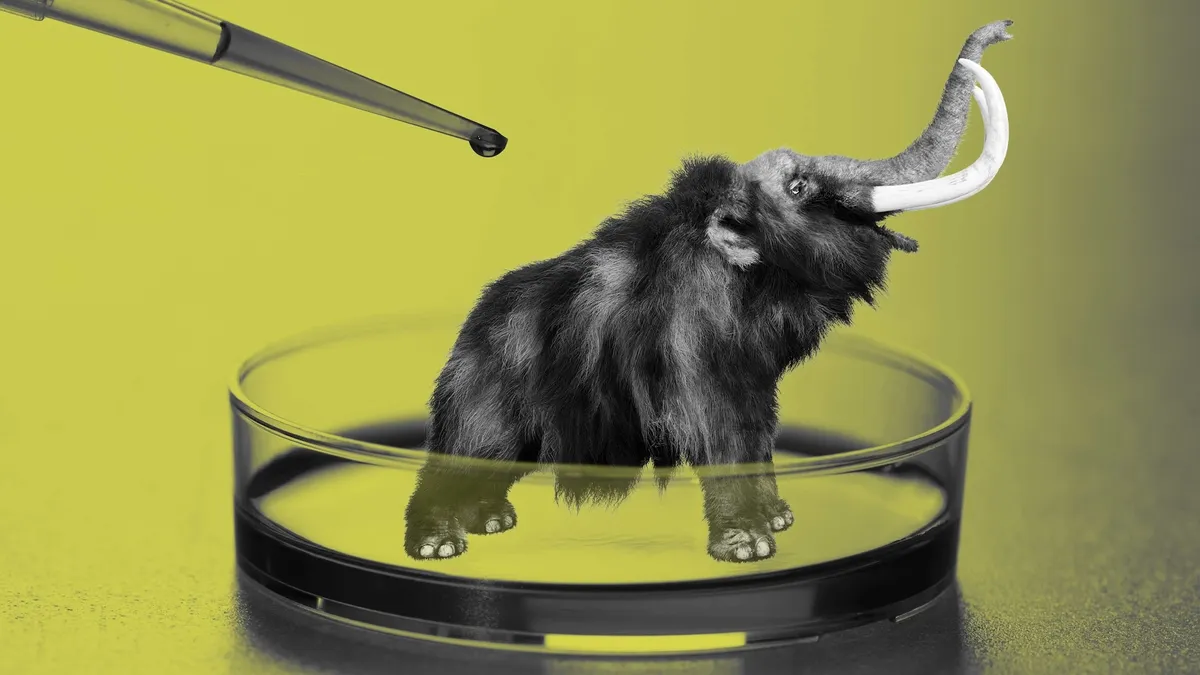
A collage of a woolly mammoth inside a petri dish with a pipet above it

Scientists say they’re close to resurrecting the woolly mammoth. The plans involve inserting genes for iconic woolly mammoth traits, like shaggy coats and curly tusks, into the genome of an elephant, and growing the creature in an elephant surrogate. (Image credit: Images by Vac1 and WLADIMIR BULGAR Getty Images; Collage by Marilyn Perkins)

And it wasn’t just living animals making headlines. In August, Siberian gold miners accidentally stumbled upon the mummified remains of a woolly rhino (Coelodonta antiquitatis) with its horn and soft tissues still intact. A winemaker in Austria found hundreds of mammoth bones while renovating his cellar, and scientists performed an autopsy on a 44,000-year-old mummified wolf pulled from the permafrost.

Get the world’s most fascinating discoveries delivered straight to your inbox.

Related: 35,000-year-old saber-toothed kitten with preserved whiskers pulled from permafrost in Siberia

Researchers in the U.K., meanwhile, discovered what could have been the biggest marine reptile ever found. This ichthyosaur, which lived 200 million years ago, is estimated to have been a whopping 82 feet (25 meters) long. Also from the age of the dinosaurs, palaeontologists in Morocco discovered a never-before-seen species of marine lizard with “dagger-like” teeth; and in Brazil, heavy rains exposed one of the oldest dinosaur skeletons ever discovered.

And where the living and long-dead collide, scientists now say the de-extinction of species like the woolly mammoth (Mammuthus primigenius) and Tasmanian tiger (Thylacinus cynocephalus) is “closer than people think.” Researchers working on the effort claim bringing back ice age megafauna could help restore ancient ecosystems, boost carbon storage and mitigate climate change — but it remains to be seen whether it will cause catastrophic, unintended consequences.

“We have this hubris as humans that we can control our technology,” Oswald Schmitz, a professor of population and community ecology at Yale University, told Live Science. “I’m not so convinced.”

Animal news quiz 2024

Source link

Share. Facebook Twitter Pinterest LinkedIn Tumblr Email
Previous Articlebest life-saving essential travel accessories to pack
Next Article Windows 11 Pro for just $19.97
Editor
  • Website

Related Posts

Lifestyle

Study suggests life on Earth has around 1.8 billion years left — but the biosphere might evolve to survive even longer

July 2, 2026
Lifestyle

Ancient-DNA analysis solves 500-year-old mystery of what killed 2 Medici brothers

July 1, 2026
Lifestyle

Antarctica’s first dinosaur fossil belonged to a group of the largest land animals ever

July 1, 2026
Add A Comment

Comments are closed.

Categories
  • Entertainment
  • Lifestyle
  • News
  • Sports
  • Tech
  • Travel
Recent Posts
  • Study suggests life on Earth has around 1.8 billion years left — but the biosphere might evolve to survive even longer
  • Ancient-DNA analysis solves 500-year-old mystery of what killed 2 Medici brothers
  • Antarctica’s first dinosaur fossil belonged to a group of the largest land animals ever
  • Scientists propose launching a giant ‘airbag’ into space to protect us from solar superstorms ‪— and experts say it’s ‘quite feasible’
  • Dead-end bitcoin mining wastes as much energy as Switzerland’s entire hydropower generation capacity
calendar
July 2026
M T W T F S S
 12345
6789101112
13141516171819
20212223242526
2728293031  
« Jun    
Recent Posts
  • Study suggests life on Earth has around 1.8 billion years left — but the biosphere might evolve to survive even longer
  • Ancient-DNA analysis solves 500-year-old mystery of what killed 2 Medici brothers
  • Antarctica’s first dinosaur fossil belonged to a group of the largest land animals ever
About

Welcome to Baynard Media, your trusted source for a diverse range of news and insights. We are committed to delivering timely, reliable, and thought-provoking content that keeps you informed
and inspired

Categories
  • Entertainment
  • Lifestyle
  • News
  • Sports
  • Tech
  • Travel
Facebook X (Twitter) Pinterest WhatsApp
  • Contact Us
  • About Us
  • Privacy Policy
  • Disclaimer
  • UNSUBSCRIBE
© 2026 copyrights reserved

Type above and press Enter to search. Press Esc to cancel.