Close Menu
  • Home
  • UNSUBSCRIBE
  • News
  • Lifestyle
  • Tech
  • Entertainment
  • Sports
  • Travel
Facebook X (Twitter) WhatsApp
Trending
  • ‘A weird result from an already weird hominin’: Archaeologists discover all Homo naledi skeletons found in South African cave are female
  • China’s Einstein Probe detected a mysterious cosmic explosion — and scientists have no idea what caused it
  • Satellites reveal Earth has a surprising symmetry in the way it reflects light — and it might be tied to the El Niño cycle
  • Water might secretly be a mix of 2 different liquids, scientists say
  • ‘Weirdos of the sperm whale world’ appear to be evolving 2 different dialects, audio recordings suggest
  • 60 million stars: Euclid space telescope snaps the largest-ever close-up photo of the Milky Way’s crowded heart
  • ‘If there’s any country that will do it, it’s China’: Why is China diverting some of the world’s mightiest rivers thousands of miles?
  • Drug-induced ‘brain freeze’ may help protect the brain after a stroke, early study suggests
Facebook X (Twitter) WhatsApp
Baynard Media
  • Home
  • UNSUBSCRIBE
  • News
  • Lifestyle
  • Tech
  • Entertainment
  • Sports
  • Travel
Baynard Media
Home»Lifestyle»‘Equinox eclipse’ 2025: Why September’s solar eclipse is mostly an affair for penguins
Lifestyle

‘Equinox eclipse’ 2025: Why September’s solar eclipse is mostly an affair for penguins

EditorBy EditorAugust 21, 2025No Comments3 Mins Read
Share Facebook Twitter Pinterest LinkedIn Tumblr Reddit Telegram Email
Share
Facebook Twitter LinkedIn Pinterest Email

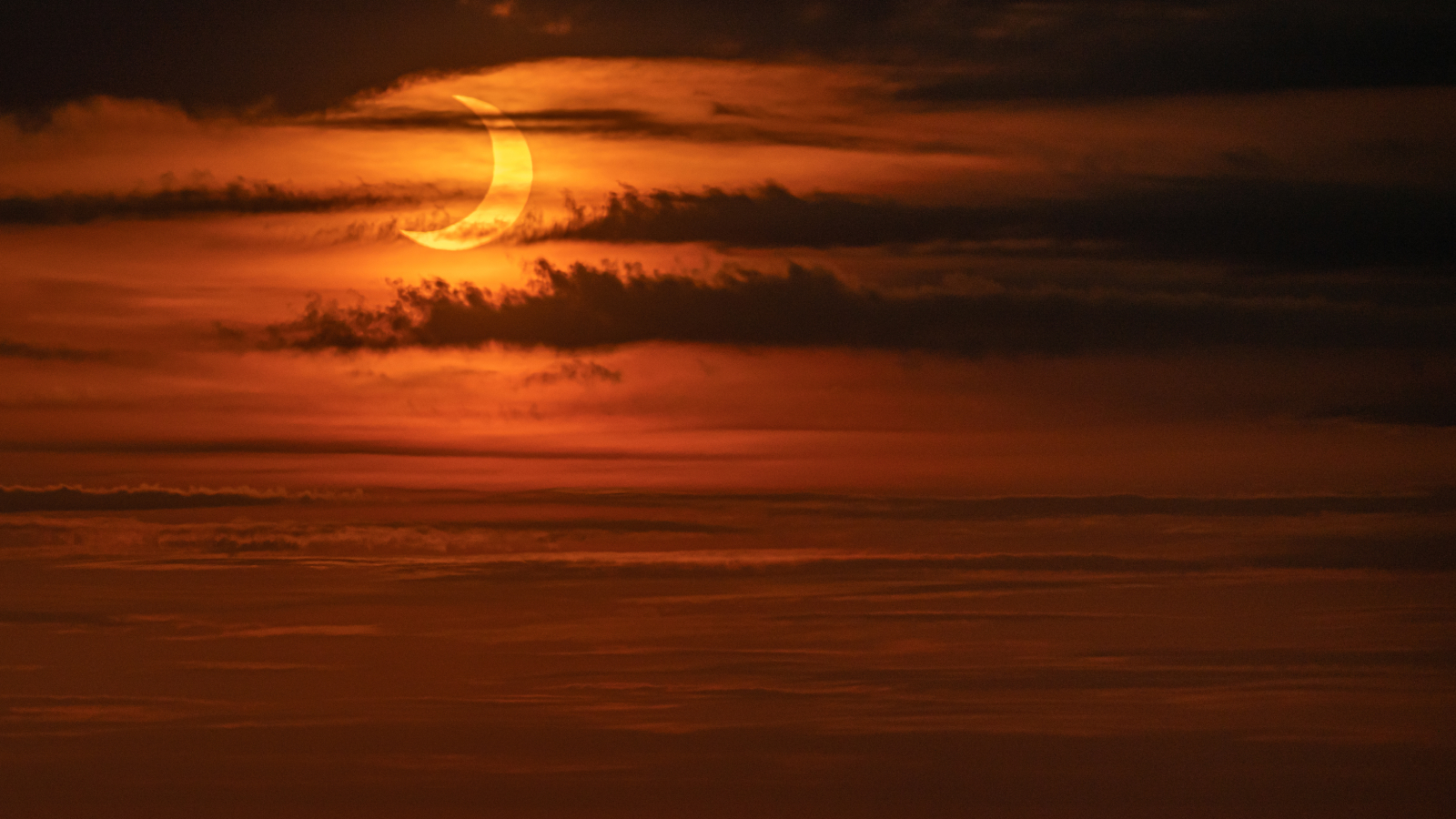
Lost in the glare of the sun on Sept. 21, the new moon will rise without anyone in the Northern Hemisphere noticing. However, early birds in New Zealand and the South Pacific — and a handful of people (and millions of penguins) overwintering in Antarctica — will see a dramatic “crescent sunrise” as an eclipsed sun emerges from the horizon. It’s as dramatic a sight as it’s possible to see this side of a total solar eclipse.

Dubbed the “equinox eclipse,” it will occur within the same 24 hours as September’s equinox, the moment when the sun appears to cross the celestial equator, heading southward to bring spring to the Southern Hemisphere as autumn begins in the north.

While the equinox occurs at 2:19 p.m. EDT (18:19 UTC) on Sept. 22, the partial solar eclipse — the second one of 2025 — will happen from 1:29 p.m. to 5:53 p.m. EDT (17:29 to 21:53 UTC) on Sept. 21. That translates to sunrise on Monday, Sept. 22, local time in Antarctica, New Zealand and the South Pacific.


You may like

Unlike a total solar eclipse, where the moon completely blocks the sun and makes it possible to see the solar corona (our star’s wispy outer atmosphere) with the naked eye, a partial solar eclipse leaves a portion still visible. The result is a crescent sun, which must be viewed through solar eclipse glasses at all times. While the sky won’t darken, the spectacle of a heavily eclipsed sun on the horizon promises unforgettable views.

Related: Where can you see the Sept. 7 ‘blood moon’ total lunar eclipse?

For this event, the coverage of our star’s visible surface will be unusually deep, with up to 86% of the sun obscured in parts of Antarctica’s Ross Sea and southern New Zealand. One of the key viewing locations on an otherwise remote eclipse track will be Dunedin, New Zealand, where the sun will rise already eclipsed at 6:27 a.m. NZST, reaching a maximum of about 72% coverage about 40 minutes later.

Only about 400,000 people will be able to see an eclipse of over 70%, according to Timeanddate.com. Further north in Auckland, the sun will rise already partially eclipsed at 6:10 NZST, and the maximum eclipse reaches 61% while in the South Pacific, viewers in Fiji and Tonga will see a much smaller partial eclipse at sunrise. From Hobart, Australia, a 3% partial eclipse will be visible just after sunrise at 6:00 a.m. AEST.

Get the world’s most fascinating discoveries delivered straight to your inbox.

The next solar eclipse on Earth will take place on Feb. 17, 2026, when an annular solar eclipse will create a “ring of fire” visible for up to 2 minutes and 20 seconds as 92% of the sun is blocked by the moon at its most distant. Unfortunately, the stunning ring of fire will only be visible from a remote region of Antarctica. Sometimes penguins have all the luck.

Source link

Share. Facebook Twitter Pinterest LinkedIn Tumblr Email
Previous ArticleTexans’ Jimmie Ward accused of assault while allegedly on crystal meth
Next Article California legislators pass redistricting plans to put a Democratic-drawn map before voters
Editor
  • Website

Related Posts

Lifestyle

‘A weird result from an already weird hominin’: Archaeologists discover all Homo naledi skeletons found in South African cave are female

June 25, 2026
Lifestyle

China’s Einstein Probe detected a mysterious cosmic explosion — and scientists have no idea what caused it

June 25, 2026
Lifestyle

Satellites reveal Earth has a surprising symmetry in the way it reflects light — and it might be tied to the El Niño cycle

June 24, 2026
Add A Comment

Comments are closed.

Categories
  • Entertainment
  • Lifestyle
  • News
  • Sports
  • Tech
  • Travel
Recent Posts
  • ‘A weird result from an already weird hominin’: Archaeologists discover all Homo naledi skeletons found in South African cave are female
  • China’s Einstein Probe detected a mysterious cosmic explosion — and scientists have no idea what caused it
  • Satellites reveal Earth has a surprising symmetry in the way it reflects light — and it might be tied to the El Niño cycle
  • Water might secretly be a mix of 2 different liquids, scientists say
  • ‘Weirdos of the sperm whale world’ appear to be evolving 2 different dialects, audio recordings suggest
calendar
June 2026
M T W T F S S
1234567
891011121314
15161718192021
22232425262728
2930  
« May    
Recent Posts
  • ‘A weird result from an already weird hominin’: Archaeologists discover all Homo naledi skeletons found in South African cave are female
  • China’s Einstein Probe detected a mysterious cosmic explosion — and scientists have no idea what caused it
  • Satellites reveal Earth has a surprising symmetry in the way it reflects light — and it might be tied to the El Niño cycle
About

Welcome to Baynard Media, your trusted source for a diverse range of news and insights. We are committed to delivering timely, reliable, and thought-provoking content that keeps you informed
and inspired

Categories
  • Entertainment
  • Lifestyle
  • News
  • Sports
  • Tech
  • Travel
Facebook X (Twitter) Pinterest WhatsApp
  • Contact Us
  • About Us
  • Privacy Policy
  • Disclaimer
  • UNSUBSCRIBE
© 2026 copyrights reserved

Type above and press Enter to search. Press Esc to cancel.