Close Menu
  • Home
  • UNSUBSCRIBE
  • News
  • Lifestyle
  • Tech
  • Entertainment
  • Sports
  • Travel
Facebook X (Twitter) WhatsApp
Trending
  • 2 rivers merged to form the Euphrates 3.6 million years ago, eventually leading to the Fertile Crescent
  • NASA confirms fireball meteor exploded over northeastern US with force of 230 tons of TNT
  • Astronauts could use lightning-like plasma jets to kill germs on the moon and Mars, demo hints
  • First whole-genome sequence of a Greenland shark holds clues to their extreme longevity
  • Heading a soccer ball just once is enough to raise levels of proteins associated with brain damage
  • OpenAI’s internal AI model just solved an 80-year-old math problem ‪—‬ and mathematicians verified it
  • Skeletal remains of Queen Elisenda, one of the most powerful rulers in medieval Europe, unearthed in Barcelona — along with several others who bore unexplained stab wounds
  • Tests that measure ‘biological age’ aren’t helpful for tracking your health, scientists say
Facebook X (Twitter) WhatsApp
Baynard Media
  • Home
  • UNSUBSCRIBE
  • News
  • Lifestyle
  • Tech
  • Entertainment
  • Sports
  • Travel
Baynard Media
Home»Lifestyle»Egyptian mummy has part of the ‘Iliad’ in its abdomen, archaeologists discover
Lifestyle

Egyptian mummy has part of the ‘Iliad’ in its abdomen, archaeologists discover

EditorBy EditorApril 23, 2026No Comments4 Mins Read
Share Facebook Twitter Pinterest LinkedIn Tumblr Reddit Telegram Email
Share
Facebook Twitter LinkedIn Pinterest Email

Archaeologists in Egypt have discovered a Roman-era mummy with a copy of Homer’s epic poem the “Iliad” inside its abdomen ‪—‬ a unique find that archaeologists are calling “exceptional.”

Written on papyrus in Greek, the text records part of Book 2 of the “Iliad,” which details the legendary Trojan War. The text found in the mummy lists the ships used against the city of Troy, according to a statement from the University of Barcelona. It would have been placed within the abdomen during the embalming ritual.

The mummy, which dates to a time when the Romans controlled Egypt, was found at a tomb within a cemetery in the modern-day town of Al-Bahnasa in Egypt, which was known as Oxyrhynchus in ancient times. The Romans controlled Egypt starting in 30 B.C., after Cleopatra died by suicide, until A.D. 641, when the Rashidun Caliphate took control of Egypt.


You may like

The site of Oxyrhynchus has been excavated off and on for well over a century. In the late 19th and early 20th centuries, archaeologists found around 500,000 fragments of papyri at the site.

The newly discovered “papyrus was placed on the abdomen to protect [the] deceased in the afterlife,” Esther Pons Mellado, co-director of the archaeological mission in Oxyrhynchus, told Live Science in an email.

Pons Mellado and Maite Mascort, who is also a co-director of the mission, explained that during the time the Romans controlled Egypt, it was common for papyri to be put inside mummies, in the chest or abdomen. However, it’s unclear why ancient Egyptians thought papyri would help protect the deceased, Pons and Mascort said.
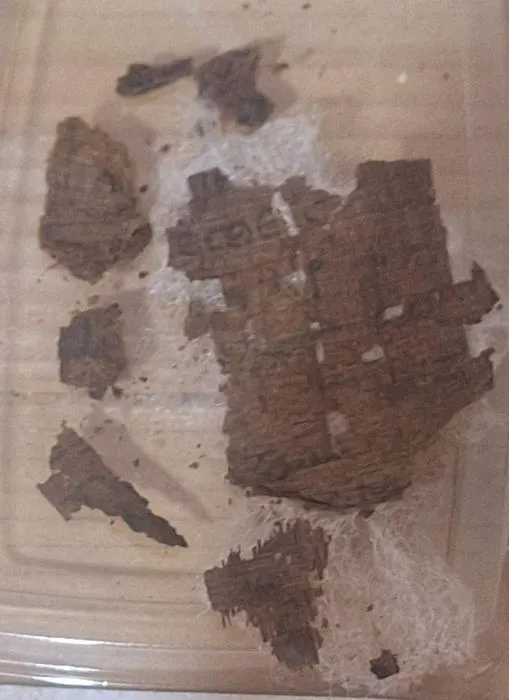
A close up of various brown fragments with writing on them.

Archaeologists found a papyrus inside a mummy that has Greek text from the “Iliad” on it. (Image credit: Professor Ignasi-Xavier Adiego)

Remarkably, this is the first time a copy of Homer’s “Iliad” has been found inside a mummy.

Get the world’s most fascinating discoveries delivered straight to your inbox.

“The discovery is exceptional: it is the first time in the history of archaeology that a Greek literary text has been found deliberately incorporated into the mummification process,” the University of Barcelona statement noted.

Although other Greek literary texts have been unearthed at Oxyrhynchus, “the real novelty” of the newfound literary papyrus is its “funerary context,” Ignasi-Xavier Adiego, a linguistics professor at the University of Barcelona who analyzed the papyrus, said in the statement. He explained that papyri found inside mummies are often magical texts.
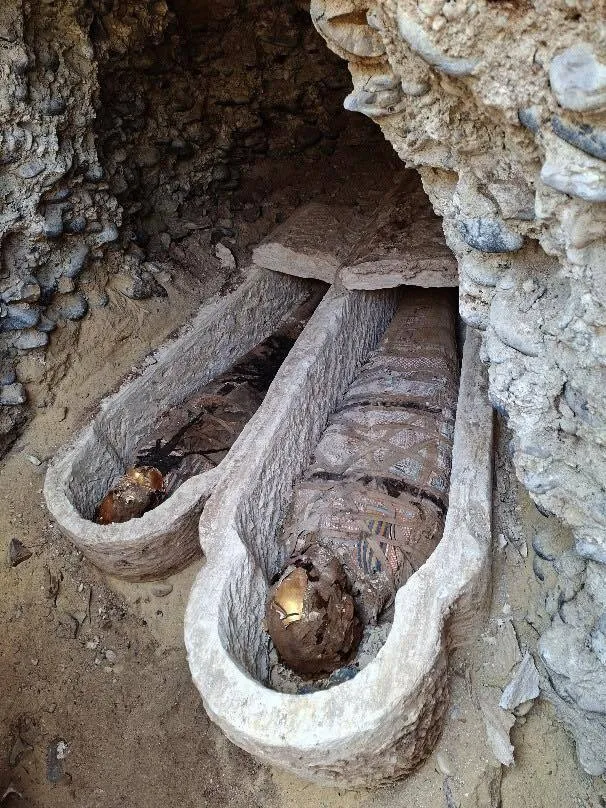
Two mummies lie in their coffins inside a cylindrical tunnel in the wall. Their heads are toward the camera

Two gilded mummies found in the cemetery in Egypt. (Image credit: Courtesy of the Egyptian Ministry of Tourism and Antiquities)

So far, archaeologists don’t know much about the mummy with the “Iliad” papyrus. “We know that [it] was a male mummified individual but it’s still under investigation,” Pons and Mascort wrote in the email. They noted that the person was an adult.


What to read next

The “papyrus is very important and relevant, but of course the study is not finished yet,” Mascort and Pons wrote.

Gold and copper tongues
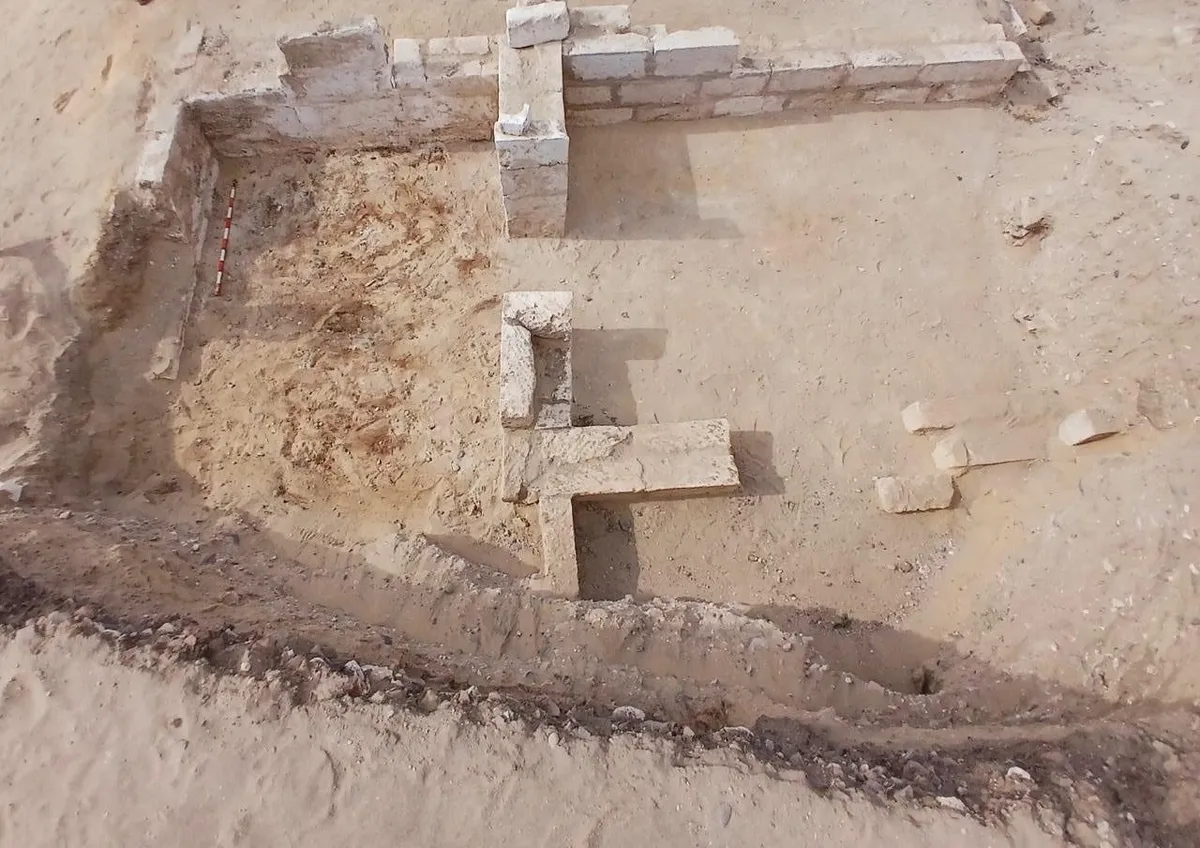
A bird-eye's view of a cemetery with a stone wall in the desert

A view of the cemetery that has the mummy with the “Iliad” papyrus inside its abdomen. (Image credit: Courtesy of the Egyptian Ministry of Tourism and Antiquities)

The “Iliad” mummy was found during a November-December 2025 excavation of a cemetery at Oxyrhynchus. The team’s previous excavations at the cemetery revealed more than a dozen mummies with gold tongues, which ancient Egyptians thought would help the mummies communicate in the afterlife.

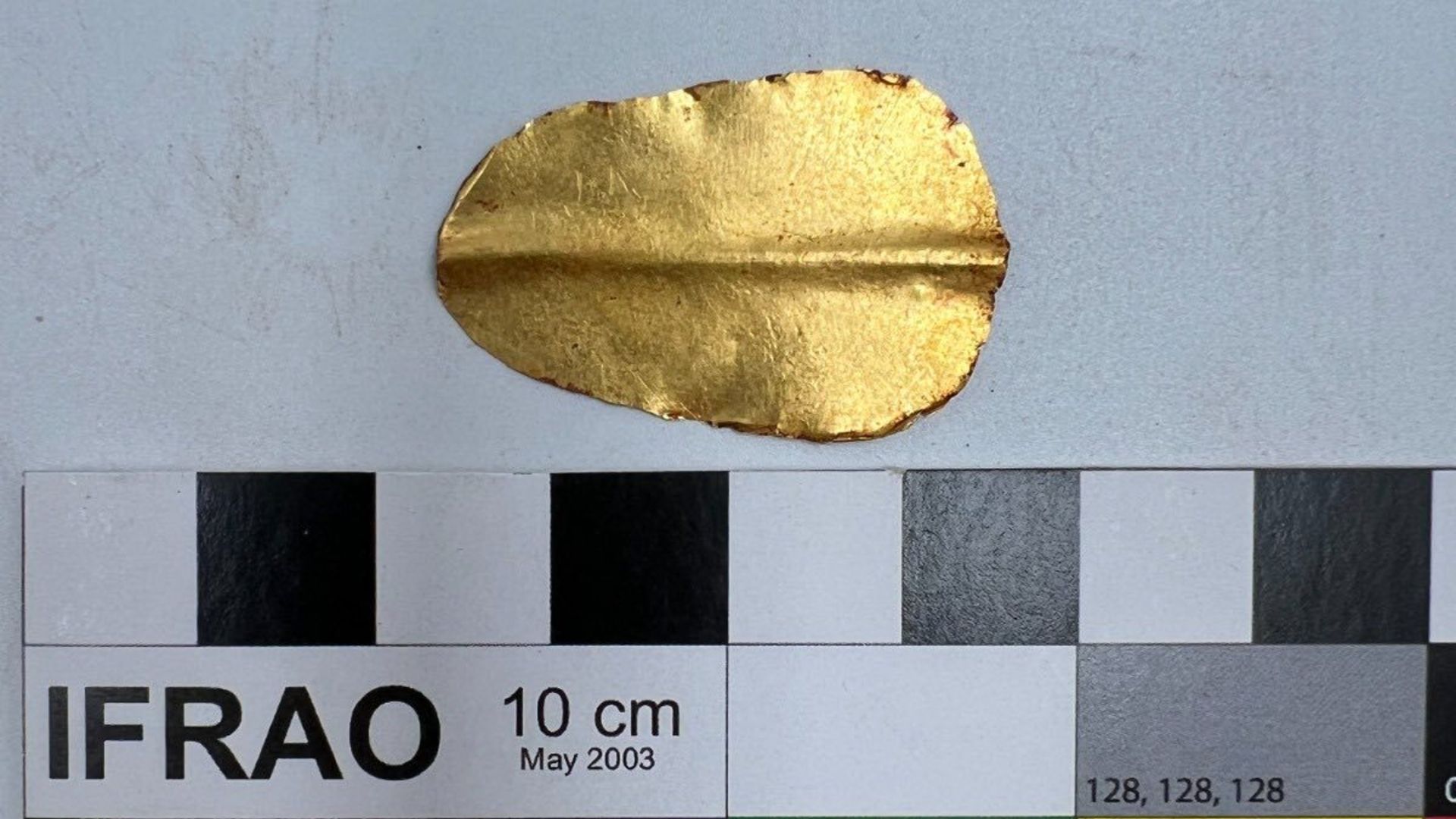
The team found three additional gold tongues and one copper tongue during the November-December 2025 excavation, a translated statement from Egypt’s Ministry of Tourism and Antiquities said. For the ancient Egyptians, gold symbolized the flesh of the gods and it was thought that having a tongue made of gold would help you communicate with them. It’s not clear why copper was used for one of the tongues.

It’s also unknown if the mummy with the “Iliad” text had a gold or copper tongue; study of the mummy is ongoing.

Source link

Share. Facebook Twitter Pinterest LinkedIn Tumblr Email
Previous Article‘A turning point in history’: Gene therapy improves hearing in 90% of patients with congenital deafness in largest trial of its kind
Next Article Oil spills from Iran war may contaminate water and food supply and threaten protected wildlife refuge
Editor
  • Website

Related Posts

Lifestyle

2 rivers merged to form the Euphrates 3.6 million years ago, eventually leading to the Fertile Crescent

June 2, 2026
Lifestyle

NASA confirms fireball meteor exploded over northeastern US with force of 230 tons of TNT

June 2, 2026
Lifestyle

Astronauts could use lightning-like plasma jets to kill germs on the moon and Mars, demo hints

June 1, 2026
Add A Comment

Comments are closed.

Categories
  • Entertainment
  • Lifestyle
  • News
  • Sports
  • Tech
  • Travel
Recent Posts
  • 2 rivers merged to form the Euphrates 3.6 million years ago, eventually leading to the Fertile Crescent
  • NASA confirms fireball meteor exploded over northeastern US with force of 230 tons of TNT
  • Astronauts could use lightning-like plasma jets to kill germs on the moon and Mars, demo hints
  • First whole-genome sequence of a Greenland shark holds clues to their extreme longevity
  • Heading a soccer ball just once is enough to raise levels of proteins associated with brain damage
calendar
June 2026
M T W T F S S
1234567
891011121314
15161718192021
22232425262728
2930  
« May    
Recent Posts
  • 2 rivers merged to form the Euphrates 3.6 million years ago, eventually leading to the Fertile Crescent
  • NASA confirms fireball meteor exploded over northeastern US with force of 230 tons of TNT
  • Astronauts could use lightning-like plasma jets to kill germs on the moon and Mars, demo hints
About

Welcome to Baynard Media, your trusted source for a diverse range of news and insights. We are committed to delivering timely, reliable, and thought-provoking content that keeps you informed
and inspired

Categories
  • Entertainment
  • Lifestyle
  • News
  • Sports
  • Tech
  • Travel
Facebook X (Twitter) Pinterest WhatsApp
  • Contact Us
  • About Us
  • Privacy Policy
  • Disclaimer
  • UNSUBSCRIBE
© 2026 copyrights reserved

Type above and press Enter to search. Press Esc to cancel.