Close Menu
  • Home
  • UNSUBSCRIBE
  • News
  • Lifestyle
  • Tech
  • Entertainment
  • Sports
  • Travel
Facebook X (Twitter) WhatsApp
Trending
  • Diagnostic dilemma: A teen’s classic diabetes symptoms didn’t improve with treatment — revealing she also had a much rarer syndrome
  • Strange mammal ancestor laid huge, leathery eggs —‬ and it was key to surviving the world’s worst mass extinction
  • Ancient process that created rare earth elements discovered — and it could help us locate desperately needed deposits
  • This humanoid robot does all your housework for you ‪—‬ and its makers say it’s ready for your home
  • ‘Nations need to prepare now’: Key Atlantic ocean current is much closer to collapse than scientists thought
  • Neanderthal toddlers grew faster than modern humans, probably because of the harsh environment they evolved in
  • NASA shuts off another Voyager 1 instrument as humanity’s most distant spacecraft prepares for risky ‘Big Bang’ maneuver to save power
  • Florida is facing its most intense drought in 15 years. Here’s how it got so bad and how long it will last.
Facebook X (Twitter) WhatsApp
Baynard Media
  • Home
  • UNSUBSCRIBE
  • News
  • Lifestyle
  • Tech
  • Entertainment
  • Sports
  • Travel
Baynard Media
Home»Lifestyle»Doomed Soviet satellite from 1972 will tumble uncontrollably to Earth next week — and it could land almost anywhere
Lifestyle

Doomed Soviet satellite from 1972 will tumble uncontrollably to Earth next week — and it could land almost anywhere

EditorBy EditorMay 1, 2025No Comments3 Mins Read
Share Facebook Twitter Pinterest LinkedIn Tumblr Reddit Telegram Email
Share
Facebook Twitter LinkedIn Pinterest Email

A chunk from a 53-year-old Soviet spacecraft designed to land on Venus is set to cannonball back to Earth next weekend, and nobody knows where it might land.

The Kosmos 482 probe, made and launched by the U.S.S.R. in 1972, was built as part of the Venera program that collected data from Venus’s hellish surface.

But a malfunction in the upper stage of the Soyuz rocket booster that lofted the ship skyward scuppered its mission, leaving the craft without the required velocity to reach the planet and instead marooning it in an elliptical orbit around our own.


You may like

Now, a telescope analysis conducted by a space researcher and satellite watcher has revealed that the descent module of the failed spaceship is due for an imminent fiery return to Earth — sometime around May 10, give or take a few days.

Related: 5,000-pound European satellite burns up over Pacific Ocean after 30 years in orbit

“As this is a lander that was designed to survive passage through the Venus atmosphere, it is possible that it will survive reentry through the Earth atmosphere intact, and impact intact,” Marco Langbroek, a lecturer in space situational awareness at Delft Technical University in the Netherlands who discovered the lander’s impending return, wrote in a blog post. “The risks involved are not particularly high, but not zero.”
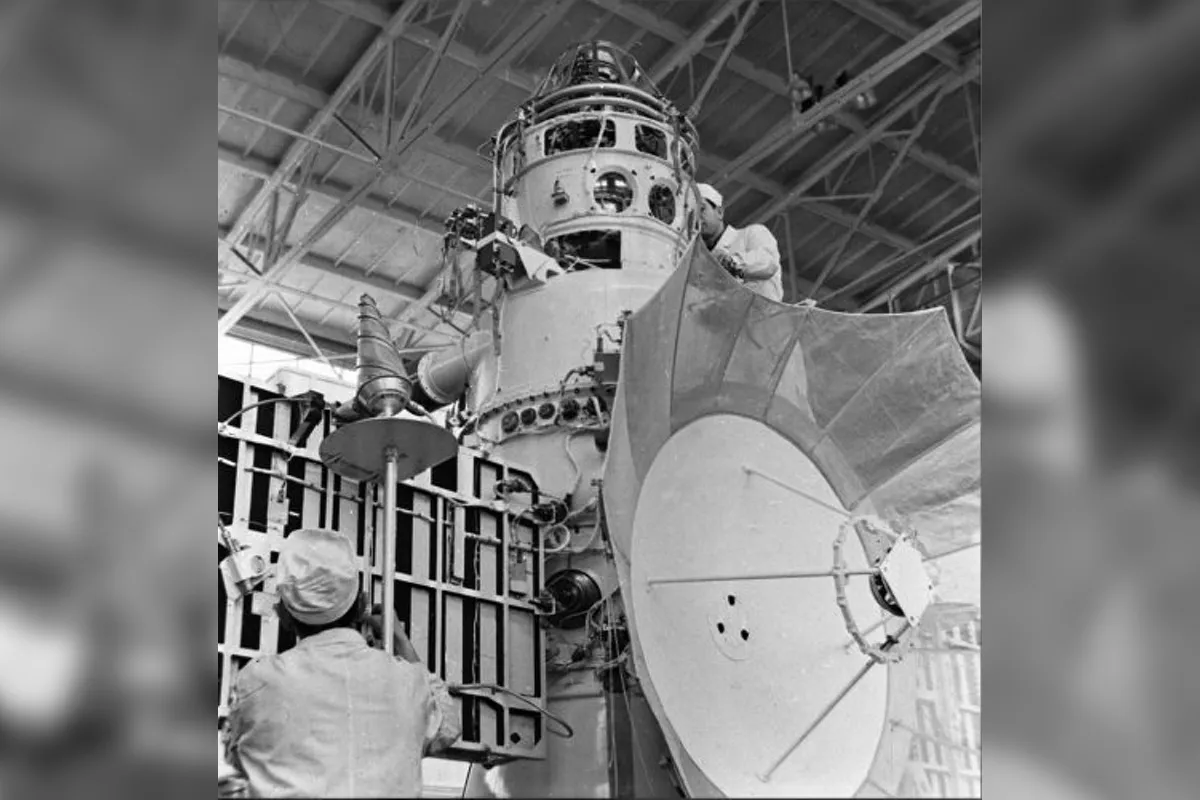
Venera 8

The Venera 8 probe, which was the second spacecraft to sucessfully land on Venus. (Image credit: Copyright Alamy)

Kosmos 482 was built as a sister probe to Venera 8, which launched in July 1972 to become the second craft (following Venera 7) to land on Venus’s scorching surface. Once there, Venera 8 beamed data from Venus for just over 50 minutes before being fried by the inhospitable planet’s blisteringly-hot atmosphere.

Get the world’s most fascinating discoveries delivered straight to your inbox.

Following its failed launch, Kosmos 482 broke into two pieces consisting of the main body and the lander. The former reentered Earth’s atmosphere nine years after launch on May 5 1981, while the descent craft remained trapped inside a slowly decaying orbit that has persisted for more than 50 years.

When the 1,091 pound (495 kilograms), 3-foot (1 meter) lander returns to Earth, Langbroek predicts that it will be travelling at roughly 150 mph (242 km/h), so he likens the risk of its impact to that of a meteorite. As for where the doomed craft will land, Langbroek says it’s still too early to tell.

“With an orbital inclination of 52 degrees, the Kosmos 482 Descent Craft could come down anywhere between 52 degrees north and 52 degrees south latitude,” he wrote in an article for The Space Review. “This includes much of south and mid-latitude Europe and Asia, as well as the Americas and the whole of Africa and Australia. Of course, the biggest chances are that it will land in one of the oceans, as the failed Phobos-Grunt Venus mission did on January 15, 2011.”

With satellite trackers continuing to observe the spacecraft’s tumble from orbit, a clearer picture of its uncontrolled reentry will emerge in the coming days.

Source link

Share. Facebook Twitter Pinterest LinkedIn Tumblr Email
Previous Article2,300-year-old sword with swastikas unearthed at necropolis in France
Next Article Climate wars are approaching — and they will redefine global conflict
Editor
  • Website

Related Posts

Lifestyle

Diagnostic dilemma: A teen’s classic diabetes symptoms didn’t improve with treatment — revealing she also had a much rarer syndrome

April 22, 2026
Lifestyle

Strange mammal ancestor laid huge, leathery eggs —‬ and it was key to surviving the world’s worst mass extinction

April 22, 2026
Lifestyle

Ancient process that created rare earth elements discovered — and it could help us locate desperately needed deposits

April 22, 2026
Add A Comment

Comments are closed.

Categories
  • Entertainment
  • Lifestyle
  • News
  • Sports
  • Tech
  • Travel
Recent Posts
  • Diagnostic dilemma: A teen’s classic diabetes symptoms didn’t improve with treatment — revealing she also had a much rarer syndrome
  • Strange mammal ancestor laid huge, leathery eggs —‬ and it was key to surviving the world’s worst mass extinction
  • Ancient process that created rare earth elements discovered — and it could help us locate desperately needed deposits
  • This humanoid robot does all your housework for you ‪—‬ and its makers say it’s ready for your home
  • ‘Nations need to prepare now’: Key Atlantic ocean current is much closer to collapse than scientists thought
calendar
April 2026
M T W T F S S
 12345
6789101112
13141516171819
20212223242526
27282930  
« Mar    
Recent Posts
  • Diagnostic dilemma: A teen’s classic diabetes symptoms didn’t improve with treatment — revealing she also had a much rarer syndrome
  • Strange mammal ancestor laid huge, leathery eggs —‬ and it was key to surviving the world’s worst mass extinction
  • Ancient process that created rare earth elements discovered — and it could help us locate desperately needed deposits
About

Welcome to Baynard Media, your trusted source for a diverse range of news and insights. We are committed to delivering timely, reliable, and thought-provoking content that keeps you informed
and inspired

Categories
  • Entertainment
  • Lifestyle
  • News
  • Sports
  • Tech
  • Travel
Facebook X (Twitter) Pinterest WhatsApp
  • Contact Us
  • About Us
  • Privacy Policy
  • Disclaimer
  • UNSUBSCRIBE
© 2026 copyrights reserved

Type above and press Enter to search. Press Esc to cancel.