

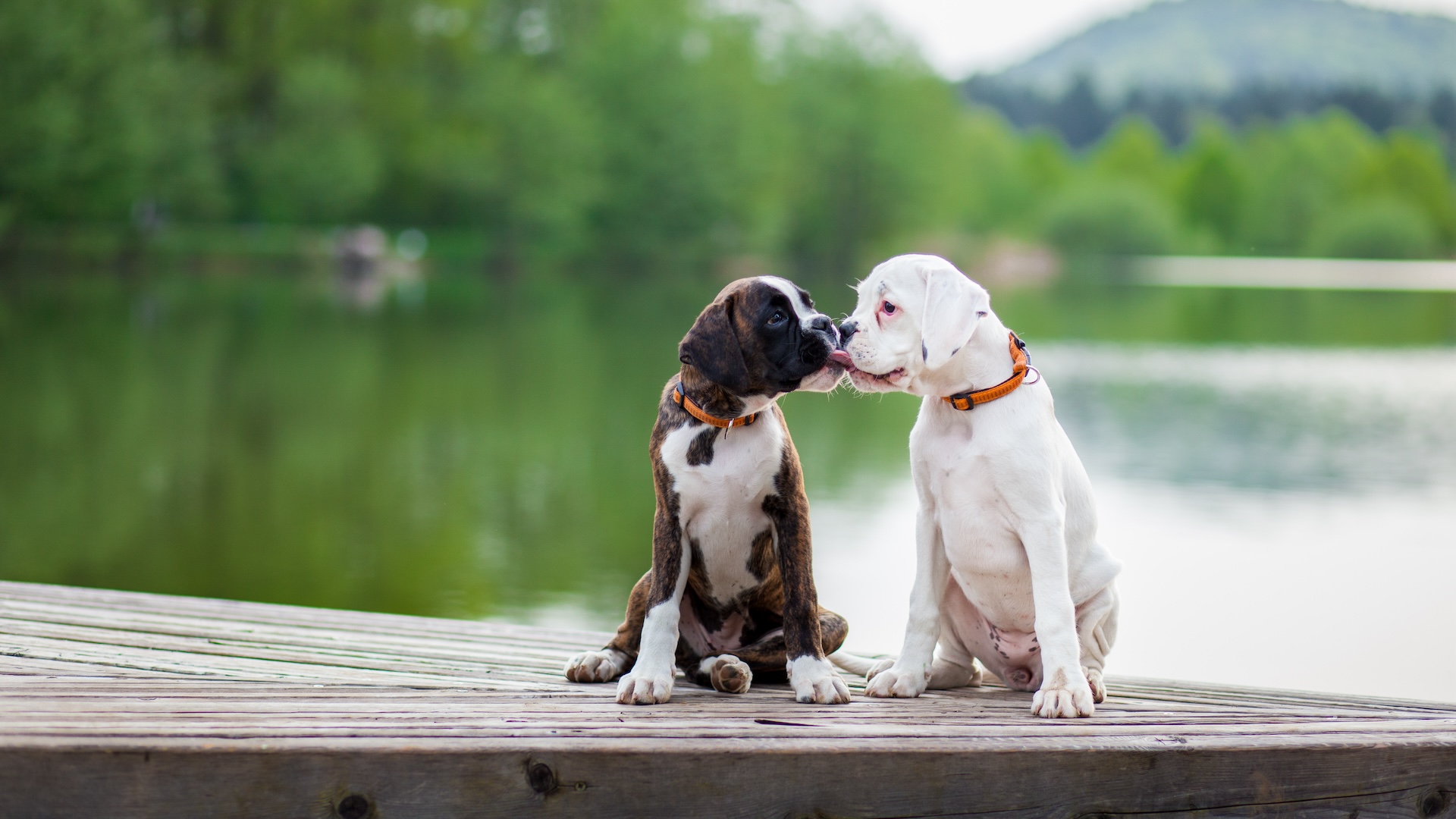
Kissing is a big part of human culture. According to ancient cuneiform tablets found in Iraq, humans have been smooching since at least 2500 B.C. Around the world today, many societies share kisses in some form or another, whether it’s for romance, familial love or a friendly greeting.
When a behavior is so widespread, it makes sense to wonder whether other species do the same and if the behavior has an evolutionary origin. So do any other animals kiss?
If you want to know the answer, first you need to define a kiss — and that’s not as simple as it sounds.
From a tongue-filled makeout to a platonic peck on the cheek, the physical expression of human kissing can run the gamut. The intention behind a lip lock matters, too; pressing your lips against another’s during CPR may physically resemble a kiss, but few people would define it as one. Generally, human kissing needs to express some sort of positive social sentiment, whether it’s sexual, romantic or platonic.
Sheril Kirshenbaum, author of “The Science of Kissing: What Our Lips Are Telling Us” (Grand Central Publishing, 2011), told NPR there are many examples of what we might consider “kisses” in the animal kingdom, from turtles tapping heads to moose and ground squirrels brushing noses.
Perhaps one of the most obvious examples of animal “kisses” are licks from our canine companions. Dogs bring their mouths to their humans’ faces and start licking to show affection, although this behavior can also serve many other purposes, such as grooming or enhancing their experience of smells. This behavior is likely reinforced by positive reactions from their owners.
Related: Do dogs love us?
On that note, it’s important to state that when studying these sorts of behaviors in animals, scientists try not to anthropomorphize, or to view animals’ actions through the lens of human motivations and behaviors. So, while it’s possible to study dogs and observe that they tend to lick the faces of humans they have close relationships with, we can’t assume those “kisses” have the same meaning for them as they do for us. For that reason, these sorts of actions are often called “kissing-like behaviors” rather than “kisses,” and they don’t always come with the positive connotation that human kisses do.
For example, out on the African savanna, you may see a pair of giraffes intertwining their necks, sometimes brushing their faces and lips across each other. But this kissing-like behavior isn’t a display of affection; it’s a dominance ritual called necking, and it’s used to determine which giraffe is of higher social status.
Do other primates kiss?
Primates are the only animals who can “kiss” using puckered lips the way humans do; other species don’t have the necessary anatomy. And when it comes to the animal kingdom, bonobos (Pan paniscus) might be some of the most copious canoodlers. Alongside chimpanzees (Pan troglodytes), bonobos are our closest living relatives, and they’re also highly promiscuous.
Vanessa Woods, a research scientist of evolutionary anthropology at Duke University, told Live Science that bonobos’ female-led social groups tend to resolve disputes with sex rather than with violence, as many other primates do. And while bonobos don’t necessarily “kiss” during those sexual encounters, they do get pretty PG-13 when sharing food and grooming each other. Both of these behaviors often end up in extended kissing-like behaviors with plenty of tongue action.
Because bonobos tend to groom and share food with those they’re close with, kissing can be thought of as a “relationship barometer” for bonobos, Woods said.
The prevalence of kissing-like behaviors in primates during grooming even led one researcher to suggest that it’s the origin of human kissing. In an article published in 2024, Adriano Lameira, an associate professor of psychology at the University of Warwick in the U.K., proposed that human kissing is actually an evolutionary remnant of grooming behaviors.
In the last stage of the grooming process, nonhuman primates pucker their lips and suck the groomee’s skin to remove any remaining bugs or debris, in a kissing-like motion. Lameira believes that as evolution stripped ancient primates of their thick body hair, grooming became unnecessary, but our human ancestors retained the final, kissing-like step of the grooming process as a way to communicate a strong social bond.
“Kissing is not merely a romantic or cultural phenomenon but an evolutionary relic of primate social bonding,” Lameira told Live Science in an email.
Woods isn’t totally convinced that this is the only evolutionary reason for kissing. She said food sharing is also a big motivator for mouth-to-mouth contact in bonobos, and kissing behaviors could have just as well stemmed from there in a shared ancestor.
While the evolutionary origins of kissing remain a mystery, one thing is clear: Other animals might share behaviors that resemble kissing in form or function, but the full spectrum of human kissing sets us apart from the rest of the animal kingdom.
