
The patient: An 82-year-old woman in Bologna, Italy
The symptoms: The woman was admitted to the hospital with abdominal pain that had worsened over the previous four days. The symptom was accompanied by constipation and episodes of nausea and vomiting.
What happened next: During a physical examination, doctors found that the patient’s abdomen was distended and tender. Laboratory results from a blood test indicated that her white blood cell count was elevated, which is often a sign of an immune response to an infection.
Latest Videos FromLive Science
When doctors performed an abdominal X-ray, they discovered that parts of the woman’s intestines had expanded due to gas or fluid, while other portions of her intestines had collapsed. An abdominal CT scan revealed that the woman had a solid object blocking her intestinal loops on the right side — a situation known as a small bowel obstruction (SBO).
The diagnosis: SBOs have several possible causes, including tumors. Additionally, a section of the bowel can twist, forming a “volvulus,” or a mass of tissue can push through a tear in the intestinal wall, causing a hernia.
However, in a report of the case, the doctors wrote that SBOs can sometimes be foreign bodies, such as swallowed objects; gallstones that migrate to the intestines; packed masses of parasites, like roundworms or nematodes; or bezoars, which are solid clumps of undigested matter that collect in the gastrointestinal system.
Bowel obstructions can be life-threatening if the blockage completely shuts off the intestinal tube and the condition goes untreated. In this case, the doctors recommended emergency surgery to clear the patient’s blockage and prevent strangulation, meaning tissue death that affects parts of the intestines when the blood supply is cut off.
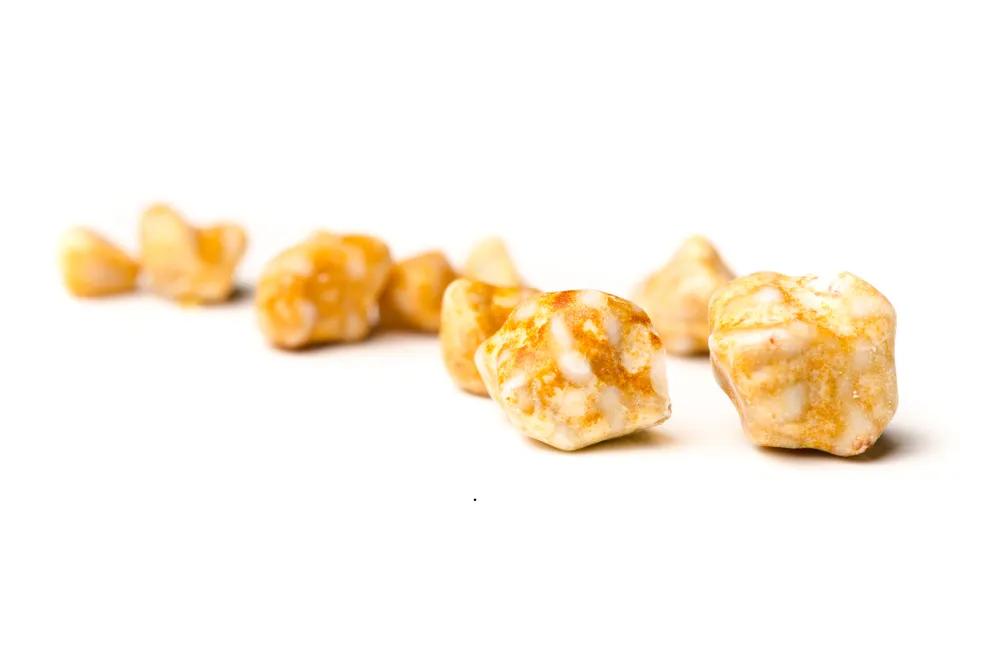
Gallstones (pictured) are one potential cause of small bowel obstruction.
The treatment: Surgeons performed a procedure called a laparotomy, making a small abdominal incision to access the patient’s intestines. They then pinpointed the location of the mass and surgically removed it. The object measured just over 2 inches (5.5 centimeters) long and was a phytobezoar, meaning a bezoar composed of plant material.
In addition to undigested plant matter, the surgeons found something they did not expect. As they extracted the bezoar, what they initially identified as “a small live insect” jumped from the vegetable mass and crawled up the sterile surgical drapes, they wrote in the report. The authors did not report the creature’s size, but it was smaller than the bezoar.
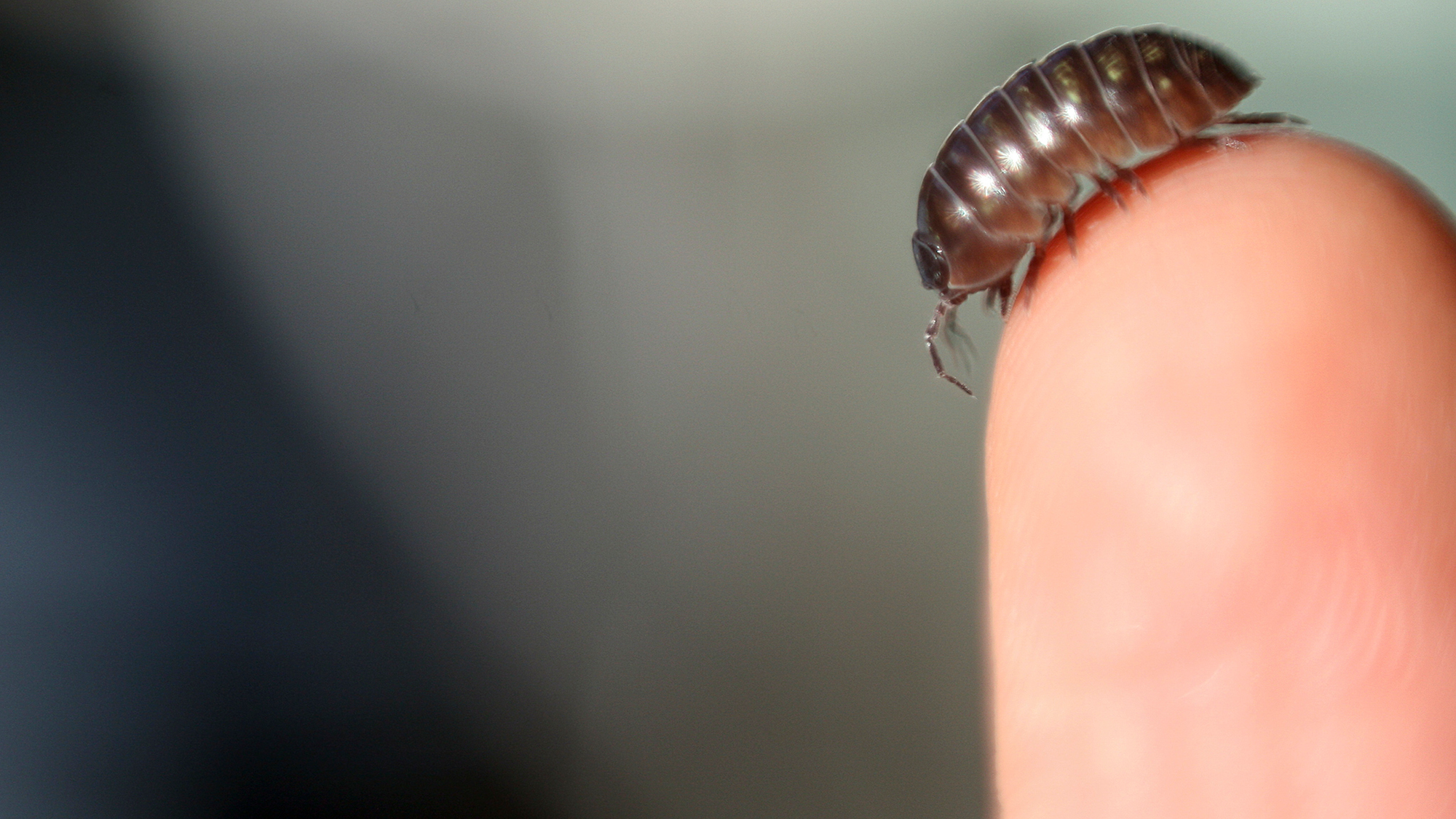
The medical team captured the live intruder, sent it to a lab for analysis and learned that it was not an insect but rather a different type of land arthropod in the order Isopoda. These animals are crustaceans, relatives of crabs and shrimp. Terrestrial isopods have flattened bodies with rigid, segmented exoskeletons and seven pairs of legs.
Land isopods are found around the world and have hundreds of common names. They are most often called pill bugs, sow bugs, roly-poly bugs or wood lice. In the U.K., their regional nicknames are especially diverse and include chucky pig, monkey pea, cheese log, daddy granfer and granny grunter.
Isopods feed on decaying vegetation, and the doctors hypothesized that the patient had accidentally swallowed the isopod along with a mouthful of unwashed vegetables or fruit.
She recovered from the surgery and, shortly after, moved to a retirement home, where she was still living 18 months later during a follow-up visit, according to the report.
What makes the case unique: Only about 25% of all SBO cases are caused by foreign bodies such as bezoars; in people over age 50, the most common SBO is a volvulus.
The isopod group contains more than 11,000 species, of which about half live in the ocean. Some of those marine isopods parasitize fish, such as the tongue biter that consumes and then replaces its host fish’s tongue. However, no terrestrial isopod is known to parasitize humans, the physicians wrote in the report.
If a person accidentally swallows a nonvenomous insect, spider or other small arthropod, the digestive system typically treats it like any other type of protein and dissolves it with acids and enzymes. In this case, though, the capsule of compressed plant matter in the woman’s digestive tract may have protected the isopod, temporarily keeping it alive inside her body.
For more intriguing medical cases, check out our Diagnostic Dilemma archives.
This article is for informational purposes only and is not meant to offer medical advice.
Di Saverio, S., Catena, F., Coccolini, F., Gazzotti, F., Filicori, F., & Ansaloni, L. (2010). Bizarre behaviour, bizarre intruder and bizarre bowel obstruction. BMJ Case Reports, 2010, bcr1120092486. https://doi.org/10.1136/bcr.11.2009.2486
Can you guess the diagnosis in these strange medical cases? Find out with our diagnostic dilemma quiz!
TOPICS
