Close Menu
  • Home
  • UNSUBSCRIBE
  • News
  • Lifestyle
  • Tech
  • Entertainment
  • Sports
  • Travel
Facebook X (Twitter) WhatsApp
Trending
  • 2 rivers merged to form the Euphrates 3.6 million years ago, eventually leading to the Fertile Crescent
  • NASA confirms fireball meteor exploded over northeastern US with force of 230 tons of TNT
  • Astronauts could use lightning-like plasma jets to kill germs on the moon and Mars, demo hints
  • First whole-genome sequence of a Greenland shark holds clues to their extreme longevity
  • Heading a soccer ball just once is enough to raise levels of proteins associated with brain damage
  • OpenAI’s internal AI model just solved an 80-year-old math problem ‪—‬ and mathematicians verified it
  • Skeletal remains of Queen Elisenda, one of the most powerful rulers in medieval Europe, unearthed in Barcelona — along with several others who bore unexplained stab wounds
  • Tests that measure ‘biological age’ aren’t helpful for tracking your health, scientists say
Facebook X (Twitter) WhatsApp
Baynard Media
  • Home
  • UNSUBSCRIBE
  • News
  • Lifestyle
  • Tech
  • Entertainment
  • Sports
  • Travel
Baynard Media
Home»Lifestyle»Diagnostic dilemma: An infant’s brown eyes turned indigo after COVID antiviral treatment
Lifestyle

Diagnostic dilemma: An infant’s brown eyes turned indigo after COVID antiviral treatment

EditorBy EditorMay 13, 2026No Comments4 Mins Read
Share Facebook Twitter Pinterest LinkedIn Tumblr Reddit Telegram Email
Share
Facebook Twitter LinkedIn Pinterest Email

The patient: A 6-month-old boy in Bangkok

The symptoms: The child was brought to a hospital after he’d had a fever and cough for 24 hours.

What happened next: Doctors tested the boy for COVID-19, and the test came back positive. They prescribed favipiravir, a broad-spectrum oral antiviral that is frequently used to treat RNA viruses, such as influenza, Ebola and some enteroviruses. Coronaviruses are also RNA-based, and doctors first started using it to treat COVID-19 in 2020.


You may like

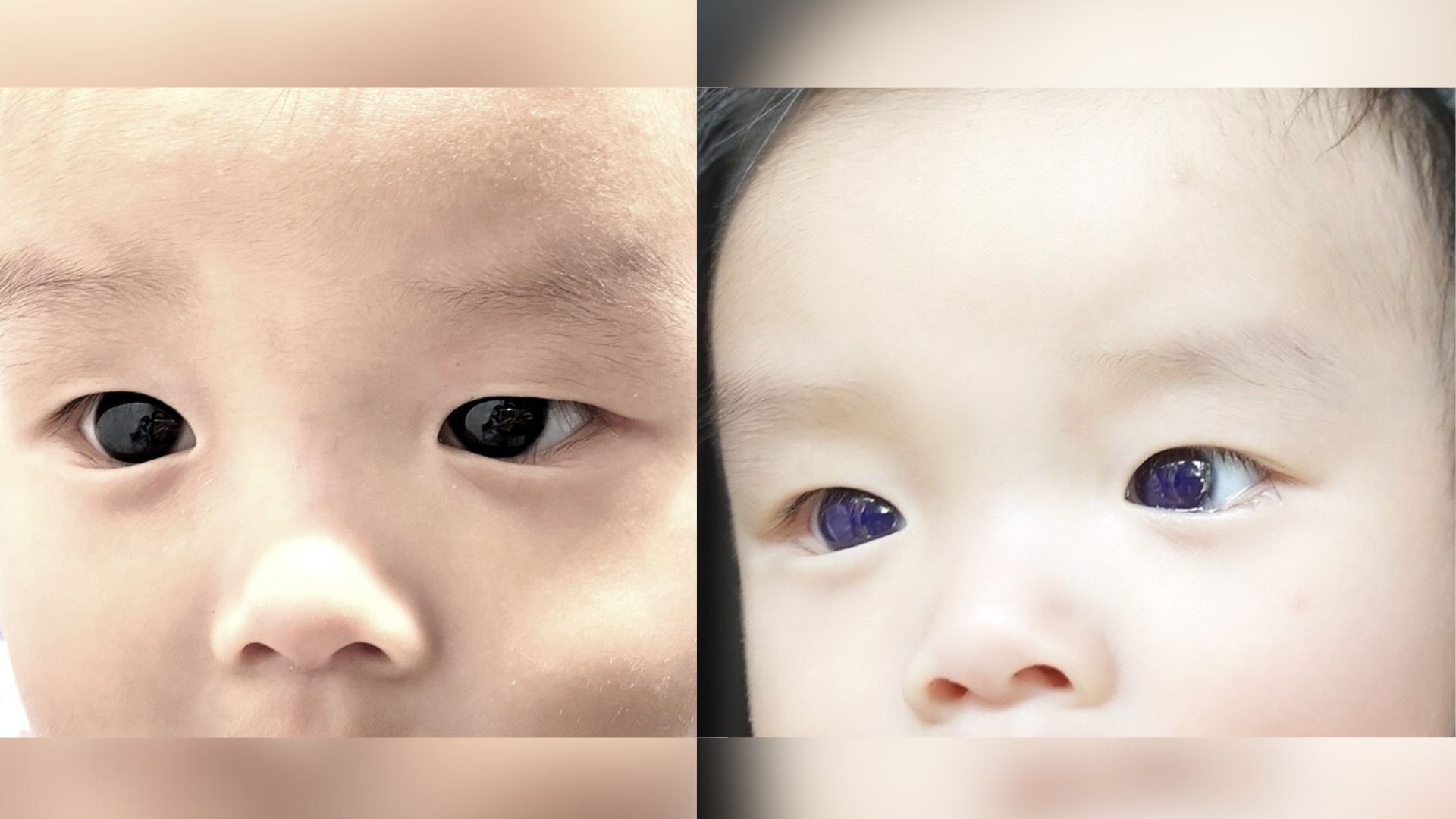
The plan was for the child to be administered favipiravir tablets on the first day of hospitalization and then given the drug in liquid form for the next four days. But about 18 hours after he began the treatment, the boy’s mother noticed that his eyes, which were normally dark brown, had turned bluish-purple.

The corneas — the transparent, dome-shaped barriers covering the fronts of the eyes — appeared blue in sunlight. There was no visible discoloration of his skin, nails or hair, according to a report of the case.

The diagnosis: Doctors suspected that favipiravir might be causing the blue tint.

A year earlier, in 2021, physicians in Goa, India, described the case of a 20-year-old man who also developed a bluish tinge in his corneas after he began favipiravir treatment for COVID-19. The side effect had never been documented before, they wrote in a report of his case. In that case, the doctors advised the man to stop taking the drug, and his corneas returned to their normal color the next day.

Get the world’s most fascinating discoveries delivered straight to your inbox.

This unusual eye color change may stem from how the body breaks down the antiviral medication, releasing fluorescent chemicals that collect in the cornea, Dr. Vik Sharma, an eye surgeon at the London Ophthalmology Centre who was not involved in either case, previously told Live Science in an email.

Four female COVID-19 patients in Turkey developed similarly fluorescent features, physicians in Istanbul reported in January 2021. All of the patients had taken favipiravir and developed a glowing blue-green tint in their hair and fingernails that was visible under a Wood’s lamp, which uses long-wave ultraviolet light to detect fluorescence.

In July 2021, another team of Turkish researchers documented fluorescence in whole favipiravir tablets and in tablets that had been dissolved in water. This “signified a robust association between the fluorescence of the ocular surface and favipiravir,” the child’s doctors wrote in their report.


What to read next

The treatment: After three days of favipiravir treatment, the child’s COVID symptoms improved, and on the fifth day, a pediatrician advised discontinuing the drug. The child’s corneas reverted to their normal color five days later.

Two weeks after that, an ophthalmologist examined the child’s eyes and found that they appeared normal, with a clear cornea and no sign of a bluish color. Nor was there any fluorescence in the cornea.

The disappearance of the blue took several days in the child’s case, while the 20-year-old man’s discoloration vanished almost immediately. Doctors did not know the reason for the delay, but they proposed that the patient’s age and the medication dosage could be factors.

It’s also possible that the baby was urinating less frequently — a potential side effect of favipiravir, which elevates levels of uric acid in the body — which meant that the compounds affecting his eye color lingered in his tissues.

What makes the case unique: Side effects of favipiravir are uncommon, but may include diarrhea, high levels of uric acid in the blood, and lower levels of neutrophils, a type of white blood cell that helps the body fight infection. Other less-common side effects include abdominal pain, nausea and a low level of platelets, blood cells that assist with clotting.

Although this child’s case is not the first example of favipiravir triggering corneal discoloration, it is the first recorded instance of a pediatric patient developing blue eyes in response to favipiravir therapy, the doctors noted in the case report.

This article is for informational purposes only and is not meant to offer medical advice.

Jiravisitkul, P., Thonginnetra, S., & Wongvisavavit, R. (2023). Case report: Favipiravir-induced bluish corneal discoloration in infant with COVID-19. Frontiers in Pediatrics, 11, 1154814. https://doi.org/10.3389/fped.2023.1154814


Can you guess the diagnosis in these strange medical cases? Find out with our diagnostic dilemma quiz!

TOPICS

Diagnostic dilemma

Source link

Share. Facebook Twitter Pinterest LinkedIn Tumblr Email
Previous ArticleAI self-replication hacks ‘no longer purely theoretical,’ study finds —‬ ‪but experts say it’s too soon to panic
Next Article Hantavirus updates: American doctor on cruise speaks out from quarantine; unrelated potential case appears in Illinois
Editor
  • Website

Related Posts

Lifestyle

2 rivers merged to form the Euphrates 3.6 million years ago, eventually leading to the Fertile Crescent

June 2, 2026
Lifestyle

NASA confirms fireball meteor exploded over northeastern US with force of 230 tons of TNT

June 2, 2026
Lifestyle

Astronauts could use lightning-like plasma jets to kill germs on the moon and Mars, demo hints

June 1, 2026
Add A Comment

Comments are closed.

Categories
  • Entertainment
  • Lifestyle
  • News
  • Sports
  • Tech
  • Travel
Recent Posts
  • 2 rivers merged to form the Euphrates 3.6 million years ago, eventually leading to the Fertile Crescent
  • NASA confirms fireball meteor exploded over northeastern US with force of 230 tons of TNT
  • Astronauts could use lightning-like plasma jets to kill germs on the moon and Mars, demo hints
  • First whole-genome sequence of a Greenland shark holds clues to their extreme longevity
  • Heading a soccer ball just once is enough to raise levels of proteins associated with brain damage
calendar
June 2026
M T W T F S S
1234567
891011121314
15161718192021
22232425262728
2930  
« May    
Recent Posts
  • 2 rivers merged to form the Euphrates 3.6 million years ago, eventually leading to the Fertile Crescent
  • NASA confirms fireball meteor exploded over northeastern US with force of 230 tons of TNT
  • Astronauts could use lightning-like plasma jets to kill germs on the moon and Mars, demo hints
About

Welcome to Baynard Media, your trusted source for a diverse range of news and insights. We are committed to delivering timely, reliable, and thought-provoking content that keeps you informed
and inspired

Categories
  • Entertainment
  • Lifestyle
  • News
  • Sports
  • Tech
  • Travel
Facebook X (Twitter) Pinterest WhatsApp
  • Contact Us
  • About Us
  • Privacy Policy
  • Disclaimer
  • UNSUBSCRIBE
© 2026 copyrights reserved

Type above and press Enter to search. Press Esc to cancel.