Close Menu
  • Home
  • UNSUBSCRIBE
  • News
  • Lifestyle
  • Tech
  • Entertainment
  • Sports
  • Travel
Facebook X (Twitter) WhatsApp
Trending
  • Thanks to natural selection, Indigenous Andeans may digest potatoes better than anyone else in the world, study finds
  • Doctors need to understand patients' lived experiences to treat them well — but medical schools may stop requiring that training
  • This yeast-based 3D printed biomaterial could one day replace your wallpaper and drapes
  • Flesh-eating screwworm found in Texas cow. Are humans at risk?
  • New Velociraptor cousin was a ‘4-winged’ dragon that hunted prey from the trees of ancient China, fossil find hints
  • AI models are teaching each other ‘violent and antisocial’ traits through hidden data signals, study finds — and scientists can’t figure out why
  • Scientists race to collect the last seeds from a critically endangered tree before it goes extinct
  • What’s the deepest cave in the world?
Facebook X (Twitter) WhatsApp
Baynard Media
  • Home
  • UNSUBSCRIBE
  • News
  • Lifestyle
  • Tech
  • Entertainment
  • Sports
  • Travel
Baynard Media
Home»Lifestyle»Creepy new giant insect may be the heaviest ever recorded in Australia
Lifestyle

Creepy new giant insect may be the heaviest ever recorded in Australia

EditorBy EditorAugust 5, 2025No Comments3 Mins Read
Share Facebook Twitter Pinterest LinkedIn Tumblr Reddit Telegram Email
Share
Facebook Twitter LinkedIn Pinterest Email

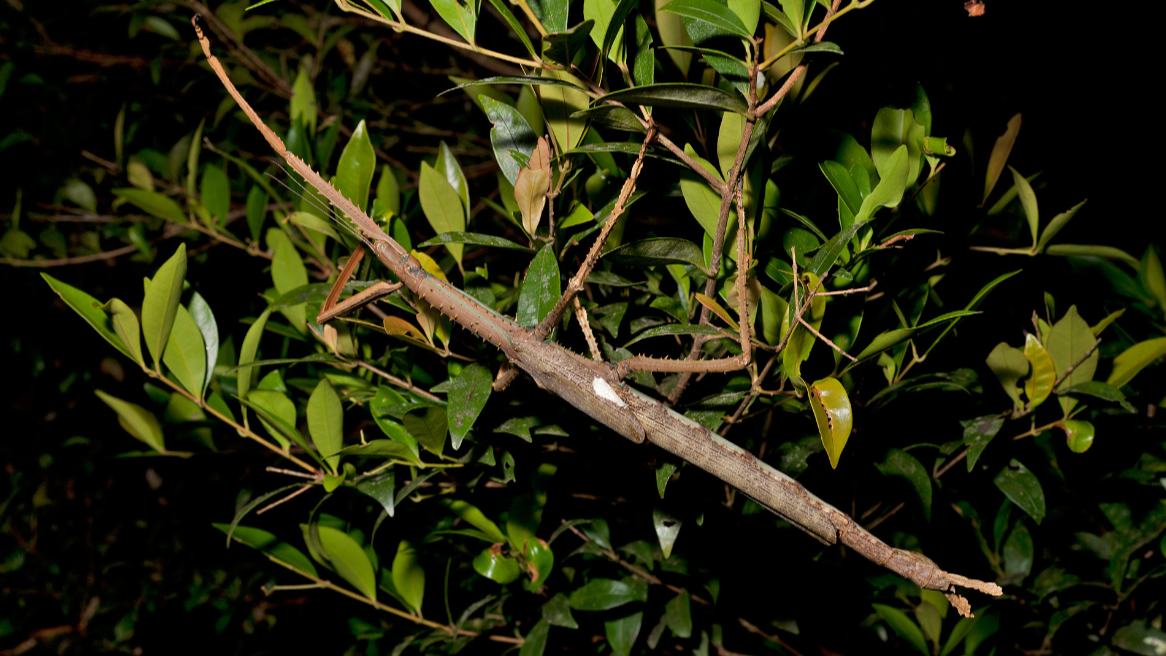
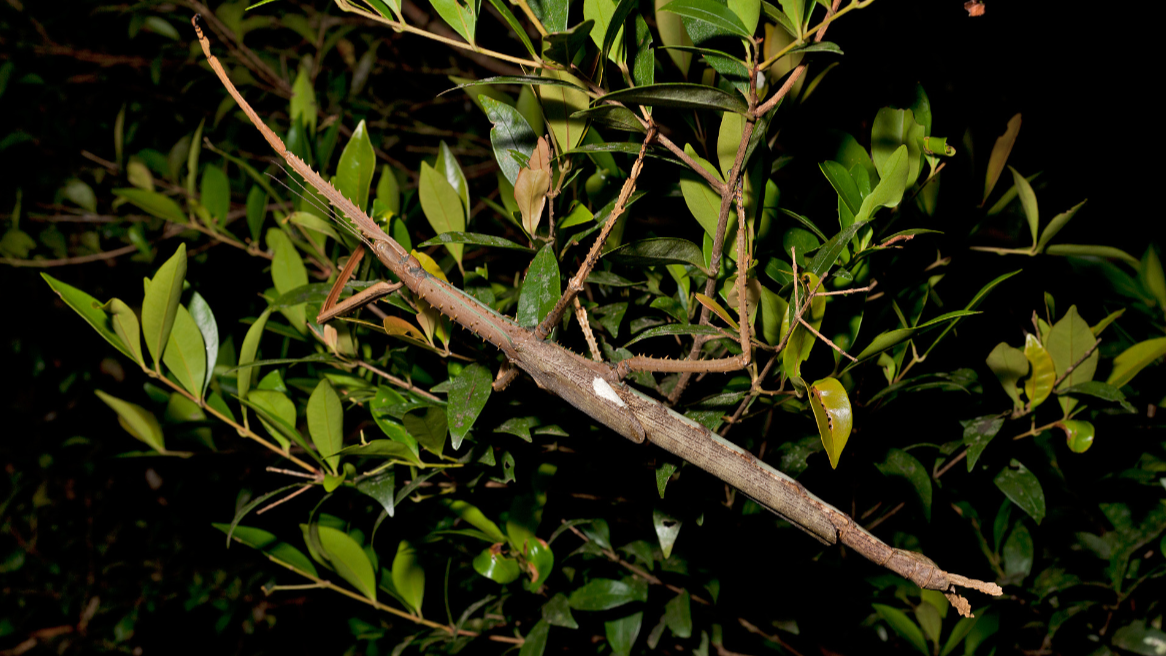
A previously unknown giant stick insect has been discovered in the high-altitude rainforests of Australia — and it may be the heaviest insect ever recorded in the country.

The colossal critter, which researchers named Acrophylla alta, grows to around 16 inches (40 centimeters) long. The giant insect lives in the difficult-to-access tree canopies of tropical North Queensland, which may be the reason it has eluded scientists for so long.

Researchers documented A. alta in a recent study, published June 17 in the journal Zootaxa, and described it as a “spectacular new species.”


You may like

A new species of stick insect weighing around the same as a golf ball has been discovered in the canopies of a remote rainforest in Australia’s northeast, an Australian university announced on Thursday.Scientists believe the winged insect, Acrophylla alta, is the heaviest ever… pic.twitter.com/kacIxGOXNYJuly 31, 2025

It is not the longest stick insect in Australia — that honor goes to gargantuan stick insects (Ctenomorpha gargantua), which reach lengths of up to around 22 inches (57 cm) and live in the same region as A. alta. However, A. alta is heavier.

“There are longer stick insects out there [in the region], but they’re fairly light bodied,” study co-author Angus Emmott, a researcher at James Cook University in Australia, said in a statement. “From what we know to date, this is Australia’s heaviest insect.”

One individual in the study weighed in at about 1.6 ounces (44 grams) — roughly double that of a mature female gargantuan stick insect filled with eggs that researchers previously documented, according to the study.

Related: Invasive Asian needle ants are surging in US Southeast — and their bite can trigger anaphylaxis

Get the world’s most fascinating discoveries delivered straight to your inbox.

The researchers discovered A. alta in the Tablelands region of North Queensland, which is 1,600 to 3,900 feet (500 to 1,200 meters) above sea level. A. alta apparently feeds on leaves in the forest canopy, where it would normally go unnoticed by humans, according to the study.

“It’s restricted to a small area of high-altitude rainforest, and it lives high in the canopy,” Emmott said. “So, unless you get a cyclone or a bird bringing one down, very few people get to see them.”

The creature’s giant size may be linked to its ability to survive in a colder, high-altitude environment. This would fit with the evolutionary trend called Bergmann’s rule, which states that animals evolve to be larger in colder climates. Not all animals follow Bergmann’s rule, and it’s uncertain how well it applies to insects, but the idea is that larger animals have a smaller surface area-to-volume ratio, which helps to reduce heat loss — something A. alta would benefit from.

“It’s a cool, wet environment where they live,” Emmott said. “Their body mass likely helps them survive the colder conditions, and that’s why they’ve developed into this large insect over millions of years.”


Source link

Share. Facebook Twitter Pinterest LinkedIn Tumblr Email
Previous ArticleNerdeen Kiswani accuses Jacob Berger in anti-Israel movement split
Next Article Redistricting reprisals: From the Politics Desk
Editor
  • Website

Related Posts

Lifestyle

Thanks to natural selection, Indigenous Andeans may digest potatoes better than anyone else in the world, study finds

June 8, 2026
Lifestyle

Doctors need to understand patients' lived experiences to treat them well — but medical schools may stop requiring that training

June 8, 2026
Lifestyle

This yeast-based 3D printed biomaterial could one day replace your wallpaper and drapes

June 8, 2026
Add A Comment

Comments are closed.

Categories
  • Entertainment
  • Lifestyle
  • News
  • Sports
  • Tech
  • Travel
Recent Posts
  • Thanks to natural selection, Indigenous Andeans may digest potatoes better than anyone else in the world, study finds
  • Doctors need to understand patients' lived experiences to treat them well — but medical schools may stop requiring that training
  • This yeast-based 3D printed biomaterial could one day replace your wallpaper and drapes
  • Flesh-eating screwworm found in Texas cow. Are humans at risk?
  • New Velociraptor cousin was a ‘4-winged’ dragon that hunted prey from the trees of ancient China, fossil find hints
calendar
June 2026
M T W T F S S
1234567
891011121314
15161718192021
22232425262728
2930  
« May    
Recent Posts
  • Thanks to natural selection, Indigenous Andeans may digest potatoes better than anyone else in the world, study finds
  • Doctors need to understand patients' lived experiences to treat them well — but medical schools may stop requiring that training
  • This yeast-based 3D printed biomaterial could one day replace your wallpaper and drapes
About

Welcome to Baynard Media, your trusted source for a diverse range of news and insights. We are committed to delivering timely, reliable, and thought-provoking content that keeps you informed
and inspired

Categories
  • Entertainment
  • Lifestyle
  • News
  • Sports
  • Tech
  • Travel
Facebook X (Twitter) Pinterest WhatsApp
  • Contact Us
  • About Us
  • Privacy Policy
  • Disclaimer
  • UNSUBSCRIBE
© 2026 copyrights reserved

Type above and press Enter to search. Press Esc to cancel.