Close Menu
  • Home
  • UNSUBSCRIBE
  • News
  • Lifestyle
  • Tech
  • Entertainment
  • Sports
  • Travel
Facebook X (Twitter) WhatsApp
Trending
  • Some fungi can influence the weather ‪—‬ and now we know how they do it
  • Neanderthals’ brains weren’t to blame for their demise, new study suggests
  • NASA Curiosity rover uncovers rock with 7 new organic molecules on Mars
  • Mystery of golden orb found in depths of ocean off Alaska finally solved: ‘Everyone was like, What the heck? What is that?’
  • How everything you do is being monitored in an AI-fuelled ‘surveillance capitalism system’ that’s ramping up aggressively
  • Amazfit Active 3 Premium review: A wallet- and beginner-friendly running watch
  • Miniature camelid effigy: A silver llama with a wry smile that the Inca crafted 600 years ago
  • Antarctica’s sea ice suddenly started shrinking a decade ago — and deep-diving robots are revealing why
Facebook X (Twitter) WhatsApp
Baynard Media
  • Home
  • UNSUBSCRIBE
  • News
  • Lifestyle
  • Tech
  • Entertainment
  • Sports
  • Travel
Baynard Media
Home»Lifestyle»Colugo: The ‘flying lemur’ that doesn’t fly and isn’t a lemur
Lifestyle

Colugo: The ‘flying lemur’ that doesn’t fly and isn’t a lemur

EditorBy EditorJuly 19, 2025No Comments3 Mins Read
Share Facebook Twitter Pinterest LinkedIn Tumblr Reddit Telegram Email
Share
Facebook Twitter LinkedIn Pinterest Email

QUICK FACTS

Name: Colugo, or Sunda flying lemur (Galeopterus variegatus). Also known as the Malayan flying lemur

Where it lives: Tropical rainforests in Southeast Asia

What it eats: Flowers, buds, shoots, leaves, sap and nectar

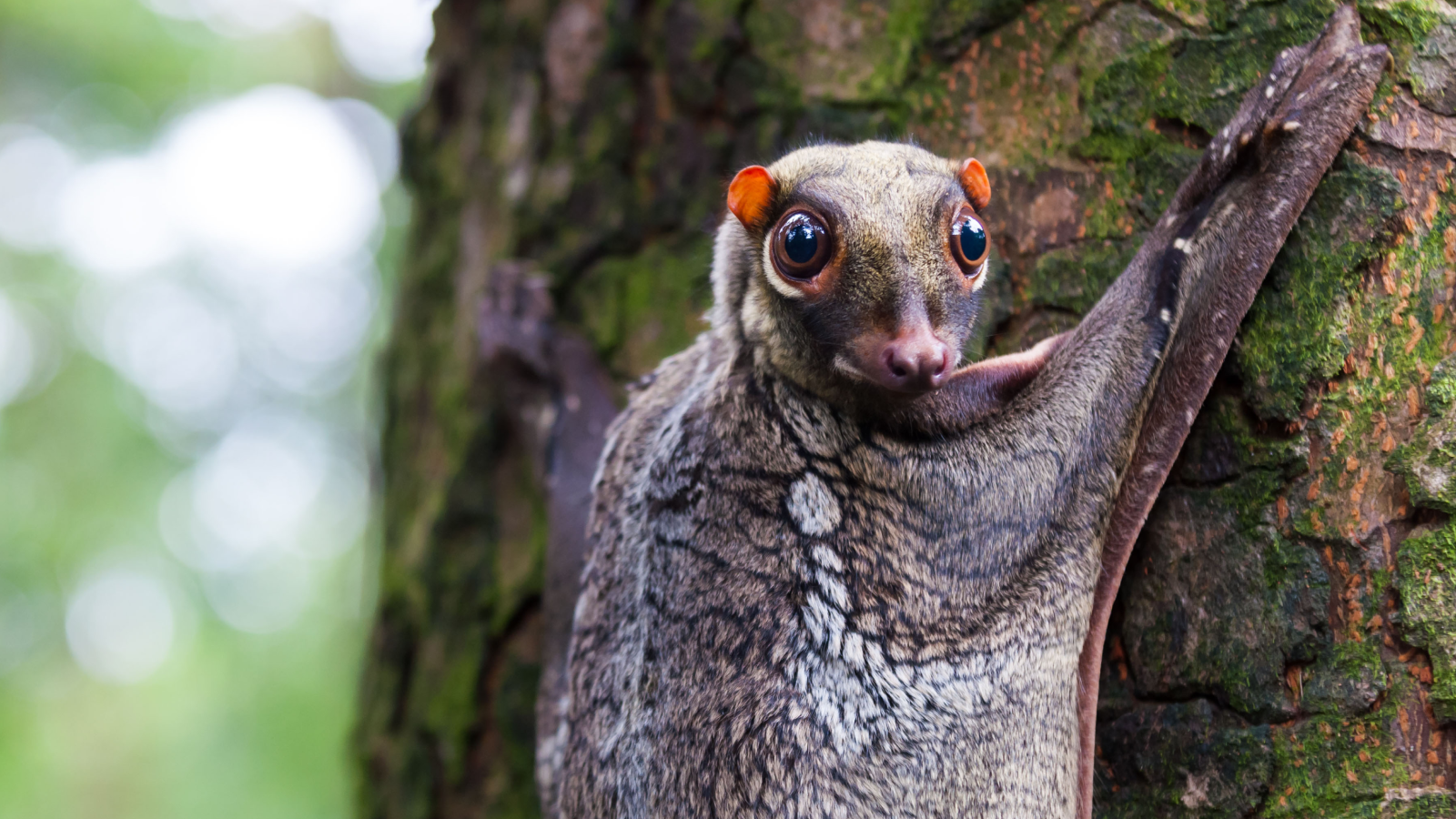
Why it’s awesome: Colugos are commonly called “flying lemurs,” but the name is misleading. These nocturnal mammals look somewhat like lemurs, with small, furry faces that are dominated by a pair of enormous forward-facing eyes. However, colugos aren’t lemurs, which are part of the Primates order. Rather, colugos are the sole members of the order Dermoptera, and are the closest living relatives of modern primates.

Colugos also don’t fly, exactly. Unlike bats — the only mammals capable of powered flight — colugos do not have wings. Instead, they have a furry membrane called a patagium that is only suitable for gliding.

This thin sail is made of skin stretching from the animal’s neck to its fingers, and from its fingers to its toes and tail. When fully extended, their “wingspan” is about 28 inches (70 centimeters) wide, and the animal resembles a living kite. Their feet are webbed, with curved claws for gripping tree bark.


You may like

Colugos are entirely arboreal, spending all their time in the treetops, where they launch into a glide by leaping from branches. They sail over distances greater than 328 feet (100 meters) while losing very little altitude, gliding at speeds of about 22 miles per hour (35 kilometers per hour). A female colugo with young will glide with her offspring clinging to her belly.

Sunda flying lemurs are slightly larger than the only other species of flying lemur: Cynocephalus volans, found in the southern parts of the Philippines.
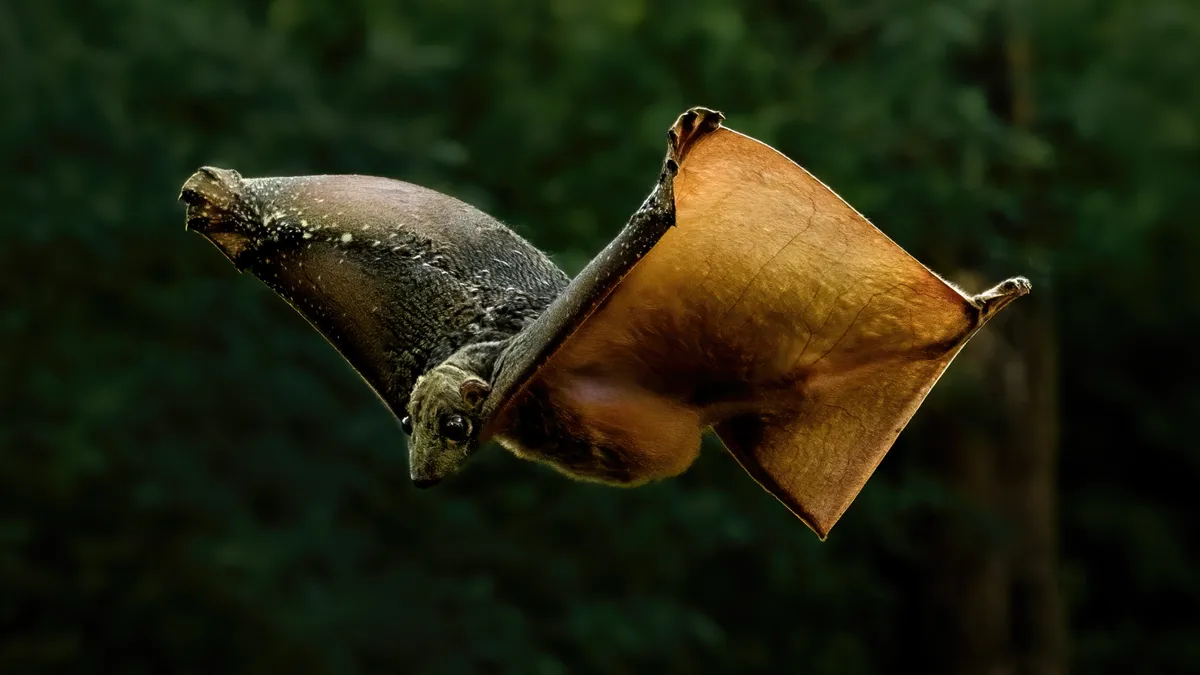
Sunda flying lemur, Colugo.

When fully extended, colugo “wings” stretch around 28 inches and make them resemble a living kite. (Image credit: Tanto Yensen/Getty Images)

The body of the Sunda species measures up to 16.5 inches (42 centimeters) long; their tails are up to 10.6 inches (27 cm) long, and they weigh up to 4.5 pounds (0.9 to 2 kilograms). Their dense fur can be black, grey, red or white, with dark, mottled patterns on their backs that resemble the lichen on rainforest trees. This camouflage hides colugos from predators.

The bottom incisors of colugos are also unique — they are comb-shaped with up to 20 prongs per tooth, and they help with grooming and removing parasites from colugos’ fur. Colugos may also use these unusual teeth to strain fluids from fruit, or to scrape up sap from plants.

Get the world’s most fascinating discoveries delivered straight to your inbox.

Source link

Share. Facebook Twitter Pinterest LinkedIn Tumblr Email
Previous ArticleSix months of Trump: Here are the highlights of his second administration
Next Article This summer, the sky comes alive with shooting stars. What you need to know about ongoing meteor showers.
Editor
  • Website

Related Posts

Lifestyle

Some fungi can influence the weather ‪—‬ and now we know how they do it

April 28, 2026
Lifestyle

Neanderthals’ brains weren’t to blame for their demise, new study suggests

April 28, 2026
Lifestyle

NASA Curiosity rover uncovers rock with 7 new organic molecules on Mars

April 27, 2026
Add A Comment

Comments are closed.

Categories
  • Entertainment
  • Lifestyle
  • News
  • Sports
  • Tech
  • Travel
Recent Posts
  • Some fungi can influence the weather ‪—‬ and now we know how they do it
  • Neanderthals’ brains weren’t to blame for their demise, new study suggests
  • NASA Curiosity rover uncovers rock with 7 new organic molecules on Mars
  • Mystery of golden orb found in depths of ocean off Alaska finally solved: ‘Everyone was like, What the heck? What is that?’
  • How everything you do is being monitored in an AI-fuelled ‘surveillance capitalism system’ that’s ramping up aggressively
calendar
April 2026
M T W T F S S
 12345
6789101112
13141516171819
20212223242526
27282930  
« Mar    
Recent Posts
  • Some fungi can influence the weather ‪—‬ and now we know how they do it
  • Neanderthals’ brains weren’t to blame for their demise, new study suggests
  • NASA Curiosity rover uncovers rock with 7 new organic molecules on Mars
About

Welcome to Baynard Media, your trusted source for a diverse range of news and insights. We are committed to delivering timely, reliable, and thought-provoking content that keeps you informed
and inspired

Categories
  • Entertainment
  • Lifestyle
  • News
  • Sports
  • Tech
  • Travel
Facebook X (Twitter) Pinterest WhatsApp
  • Contact Us
  • About Us
  • Privacy Policy
  • Disclaimer
  • UNSUBSCRIBE
© 2026 copyrights reserved

Type above and press Enter to search. Press Esc to cancel.