Close Menu
  • Home
  • UNSUBSCRIBE
  • News
  • Lifestyle
  • Tech
  • Entertainment
  • Sports
  • Travel
Facebook X (Twitter) WhatsApp
Trending
  • Lemur used in ‘lemur yoga’ session dies of human herpesvirus, study finds
  • ‘A fine line between reducing stigma and trivialising conditions’: Social media, self-diagnosis and the glamorization of ADHD
  • New 2D memory device stores data on just a single electron
  • Before we ban kids from social media completely, here’s what we should try first | Jonathan Bellack and Mariana Olaizola Rosenblat
  • Scientists uncover a better way to beat ‘the bends’ — using deep-diving pigs
  • Mars may have been losing its water more than 4 billion years ago, oldest-known Martian meteorite suggests
  • ‘The lance head was still inside the pelvis’: Mass grave found in Austria may hold casualties of unknown ancient Roman battle
  • ‘Full-on berserker mode’: Archaeologists solve mystery of medieval soldiers with gruesome square holes in their skull
Facebook X (Twitter) WhatsApp
Baynard Media
  • Home
  • UNSUBSCRIBE
  • News
  • Lifestyle
  • Tech
  • Entertainment
  • Sports
  • Travel
Baynard Media
Home»Lifestyle»Coldest-ever qubits could lead to faster quantum computers
Lifestyle

Coldest-ever qubits could lead to faster quantum computers

EditorBy EditorFebruary 7, 2025No Comments3 Mins Read
Share Facebook Twitter Pinterest LinkedIn Tumblr Reddit Telegram Email
Share
Facebook Twitter LinkedIn Pinterest Email

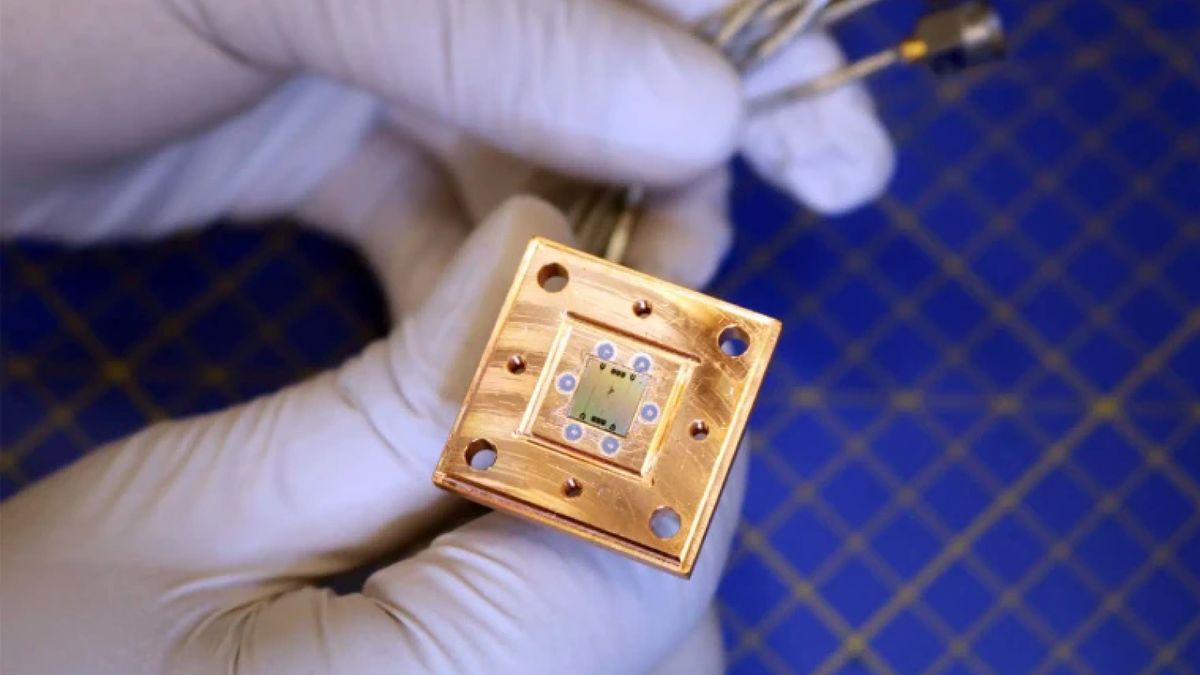
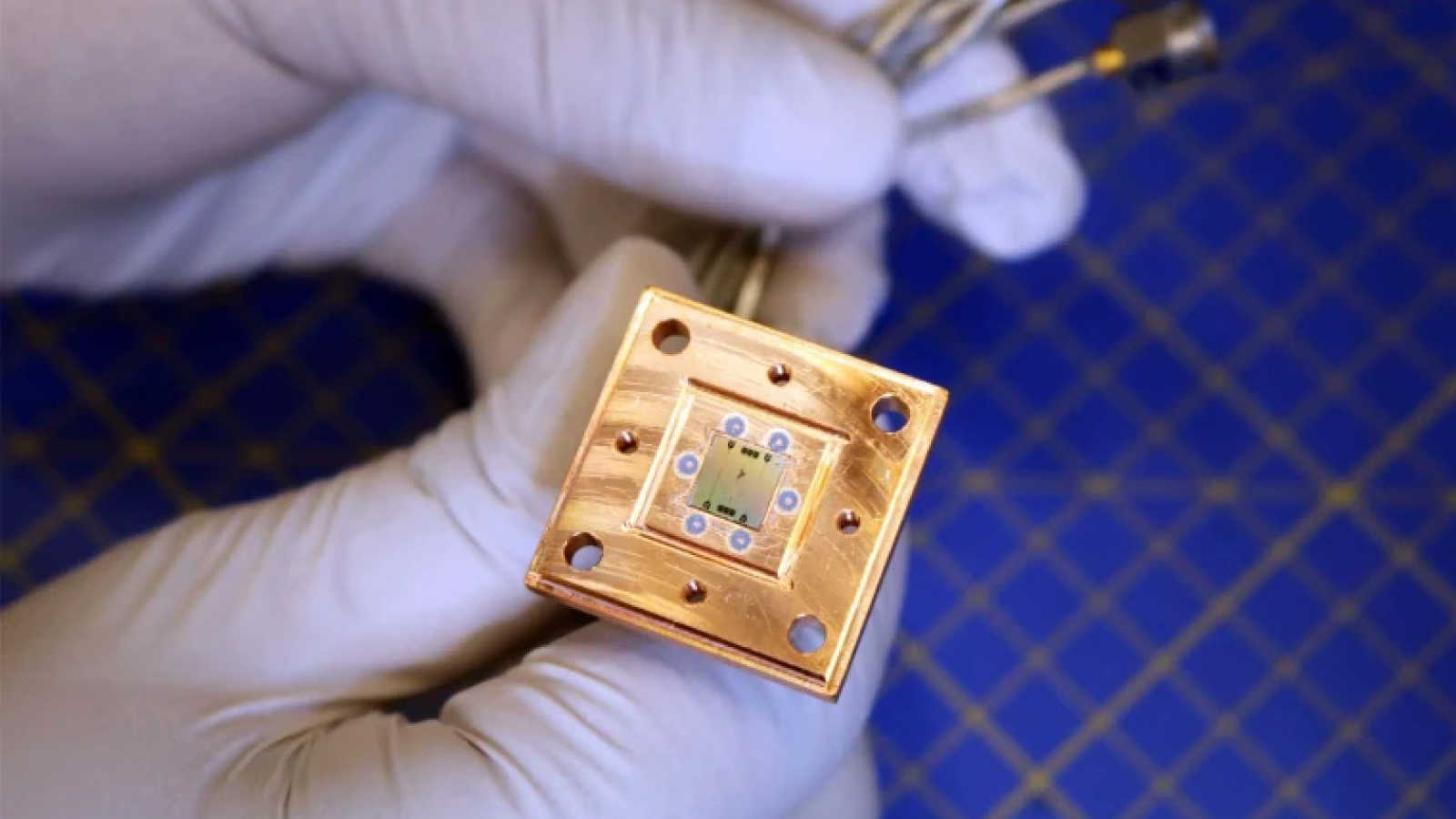
A new type of autonomous quantum refrigerator could give quantum computers “a major performance boost” and make them more reliable, scientists say.

In a study published Jan. 9 in the journal Nature Physics, researchers successfully cooled a qubit to just 22 millikelvin (minus 459.63 degrees Fahrenheit, or minus 273.13 degrees Celsius) using a quantum refrigerator powered by “thermal baths” of microwave radiation. This is the lowest temperature that qubits have ever reached.

“This paves the way for more reliable and error-free quantum computations that require less hardware overload,” study lead author Aamir Ali, research specialist in quantum technology at Chalmers University of Technology in Sweden, said in a statement.

Quantum computers need to be cooled to extremely low temperatures so scientists can tap into delicate quantum properties and perform calculations — as even the smallest environmental disturbance can “flip” their quantum state, causing errors. This is crucial for superconducting qubits — used in the likes of IBM’s 1,000-qubit Condor chip — which need to operate at temperatures close to absolute zero (0 K, minus 459.67 F or minus 273.15 C) to maintain stability.

Cooling qubits to near absolute zero places them in their lowest possible energy state, otherwise known as their “ground state”. In this state, qubits are likely to retain their quantum properties long enough to perform calculations accurately.

The new system complements conventional dilution refrigerators — which use helium gases to absorb heat through a dilution process and can bring qubits down to around 50 mK — by cooling qubits further, rather than replacing them altogether.

It does this by harnessing energy from reservoirs of heat created using microwave radiation, which is then directed into one of the quantum refrigerator’s two qubits.

Get the world’s most fascinating discoveries delivered straight to your inbox.

“Energy from the thermal environment, channeled through one of the quantum refrigerator’s two qubits, pumps heat from the target qubit into the quantum refrigerator’s second qubit, which is cold. That cold qubit is thermalized to a cold environment, into which the target qubit’s heat is ultimately dumped,” study co-author Nicole Yunger Halpern, adjunct assistant professor of physics and IPST at the University of Maryland, said in the statement.

Using this method, the scientists increased the likelihood that the qubit would be in its ground state before a computation to 99.97%.

Ali said this compares to probabilities between 99.8% and 99.92% achieved with previous techniques. “This might seem like a small difference, but when performing multiple computations, it compounds into a major performance boost in the efficiency of quantum computers,” he added.

And unlike quantum dilution refrigerators, which are extremely complex and difficult to scale, the new, thermally-driven system is autonomous, meaning it doesn’t require external control once started. The findings surpassed the researchers’ initial expectations.

“Our work is arguably the first demonstration of an autonomous quantum thermal machine executing a practically useful task,” study co-author Simone Gasparinetti, associate professor in quantum technology at Chalmers University of Technology, added in the statement. “We initially saw this as a proof of concept, so we were pleasantly surprised to find its performance surpasses all existing reset protocols for cooling qubits to record-low temperatures.”

Source link

Share. Facebook Twitter Pinterest LinkedIn Tumblr Email
Previous ArticleBill Belichick, Girlfriend Jordon Hudson React to 48-Year Age Gap Joke
Next Article Marcus Rashford: Aston Villa boss Unai Emery relishing challenge of getting forward back to his best | Football News
Editor
  • Website

Related Posts

Lifestyle

Lemur used in ‘lemur yoga’ session dies of human herpesvirus, study finds

August 15, 2026
Lifestyle

‘A fine line between reducing stigma and trivialising conditions’: Social media, self-diagnosis and the glamorization of ADHD

August 15, 2026
Lifestyle

New 2D memory device stores data on just a single electron

August 15, 2026
Add A Comment

Comments are closed.

Categories
  • Entertainment
  • Lifestyle
  • News
  • Sports
  • Tech
  • Travel
Recent Posts
  • Lemur used in ‘lemur yoga’ session dies of human herpesvirus, study finds
  • ‘A fine line between reducing stigma and trivialising conditions’: Social media, self-diagnosis and the glamorization of ADHD
  • New 2D memory device stores data on just a single electron
  • Before we ban kids from social media completely, here’s what we should try first | Jonathan Bellack and Mariana Olaizola Rosenblat
  • Scientists uncover a better way to beat ‘the bends’ — using deep-diving pigs
calendar
September 2026
M T W T F S S
 123456
78910111213
14151617181920
21222324252627
282930  
« Aug    
Recent Posts
  • Lemur used in ‘lemur yoga’ session dies of human herpesvirus, study finds
  • ‘A fine line between reducing stigma and trivialising conditions’: Social media, self-diagnosis and the glamorization of ADHD
  • New 2D memory device stores data on just a single electron
About

Welcome to Baynard Media, your trusted source for a diverse range of news and insights. We are committed to delivering timely, reliable, and thought-provoking content that keeps you informed
and inspired

Categories
  • Entertainment
  • Lifestyle
  • News
  • Sports
  • Tech
  • Travel
Facebook X (Twitter) Pinterest WhatsApp
  • Contact Us
  • About Us
  • Privacy Policy
  • Disclaimer
  • UNSUBSCRIBE
© 2026 copyrights reserved

Type above and press Enter to search. Press Esc to cancel.