Close Menu
  • Home
  • UNSUBSCRIBE
  • News
  • Lifestyle
  • Tech
  • Entertainment
  • Sports
  • Travel
Facebook X (Twitter) WhatsApp
Trending
  • New robotic heart mimics common, mysterious condition to help researchers study it
  • Canon EOS R6 III review: A wildlife wonder
  • Medieval babies and adults buried together in Sweden were not related, archaeologists discover — raising big questions about early Christian burial practices
  • NASA is creating a fifth state of matter on the ISS, thanks to an upgrade to a mini-fridge-sized quantum lab
  • New sodium metal battery design charges in just 4 minutes and retains its capacity for years
  • Quantum computing wielded to create extremely rare material critical to nuclear fusion
  • Scientists build tiny ‘diving suit’ for cockroaches, turning them into search-and-rescue cyborgs
  • Physicists develop the first working model of quantum mechanics using only ‘real’ numbers
Facebook X (Twitter) WhatsApp
Baynard Media
  • Home
  • UNSUBSCRIBE
  • News
  • Lifestyle
  • Tech
  • Entertainment
  • Sports
  • Travel
Baynard Media
Home»Lifestyle»Climate disasters caused societal upheaval 3,000 years ago in China, study of ‘oracle bones’ hints
Lifestyle

Climate disasters caused societal upheaval 3,000 years ago in China, study of ‘oracle bones’ hints

EditorBy EditorMarch 5, 2026No Comments4 Mins Read
Share Facebook Twitter Pinterest LinkedIn Tumblr Reddit Telegram Email
Share
Facebook Twitter LinkedIn Pinterest Email

Abrupt population drops over 3,000 years ago in the waning years of China’s Shang dynasty were likely the result of a deadly increase in typhoons and related weather events, according to a new study that combined ancient texts, archaeological evidence and paleoclimate modeling.

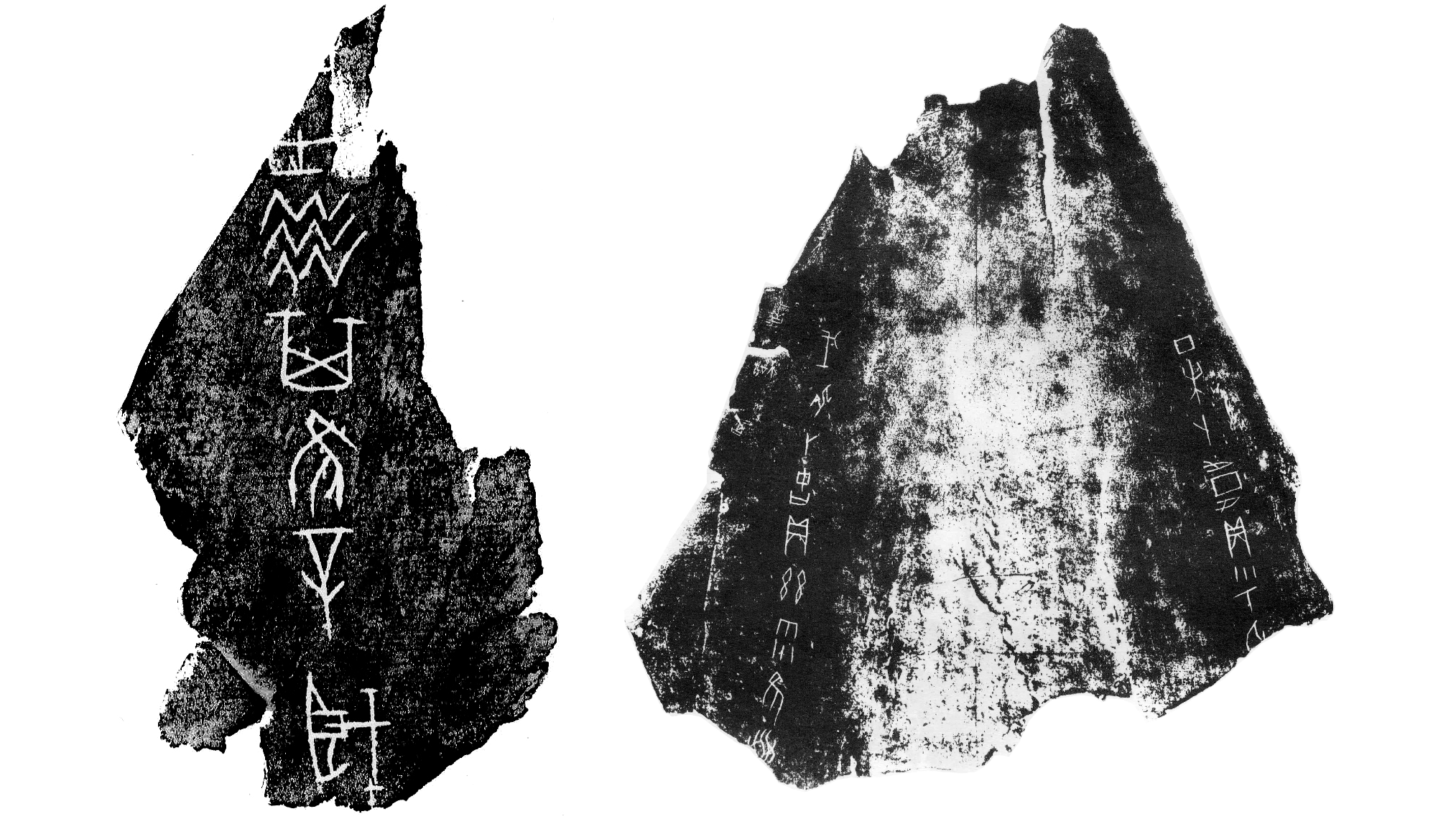
These coastal typhoons likely caused disastrous climate events, such as massive floods, that hit China‘s Central Plains, sometimes called the “cradle of Chinese civilization.” This area was home to a royal dynasty called the Shang that ruled the Yellow River valley from 1600 to 1046 B.C. The Shang dynasty is known for having the earliest evidence of writing, in the form of divination texts inscribed on “oracle bones” made from turtle shells and ox shoulder bones. In addition, tens of thousands of bronze, ceramic and jade artifacts have been unearthed at the Shang capital in the modern-day city of Anyang, revealing the wealth and power of the dynasty before it was overthrown by the Zhou people.

In a study published Wednesday (March 4) in the journal Science Advances, researchers investigated whether extreme climate events could have contributed to cultural changes in inland China around the time the Shang dynasty collapsed. The researchers correlated information from oracle bones and archaeological sites with paleoclimate models and discovered that intensified typhoons and related weather events might have been to blame.


You may like

First, the team counted the instances of weather-related writing on over 55,000 pieces of oracle bone scripts dated to between 1250 and 1046 B.C., the last two centuries of the Shang dynasty. The oracle bones included a larger proportion of divinations related to upcoming heavy rain and water-related disasters in the middle of the time period, suggesting an increase in the Shang society’s concern about extreme rainfall events in the Central Plains, the researchers wrote in the study.

The Shang dynasty was not the only society experiencing a population decline in what is now central China. The team examined archaeological data for flood layers in the Chengdu Plain southwest of the Central Plains. Chengdu was occupied by the Shu kingdom, which existed at the same time as the Shang but lasted until 316 B.C. They found evidence of flood-damaged buildings dating to 950 B.C. and flood-destroyed dikes from 500 B.C. Additionally, archaeological sites in the Chengdu Plain decreased in number and became geographically concentrated in relatively elevated areas, suggesting that people were relocating to higher ground.

The researchers’ paleoclimate modeling showed that northward typhoons and related weather events intensified between 1850 and 1350 B.C., affecting the Shang in the Central Plains, and that westward typhoon activities intensified between 850 and 500 B.C., affecting the Shu in the Chengdu Plain.

“What stood out here was intensified typhoon activities,” the researchers wrote, which may have caused widespread inland flooding and resulted in population decline and social changes in the Central Plains and Chengdu Plain. “Intensified typhoon activities exerted unexpected disastrous influences in inland China during the Bronze Age,” they wrote.

Get the world’s most fascinating discoveries delivered straight to your inbox.

The climate conditions in this area were extremely variable, however, and the researchers noted that other climate-related hazards may have contributed to cultural instability in Bronze Age China. In particular, droughts caused by El Niño-like conditions could have hit the Central Plains around 1350 B.C. and disrupted the culture, similar to how protracted droughts ushered in the collapse of many cities within the Maya civilization.

Although the researchers are not certain exactly how the ancient climate affected inland Chinese civilizations, they suggested that typhoon-induced extreme weather events were as much of a concern in the past as they are today. But by integrating archaeological evidence, oracle bone scripts and paleoclimate proxies, the researchers wrote, the study is the first to reveal links between coastal typhoon activity, inland extreme rainfall, flooding and social changes around 1050 B.C.

Live Science reached out to the study’s authors for comment, but they did not respond by the time of publication.

Ding, K., Li, S., Ding, A., Lu, H., Zhang, J., Xi, D., Huang, X., Lou, S., Tang, X., Qiu, X., He, L., Ma, Y., Lin, H., Zhang, S., Zhou, D., Zhou, X., Tan, Z.-M., Fu, C., & Ge, Q. (2026). Archeological data with AI- and physics-based modeling explain typhoon-induced disasters in inland China around 3000 yr B.P. Science Advances, 12, eaeb1598. http://dx.doi.org/10.1126/sciadv.aeb1598

Source link

Share. Facebook Twitter Pinterest LinkedIn Tumblr Email
Previous ArticleUpgrade to a MacBook Pro for under $500
Next Article The Federal Plan to Drill Our Coast is Wrong For OC’s Businesses and Economy
Editor
  • Website

Related Posts

Lifestyle

New robotic heart mimics common, mysterious condition to help researchers study it

July 11, 2026
Lifestyle

Canon EOS R6 III review: A wildlife wonder

July 10, 2026
Lifestyle

Medieval babies and adults buried together in Sweden were not related, archaeologists discover — raising big questions about early Christian burial practices

July 10, 2026
Add A Comment

Comments are closed.

Categories
  • Entertainment
  • Lifestyle
  • News
  • Sports
  • Tech
  • Travel
Recent Posts
  • New robotic heart mimics common, mysterious condition to help researchers study it
  • Canon EOS R6 III review: A wildlife wonder
  • Medieval babies and adults buried together in Sweden were not related, archaeologists discover — raising big questions about early Christian burial practices
  • NASA is creating a fifth state of matter on the ISS, thanks to an upgrade to a mini-fridge-sized quantum lab
  • New sodium metal battery design charges in just 4 minutes and retains its capacity for years
calendar
July 2026
M T W T F S S
 12345
6789101112
13141516171819
20212223242526
2728293031  
« Jun    
Recent Posts
  • New robotic heart mimics common, mysterious condition to help researchers study it
  • Canon EOS R6 III review: A wildlife wonder
  • Medieval babies and adults buried together in Sweden were not related, archaeologists discover — raising big questions about early Christian burial practices
About

Welcome to Baynard Media, your trusted source for a diverse range of news and insights. We are committed to delivering timely, reliable, and thought-provoking content that keeps you informed
and inspired

Categories
  • Entertainment
  • Lifestyle
  • News
  • Sports
  • Tech
  • Travel
Facebook X (Twitter) Pinterest WhatsApp
  • Contact Us
  • About Us
  • Privacy Policy
  • Disclaimer
  • UNSUBSCRIBE
© 2026 copyrights reserved

Type above and press Enter to search. Press Esc to cancel.