Close Menu
  • Home
  • UNSUBSCRIBE
  • News
  • Lifestyle
  • Tech
  • Entertainment
  • Sports
  • Travel
Facebook X (Twitter) WhatsApp
Trending
  • New robotic heart mimics common, mysterious condition to help researchers study it
  • Canon EOS R6 III review: A wildlife wonder
  • Medieval babies and adults buried together in Sweden were not related, archaeologists discover — raising big questions about early Christian burial practices
  • NASA is creating a fifth state of matter on the ISS, thanks to an upgrade to a mini-fridge-sized quantum lab
  • New sodium metal battery design charges in just 4 minutes and retains its capacity for years
  • Quantum computing wielded to create extremely rare material critical to nuclear fusion
  • Scientists build tiny ‘diving suit’ for cockroaches, turning them into search-and-rescue cyborgs
  • Physicists develop the first working model of quantum mechanics using only ‘real’ numbers
Facebook X (Twitter) WhatsApp
Baynard Media
  • Home
  • UNSUBSCRIBE
  • News
  • Lifestyle
  • Tech
  • Entertainment
  • Sports
  • Travel
Baynard Media
Home»Lifestyle»Climate change is the worst. Here’s just how bad it got this year.
Lifestyle

Climate change is the worst. Here’s just how bad it got this year.

EditorBy EditorDecember 27, 2024No Comments4 Mins Read
Share Facebook Twitter Pinterest LinkedIn Tumblr Reddit Telegram Email
Share
Facebook Twitter LinkedIn Pinterest Email

The most important Earth news in 2024 was undoubtedly the most depressing: Climate change wreaked havoc around the globe, indirectly causing flooding, drought, wildfires and other extreme weather events.

This year is on track to become the warmest year since records began and the first year that global temperatures have been 1.5 degrees Celsius (2.7 degrees Fahrenheit) above preindustrial levels.

In May, levels of carbon dioxide (CO2) in the atmosphere — as measured from the National Oceanic and Atmospheric Administration’s Mauna Loa Observatory — reached a record high of 426.90 parts per million. “Not only is CO2 now at the highest level in millions of years, it is also rising faster than ever,” Ralph Keeling, director of the Scripps CO2 Program, said in a statement at the time. Global carbon emissions from fossil fuels also reached a new record high.

Annual global surface air temperature anomalies (°C) relative to 1850–1900 from 1940 to 2024. Estimate in 2024 exceeds 1.5 degrees celsius.

Copernicus graph showing warming above preindustrial levels since 1940. (Image credit: Copernicus Climate Change Service /ECMWF.)

All that warming has had disastrous impacts on weather around the globe. The year started with one of the strongest El Niño events on record. That led to a devastating hurricane season that culminated in the deadliest storm to hit the continental U.S. in decades. El Niño also fueled a severe drought in the Amazon. This prolonged drought made the rainforest “more flammable” — an impact that led to the worst wildfire season in nearly 20 years.
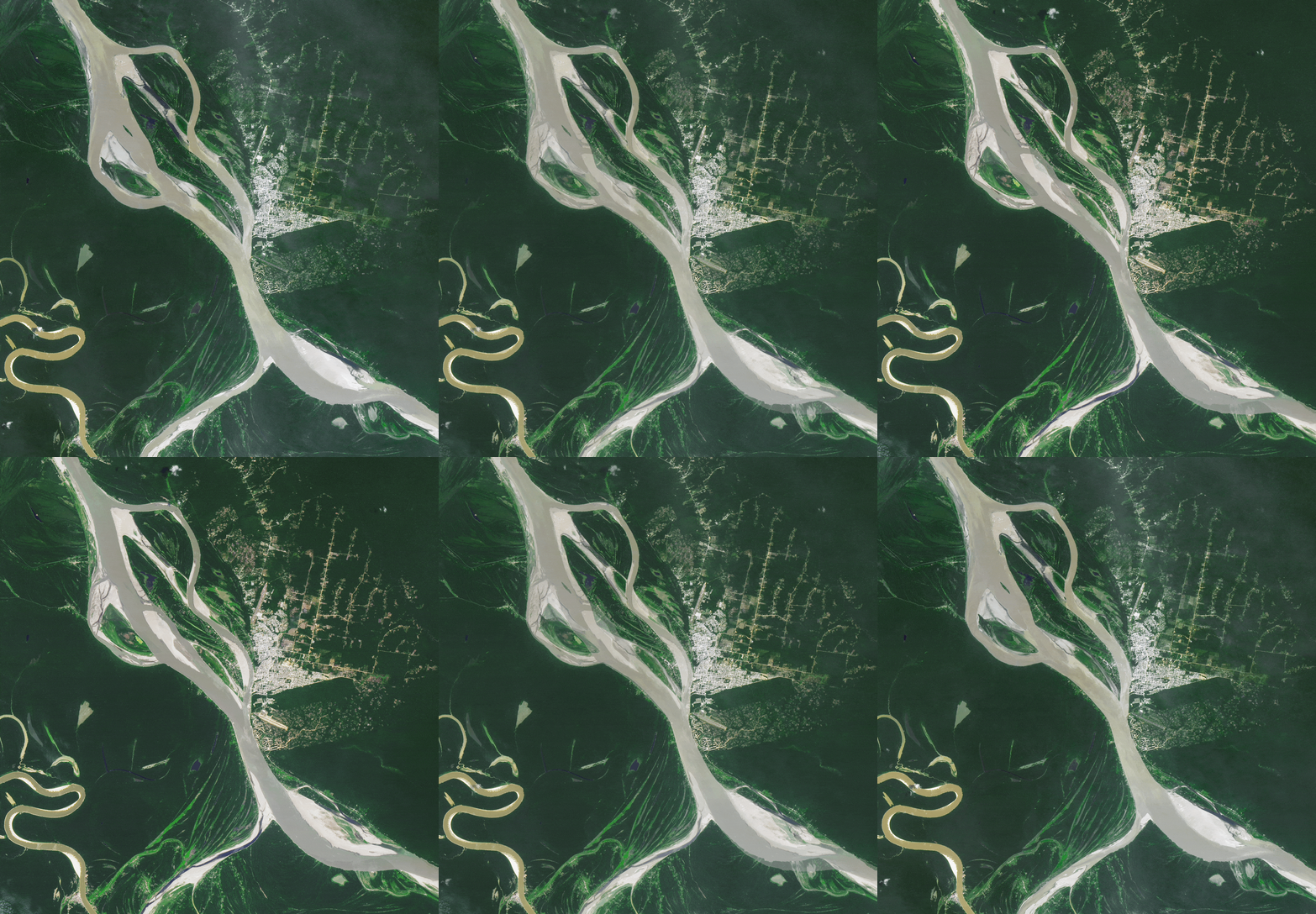
Insufficient rainfall in 2023-2024 has taken a toll on the region’s rivers and groundwater and upended daily life in several countries - this is a gif of the effects of climates change on the areas rivers.

Gif showing the water levels in the Solimões River near Tabatinga, Brazil, in 2021 and 2024. Water levels fell to record-low levels in October 2024. (Image credit: NASA Earth Observatory)

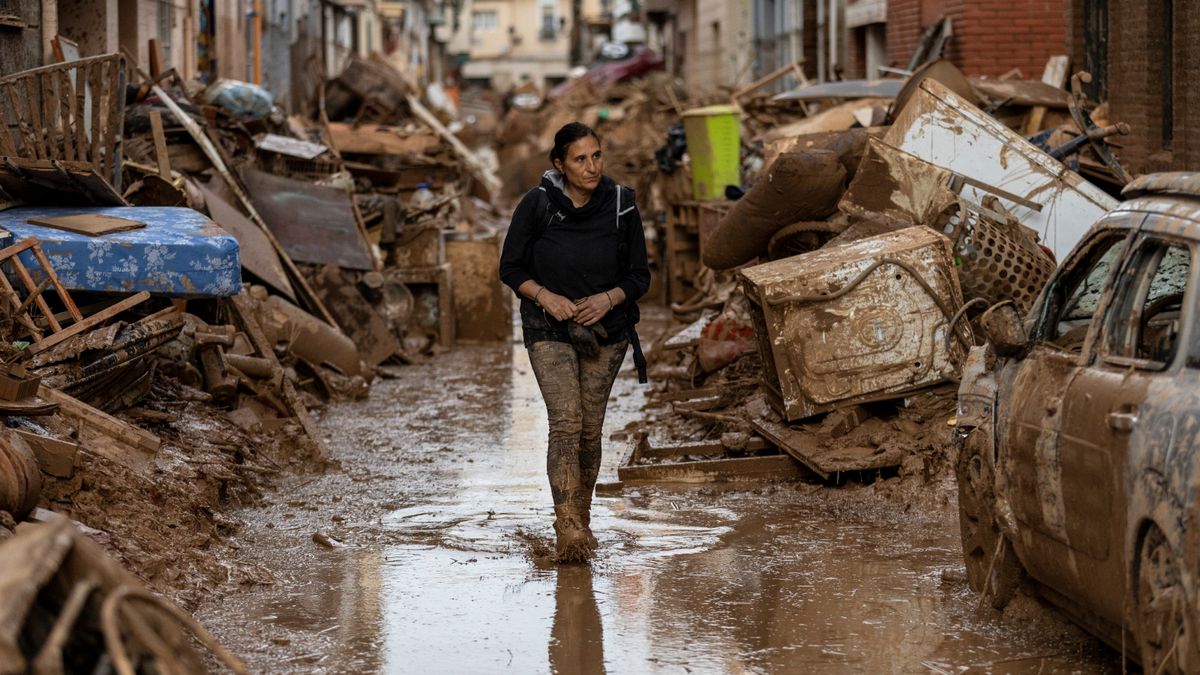
And in Spain, torrential rain led to flash floods that killed over 200 people. Scientists also linked this dramatic weather event to climate change.

Climate change devastation edging closer

But some of the scariest news about the planet isn’t what happened this year but rather what could occur if we don’t stop spewing carbon into the atmosphere. A study published in June suggested ecological tipping points — such as the collapse of the Greenland Ice Sheet and the transformation of the Amazon rainforest into savanna — could be reached in just 15 years if climate change isn’t controlled.

In October, scientists penned an open letter warning about the risk posed by the collapse of a key Atlantic current. In it, researchers urged policymakers to address the threat posed by the weakening Atlantic Meridional Overturning Circulation (AMOC) — a giant ocean conveyor belt that transports heat to the Northern Hemisphere, and the breakdown of which could cause temperatures across Europe to plummet.

Get the world’s most fascinating discoveries delivered straight to your inbox.

We’ve also been warned that we’re facing a global water crisis due in part to climate change and chronic mismanagement of resources. “For the first time in human history, we are pushing the global water cycle out of balance,” Johan Rockström, director of the Potsdam Institute for Climate Impact Research and co-chair of the Global Commission on the Economics of Water, which produced the report, said in a statement. “Precipitation, the source of all freshwater, can no longer be relied upon due to human caused climate and land use change, undermining the basis for human wellbeing and the global economy.”

Still, it’s not too late to avert some of the worst of these futures. Michael Mann, presidential distinguished professor and director of the Center for Science, Sustainability and the Media at the University of Pennsylvania, believes it’s not too late to stop the worst effects of climate change. “We [climate scientists] have, in some ways, failed to communicate that we can still avert catastrophic climate change,” he wrote for Live Science in November.

“We actually decide how bad the climate crisis will get. There is still time to preserve our ‘fragile moment,’ but the window of opportunity is narrowing. There is urgency in reducing carbon emissions. But there is also still agency on our part in acting.”

Source link

Share. Facebook Twitter Pinterest LinkedIn Tumblr Email
Previous ArticleNew iPhone 17 Pro rumor suggests changes are coming for the Dynamic Island
Next Article Man suspected of fatally setting woman on fire on NYC subway charged with murder, arson
Editor
  • Website

Related Posts

Lifestyle

New robotic heart mimics common, mysterious condition to help researchers study it

July 11, 2026
Lifestyle

Canon EOS R6 III review: A wildlife wonder

July 10, 2026
Lifestyle

Medieval babies and adults buried together in Sweden were not related, archaeologists discover — raising big questions about early Christian burial practices

July 10, 2026
Add A Comment

Comments are closed.

Categories
  • Entertainment
  • Lifestyle
  • News
  • Sports
  • Tech
  • Travel
Recent Posts
  • New robotic heart mimics common, mysterious condition to help researchers study it
  • Canon EOS R6 III review: A wildlife wonder
  • Medieval babies and adults buried together in Sweden were not related, archaeologists discover — raising big questions about early Christian burial practices
  • NASA is creating a fifth state of matter on the ISS, thanks to an upgrade to a mini-fridge-sized quantum lab
  • New sodium metal battery design charges in just 4 minutes and retains its capacity for years
calendar
July 2026
M T W T F S S
 12345
6789101112
13141516171819
20212223242526
2728293031  
« Jun    
Recent Posts
  • New robotic heart mimics common, mysterious condition to help researchers study it
  • Canon EOS R6 III review: A wildlife wonder
  • Medieval babies and adults buried together in Sweden were not related, archaeologists discover — raising big questions about early Christian burial practices
About

Welcome to Baynard Media, your trusted source for a diverse range of news and insights. We are committed to delivering timely, reliable, and thought-provoking content that keeps you informed
and inspired

Categories
  • Entertainment
  • Lifestyle
  • News
  • Sports
  • Tech
  • Travel
Facebook X (Twitter) Pinterest WhatsApp
  • Contact Us
  • About Us
  • Privacy Policy
  • Disclaimer
  • UNSUBSCRIBE
© 2026 copyrights reserved

Type above and press Enter to search. Press Esc to cancel.