Close Menu
  • Home
  • UNSUBSCRIBE
  • News
  • Lifestyle
  • Tech
  • Entertainment
  • Sports
  • Travel
Facebook X (Twitter) WhatsApp
Trending
  • Lemur used in ‘lemur yoga’ session dies of human herpesvirus, study finds
  • ‘A fine line between reducing stigma and trivialising conditions’: Social media, self-diagnosis and the glamorization of ADHD
  • New 2D memory device stores data on just a single electron
  • Before we ban kids from social media completely, here’s what we should try first | Jonathan Bellack and Mariana Olaizola Rosenblat
  • Scientists uncover a better way to beat ‘the bends’ — using deep-diving pigs
  • Mars may have been losing its water more than 4 billion years ago, oldest-known Martian meteorite suggests
  • ‘The lance head was still inside the pelvis’: Mass grave found in Austria may hold casualties of unknown ancient Roman battle
  • ‘Full-on berserker mode’: Archaeologists solve mystery of medieval soldiers with gruesome square holes in their skull
Facebook X (Twitter) WhatsApp
Baynard Media
  • Home
  • UNSUBSCRIBE
  • News
  • Lifestyle
  • Tech
  • Entertainment
  • Sports
  • Travel
Baynard Media
Home»Lifestyle»Chinese quantum processor is 1 quadrillion times faster than the best supercomputer — and it rivals Google’s breakthrough Willow chip
Lifestyle

Chinese quantum processor is 1 quadrillion times faster than the best supercomputer — and it rivals Google’s breakthrough Willow chip

EditorBy EditorMarch 13, 2025No Comments3 Mins Read
Share Facebook Twitter Pinterest LinkedIn Tumblr Reddit Telegram Email
Share
Facebook Twitter LinkedIn Pinterest Email

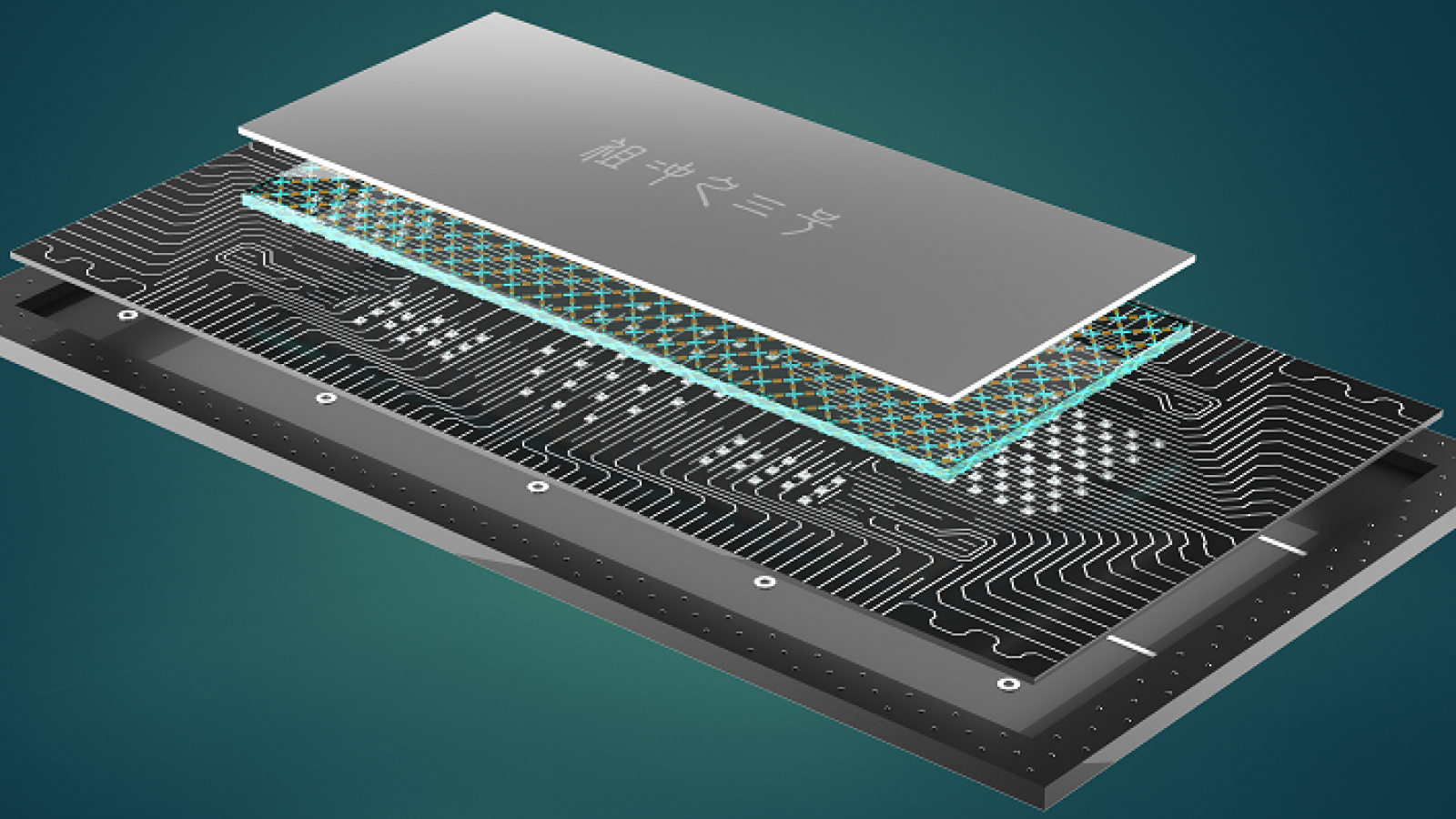
Researchers in China have developed a quantum processing unit (QPU) that is 1 quadrillion (10¹⁵) times faster than the best supercomputers on the planet.

The new prototype 105-qubit chip, dubbed “Zuchongzhi 3.0,” which uses superconducting qubits, represents a significant step forward for quantum computing, scientists at the University of Science and Technology of China (USTC) in Hefei said.

It rivals the benchmarking results set by Google’s latest Willow QPU in December 2024 that allowed scientists to stake a claim for quantum supremacy — where quantum computers are more capable than the fastest supercomputers — in lab-based benchmarking.

The scientists used the processor to complete a task on the widely used quantum computing random circuit sampling (RSC) benchmark in just a few hundred seconds, they said in a new study published March 3 in the journal Physical Review Letters.

This test, 83-qubit, 32-layer random circuit sampling task, was also completed 1 million times faster than the result set by Google’s previous generation Sycamore chip, published in October 2024. Frontier, the second-fastest supercomputer in the world, would only be able to complete the same task in 5.9 billion years, by contrast

Related: World’s 1st modular quantum computer that can operate at room temperature goes online

Although the results suggest QPUs are capable of achieving quantum supremacy, the specific RCS benchmarking used favors quantum methods. Also, improvements in classical algorithms that drive classical computing may close the gap, as happened in 2019 when Google scientists first announced a quantum computer had outperformed a classical computer — in the first use of the RSC benchmark.

Get the world’s most fascinating discoveries delivered straight to your inbox.

“Our work not only advances the frontiers of quantum computing, but also lays the groundwork for a new era where quantum processors play an essential role in tackling sophisticated real-world challenges,” the scientists said in the study.

Rivaling Google’s best quantum processor

The latest iteration of Zuchongzhi includes 105 transmon qubits — devices made from metals like tantalum, niobium, and aluminum that have reduced sensitivity to noise — in a 15-by-7 rectangular lattice. This builds on the previous chip, which included 66 qubits.

One of the most important areas critical to the viability of quantum computing in real-world settings is coherence time, a measure of how long a qubit can maintain its superposition and tap into the laws of quantum mechanics to perform calculations in parallel. Longer coherence times mean more complicated operations and calculations are possible.

Another major improvement was in gate fidelity and quantum error correction, which has been an obstacle to building useful quantum computers. Gate fidelity measures how accurately a quantum gate performs its intended operation, where a quantum gate is analogous to a classical logic gate, performing a specific operation on one or more qubits, manipulating their quantum state. Higher fidelity qubits mean fewer errors and more accurate computations.

Zuchongzhi 3.0 performed with an impressive parallel single-qubit gate fidelity of 99.90%, and a parallel two-qubit gate fidelity of 99.62%. Google’s Willow QPU edged it slightly, with results of 99.97% and 99.86% respectively.

These improvements were largely possible due to engineering improvements, including enhancements in fabrication methods and better optimized qubits design, the scientists said in the study. For instance, the latest iteration lithographically defines qubit components using tantalum and aluminum, bonded through an indium bump flip-chip process. This improves accuracy and minimizes contamination.

Source link

Share. Facebook Twitter Pinterest LinkedIn Tumblr Email
Previous ArticleMemphis man says he was shot by his dog while lying in bed
Next Article Wall Street turmoil rattles retirement savers, turning financial planners into therapists
Editor
  • Website

Related Posts

Lifestyle

Lemur used in ‘lemur yoga’ session dies of human herpesvirus, study finds

August 15, 2026
Lifestyle

‘A fine line between reducing stigma and trivialising conditions’: Social media, self-diagnosis and the glamorization of ADHD

August 15, 2026
Lifestyle

New 2D memory device stores data on just a single electron

August 15, 2026
Add A Comment

Comments are closed.

Categories
  • Entertainment
  • Lifestyle
  • News
  • Sports
  • Tech
  • Travel
Recent Posts
  • Lemur used in ‘lemur yoga’ session dies of human herpesvirus, study finds
  • ‘A fine line between reducing stigma and trivialising conditions’: Social media, self-diagnosis and the glamorization of ADHD
  • New 2D memory device stores data on just a single electron
  • Before we ban kids from social media completely, here’s what we should try first | Jonathan Bellack and Mariana Olaizola Rosenblat
  • Scientists uncover a better way to beat ‘the bends’ — using deep-diving pigs
calendar
September 2026
M T W T F S S
 123456
78910111213
14151617181920
21222324252627
282930  
« Aug    
Recent Posts
  • Lemur used in ‘lemur yoga’ session dies of human herpesvirus, study finds
  • ‘A fine line between reducing stigma and trivialising conditions’: Social media, self-diagnosis and the glamorization of ADHD
  • New 2D memory device stores data on just a single electron
About

Welcome to Baynard Media, your trusted source for a diverse range of news and insights. We are committed to delivering timely, reliable, and thought-provoking content that keeps you informed
and inspired

Categories
  • Entertainment
  • Lifestyle
  • News
  • Sports
  • Tech
  • Travel
Facebook X (Twitter) Pinterest WhatsApp
  • Contact Us
  • About Us
  • Privacy Policy
  • Disclaimer
  • UNSUBSCRIBE
© 2026 copyrights reserved

Type above and press Enter to search. Press Esc to cancel.