Close Menu
  • Home
  • UNSUBSCRIBE
  • News
  • Lifestyle
  • Tech
  • Entertainment
  • Sports
  • Travel
Facebook X (Twitter) WhatsApp
Trending
  • Chinese medical practitioners used extremely toxic plant as a topical anesthetic 600 years ago, study finds
  • Bead net funerary shroud: A 2,500-year-old beaded veil from Egypt depicting the deceased’s transformation into Osiris
  • Rare genetic disease makes scientists reconsider what the ‘seat of fear’ in the brain really is
  • It’s illegal to repair most of our devices. There’s a surprising reason for that.
  • Jupiter’s Ganymede, the largest moon in the solar system, may be heating up
  • Bizarre patterns on Venus have scientists puzzled
  • Scientists trained an AI model using an IBM quantum computer — and it answered questions correctly that the base model couldn’t
  • How did animals survive the asteroid that killed the dinosaurs?
Facebook X (Twitter) WhatsApp
Baynard Media
  • Home
  • UNSUBSCRIBE
  • News
  • Lifestyle
  • Tech
  • Entertainment
  • Sports
  • Travel
Baynard Media
Home»Lifestyle»China signs deal with Russia to build a power plant on the moon — potentially leaving the US in the dust
Lifestyle

China signs deal with Russia to build a power plant on the moon — potentially leaving the US in the dust

EditorBy EditorMay 13, 2025No Comments3 Mins Read
Share Facebook Twitter Pinterest LinkedIn Tumblr Reddit Telegram Email
Share
Facebook Twitter LinkedIn Pinterest Email

Russia has signed a deal with China to build a nuclear power plant on the moon.

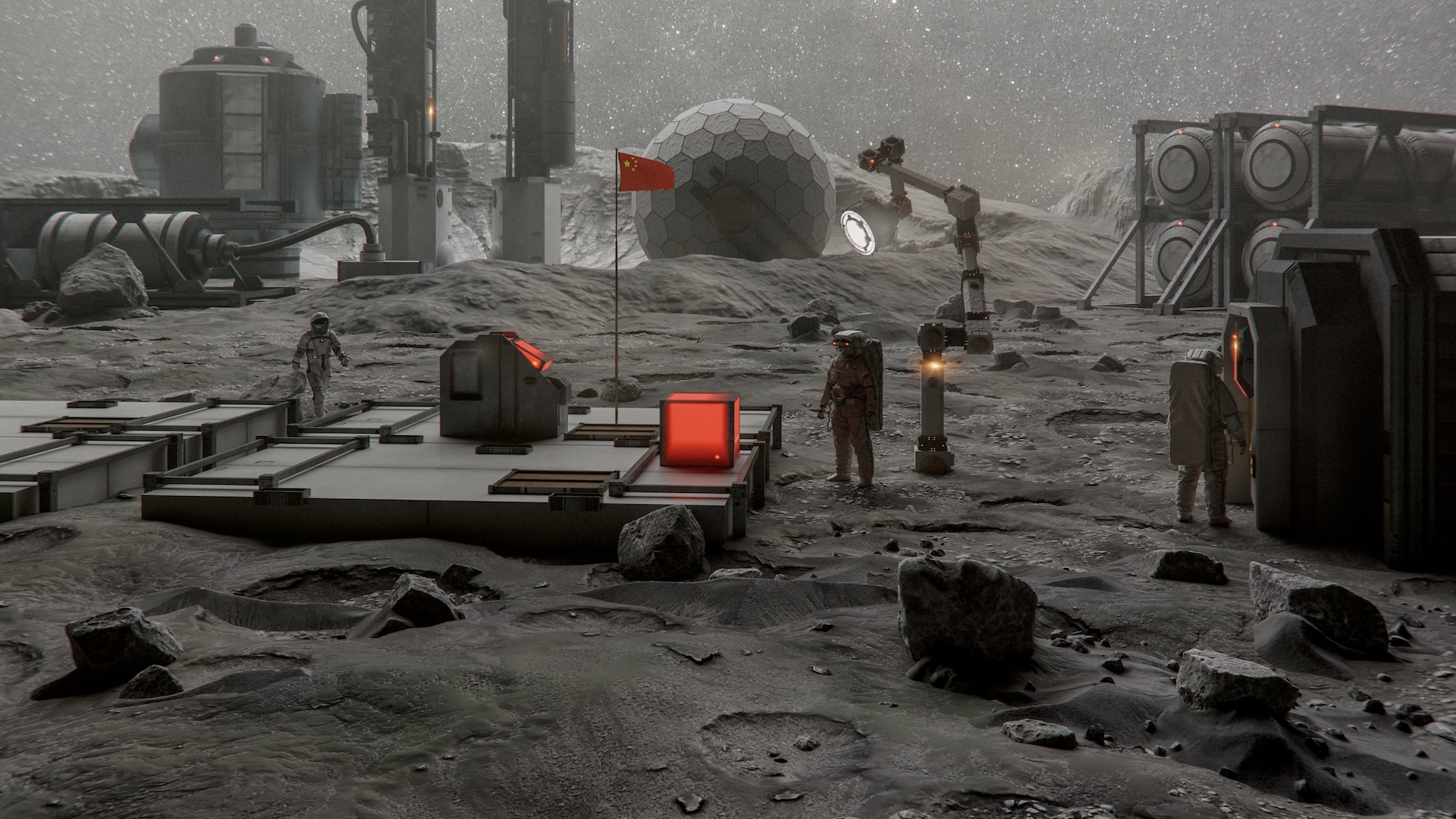
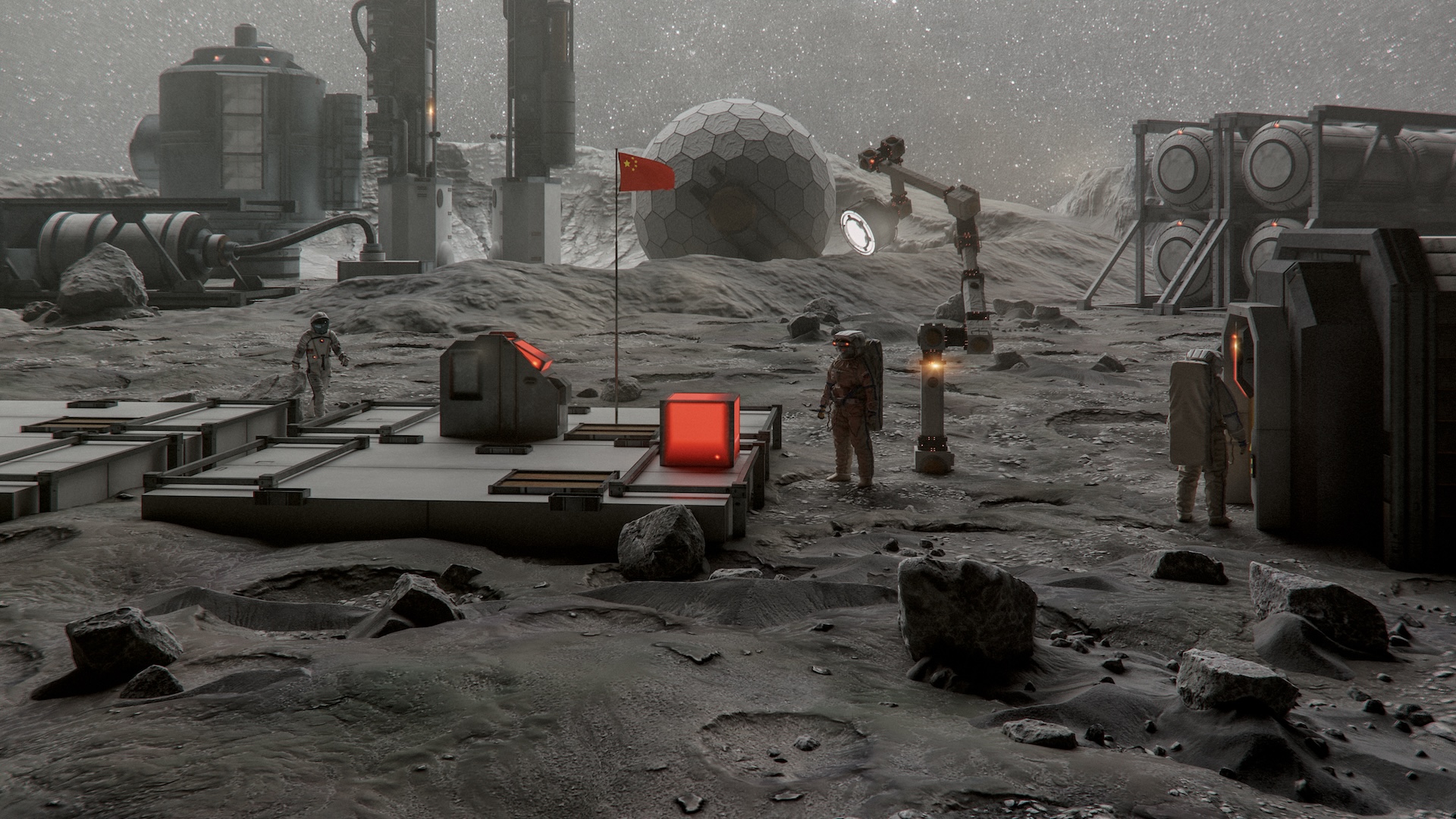
The Russian reactor will be used to power the International Lunar Research Station (ILRS), jointly led by China and Russia, and should be completed by 2036, according to a memorandum of cooperation signed by the two nations.

The announcement comes just after NASA revealed a 2026 budget proposal that would axe the agency’s plans for an orbital lunar base.


You may like

The construction of the Chinese-Russian reactor will likely be carried out autonomously “without the presence of humans,” according to a 2024 interview with Yury Borisov, director general of the Russian space agency Roscosmos, on the Russian state-owned news site TASS. While details of how this can be achieved remain unclear, Borisov added that the technological steps are “almost ready.”

“The station will conduct fundamental space research and test technology for long-term uncrewed operations of the ILRS, with the prospect of a human being’s presence on the Moon,” Roscosmos wrote in a May 8 announcement following the signing of the memorandum.

The new research station, a permanent, manned lunar base located on the moon’s south pole, has so far attracted 17 countries to join the program — including Egypt, Pakistan, Venezuela, Thailand and South Africa. Its groundwork will be laid by China’s 2028 Chang’e-8 mission, which will be the nation’s first time landing an astronaut on the lunar surface.

Related: Russia and China announce plan to build shared nuclear reactor on the moon by 2035, ‘without humans’

Get the world’s most fascinating discoveries delivered straight to your inbox.

The roadmap for the ILRS was first unveiled in June 2021, with China and Russia announcing they would loft the pieces for a robotic moon base using five super heavy-lift rocket launches from 2030 to 2035.

Once these basic pieces are established, China plans additional launches that will extend the base further, connecting it to a space station orbiting the moon and two nodes located at the moon’s equator and its far side, Wu Yanhua, the chief designer of China’s deep exploration project, said at a 2024 media conference, according to state media outlet Xinhua.

This extended model, laying the foundations for manned landings on Mars, should be completed by 2050. It “will be powered by solar, radioisotope and nuclear generators,” Wu said. “It will also include lunar-Earth and high-speed lunar surface communication networks, as well as lunar vehicles like a hopper, an unmanned long-range vehicle, and pressurized and unpressurized manned rovers.”

The memorandum comes at a time of growing ambition for China’s space programs. The country has had a lunar presence since the 2013 landing of the Chang’e 3 mission, which placed a rover on the moon. Subsequent missions landed more rovers on the moon and Mars, while collecting samples from the moon’s near and far sides, and mapped out the lunar surface.

China’s race to build a lunar outpost also has an American rival in the Artemis program, which has recently been beset by delays. Artemis III, which will see NASA astronauts return to our nearest natural satellite for the first time in over 50 years, is expected to launch sometime in 2027.

Meanwhile, the future of NASA’s own planned lunar space station, dubbed Gateway and initially slated for launch as soon as 2027, has been thrown into question with the release of the Trump administration’s proposed 2026 budget. The budget calls for canceling the Gateway mission, despite significant progress on building the station’s modules.

Source link

Share. Facebook Twitter Pinterest LinkedIn Tumblr Email
Previous Article‘This should not be published’: Scientists cast doubt on study claiming trees ‘talk’ before solar eclipses
Next Article First-of-its-kind video captures the terrifying moment the ground tore apart during major Myanmar earthquake
Editor
  • Website

Related Posts

Lifestyle

Chinese medical practitioners used extremely toxic plant as a topical anesthetic 600 years ago, study finds

May 26, 2026
Lifestyle

Bead net funerary shroud: A 2,500-year-old beaded veil from Egypt depicting the deceased’s transformation into Osiris

May 25, 2026
Lifestyle

Rare genetic disease makes scientists reconsider what the ‘seat of fear’ in the brain really is

May 25, 2026
Add A Comment

Comments are closed.

Categories
  • Entertainment
  • Lifestyle
  • News
  • Sports
  • Tech
  • Travel
Recent Posts
  • Chinese medical practitioners used extremely toxic plant as a topical anesthetic 600 years ago, study finds
  • Bead net funerary shroud: A 2,500-year-old beaded veil from Egypt depicting the deceased’s transformation into Osiris
  • Rare genetic disease makes scientists reconsider what the ‘seat of fear’ in the brain really is
  • It’s illegal to repair most of our devices. There’s a surprising reason for that.
  • Jupiter’s Ganymede, the largest moon in the solar system, may be heating up
calendar
May 2026
M T W T F S S
 123
45678910
11121314151617
18192021222324
25262728293031
« Apr    
Recent Posts
  • Chinese medical practitioners used extremely toxic plant as a topical anesthetic 600 years ago, study finds
  • Bead net funerary shroud: A 2,500-year-old beaded veil from Egypt depicting the deceased’s transformation into Osiris
  • Rare genetic disease makes scientists reconsider what the ‘seat of fear’ in the brain really is
About

Welcome to Baynard Media, your trusted source for a diverse range of news and insights. We are committed to delivering timely, reliable, and thought-provoking content that keeps you informed
and inspired

Categories
  • Entertainment
  • Lifestyle
  • News
  • Sports
  • Tech
  • Travel
Facebook X (Twitter) Pinterest WhatsApp
  • Contact Us
  • About Us
  • Privacy Policy
  • Disclaimer
  • UNSUBSCRIBE
© 2026 copyrights reserved

Type above and press Enter to search. Press Esc to cancel.