Close Menu
  • Home
  • UNSUBSCRIBE
  • News
  • Lifestyle
  • Tech
  • Entertainment
  • Sports
  • Travel
Facebook X (Twitter) WhatsApp
Trending
  • Lemur used in ‘lemur yoga’ session dies of human herpesvirus, study finds
  • ‘A fine line between reducing stigma and trivialising conditions’: Social media, self-diagnosis and the glamorization of ADHD
  • New 2D memory device stores data on just a single electron
  • Before we ban kids from social media completely, here’s what we should try first | Jonathan Bellack and Mariana Olaizola Rosenblat
  • Scientists uncover a better way to beat ‘the bends’ — using deep-diving pigs
  • Mars may have been losing its water more than 4 billion years ago, oldest-known Martian meteorite suggests
  • ‘The lance head was still inside the pelvis’: Mass grave found in Austria may hold casualties of unknown ancient Roman battle
  • ‘Full-on berserker mode’: Archaeologists solve mystery of medieval soldiers with gruesome square holes in their skull
Facebook X (Twitter) WhatsApp
Baynard Media
  • Home
  • UNSUBSCRIBE
  • News
  • Lifestyle
  • Tech
  • Entertainment
  • Sports
  • Travel
Baynard Media
Home»Lifestyle»Chimps eat fruit full of alcohol, but no, they don’t get drunk
Lifestyle

Chimps eat fruit full of alcohol, but no, they don’t get drunk

EditorBy EditorOctober 2, 2025No Comments4 Mins Read
Share Facebook Twitter Pinterest LinkedIn Tumblr Reddit Telegram Email
Share
Facebook Twitter LinkedIn Pinterest Email

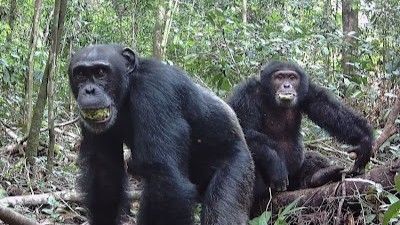
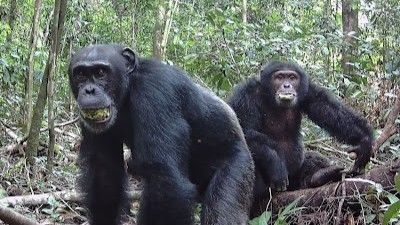
Chimpanzees could be consuming the equivalent of a beer and half a day from eating alcoholic fruits, according to the first estimates of wild chimp alcohol intake.

By virtue of their fruit-filled diets alongside natural fermentation, chimps (Pan troglodytes) in Uganda and the Ivory Coast probably eat around 0.5 ounces (14 grams) of ethanol a day.

That doesn’t mean the chimps are getting drunk. But it could mean that our predilection for alcohol comes from exposure to ethanol from fermented fruit in ancestral diets, according to research published Sept. 17 in the journal Science Advances.


You may like

“They’re definitely not getting drunk,” study co-author Aleksey Maro, a primatologist at University of California Berkeley (UC Berkeley), told Live Science. “If you had two drinks split through the whole day, you wouldn’t feel much either.”

The idea that humans have a taste for alcohol because it first appeared naturally in our diets is called the “drunken monkey hypothesis,” and was proposed by study co-author Robert Dudley, a professor of integrative biology at UC Berkeley. Dudley’s hypothesis postulates that there was a period of primate evolution during which our early ancestors couldn’t metabolize fermented fruits, and so were missing out on high calorie meals.

To tap into this nutritious resource, primates evolved to be able to hold their liquor by being able to break down ethanol.

However, until now scientists have only directly observed chimps eating fruit known to contain ethanol once, reporting chimps in Guinea-Bissau eating and sharing naturally-occurring fermented African breadfruit in 2022.

Get the world’s most fascinating discoveries delivered straight to your inbox.

“I’m as skeptical as everyone else about the drunken monkey hypothesis,” Maro said, “so I’ve taken care to do my own sleuthing.”

To figure out how regularly chimpanzees could be consuming ethanol rich fruits, Maro and his team followed two groups of chimps: The Ngogo chimpanzees in Uganda and the Taï chimpanzees in Côte d’Ivoire. They observed the chimps for three periods lasting several months between 2017 and 2021.

The researchers took samples of freshly fallen fruit whenever they encountered them eating. From this, they retrieved 254 ripe fruit samples from 15 fruit species in Ngogo and 245 samples from six species in Taï.


You may like

To estimate the alcohol content in the samples, the team either analyzed the alcohol vapor found inside the fruit or used a chemical reagent that turned yellow on contact with ethanol.

They found that the Ngogo chimps ate fruit with an average ethanol concentration of 0.32%, meaning that there was 1.1 ounces (32 grams) of ethanol in every 3.5 ounces (100 grams) of the total weight. The fruit eaten by the Taï chimps had a remarkably similar average ethanol concentration at 0.31%.

Maro and his team then used pre-existing data on chimp diets and body weights to estimate the chimpanzees’ daily ethanol intake across the two populations. They found that both male and female chimps consume approximately 0.5 ounces ethanol per day, which is around 2.5 standard drinks when adjusted for their smaller body size.

Matthew Carrigan, a molecular biologist at the College of Central Florida who was not involved in the research, said that while the results aren’t necessarily surprising, they are exciting because it’s moving forward an “important question about human ethanol addiction and evolution.”

However, Carrigan pointed out that “there’s a very wide range” in the error bars, meaning that the chimps could be eating as little as 0.14 ounces (4 grams) of ethanol per day, or as much as 0.85 ounces (24 grams) — the difference between less than one drink or four.

Maro also acknowledged that the research samples could have been fruits the chimps refused to eat. The next step is to investigate if the chimps are opting to avoid or seek out individual fruits based on their degree of fermentation, Carrigan said.

Ultimately, humans and chimpanzees “evolved to get calories without getting drunk,” Carrigan said. “Otherwise, if we evolved to get drunk, then we would not evolve to metabolize the ethanol faster.”

Source link

Share. Facebook Twitter Pinterest LinkedIn Tumblr Email
Previous ArticleHARDY opens up about his near-fatal 2022 tour bus crash experience
Next Article Attack on synagogue in U.K. declared a terrorist attack
Editor
  • Website

Related Posts

Lifestyle

Lemur used in ‘lemur yoga’ session dies of human herpesvirus, study finds

August 15, 2026
Lifestyle

‘A fine line between reducing stigma and trivialising conditions’: Social media, self-diagnosis and the glamorization of ADHD

August 15, 2026
Lifestyle

New 2D memory device stores data on just a single electron

August 15, 2026
Add A Comment

Comments are closed.

Categories
  • Entertainment
  • Lifestyle
  • News
  • Sports
  • Tech
  • Travel
Recent Posts
  • Lemur used in ‘lemur yoga’ session dies of human herpesvirus, study finds
  • ‘A fine line between reducing stigma and trivialising conditions’: Social media, self-diagnosis and the glamorization of ADHD
  • New 2D memory device stores data on just a single electron
  • Before we ban kids from social media completely, here’s what we should try first | Jonathan Bellack and Mariana Olaizola Rosenblat
  • Scientists uncover a better way to beat ‘the bends’ — using deep-diving pigs
calendar
September 2026
M T W T F S S
 123456
78910111213
14151617181920
21222324252627
282930  
« Aug    
Recent Posts
  • Lemur used in ‘lemur yoga’ session dies of human herpesvirus, study finds
  • ‘A fine line between reducing stigma and trivialising conditions’: Social media, self-diagnosis and the glamorization of ADHD
  • New 2D memory device stores data on just a single electron
About

Welcome to Baynard Media, your trusted source for a diverse range of news and insights. We are committed to delivering timely, reliable, and thought-provoking content that keeps you informed
and inspired

Categories
  • Entertainment
  • Lifestyle
  • News
  • Sports
  • Tech
  • Travel
Facebook X (Twitter) Pinterest WhatsApp
  • Contact Us
  • About Us
  • Privacy Policy
  • Disclaimer
  • UNSUBSCRIBE
© 2026 copyrights reserved

Type above and press Enter to search. Press Esc to cancel.