Close Menu
  • Home
  • UNSUBSCRIBE
  • News
  • Lifestyle
  • Tech
  • Entertainment
  • Sports
  • Travel
Facebook X (Twitter) WhatsApp
Trending
  • A 2025 Alaskan tsunami was one of the largest on record, new research finds
  • Lion’s head pendant: An ancient Egyptian board game piece that was later repurposed into a magical religious object with baboons
  • Are we more closely related to cats or dogs?
  • Declassified Apollo 12 images show UFOs on the moon — Space photo of the week
  • ‘More than 100 million years of evolution’: How snakes evolved and lost their legs
  • More polar bears are approaching human sites as the climate warms, and it’s not just the skinny ones
  • James Webb telescope zooms in on a black hole that could reveal the truth about ‘little red dots’
  • If humans are getting smarter, why are our brains shrinking?
Facebook X (Twitter) WhatsApp
Baynard Media
  • Home
  • UNSUBSCRIBE
  • News
  • Lifestyle
  • Tech
  • Entertainment
  • Sports
  • Travel
Baynard Media
Home»Lifestyle»Black hole paradox that stumped Stephen Hawking may have a solution, new paper claims
Lifestyle

Black hole paradox that stumped Stephen Hawking may have a solution, new paper claims

EditorBy EditorDecember 11, 2024No Comments3 Mins Read
Share Facebook Twitter Pinterest LinkedIn Tumblr Reddit Telegram Email
Share
Facebook Twitter LinkedIn Pinterest Email

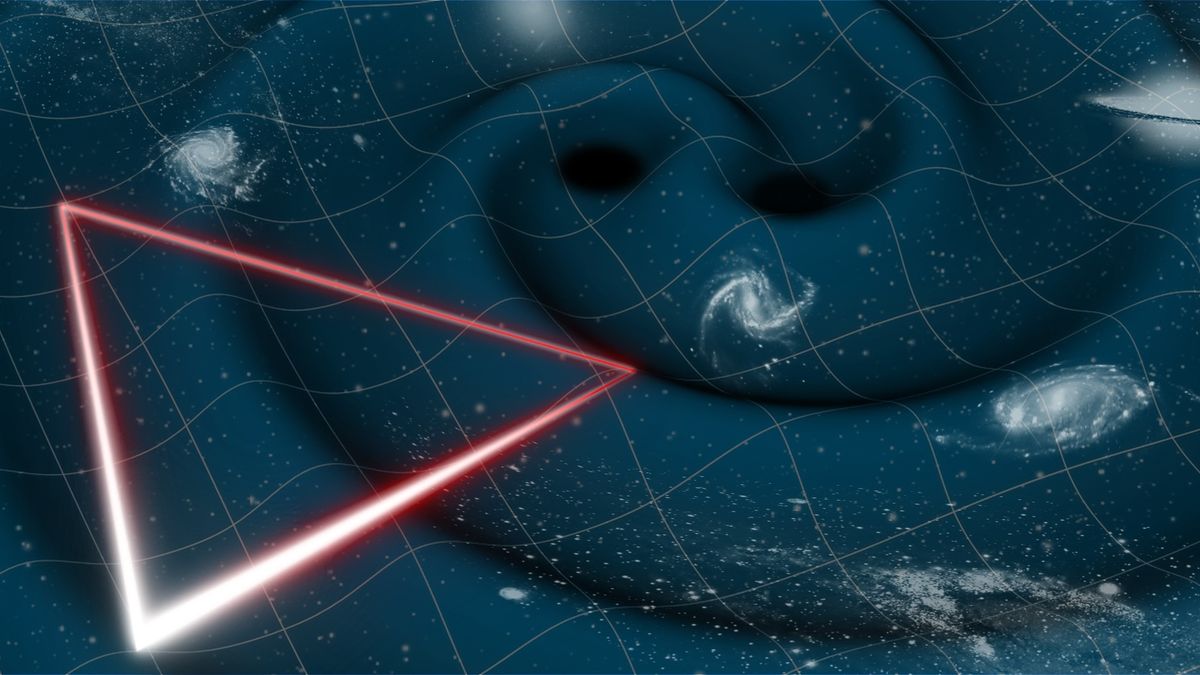
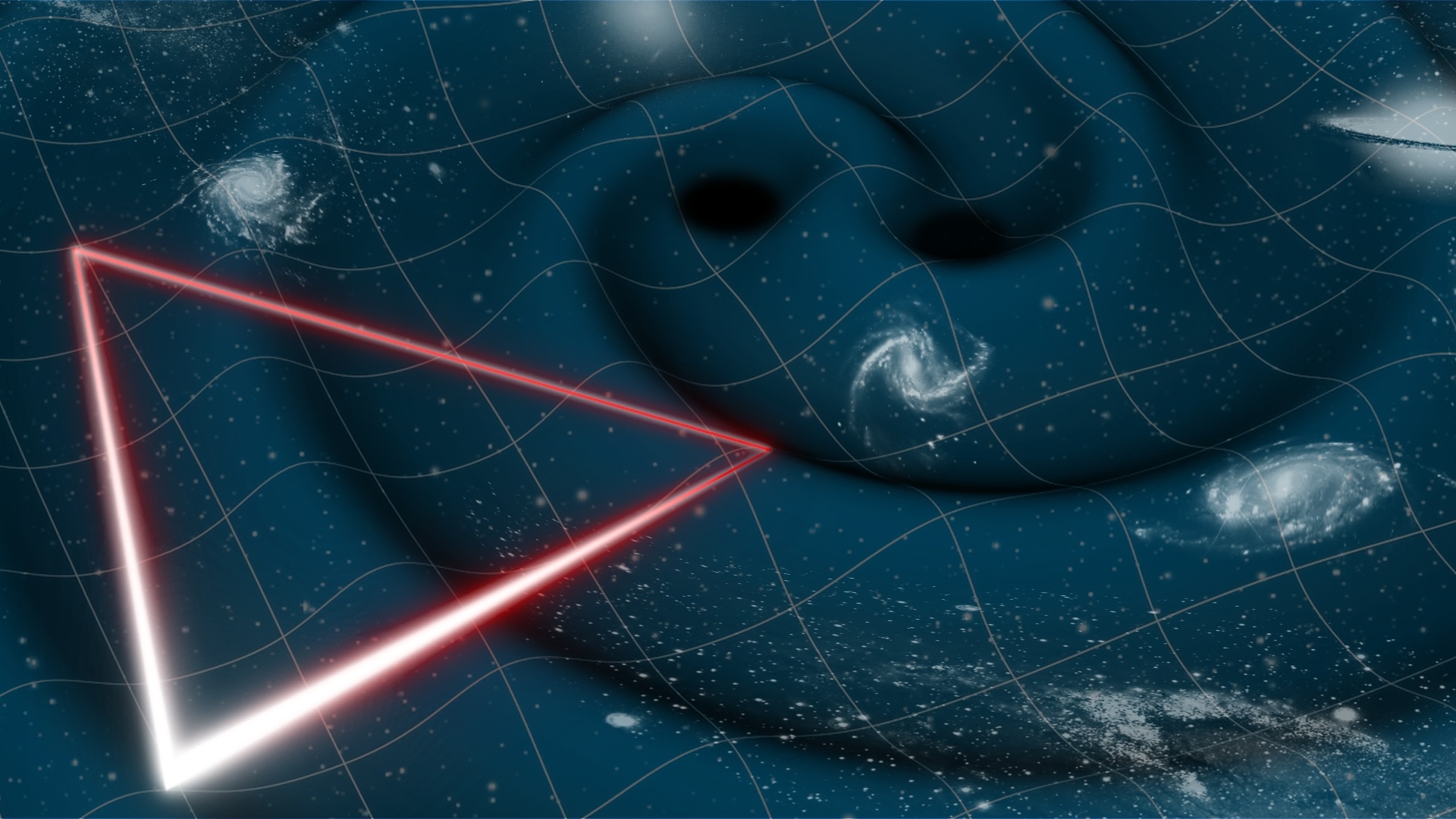
Nothing is supposed to escape a black hole’s event horizon — yet new research suggests it may secretly leak information. That leakage would appear in subtle signatures in gravitational waves, and now we know how to look for them, the study authors say.

In 1976, Stephen Hawking rocked the astrophysics world with his discovery that black holes aren’t entirely black. Instead, they emit tiny amounts of radiation and, given enough time, can give off so much that they disappear entirely. But this introduced a massive problem. Information flows into black holes as they consume matter, and that information can’t escape. But Hawking radiation doesn’t carry any information with it. So what happens to it when the black hole disappears?

This “black hole information paradox” has bedeviled researchers for decades, and they have developed numerous potential solutions. One is known as nonviolent nonlocality. In this scenario, the insides of black holes are connected to their outsides through “quantum nonlocality” — in which correlated particles share the same quantum state — an effect Einstein called “spooky action at a distance.” This nonlocality is “nonviolent” because nothing energetic like an explosion or merger that is causing the ensuing gravitational waves — the ripples in space-time outside the black hole. Rather, they are being caused by the quantum connections between the inside and outside of the black hole.

If this hypothesis is true, the space-time around black holes carries tiny perturbations that aren’t entirely random. Instead, the variations would be correlated with the information inside the black hole. Then, when the black hole disappeared, the information would be preserved outside it, thus resolving the paradox.

In a recent preprint paper that has not been peer-reviewed yet, researchers at Caltech investigated this intriguing hypothesis to explore how we might be able to test it.

Related:
‘Impossible’ black holes discovered by the James Webb telescope may finally have an explanation

The researchers found that these nonlocal quantum correlations don’t just make an imprint in the space-time around a black hole; they also leave a signature in the gravitational waves released when black holes merge. These signatures exist as tiny fluctuations on top of the main gravitational wave signal, but they have a unique spectrum that clearly separates them from the usual waves.

The researchers went on to outline a program for separating out this special signal. They found that current gravitational wave detectors, like the Laser Interferometer Gravitational-Wave Observatory and the Virgo interferometer, don’t have the sensitivity to comprehensively determine if nonviolent nonlocality is an accurate solution to the black hole information paradox. But next-generation instruments that are currently being designed and constructed might be able to do it.

Get the world’s most fascinating discoveries delivered straight to your inbox.

The next step for the research is to build even more-accurate models of how nonviolent nonlocality affects the space-time around realistic black holes. This will provide a precise prediction of what the changes in the gravitational wave signals should look like — and it just might lead to a resolution of the infamous paradox.

Source link

Share. Facebook Twitter Pinterest LinkedIn Tumblr Email
Previous ArticleFBI Director Wray is out. Don’t tear down the Bureau next. Make it great again
Next Article Beaumont's spectacular 65 leads England to victory against South Africa
Editor
  • Website

Related Posts

Lifestyle

A 2025 Alaskan tsunami was one of the largest on record, new research finds

May 11, 2026
Lifestyle

Lion’s head pendant: An ancient Egyptian board game piece that was later repurposed into a magical religious object with baboons

May 11, 2026
Lifestyle

Are we more closely related to cats or dogs?

May 11, 2026
Add A Comment

Comments are closed.

Categories
  • Entertainment
  • Lifestyle
  • News
  • Sports
  • Tech
  • Travel
Recent Posts
  • A 2025 Alaskan tsunami was one of the largest on record, new research finds
  • Lion’s head pendant: An ancient Egyptian board game piece that was later repurposed into a magical religious object with baboons
  • Are we more closely related to cats or dogs?
  • Declassified Apollo 12 images show UFOs on the moon — Space photo of the week
  • ‘More than 100 million years of evolution’: How snakes evolved and lost their legs
calendar
May 2026
M T W T F S S
 123
45678910
11121314151617
18192021222324
25262728293031
« Apr    
Recent Posts
  • A 2025 Alaskan tsunami was one of the largest on record, new research finds
  • Lion’s head pendant: An ancient Egyptian board game piece that was later repurposed into a magical religious object with baboons
  • Are we more closely related to cats or dogs?
About

Welcome to Baynard Media, your trusted source for a diverse range of news and insights. We are committed to delivering timely, reliable, and thought-provoking content that keeps you informed
and inspired

Categories
  • Entertainment
  • Lifestyle
  • News
  • Sports
  • Tech
  • Travel
Facebook X (Twitter) Pinterest WhatsApp
  • Contact Us
  • About Us
  • Privacy Policy
  • Disclaimer
  • UNSUBSCRIBE
© 2026 copyrights reserved

Type above and press Enter to search. Press Esc to cancel.